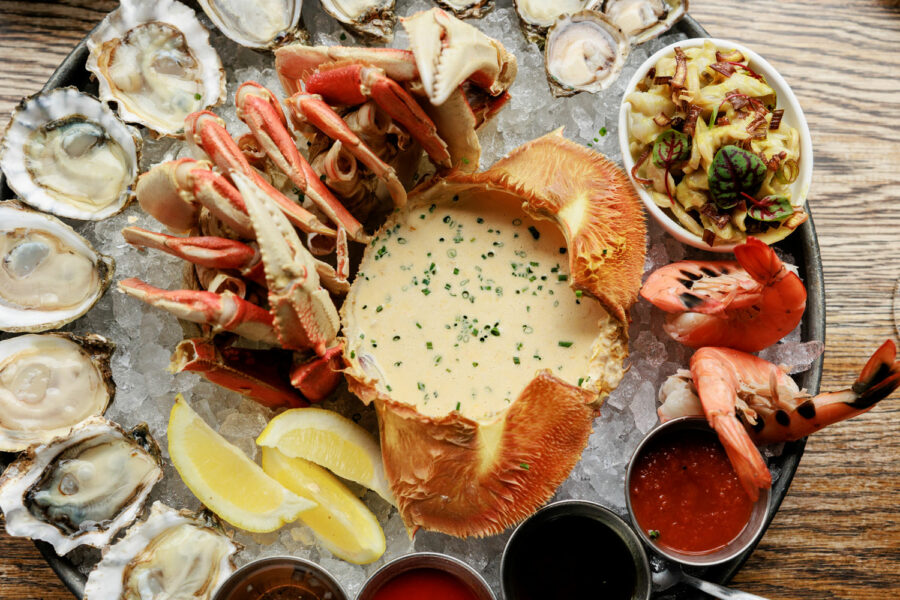
Seattle doesn’t just eat seafood. It breathes it. The briny scent of Puget Sound drifts through downtown streets, mingles with the steam rising from chowder pots, and settles into the fabric of a city that has been hauling, shucking, filleting, and celebrating the ocean’s bounty for well over a century. To understand Seattle’s relationship with seafood is to understand the city itself — its Indigenous roots, its immigrant waves, its blue-collar grit, and its modern appetite for sustainability and innovation.
Other American cities have seafood scenes, sure. Boston has its lobster rolls. New Orleans has its crawfish boils. But Seattle’s connection to the water runs deeper than any single dish or tradition. It’s an identity, woven into the economy, the culture, the calendar, and the daily rhythms of life in the Pacific Northwest. From the first salmon pulled from the Columbia River by Coast Salish peoples thousands of years ago to the guy tossing a king salmon across the counter at Pike Place Market this morning, seafood in Seattle isn’t a trend. It’s a through-line.
The First Fishermen: Indigenous Seafood Heritage
Long before Seattle had a name — long before there was a city at all — the waters of Puget Sound, the rivers feeding into it, and the vast Pacific Ocean beyond were the lifeblood of the region’s Indigenous peoples. The Duwamish, Suquamish, Muckleshoot, Tulalip, and other Coast Salish tribes built entire civilizations around salmon, shellfish, and the marine ecosystem.
Salmon, in particular, held a place of almost sacred importance. It wasn’t simply food. It was a relative, a gift, a spiritual being that chose to return each year to nourish the people. The First Salmon Ceremony, still practiced by many tribes today, honors the arrival of the salmon run. The first fish caught is prepared with care, shared communally, and its bones returned to the water — a gesture of gratitude meant to ensure the salmon’s return the following season. This isn’t folklore tucked away in a museum. It’s a living tradition, and it has shaped how Seattle thinks about its relationship with the sea, even if the city hasn’t always acknowledged it properly.
Beyond salmon, Coast Salish peoples harvested geoduck, clams, mussels, oysters, herring, and a staggering variety of marine life from the nutrient-rich waters of the Salish Sea. Clam gardens — carefully managed tidal areas designed to increase shellfish productivity — represent one of the earliest known forms of aquaculture on the continent. These weren’t passive gatherers. They were stewards, engineers of abundance, and their legacy echoes in every modern conversation about sustainable fishing in the region.
Pike Place Market: The Beating Heart of Seattle Seafood
No conversation about seafood in Seattle gets very far without landing at Pike Place Market. Opened in 1907 as a public market where farmers and fishermen could sell directly to consumers, Pike Place has become one of the most iconic food destinations in the world. And at its core, it’s still about fish.
The market’s most famous attraction is, of course, the fish-throwing spectacle at Pike Place Fish Co. Workers hurl whole salmon through the air to one another, shouting orders and cracking jokes while tourists fumble for their phones. It’s theatrical, it’s loud, and it’s become a symbol of the city. But beneath the showmanship, there’s something real happening. These are working fishmongers selling wild-caught Alaskan salmon, Dungeness crab, halibut, and spot prawns to locals who know exactly what they’re looking for.
Pike Place is where you’ll find the old-timers who remember when the market was struggling, when Seattle’s waterfront was rougher and less polished. It’s where immigrant families — Vietnamese, Filipino, Chinese, Ethiopian — have set up stalls selling their own seafood traditions alongside the Pacific Northwest staples. Walk through the lower levels and you’ll find shops selling dried shrimp, fish sauce, and smoked black cod next to displays of gleaming whole sockeye. The market isn’t a monoculture. It’s a living, evolving intersection of every community that has made Seattle home.
Salmon: The King of the Pacific Northwest Table
If Seattle’s seafood tradition had a mascot, it would be the salmon. Five species of Pacific salmon — king (chinook), sockeye, coho, pink, and chum — run through the region’s rivers, and each one has its loyalists.
King salmon is the crown jewel. Rich, buttery, with fat marbling that rivals the finest steak, a well-prepared king salmon fillet is the pinnacle of Northwest dining. Sockeye, with its deep red flesh and bold flavor, is the workhorse of summer cookouts and family gatherings. Coho is prized for its versatility, and even the humble pink salmon — sometimes dismissed by snobs — plays a vital role in the region’s canning industry and everyday cooking.
The salmon tradition in Seattle goes far beyond the plate. It’s tied to the seasons in a way that most modern food isn’t. When the salmon run begins, the city pays attention. Fishermen head to the rivers. Newspapers publish reports on run sizes. Restaurants update their menus. There’s a palpable excitement, a collective awareness that something ancient and important is happening in the waterways just outside the city limits.
Smoking salmon is one of the oldest preservation methods in the region, and it remains enormously popular. Alder-smoked salmon — prepared on planks of local alder wood — has a distinctive sweetness and depth that you simply can’t replicate with other woods. You’ll find it at backyard barbecues, holiday tables, and tucked into cream cheese on a Sunday morning bagel. It’s comfort food with a thousand-year pedigree.
The salmon bake, a tradition borrowed and adapted from Indigenous practice, remains a beloved community event. Whole fillets are pinned to cedar stakes and slow-roasted over an open fire, usually at outdoor gatherings, festivals, or tribal celebrations. It’s smoky, communal, and deeply satisfying — the kind of food that tastes better because of where you are and who you’re with.
Dungeness Crab: The Other Royalty
Salmon may be the king, but Dungeness crab is the queen, and in some households, it rules the table outright. Named after the town of Dungeness on Washington’s Olympic Peninsula, this sweet, tender crab is one of the Pacific Northwest’s greatest culinary treasures.
Dungeness crab season typically opens in December, and for many Seattle families, a fresh crab feast is as essential to the holidays as a tree or a wrapped gift. The ritual is specific: whole crabs, steamed or boiled, cracked open at a newspaper-covered table, dipped in melted butter, and eaten slowly with cold beer or white wine. There’s no pretension to it. You’re wearing a bib. Your hands are a mess. The conversation is good. That’s the whole point.
Crab shacks and seafood counters across the city sell live Dungeness by the pound during the season, and the best ones draw long lines. Restaurants from the waterfront to Capitol Hill feature Dungeness in everything from crab cakes to cioppino to straight-up crab cocktails. And the Louis — the Crab Louis salad — is a Seattle institution in its own right, a composed salad of crab, hard-boiled eggs, tomatoes, and a tangy Thousand Island-style dressing that has been served in Northwest dining rooms since the early 1900s.
Oysters: The Northwest’s Quiet Obsession
Seattle’s oyster culture doesn’t make as much noise as its salmon heritage, but it runs just as deep. The cold, clean waters of Puget Sound and the surrounding coastline produce some of the finest oysters on the planet, and Seattleites consume them with quiet, almost reverent enthusiasm.
Varieties like Shigoku, Kumamoto, Pacific, and the treasured Olympia oyster — the only oyster species native to the West Coast — each offer a different flavor profile, from briny and metallic to sweet and creamy. Oyster bars are scattered across the city, from the elegant raw bars in Ballard and Capitol Hill to the more casual spots along the waterfront where you can slurp a dozen on the half shell while watching ferries cross the Sound.
The Taylor Shellfish Farms name is practically synonymous with oysters in Seattle. A family-run operation that stretches back five generations, Taylor has been farming oysters in Washington waters since the 1890s and operates several popular oyster bars in the city. Their presence is a reminder that shellfish farming isn’t some newfangled sustainable food trend in this region — it’s heritage.
Olympia oysters deserve special mention. Tiny, intensely flavored, and notoriously difficult to cultivate, Olympias were nearly wiped out by pollution and overharvesting in the early twentieth century. Restoration efforts have brought them back in limited quantities, and eating one today feels like tasting a piece of the region’s ecological history. They’re metallic, complex, and unlike anything else on the half shell.
The Immigrant Kitchen: How Migration Reshaped Seattle Seafood
Seattle’s seafood traditions didn’t develop in isolation. Waves of immigration — particularly from Asia and the Pacific Islands — have profoundly influenced how the city prepares, seasons, and thinks about fish and shellfish.
The city’s large Japanese American community, established in the early twentieth century, brought sushi, sashimi, and an exacting standard for fish quality that helped raise the bar for the entire local industry. Seattle was one of the first cities in the mainland United States where sushi gained a serious foothold, and that legacy endures. The Tsukiji-style fish handling you see at Pike Place Market owes a great deal to Japanese influence.
Vietnamese immigrants, many of whom arrived after the fall of Saigon in 1975, brought pho with seafood, caramelized clay pot fish, and the addictive crunch of salt-and-pepper crab. Filipino families contributed sinigang na hipon (sour shrimp soup), kare-kare with shrimp paste, and a love of whole grilled fish that fits perfectly with the Northwest’s outdoor cooking culture. Chinese immigrants — some of whom had been in the region since the nineteenth-century railroad and cannery days — contributed stir-fried geoduck, steamed whole fish with ginger and scallions, and a deep knowledge of how to prepare shellfish with minimal waste.
These aren’t fringe contributions. They’re central to what Seattle seafood tastes like today. Walk into any serious seafood restaurant in the city and you’ll see the influence: yuzu in the mignonette, sambal on the grilled octopus, fish sauce in the chowder base. The city’s seafood tradition is richer, bolder, and more interesting because it has always been willing to absorb new ideas.
The Sustainability Question: Fishing With a Conscience
Seattle has long positioned itself as a city that cares about where its food comes from, and nowhere is that more visible than in the seafood world. The region has been at the forefront of sustainable fishing practices, marine conservation, and the farm-to-table movement as applied to the ocean.
The decline of wild salmon runs — driven by dam construction, habitat loss, climate change, and overfishing — has been a galvanizing issue for decades. Seattle residents have fought bitter political battles over dam removal, hatchery programs, and fishing rights. The return of salmon to urban waterways like the Duwamish River is treated as both an ecological victory and a civic triumph. When salmon are spotted running through the city’s streams, people celebrate.
The Marine Stewardship Council, sustainable seafood certifications, and restaurant-level traceability programs all have strong footholds in Seattle. Many of the city’s best-known chefs have made sustainability a core part of their brand, refusing to serve endangered species, sourcing exclusively from well-managed fisheries, and educating diners about the choices they’re making.
Community Supported Fishery (CSF) programs — the seafood equivalent of farm-share boxes — have become increasingly popular, connecting Seattle residents directly with local fishermen and offering seasonal, wild-caught fish delivered to neighborhood pickup points. It’s a model that supports small-scale fishing families while giving consumers access to extraordinarily fresh product.
There’s a tension here, of course. Sustainability can become a marketing buzzword, and not every claim holds up to scrutiny. But the conversation itself — the insistence that seafood should be harvested responsibly, that the ocean’s resources are finite, that Indigenous fishing rights must be respected — is woven deeply into Seattle’s identity. It’s not just a food trend. It’s a civic value.
Geoduck: Seattle’s Strangest Delicacy
No discussion of Seattle seafood is complete without addressing the geoduck (pronounced “gooey-duck”), the enormous burrowing clam that looks like something from another planet and tastes like the purest essence of the sea.
Geoducks can live over 150 years and grow to weigh more than seven pounds. Their long, thick siphons protrude from the sand in ways that invite inevitable jokes, but beyond the novelty, they’re a genuinely remarkable food. Sliced thin and served raw, geoduck has a clean, sweet, almost crunchy texture that’s prized in sushi bars across Seattle and throughout Asia, where the clam is considered a luxury item.
Washington State is the epicenter of geoduck harvesting, and the industry is worth hundreds of millions of dollars, with a significant portion of the harvest exported to China and other Asian markets. Watching a geoduck diver work — plunging into cold Puget Sound water, using a high-pressure water jet to loosen the clams from deep in the substrate — is a reminder that this is hard, physical, unglamorous work that puts extraordinary food on the table.
The Modern Seattle Seafood Scene
Today, Seattle’s seafood culture is a dynamic, evolving thing. The city’s restaurant scene pushes boundaries while honoring tradition. You can find a perfectly classic bowl of clam chowder at Ivar’s — a Seattle institution since 1938, founded by Ivar Haglund, a folk-singing showman who understood that seafood and personality go hand in hand — and then walk a few blocks to a modern tasting menu where spot prawns are served with fermented black garlic and sea buckthorn.
The city’s food trucks serve fish tacos with wild coho. Its neighborhood bars offer smoked salmon dip as a standard happy hour snack. Its grocery stores sell sushi-grade fish that would make a Tokyo fishmonger nod in approval. Seafood isn’t reserved for special occasions or fancy restaurants. It’s Tuesday night dinner. It’s a quick lunch at the market. It’s a bag of smoked salmon jerky on a hiking trail.
Seattle’s seafood festivals — from Ballard SeafoodFest to the Puget Sound crab derbies — draw thousands every year and serve as annual reminders that this is a city that organizes its social calendar around what’s coming out of the water.
The Tide Keeps Coming In
Seattle’s seafood traditions are not static, and that’s precisely what keeps them vital. Every generation adds a new layer — a new preparation, a new imported technique, a new ethical framework for thinking about the ocean. The Indigenous foundation endures. The immigrant influences deepen. The sustainability conversation grows more urgent and more sophisticated. And through all of it, the fundamental act remains the same: pulling something extraordinary from cold, dark water and sharing it with the people around you.
That’s the real tradition. Not any single recipe or ritual, but the ongoing relationship between a city and the sea that defines it. Seattle didn’t choose to be a seafood city. Geography made that decision a long time ago. But the way it has embraced, complicated, and continually reimagined that inheritance — that’s the story worth telling.
And it’s still being written, one salmon fillet, one cracked crab, one slurped oyster at a time.