

Every city has its headlines — the tech booms, the coffee culture wars, the endless debates about rain versus sunshine. But tucked quietly behind all of that is another story that Seattle tells really, really well: the story of how a city chooses to treat its most vulnerable, voiceless residents. We’re talking about the cats, dogs, rabbits, and everything in between that find themselves without a home, without a voice, and without much luck — until they land in the hands of the people who run this region’s animal shelters.
Seattle’s network of animal shelters and rescue organizations is, by any honest measure, extraordinary. It stretches from the Interbay neighborhood to the University District, from Bellevue’s east side to Kent’s industrial south, and it is held together not by money or policy alone, but by the kind of genuine human commitment that makes you feel a little better about the world. This is not a feel-good puff piece. This is a real look at what these organizations do, who they are, how to find them, and why — if you live anywhere near Seattle — you should know their names.
The Flagship: Seattle Animal Shelter
📍 2061 15th Ave W, Seattle, WA 98119 | (206) 386-7387 Hours: Wed–Sun, 1:00 PM – 6:00 PM | Closed Mon–Tue
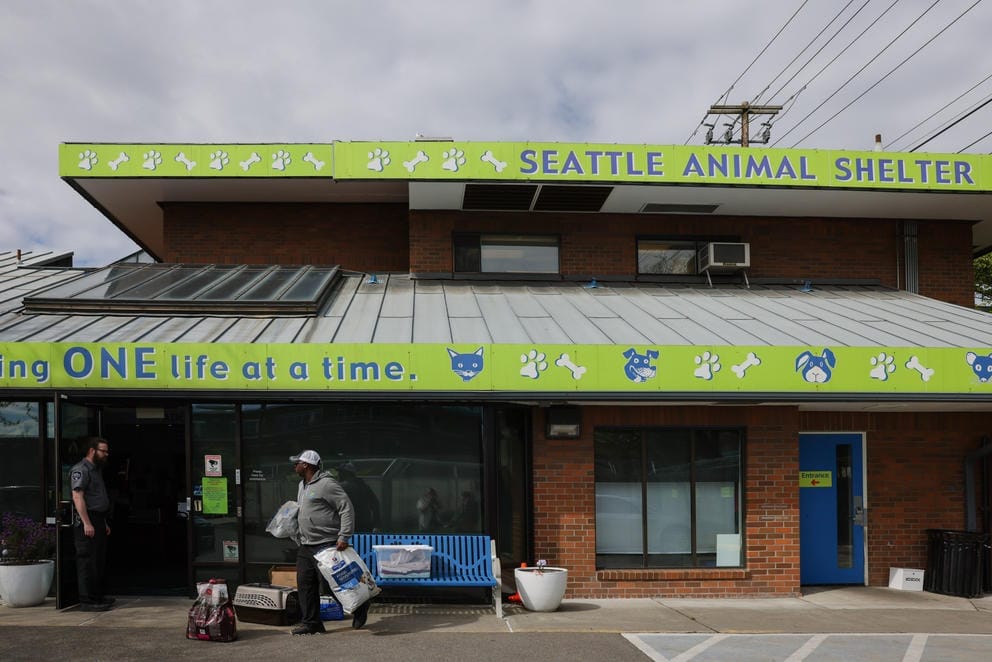
Start here. The Seattle Animal Shelter is known for its innovative and progressive animal welfare programs and boasts a 93 percent gold-standard save rate. That number matters. A 93 percent save rate means that nearly every animal that walks through the doors of this Interbay facility has a genuine shot at making it out alive and into a home. That is not an accident. That is the result of decades of deliberate policy, staff commitment, and community buy-in.
The address is 2061 15th Ave W, Seattle, WA 98119, and the phone number is (206) 386-7387. The shelter operates under the City of Seattle and serves residents within the Seattle city limits. If you’ve lost a pet in Seattle, this is your first call. If you want to adopt one, this is a strong first stop.
The shelter’s mission is to foster safe, healthy, and caring relationships between people and animals in the community. There are no time or space limits for animals in the shelter’s care, and a diverse array of programs and volunteer support are used to find appropriate forever homes. That “no time limit” policy is one of the most humane decisions any municipal shelter can make. It means animals aren’t euthanized simply because they’ve been there too long or because they take a little extra time to warm up to strangers.
The programs offered go well beyond basic adoption. Services include adoption, volunteer programs, foster care, low- or no-cost spay and neuter for dogs, cats, and rabbits, lost and found services including pet licensing, humane law enforcement, and community outreach. The spay/neuter clinic alone is a cornerstone of the city’s effort to reduce the stray animal population in a sustainable, compassionate way. To schedule an appointment with the clinic, you can call (206) 386-4260.
The City of Seattle recently selected Ashley Harrington to serve as the new Executive Director of the Seattle Animal Shelter following a comprehensive and competitive national search. Transitions in leadership at shelters always carry a mix of uncertainty and possibility. By all indications, SAS is heading into a strong chapter.
Seattle Humane: Over a Century of Compassion
📍 13212 SE Eastgate Way, Bellevue, WA 98005 | (425) 641-0080 Hours: Tue–Sun, 12:00 PM – 6:00 PM | Closed Monday
Don’t let the Bellevue address fool you. Seattle Humane is as much a part of the greater Seattle animal welfare ecosystem as any organization in the city proper. Founded in 1897, Seattle Humane promotes the human-animal bond by saving and serving pets in need. That’s well over 125 years of doing this work — before there were social media adoption campaigns, before Petfinder existed, before anyone used the word “no-kill” as a benchmark. Seattle Humane was showing up for animals before most of the modern frameworks for animal welfare even existed.
Seattle Humane is more than a shelter — it is a resource center for the region, providing adoption services, a pet food bank and support for pet owners, low-cost spay/neuter surgeries and wellness exams, humane education for all ages and more. The pet food bank — Oogie’s Ohana — is a particularly meaningful program. Walk-up hours for the food bank are every first and third Thursday and Saturday of the month from 12 to 3 p.m. For Seattle residents who are struggling financially but want to keep their pets, this kind of resource can make the difference between a family staying together and a beloved animal being surrendered out of desperation.
In the fiscal year ending March 2025, Seattle Humane served more than 82,000 pets and their people through its many programs and saved the lives of more than 5,200 shelter pets. Read that again: 82,000 pets and people. That’s not just adoption numbers. That’s a whole ecosystem of services wrapping around the human-animal relationship at every stage — from the moment someone gets a puppy to the moment an elderly person worries they can no longer care for their cat.
71 cents of every dollar spent goes directly to the pets in care and community programming. That’s a figure worth sharing with anyone who hesitates to donate to nonprofits out of concern about administrative overhead.
The Adoption Center is open Tuesday through Sunday from noon to 6 p.m. The waitlist closes at 5 p.m. on weekdays and 4:30 p.m. on weekends, with potential for earlier closure depending on crowds. Anyone hoping to adopt the same day is advised to arrive before 4 p.m.
Dog training classes at Seattle Humane utilize positive, dog-friendly methods effective for dogs and puppies of all ages, with a focus on good manners in the real world and socialization. This is the kind of post-adoption support that actually keeps animals in their homes. A dog that gets trained is a dog that stays adopted.
PAWS: Progressive Animal Welfare, Done Right
PAWS Cat City (Seattle)
📍 5200 Roosevelt Way NE, Suite B, Seattle, WA 98105 | (206) 782-1700 Hours: Tue–Fri, 12:00 PM – 6:00 PM | Sat–Sun, 11:00 AM – 5:00 PM | Closed Monday
PAWS Companion Animal Shelter (Lynnwood)
📍 15305 44th Ave W, Lynnwood, WA 98087 | (425) 787-2500
From its beginning in 1967, PAWS has maintained a vision of a community where animals are treated with respect, every pet has a permanent and loving home, and companion animals are spayed or neutered. That vision has translated into something tangible and lasting.
PAWS Cat City in Seattle’s University District is one of the more unusual and quietly wonderful places in the city. PAWS Cat City is located in the University neighborhood of Seattle and has adopted out more than 10,000 cats and kittens since opening in 1997. Its open-colony setting, with cats and kittens staying in rooms rather than in cages, provides an opportunity for visitors to interact with the cats, see how they interact with each other, and get a better sense of each cat’s unique personality.
That distinction — rooms instead of cages — matters enormously. Cats in cages are stressed, withdrawn, and often show the worst versions of themselves to potential adopters. Cats in open rooms can sprawl, play, hide, or strut depending on their personality. You get to see who they actually are. It makes for better matches and fewer returns.
PAWS has found homes for more than 117,000 Seattle-area families through the adoption of a companion animal. And because PAWS operates under a no-kill philosophy, no healthy, adoptable animal is euthanized at PAWS — there are no time limits regardless of age, health, or behavior needs.
PAWS also runs a Placement Partner Program that accepts animals from shelters in other regions that are overwhelmed. This effort helps animals at risk of euthanasia have the best chance at finding loving, permanent homes in the animal-friendly Northwest. Seattle’s broader network doesn’t just serve its own community — it extends a lifeline to animals in less fortunate parts of the country.
Regional Animal Services of King County (RASKC)
📍 21615 64th Ave S, Kent, WA 98032 | (206) 296-7387 Hours: Mon–Fri, 12:00 PM – 6:00 PM | Sat–Sun, 12:00 PM – 5:00 PM Adoptions end one hour before closing
RASKC’s mission is to place healthy and treatable adoptable pets into permanent homes. The organization welcomes all adopters and aims to find a great match for every customer by providing as much information as possible about each animal, ultimately allowing each adopter to make the final decision about what is right for their family.
RASKC is the county’s official animal services agency — the equivalent of the Seattle Animal Shelter but serving the sprawling, unincorporated reaches of King County beyond the city limits. It’s also one of the most pragmatic and adopter-friendly shelters in the region. Adopters who live with people and pets of all ages are welcome, as are adopters of all lifestyles and backgrounds, including those who rent. That last detail is quietly significant. Many shelters still make renters feel like second-class applicants. RASKC explicitly doesn’t.
If an adoption doesn’t work out, adopters have 90 days to return their pet to RASKC for a full refund of the adoption fee. It’s the kind of policy that removes anxiety from the adoption process and likely prevents a lot of animals from ending up abandoned rather than properly returned.
There’s big news on the horizon for RASKC. King County is renovating a former warehouse in the Kent Valley into a new, modern animal shelter that will replace RASKC’s current facility. The new center is expected to open in early 2027. The organization has faced real challenges recently: during the December 2025 storms, the cat building at the Pet Adoption Center suffered damage that rendered it unusable, and since then RASKC had been unable to accept new cats for sheltering. A newly-refurbished Cat Adoptions Building opened in late March 2026 to receive incoming cats and allow adopters to once again choose a feline companion on-site.
The resilience shown during that crisis — improvising, communicating clearly, getting back online fast — is a testament to the staff and volunteers who keep these organizations running when things get hard.
Homeward Pet Adoption Center
📍 13132 NE 177th Place, Woodinville, WA 98072 | (425) 488-4444 Adoptions: By Appointment Mon–Sun, 12:00 PM – 2:30 PM and 3:30 PM – 5:00 PM General Hours: Tue–Sun, 11:30 AM – 5:30 PM
Homeward Pet’s mission is to transform the lives of cats and dogs in need through compassionate medical care, positive behavior training, and successful adoption while building a more humane community.
Nestled in Woodinville — better known for its wine country than its cat rooms — Homeward Pet operates on a model that emphasizes behavioral wellness alongside physical health. This is not a shelter that just houses animals until someone claims them. It actively works to make those animals more adoptable, more confident, and more ready to thrive in a home environment.
The appointment-based adoption model, while sometimes frustrating for drop-in visitors, reflects a philosophy that adoption decisions shouldn’t be rushed. Taking the time to match the right animal with the right family produces more durable placements. Fewer returns. More lasting bonds.
Seattle Area Feline Rescue (SAFR)
📍 20226 Ballinger Way NE, Shoreline, WA 98155 | (206) 659-6220
SAFR specializes in cats and operates largely through a network of foster homes and community partners rather than a large central facility. This model keeps stress levels low for cats, who tend to thrive in home settings rather than institutional ones. SAFR is particularly valuable for adopters looking for cats that have been properly socialized in a household environment — they know how to live with humans because they’ve been doing exactly that.
What These Shelters Have in Common — And Why It Matters
Step back and look at this network as a whole, and a picture emerges that is genuinely worth celebrating. Seattle and its surrounding communities have built something that many American cities have failed to construct: a coordinated, philosophically coherent approach to animal welfare that prioritizes keeping animals alive, keeping them healthy, and keeping them matched with the right humans.
The no-kill philosophy — or the pursuit of save rates above 90 percent — runs through almost every organization listed here. That’s not a coincidence. It reflects a regional consensus that euthanasia as a default tool of population management is both unnecessary and morally unjustifiable when the alternatives exist. And in Seattle, the alternatives do exist, in abundance.
Foster networks allow shelters to expand their capacity without building more kennels. Behavior programs reduce the number of animals returned after adoption. Low-cost spay/neuter clinics prevent the overproduction of animals in the first place. Pet food banks and owner support programs keep animals in their existing homes rather than forcing surrenders. These aren’t revolutionary ideas — but the execution here, across multiple independent organizations that nonetheless work in concert, is something to pay attention to.
How to Actually Help
You don’t have to adopt to make a difference. Here’s what these shelters consistently need:
Fostering is perhaps the highest-impact way to contribute. Every animal placed in a foster home frees up a kennel slot, reduces stress for the animal, and produces a more adoptable pet. Every major shelter in this list is perpetually seeking foster families.
Volunteering takes many forms. Dog walkers, cat socializers, kennel cleaners, event coordinators, social media photographers — all are needed. Contact each shelter’s volunteer coordinator to find where your skills fit.
Donating supplies through Amazon or Chewy wishlists is a tangible, low-friction way to help. The Seattle Animal Shelter created a supply wish list to highlight items most critically needed by pets in its care and by members of the community who visit the shelter’s monthly free community pet vaccination clinics.
Adopting an older animal is a choice that shelters quietly hope more people will consider. Senior animals are consistently the hardest to place and the fastest to be overlooked in favor of puppies and kittens. They are also, often, the most settled, grateful, and unexpectedly delightful companions available.
Before You Go: Quick Reference
| Organization | Address | Phone |
|---|---|---|
| Seattle Animal Shelter | 2061 15th Ave W, Seattle, WA 98119 | (206) 386-7387 |
| Seattle Humane | 13212 SE Eastgate Way, Bellevue, WA 98005 | (425) 641-0080 |
| PAWS Cat City | 5200 Roosevelt Way NE, Suite B, Seattle, WA 98105 | (206) 782-1700 |
| PAWS Lynnwood | 15305 44th Ave W, Lynnwood, WA 98087 | (425) 787-2500 |
| RASKC | 21615 64th Ave S, Kent, WA 98032 | (206) 296-7387 |
| Homeward Pet | 13132 NE 177th Place, Woodinville, WA 98072 | (425) 488-4444 |
| Seattle Area Feline Rescue | 20226 Ballinger Way NE, Shoreline, WA 98155 | (206) 659-6220 |
Bottom Line
Seattle talks a lot about being a progressive, compassionate city. Its animal shelters are one of the places where that talk actually becomes action. These organizations operate on tight budgets, depend heavily on volunteers, navigate the emotional weight of animal suffering every single day, and still manage to achieve save rates and impact numbers that would be remarkable in any context.
The next time someone asks you what Seattle does well, you now have another answer ready. Because behind the Pike Place fish throws and the Space Needle selfies, there are thousands of people showing up quietly, week after week, to make sure that every stray dog and every abandoned cat in this region has a fighting chance.
That’s worth knowing about. And it’s worth supporting.