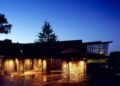
Pioneer Square stands as Seattle’s original canvas, smeared with the fingerprints of indigenous stewards, frontier gamblers, fire-forged architects, and modern preservationists. What began as a soggy spit of land between Elliott Bay’s tides and the forested ridges has morphed into a neighborhood that defies easy categorization—a blend of Victorian grandeur, underground mysteries, and contemporary grit. Its development mirrors Seattle’s own trajectory: from tentative toehold to booming gateway, through slumps of neglect and surges of revival. This is not just a district; it is the city’s foundational myth made manifest in brick and iron, where every cobblestone whispers of reinvention.
The land itself tells the oldest story. For millennia, Coast Salish peoples, including the Duwamish and Suquamish, called this spot Djijila’letc, or “little crossing-over place.” It served as a seasonal village, a hub for fishing, hunting, gathering shellfish from the tidal flats, and winter gatherings among kin. Archaeological digs have unearthed tools and hearths dating back 10,000 years, evidence of a thriving community long before European maps labeled it blank space. British explorer George Vancouver skimmed past in 1792 without note, but U.S. Navy lieutenant Charles Wilkes charted Elliott Bay in 1841, describing steep wooded slopes tumbling to a peninsula amid shallow mudflats. Native villages dotted the vicinity—at least 17 in the broader area—naming it Zechalalitch, the pathway between the Duwamish River and Lake Washington.
Then came the outsiders. In mid-September 1851, the first permanent white settlers staked claims on the fertile delta. The Denny Party—led by Arthur A. Denny, a pragmatic Illinois surveyor—had initially landed at Alki Point but found it too exposed. They relocated to the eastern shore of Elliott Bay, drawn by the sheltered harbor and timber-rich hills. Arthur Denny, Carson Boren, William Bell, and David S. “Doc” Maynard claimed the land that would become Pioneer Square’s core: bounded by Cherry Street to the north, 2nd Avenue to the east, Alaskan Way to the west, and South King Street to the south. By spring 1852, Louisa Boren had built the town’s first cabin at 2nd Avenue and Cherry Street, a humble log structure that symbolized the shift from wilderness to settlement.
The Visionaries Who Drew the Lines
Doc Maynard, a colorful divorcee and physician with a penchant for whiskey and progressive ideas, erected the second cabin at South Main Street and 1st Avenue South. He opened “The Seattle Exchange,” a general store that doubled as a social nexus, and lobbied fiercely to rename the fledgling town after Chief Si’ahl (Seattle), the Duwamish and Suquamish leader who had forged alliances with the newcomers. Si’ahl sought prosperity through these ties, though the relationship soured; by 1865, Seattle’s first city council banned Native Americans from residing within city limits, a stark betrayal of early cooperation.
Henry Yesler arrived in October 1852 with a steam engine and big plans. He secured a narrow strip of land from the settlers to build Puget Sound’s first steam-powered sawmill at the foot of what became Yesler Way—originally Mill Street, infamously dubbed “Skid Road” for the greased logs skidded downhill to the mill. Yesler’s operation became the economic engine, supplying timber to San Francisco’s booming market. He and his wife Sarah constructed an aqueduct of elevated log troughs to pipe water from ridge-top springs, an early infrastructure feat. Social life revolved around the mill’s cookhouse, Yesler’s Pavilion at 1st Avenue and Cherry Street (a multipurpose hall for dances, trials, and lectures), and Captain Felker’s home near 1st Avenue and Jackson Street, run by the notorious Mary Conklin, aka “Mother Damnable,” as a hotel-cum-bordello.
By late 1855, the town boasted 300 residents. Tensions with Native tribes erupted in the Battle of Seattle on January 26, 1856, when warriors attacked amid grievances over treaty relocations. Two settlers died, along with unknown Native casualties, before U.S. Navy firepower from the USS Decatur repelled them. The incident hardened boundaries, but growth continued. Railroads arrived in the 1870s, built partly by Chinese laborers who formed an informal Chinatown around 2nd Avenue South and South Washington Street. Anti-Chinese riots in February 1886 expelled about 300 workers during an economic slump, a dark chapter in the neighborhood’s inclusive facade.
Seattle swelled to 40,000 by the late 1880s, its wooden structures a tinderbox waiting for a spark.
The Inferno That Forged a New Foundation
June 6, 1889, changed everything. A glue pot overheated in a cabinet shop at 1st Avenue and Madison Street, igniting a blaze that devoured 29 downtown blocks in hours. The fire exposed the city’s vulnerabilities: inadequate water mains, flammable balloon-frame buildings, and chaotic streets. Remarkably, no lives were lost, but the destruction displaced thousands and razed the heart of Pioneer Square.
Rebuilding was swift and transformative. Wooden construction was banned in the central district; brick and stone became mandatory. The city seized control of the water supply to prevent future failures. Streets were regraded—raised by 12 to 22 feet to combat flooding and steep slopes—creating subterranean passageways beneath the new sidewalks. Prism glass blocks embedded in the pavements funneled light to these basements, a clever engineering fix that would later become a tourist draw. Architects like Elmer H. Fisher led the charge, designing over 30 buildings in the Romanesque Revival style that defined the post-fire era—robust arches, intricate stonework, and a sense of permanence.
The Pioneer Building, completed in 1892, exemplified this resurgence, its ornate facade a symbol of optimism. The Delmar Building, like many, rose from the ashes with durable masonry. Pioneer Place park at 1st Avenue and Yesler Way gained a Tlingit totem pole (stolen and later replaced), and an ornate iron Pergola provided shelter for streetcar riders. By the 1890s, the neighborhood pulsed with commerce, its elevated streets a testament to human tenacity over topography.
Gold Rush Glory and Architectural Ascendancy
The 1893 national panic plunged Seattle into depression, but salvation arrived on July 17, 1897, when the steamship Portland docked with a ton of Klondike gold. Pioneer Square became the “Gateway to Alaska,” outfitting thousands of stampeders and funneling wealth back into the city. Population exploded, funding infrastructure like the 1909 Alaska-Yukon-Pacific Exposition, which added underground comfort stations to the park.
Steel-frame technology enabled skyscrapers: the Alaska Building (1903-1904), Frye Hotel (1906-1911), Hoge Building (1911), and the iconic Smith Tower (1914), soaring 42 stories as the tallest west of the Mississippi until 1962. These structures blended Victorian elegance with Edwardian boldness, creating an architectural ensemble unmatched in the Pacific Northwest.
Yet by 1914, economic gravity shifted north. Street regrades, electric streetcars, and cable railways drew businesses to 2nd and 3rd avenues, leaving Pioneer Square’s southern stretches—south of Yesler Way—as “Skid Road,” a haven for saloons, brothels, and gambling dens. Reformers like Pastor Mark Matthews railed against the vice, but it persisted.
The Slide into Shadow: Depression and Decay
The Great Depression struck Pioneer Square hardest. Grand hotels devolved into flophouses, pawnbrokers proliferated, and a “Hooverville” shantytown sprouted from an abandoned shipyard south of the district. The 1949 earthquake rattled buildings but inflicted minimal damage compared to urban renewal threats in the 1960s.
Planners eyed the area for parking garages, demolishing the Hotel Seattle in 1962 for a notorious “sinking ship” structure. The neighborhood teetered on erasure, its once-vibrant blocks now synonymous with skid row transients and faded glory.
The Guardians Who Saved the Soul
Preservationists mounted a counteroffensive. Architect Ralph Anderson, gallery owner Richard White, and journalist Bill Speidel—who launched underground tours in 1964 to highlight the buried sidewalks—rallied support. Reform-minded leaders like Mayor Wes Uhlman and council members John Miller and Phyllis Lamphere established a 30-acre Historic District in 1969, expanded to a Special Review District. Young professionals flocked in, converting warehouses to lofts, taverns, and offices.
Challenges arose: the 1970 Ozark Hotel fire prompted fire codes that closed single-room-occupancy hotels, displacing low-income residents. Developer Sam Israel preserved the area’s funky charm until 1994; his Samis Foundation later adopted stricter policies. Public enhancements included Occidental Park in the 1970s, Pioneer Place rehabilitation in 1973 (funded by the Annie E. Casey Foundation), salvaging the Seattle Harbormaster station, Waterfront Streetcar service in 1982 (extended 1990), and Pioneer Square Station for Metro Transit’s downtown tunnel in 1990.
The 1976 Kingdome expanded the review area but flooded streets with sports crowds, hurting retail. Its 2000 implosion cleared space for Safeco Field and Seahawks Stadium (now Lumen Field and T-Mobile Park). Early 2001 brought crises: a truck felled the Pergola (repaired 2002), Fat Tuesday violence killed one amid gang clashes, and a February 28 earthquake tested retrofits.
Revitalization in the 21st Century: Balancing Past and Present
Today, Pioneer Square thrives under the Alliance for Pioneer Square, a nonprofit driving business development, marketing, and advocacy, alongside the city’s oldest Business Improvement Area. Bordered by the Retail Core, Chinatown-International District, SODO, and Central Waterfront, it boasts transit links via I-5, I-90, Highway 99, and Sound Transit Light Rail. Arts and culture flourish, with Native Works and Chief Seattle Club honoring indigenous heritage through art and community spaces.
Preservation efforts continue, like restoring prism glass sidewalks—a crowdfunding campaign with the National Trust for Historic Preservation targeted the Smith Tower area. The neighborhood hosts social services amid tech workers and creatives, viewing diversity as strength while tackling public space improvements.
Gentrification poses threats, pricing out long-time residents, but initiatives preserve affordability. The Pioneer Square Totem Pole and Occidental Square embody its eclectic vibe.
The Enduring Legacy: A Neighborhood That Refuses to Fade
Pioneer Square’s development is a saga of resilience—from indigenous crossroads to settler outpost, fire-scorched ruin to gold-rush boomtown, skid row shadow to preserved gem. Its Romanesque buildings, underground labyrinths, and cultural mosaic stand as testaments to Seattle’s spirit. In a city of constant reinvention, this square remains the anchor, reminding us that progress builds on the layers below.