A Museum That Earns Its “National” Title
There are museums, and then there are experiences. The National Nordic Museum in Seattle, Washington, is firmly in the second category — a place that manages to be simultaneously scholarly and deeply human, architecturally stunning and emotionally accessible. Tucked into the Ballard neighborhood at 2655 NW Market Street, Seattle, WA 98107, this institution has quietly become one of the Pacific Northwest’s most significant cultural destinations.
The “national” designation isn’t marketing fluff. Granted by an act of Congress in 2016, it’s a recognition that Nordic heritage is woven into the fabric of American history in ways that most people have never stopped to think about. From the Norwegian fishermen who helped build Ballard into a working-class maritime community to the Swedish immigrants who settled the Midwest prairies, the Nordic story is an American story. Seattle just happens to be where that story gets told best.
The museum sits at the intersection of two worlds: the historic Scandinavian-immigrant neighborhood of Ballard, which has roots going back to the 1880s, and the modern, globally-minded city that Seattle has become. Walking through its doors feels less like entering a museum and more like stepping into a very long conversation — one that started somewhere in Norway or Finland centuries ago and is still very much ongoing.
Getting There: Ballard Is Worth the Trip Itself
Before you even reach the museum, Ballard is worth your time. The neighborhood has gentrified considerably over the past two decades, but it still carries its Nordic bones — the old brick storefronts, the proximity to the ship canal, the lingering sense that this was once a place where men came home smelling like the sea.
The National Nordic Museum is accessible via the King County Metro bus system, with several routes stopping along NW Market Street. If you’re driving, parking is available in the surrounding streets and in nearby lots, though Ballard on a weekend can test your patience. The museum is approximately 20 minutes from downtown Seattle by car and somewhat longer by bus, but the ride through the city’s neighborhoods is its own small pleasure.
Cyclists will find the Ballard area well-served by bike lanes, and the Burke-Gilman Trail connects much of north Seattle to the neighborhood. The museum is situated just blocks from the Ballard Locks — the Hiram M. Chittenden Locks at 3015 NW 54th Street — which are themselves a fascinating piece of engineering history and worth combining into a full afternoon out.
The Building Itself: Architecture as Argument
The first thing that strikes you about the National Nordic Museum is the building. Designed by Mithun Architects and completed in 2018, the structure is a bold architectural statement disguised as a modest industrial building. Clad in weathered steel and corrugated metal, it echoes the working waterfront heritage of Ballard and the industrial aesthetic of Scandinavian design without ever feeling like a pastiche.
The building’s exterior is deliberately rough-hewn — rust-toned panels and angular geometry that age gracefully rather than fighting against the elements. Inside, however, the architecture opens up dramatically. Exposed wood beams, generous natural light, and clean Scandinavian lines create spaces that feel both contemporary and deeply connected to tradition.
This is not a coincidence. Nordic design philosophy — that form should serve function, that beauty emerges from honest use of materials, that spaces should be lived in rather than simply admired — runs through the building’s bones. The architects were clearly paying attention to the content they were housing.
The five-story structure contains over 57,000 square feet of space, including permanent galleries, rotating exhibition halls, an education center, a library and archives, a café, and a gift shop that is genuinely worth lingering in. The building is fully accessible, with elevators connecting all floors and thoughtful accommodations throughout.
Five Countries, One Story: The Permanent Collection
The Nordic Galleries: More Depth Than You Expect
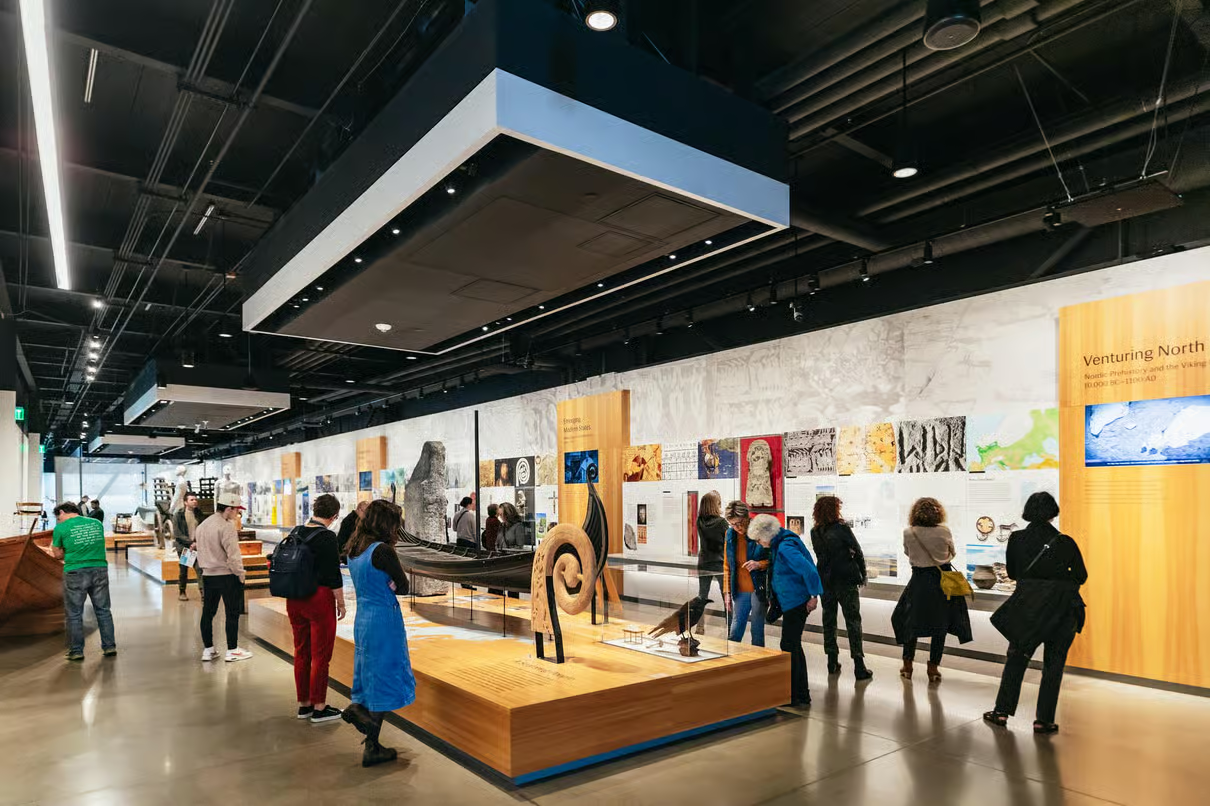
The permanent galleries occupy the museum’s core floors and are organized around the five Nordic nations: Denmark, Finland, Iceland, Norway, and Sweden. But the museum resists the temptation to turn this into a series of disconnected national showcases. Instead, it weaves the stories together, finding the threads that connect a Danish farmstead to a Finnish sauna to a Norwegian fishing boat.
The collection spans an extraordinary range — from Viking-age artifacts to contemporary Scandinavian design, from hand-stitched traditional folk costumes to brutalist mid-century furniture. You’ll find rosemaling decorations alongside Marimekko textiles, ancient carved wooden objects next to sleek modernist ceramics. The effect is of a culture that has been having a very productive argument with itself for about a thousand years.
The folk art collections are particularly strong. Nordic cultures developed rich traditions of decorative craft — woodcarving, weaving, ceramics, metalwork — that were inseparable from daily life and community identity. The museum treats these objects with the same seriousness that major art institutions reserve for paintings and sculpture, and the argument is persuasive: a hand-carved Norwegian ale bowl is as much a work of art as anything hanging in a gallery.
The Nordic Immigrant Experience in America
The section devoted to Nordic immigration to the United States is among the most emotionally resonant in the building. The museum doesn’t sanitize this history. Immigration was hard. The journey was brutal for many, the arrival disorienting, the discrimination real.
Norwegians, Swedes, Danes, Finns, and Icelanders came to America in waves throughout the 19th and early 20th centuries. They settled in Minnesota, Wisconsin, the Dakotas, Michigan, and the Pacific Northwest. They built communities, established churches and mutual aid societies, published newspapers in their native languages, and gradually, generation by generation, became American without entirely ceasing to be Nordic.
The museum tells this story through objects, photographs, letters, and oral histories. A hand-stitched quilt brought from Sweden. Immigration papers stamped at Ellis Island. A letter written in Norwegian to a sister back home, describing the strangeness of this new country. These artifacts do what great museum objects always do — they collapse the distance between then and now, between there and here, between stranger and neighbor.
The Sámi Story
One of the most important aspects of the National Nordic Museum’s approach is its inclusion of Sámi culture and history. The Sámi are the Indigenous people of northern Scandinavia and the Kola Peninsula of Russia, and their story has too often been marginalized or footnoted in mainstream presentations of Nordic culture.
The museum gives the Sámi people genuine space — not as an exotic exhibit but as a living culture with its own artistic traditions, political history, and contemporary voice. The collection includes traditional Sámi duodji (handicrafts), which are considered a form of art, cultural expression, and practical skill all at once. These objects — decorated knives, woven textiles, reindeer-hide clothing — are beautiful, but the museum is careful to explain what they mean within Sámi culture rather than simply displaying them as aesthetic objects.
This is increasingly rare in museum practice and reflects a genuine commitment to ethical curation. The museum has worked with Sámi cultural organizations to ensure that Indigenous voices are part of the interpretive framework, not just the subject of it.
Rotating Exhibitions: The Museum Keeps Moving
The National Nordic Museum is not a static institution. Its rotating exhibition program brings in work from Nordic artists, designers, photographers, and cultural organizations throughout the year, and the programming quality is consistently high.
Past exhibitions have explored everything from contemporary Scandinavian photography to Norse mythology reimagined through modern art, from the design history of IKEA to the political art that emerged from Finland’s turbulent 20th century. The museum has a particular strength in design exhibitions, which makes sense given that Nordic countries — especially Denmark, Sweden, and Finland — have been global leaders in design for more than a century.
Check the museum’s website at nordicmuseum.org before visiting to see what’s currently on. The rotating exhibitions often require separate consideration in terms of planning your visit, as they can significantly extend the time you’ll want to spend in the building.
The Nordic Heritage Library and Archives
Less visited but genuinely remarkable, the museum’s library and archives represent one of the most significant collections of Nordic-American historical materials in the country. The collection includes books, periodicals, photographs, maps, genealogical records, and personal papers related to Nordic immigration and Nordic-American cultural life.
For anyone with Scandinavian ancestry, this resource is potentially invaluable. Genealogical research is a serious pursuit in communities with Nordic roots, and the library staff are experienced at helping people navigate records that span languages, borders, and centuries. If you’re trying to trace a Swedish great-grandmother or a Norwegian great-great-grandfather who came through Ellis Island, this is an excellent place to start.
The library is open to researchers and is not limited to museum members. Hours may differ from the main museum, so contact the museum directly at the address above before planning a research visit.
Fieldhouse Café: Nordic Food That Doesn’t Condescend
A museum café could easily be an afterthought. The Fieldhouse Café at the National Nordic Museum is not. Located on the ground floor with pleasant views, it takes Nordic food traditions seriously without turning them into a gimmick.
The menu draws on Scandinavian culinary traditions — open-faced sandwiches (smørrebrød), seasonal soups, Nordic-inspired baked goods — while incorporating Pacific Northwest ingredients and sensibilities. A gravlax sandwich made with local salmon. A cardamom roll that puts most American pastries to shame. A rotating soup that reflects whatever is seasonal and good.
The café is open during museum hours and is accessible without a museum admission ticket, making it a valid destination even for Ballard locals who aren’t planning a full museum visit that day. On weekday afternoons it’s quiet enough to feel like a genuine retreat.
The Gift Shop: Actually Worth Your Time
The museum’s gift shop — the Nordic Store — operates with the same editorial sensibility that runs through the rest of the institution. You won’t find cheap tchotchkes shaped like Vikings. Instead, the shop stocks Scandinavian design objects, books, textiles, ceramics, and food products that have been selected with real taste.
Notable among the offerings are books on Nordic art, design, history, and food — the museum maintains one of the better selections of Nordic-focused titles you’ll find in an American bookstore. There are also children’s books, which is worth noting for families visiting with younger kids.
Prices reflect the quality of what’s on offer. This is not a discount shop, but the objects hold their value — a hand-thrown Finnish ceramic mug or a piece of traditional Scandinavian textile is the kind of thing you’ll actually use and keep.
Education Programs and Community Events
Learning as a Core Mission
Education is built into the National Nordic Museum’s DNA in ways that go well beyond the standard museum programming. The institution runs school programs, teacher resources, adult lectures, film screenings, language classes, cultural celebrations, and community partnerships throughout the year.
The Nordic cultural calendar is rich — Midsummer festivals, Lucia celebrations in December, Norwegian Constitution Day (Syttende Mai) on May 17th, Scandinavian folk music events — and the museum serves as a hub for these celebrations in Seattle. During Syttende Mai in particular, Ballard comes alive in a way that’s genuinely unique in American civic life, with a parade, traditional dress, and a level of Norwegian pride that would feel excessive anywhere else but feels completely natural in this neighborhood.
The museum’s language programs offer introductions to Norwegian, Swedish, and Finnish — practical entry points for Americans with Scandinavian heritage who want to reconnect with languages that may have been lost a generation or two back. These classes fill quickly and reflect genuine community demand.
Programs for Children and Families
The museum does a particularly good job with its family programming. Children’s workshops tied to the permanent collection give younger visitors hands-on entry points into Nordic craft traditions — woodcarving, textile arts, traditional cooking. These aren’t dumbed-down activities; they’re genuine skill introductions that treat children as capable learners.
The permanent galleries include interactive elements designed specifically for younger visitors, though the museum resists the temptation to turn the educational spaces into a pure entertainment experience. Kids learn something real here, which is ultimately more respectful of their intelligence than a purely gamified museum experience.
Membership and Admission
Museum admission is priced reasonably for a major cultural institution. General adult admission runs around $15-20, with discounts for seniors, students, children, and families. Children under five are admitted free. Members of NARM (North American Reciprocal Museum) and ACM (Association of Children’s Museums) may receive discounts as well — worth checking if you hold memberships at other institutions.
Museum membership starts at accessible price points and includes unlimited admission, discounts in the café and gift shop, and early access to exhibitions and events. Given how much is happening at the museum throughout the year, a membership pays off quickly for Seattle-area residents with even casual interest in Nordic culture.
The museum is closed on Mondays. Hours are generally Tuesday through Sunday, 10am to 5pm, with extended evening hours on select dates tied to programming. Always verify current hours at nordicmuseum.org before visiting, as holiday schedules and special events can affect access.
The Neighborhood Context: Ballard Then and Now
Nordic Ballard: A Neighborhood That Remembers
Understanding the National Nordic Museum requires understanding Ballard, and understanding Ballard requires at least a brief engagement with its history. The neighborhood began attracting Scandinavian immigrants — primarily Norwegian and Swedish fishermen and timber workers — in the 1880s. By the early 20th century, Ballard was so thoroughly Scandinavian that it was sometimes called “Snoose Junction,” a term derived from the Swedish-Norwegian word for snuff tobacco that was ubiquitous among Scandinavian workers.
Ballard was actually an independent city before being annexed by Seattle in 1907, and that history of self-sufficiency and distinct identity persists in the neighborhood’s character. The working-class maritime heritage is still legible in the architecture along the ship canal and in institutions like the Fishermen’s Terminal at 3919 18th Avenue W, Seattle, WA 98199 — the home base of the North Pacific fishing fleet, which has deep roots in Scandinavian-American maritime culture.
The neighborhood has changed enormously since its Scandinavian heyday. Ballard today is a mix of longtime residents, younger transplants drawn by the restaurant and bar scene, tech workers, artists, and families. Property values have climbed steeply. The old working-class character has softened considerably. But the Nordic cultural presence persists — in the museum, in a handful of businesses and organizations, in the Leif Erikson Lodge of the Sons of Norway, and in the general sense that the neighborhood knows where it came from.
What Else to See in Ballard
A visit to the National Nordic Museum pairs naturally with exploration of the broader neighborhood. The Ballard Farmers Market (running year-round at Ballard Ave NW between Vernon Pl NW and 22nd Ave NW) is one of Seattle’s best, drawing serious food vendors and loyal regulars every Sunday morning. The Hiram M. Chittenden Locks a short drive away are free to visit and fascinating to watch — particularly during salmon migration season when the fish ladder viewing windows reveal the improbable athleticism of Pacific salmon.
Old Ballard Avenue is lined with restaurants, bars, and shops worth exploring before or after your museum visit. For a neighborhood that’s been thoroughly gentrified, it still has enough grit and character to feel real rather than curated.
Why This Museum Matters Now
Nordic Values in a Complicated World
There’s a reason Nordic culture has attracted global attention in recent decades that goes beyond a fascination with design aesthetics or crime fiction. The Nordic countries — Denmark, Finland, Iceland, Norway, Sweden — consistently rank among the world’s happiest, most equitable, most innovative, and most environmentally conscious societies. People want to understand how that happened.
The National Nordic Museum doesn’t function as a propaganda arm for Nordic exceptionalism. It’s more honest than that. The permanent collection includes difficult history — the role of Nordic countries in World War II, the history of colonialism and exploitation directed at the Sámi people, the ways in which Nordic immigrant communities in America sometimes reproduced prejudices and hierarchies from the old country. The museum earns the right to celebrate Nordic culture precisely because it doesn’t flinch from the complicated parts.
But there is something genuinely worth examining in the Nordic traditions of communal welfare, craft culture, relationship with nature, design philosophy, and democratic governance. These aren’t simple answers to complex problems, but they’re serious contributions to the ongoing human project of figuring out how to live together well. The National Nordic Museum creates space for that examination without oversimplifying it.
Practical Information: Everything You Need Before You Go
National Nordic Museum 2655 NW Market Street Seattle, WA 98107
Phone: (206) 789-5707 Website: nordicmuseum.org
Hours: Tuesday–Sunday, 10am–5pm (closed Mondays; verify holiday hours on the website)
Admission: Adults approximately $15–$20; seniors, students, and children receive discounted rates; children under 5 free
Parking: Street parking available on NW Market Street and surrounding blocks; limited pay lots nearby
Public Transit: Multiple King County Metro bus routes serve NW Market Street
Accessibility: Fully ADA accessible; elevator access to all floors; accessible restrooms throughout
Café: Fieldhouse Café, open during museum hours
Gift Shop: Nordic Store, open during museum hours
Library & Archives: Contact museum directly for research appointment availability
Final Verdict: Go, and Take Someone Who Doesn’t Know Why
The National Nordic Museum is the kind of cultural institution that a city should be proud of — not because it flatters its community with comfortable myths, but because it does the harder and more interesting work of honest storytelling. It takes a subject that might seem narrow (Nordic heritage? In Seattle?) and opens it into something genuinely universal: the story of migration, identity, craft, community, and the slow, difficult process of becoming somewhere new without forgetting where you came from.
If you live in Seattle and haven’t been, you’re missing one of the city’s best museums. If you’re visiting Seattle, this belongs on your list alongside Pike Place Market and the Space Needle — and unlike those two institutions, you won’t be fighting through tour groups to experience it. The museum is busy enough to feel alive but spacious enough to breathe.
Come for the architecture. Stay for the folk art. Leave thinking about your own grandmother’s hands, and what she made with them, and what that meant.
That’s what a good museum does. This one does it very well.
The National Nordic Museum is located at 2655 NW Market Street, Seattle, WA 98107. Visit nordicmuseum.org for current exhibitions, events, and admission information.