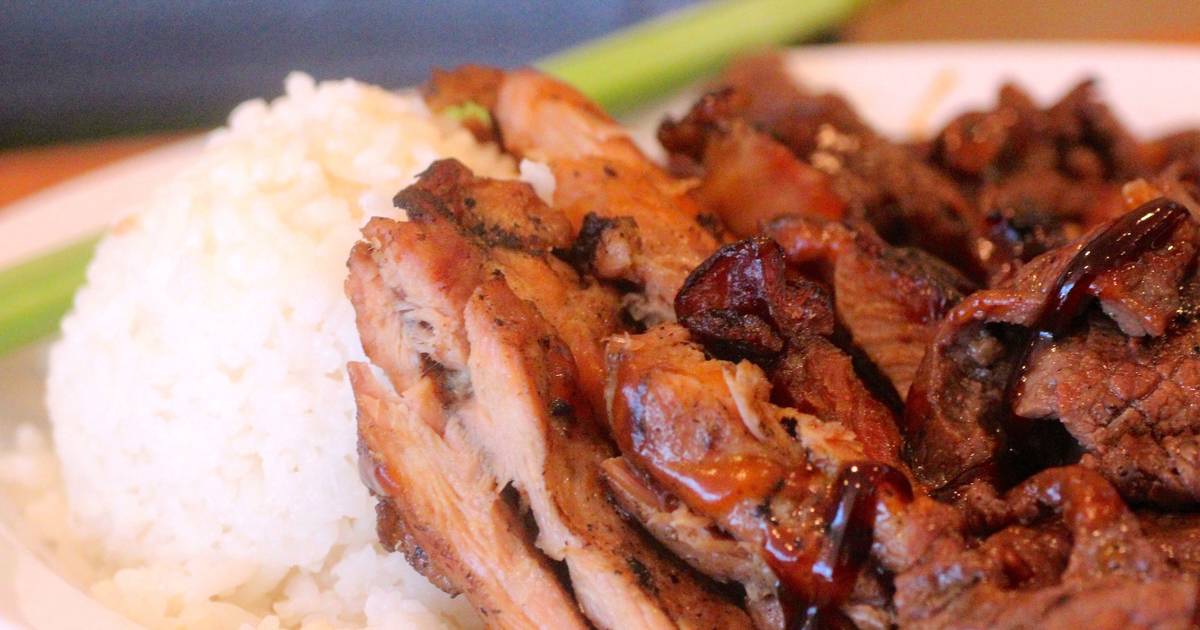
There are roughly 450 teriyaki restaurants in the greater Seattle metropolitan area. Let that number settle in for a moment. In a city of about 750,000 people, that ratio is staggering — more teriyaki joints per capita than any other city in the United States. More than Los Angeles. More than New York. More than Honolulu, which, given Hawaii’s deep Japanese culinary roots, seems almost impossible. And yet, it’s true. Seattle didn’t just adopt teriyaki. Seattle reinvented it, democratized it, and turned it into an identity.
This is the story of how a simple chicken-and-rice plate became the unofficial civic dish of one of America’s most interesting food cities — and why, decades later, it still matters.
The Roots: Japanese Immigration and the Pacific Northwest Connection
To understand Seattle’s teriyaki obsession, you have to go back further than the first teriyaki shop. You have to go back to the ships.
Seattle has been a gateway to and from Asia for well over a century. Its position on the Pacific Rim made it a natural landing point for waves of Japanese immigrants beginning in the late 1800s. By the early 1900s, Seattle’s Nihonmachi — its Japantown — was one of the largest Japanese communities on the mainland United States. Centered around what is now the International District, Japanese families ran hotels, grocery stores, bathhouses, and restaurants. The culinary influence was baked into the city’s DNA long before anyone was grilling chicken thighs and ladling sauce over steamed rice.
Then came World War II and the internment camps, which devastated the community. Families lost businesses, homes, and decades of accumulated wealth. But the Japanese American community in Seattle rebuilt, slowly and persistently, and by the postwar decades, Japanese food culture had become an inseparable thread in the city’s fabric. Sushi bars, ramen shops, and izakayas all found fertile ground. But none of them would come close to the cultural penetration of teriyaki.
The key ingredient wasn’t soy sauce or mirin. It was timing.
Toshi’s Teriyaki: The Shop That Started Everything
Most histories of Seattle teriyaki point to one man: Toshihiro Kasahara. In 1976, he opened Toshi’s Teriyaki Grill in the International District. It was modest, fast, and cheap. The concept was deceptively simple — marinated chicken, grilled over open flame, sliced and served over a mound of white rice with a side of iceberg lettuce salad doused in ginger dressing. Maybe a California roll on the side if you were feeling extravagant.
What Kasahara did, whether he fully realized it at the time or not, was create a new food category. Traditional Japanese teriyaki is a cooking technique — proteins glazed with a sauce made from soy sauce, sake, mirin, and sugar, then grilled or broiled. It’s elegant and restrained. Kasahara’s version was louder, sweeter, and more generous. The sauce was thicker, almost syrupy, with a caramelized sweetness that clung to every piece of meat. The portions were enormous. The price was absurdly low.
It was, in every sense, an American adaptation — but one that felt entirely natural in Seattle, a blue-collar city in the 1970s that ran on Boeing paychecks and fishing industry wages. Workers needed a fast, filling, affordable lunch, and Toshi’s delivered. The formula worked so well that it spawned imitators almost immediately.
Within a few years, teriyaki shops began multiplying across the city like coffee stands would a generation later. And just like those coffee stands, they became so omnipresent that Seattleites stopped noticing how unusual the phenomenon was.
The Korean Wave That Nobody Talks About
Here’s where the story gets more complicated and more interesting. While the origin of Seattle teriyaki is rooted in Japanese culinary tradition, its explosive growth was largely driven by Korean immigrants.
In the 1980s and 1990s, waves of Korean families arrived in the Seattle area, many of them looking for small business opportunities with low startup costs. The teriyaki shop model — small footprint, simple menu, minimal staffing — was almost perfectly designed for immigrant entrepreneurs. You didn’t need a culinary degree. You didn’t need a massive loan. You needed a grill, a rice cooker, a good sauce recipe, and the willingness to work fourteen-hour days.
Korean operators brought their own sensibilities to the teriyaki formula. The marinades got a little more complex, sometimes incorporating gochujang or sesame oil. Side dishes occasionally borrowed from Korean banchan traditions. Bulgogi-style beef teriyaki started appearing alongside the standard chicken. The boundaries between Japanese teriyaki and Korean barbecue began to blur in ways that were unique to Seattle.
This wasn’t cultural appropriation in any malicious sense. It was cultural exchange happening in real time, in tiny storefronts on Aurora Avenue and Rainier Avenue and in suburban strip malls from Renton to Lynnwood. Korean families were building livelihoods on a foundation laid by Japanese Americans, and the food evolved as a result. The teriyaki plate became a genuinely multicultural creation — Japanese in concept, Korean in execution, and thoroughly American in scale and attitude.
Some purists grumble about this. They argue that what you get at most Seattle teriyaki shops isn’t “real” teriyaki. And they’re right, in a narrow technical sense. But food has never respected those kinds of boundaries, and the Seattle teriyaki plate is honest about what it is: a fast, hearty, working-person’s meal that doesn’t pretend to be anything more refined than exactly what it delivers.
The Anatomy of a Seattle Teriyaki Plate
Walk into any of the city’s hundreds of teriyaki shops — whether it’s a beloved neighborhood institution or a fluorescent-lit counter joint in a strip mall — and the experience is remarkably consistent.
The menu is laminated and hangs above the counter or sits behind smudged plexiglass. It will offer chicken teriyaki, beef teriyaki, pork teriyaki, and maybe salmon or tofu for the health-conscious or vegetarian crowd. There will be a combination plate that adds gyoza or a California roll. There might be yakisoba or fried rice as alternatives to steamed white rice. Spicy chicken is almost always an option, a nod to the Korean influence.
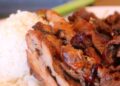
You order at the counter. You pay in cash more often than card, though this has changed in recent years. Your food comes on a styrofoam plate or in a plastic container, the rice packed tight, the meat sliced and fanned across the top, the sauce pooling in the valleys between pieces. The salad is iceberg lettuce with shredded carrot, dressed in that ubiquitous orange-pink ginger dressing that exists almost nowhere outside the Pacific Northwest in such concentrations.
The whole meal costs somewhere between eight and twelve dollars, and it will keep you full for the rest of the day.
There is nothing fancy about this experience. There are no craft cocktails, no Edison bulb fixtures, no prix fixe tasting menus. The chairs are plastic. The tables wobble. The walls are decorated with faded photos of Mount Rainier or Japanese landscapes, or sometimes nothing at all. And that is precisely the point.
Seattle teriyaki is democratic in a way that very few food traditions manage to be. It doesn’t care about your income bracket or your Instagram aesthetic. It feeds you well, it feeds you fast, and it doesn’t ask for anything more than a few dollars and your patience while the chicken finishes on the grill.
Why Seattle and Nowhere Else?
Other cities have teriyaki, of course. You can find teriyaki plates in Los Angeles, San Francisco, Portland, and throughout Hawaii. But nowhere else did the teriyaki shop become a civic institution in the way it did in Seattle. The question is worth asking directly: why here?
Several factors converged to create the perfect conditions.
Geography and demographics. Seattle’s proximity to Asia and its established Asian American communities provided the cultural foundation. The ingredients and techniques weren’t exotic here — they were familiar, which lowered the barrier for both producers and consumers.
Economics. Seattle in the 1970s, ’80s, and ’90s was not the tech boomtown it would later become. It was a middle-class city with a strong blue-collar workforce. The teriyaki plate fit the economic reality of the city perfectly — a substantial meal for a modest price, available quickly during a lunch break.
Real estate. Compared to cities like San Francisco or New York, commercial real estate in Seattle was relatively affordable through the 1990s. Small storefronts were plentiful and cheap enough that a family could open a teriyaki shop without taking on crippling debt. This low barrier to entry allowed the market to grow organically.
The absence of a dominant fast-food competitor. In some cities, cheap Mexican food fills the role that teriyaki fills in Seattle. In others, it’s pizza or Chinese takeout. Seattle had all of those things, but none of them had achieved the same density or cultural loyalty that teriyaki did. The niche was wide open, and teriyaki filled it.
Cultural receptiveness. Seattleites have always been unusually open to Asian cuisines. This isn’t a coincidence — it’s the product of a century of Asian American presence and influence. Teriyaki didn’t have to overcome skepticism or unfamiliarity. It just had to taste good and be affordable, and it did both.
The Teriyaki Shop as Community Anchor
Beyond the food itself, Seattle’s teriyaki shops have served a social function that often goes unrecognized. In a city that has undergone enormous demographic and economic upheaval over the past two decades — Amazon’s explosive growth, skyrocketing housing costs, the displacement of longtime residents — the neighborhood teriyaki shop has been one of the few constants.
For many Seattleites, their teriyaki spot is as personal as their barbershop or their corner bar. People develop fierce loyalties to specific shops. Arguments about whose chicken teriyaki is best can escalate with surprising intensity. Online forums and Reddit threads devoted to ranking Seattle’s teriyaki shops generate hundreds of passionate comments.
The owners of these shops — many of them immigrants who have worked the same grill for twenty or thirty years — become neighborhood fixtures. They remember regulars’ orders. They wave through the window when you walk past. They sponsor Little League teams and donate food to school fundraisers. In an era when so much of urban commercial life has been absorbed by chains and apps, the independent teriyaki shop remains stubbornly, beautifully local.
This social dimension is part of what makes Seattle teriyaki culture difficult to replicate elsewhere. You can copy the recipe, but you can’t copy the relationships that have been built over decades between shop owners and their communities.
Threats to the Tradition
The Seattle teriyaki shop is, however, facing real existential pressures.
Rising commercial rents — driven by the same tech boom that transformed Seattle from a sleepy rain city into one of the most expensive metros in America — have pushed many longtime shops out of their locations. A teriyaki restaurant operating on thin margins in a strip mall that suddenly doubles its lease has very few options. Some owners have moved to cheaper suburbs. Others have simply closed.
Gentrification has reshaped entire neighborhoods. The International District, where Toshi’s first opened, has been under enormous development pressure. Longtime businesses have been displaced by luxury apartments and upscale restaurants. The irony is sharp: the very diversity and character that made these neighborhoods attractive to developers was built by the small businesses now being priced out.
The economics of the model itself are under strain. Food costs have risen. Labor is more expensive. The teriyaki plate’s greatest virtue — its low price — becomes a liability when the cost of producing it climbs while customers’ expectations about price remain anchored to what they paid ten years ago.
There is also a generational challenge. Many teriyaki shop owners are aging, and their children, who grew up watching their parents work grueling hours for modest returns, are understandably reluctant to take over. The American immigrant story often involves one generation sacrificing so the next can pursue different opportunities, and the teriyaki world is no exception.
A New Generation of Appreciation
And yet, there are countervailing forces. A growing cultural awareness of Seattle’s teriyaki heritage has sparked efforts to document, celebrate, and preserve it.
The 2023 documentary “The Teriyaki Joint,” along with numerous journalistic deep dives, food blog celebrations, and social media campaigns, has brought national attention to what Seattleites have long taken for granted. Food writers from major outlets have made pilgrimages to the city to understand the phenomenon. The teriyaki plate is finally getting its due as a legitimate and fascinating piece of American food history.
Some newer teriyaki shops are updating the formula — using organic chicken, brown rice, housemade sauces with less sugar — without abandoning the essential spirit of the thing. These aren’t gentrified teriyaki shops charging twenty-five dollars for a deconstructed plate with microgreens. They’re still fundamentally affordable, fast, and unpretentious. They’re just making a few concessions to contemporary tastes while staying true to the tradition.
There’s also a growing recognition among food historians and cultural critics that immigrant food traditions like Seattle teriyaki deserve the same respect and scholarly attention as any haute cuisine tradition. The teriyaki plate is a document of immigration patterns, economic conditions, cultural exchange, and urban geography. It tells a story about Seattle that no amount of tech campus architecture or craft brewery branding ever could.
More Than a Meal
Seattle’s relationship with teriyaki is, at its core, a story about what happens when food, immigration, economics, and geography collide in just the right way at just the right time. It’s a story about Japanese technique and Korean entrepreneurship and American appetite. It’s about a city that was blue-collar before it was bougie, and about the food that sustained it during that transformation.
The teriyaki plate doesn’t need a Michelin star or a James Beard nomination to validate what it has meant to millions of people over five decades. It doesn’t need to be elevated or reimagined or put on a tasting menu. It needs to be eaten — quickly, gratefully, standing at a counter or sitting in your car in a parking lot, sauce dripping onto the steering wheel, rice stuck to the corner of your mouth.
That is the teriyaki experience. That is Seattle.
And if you’ve never had it, you owe yourself a trip to any of the city’s remaining hundreds of shops. Order the chicken teriyaki combo with a side of gyoza. Don’t overthink it. Just eat.
You’ll understand why this city claimed teriyaki as its own — and why teriyaki, in return, claimed Seattle right back.