Seattle’s artisan bakery scene has evolved into one of the most sophisticated and diverse in the country. The city’s commitment to craftsmanship, local sourcing, and culinary innovation has created a landscape where European tradition meets Pacific Northwest sensibility. From the buttery layers of a perfect croissant to the crackle of sourdough crust, these bakeries represent more than just places to buy bread—they’re cultural institutions that shape how the city eats, gathers, and celebrates the everyday ritual of breaking bread.
Bakery Nouveau: Where Championship Meets Craft
Multiple Locations:
- 4737 California Ave SW, Seattle, WA 98116 (West Seattle)
- 137 15th Ave E, Seattle, WA 98112 (Capitol Hill)
- 426 SW 153rd St, Burien, WA
When pastry chef William Leaman led the U.S. Bread Bakers Guild team to a gold medal at the 2005 Coupe du Monde de Boulangerie, defeating France on its home turf, he brought more than just a trophy back to Seattle. He brought a standard of excellence that would define his bakeries for decades to come.
Walking into any Bakery Nouveau location feels like stepping into a European patisserie, but with a distinctly Seattle sensibility. The cases display an overwhelming array of options: three-inch pear, cherry, and almond tarts sit alongside raspberry spring cake slices and chocolate mocha cheesecake. Behind the counter, baguettes, challah, and artisanal loaves await their new homes.
The twice-baked almond croissant has achieved legendary status in Seattle’s food scene. The process of baking, filling with almond cream, then baking again creates a textural experience that defies expectations—crispy on the outside, impossibly tender within, with a sweetness that never overwhelms. First-time visitors often make the mistake of ordering just one pastry. Regulars know better.
But Leaman’s genius extends beyond the sweet. His ham and cheese baguette sandwich demonstrates that simplicity, when executed with precision and quality ingredients, can be transcendent. The pizza by the square, the hand-formed breads, the meticulously crafted chocolates, even the gelato—each category receives the same attention to detail that won him international acclaim.
The Burien location, the newest of the three, houses a chocolate laboratory where Leaman produces single-origin bars and elaborate molded chocolates that rival the best chocolatiers in the country. The lemon lavender cake, made with blackberry brandy, lemon curd, and lavender bergamot buttercream, captures the essence of Pacific Northwest flavor profiles—floral, bright, unexpected.
Sea Wolf Bakers: The Brotherhood of Bread
3617 Stone Way N, Seattle, WA 98103
Brothers Jesse and Kit Schumann opened Sea Wolf Bakers in 2014 with a philosophy that feels almost monastic in its dedication to craft. The bakery occupies a bright, open space in Fremont where customers can watch the baking process unfold. This transparency isn’t accidental—it reflects the Schumanns’ belief that understanding how food is made creates a more engaged, appreciative community of eaters.
The sourdough program at Sea Wolf deserves particular attention. Their loaves demonstrate what years of working with wild yeast can achieve—a crust that shatters audibly under pressure, an interior structure with irregular, glossy holes, and a complexity of flavor that develops over days of fermentation. The rye sourdough, infused with coffee and caraway, pushes the boundaries of what bread can be, bridging European tradition with modern experimentation.
Their chocolate croissant has earned devoted followers who arrive early, knowing that popular items sell out quickly. Inside each pastry, Theo dark chocolate—another Seattle institution—melts into buttery, laminated dough. The cinnamon rolls, massive and generously spiced, strike the difficult balance between richness and restraint.
Sea Wolf’s commitment to seasonal rotation means the menu never stagnates. A mushroom croissant might appear one week, filled with sautéed wild mushrooms and herbs. The next month brings a pear-yogurt sweet pastry that showcases local fruit. This approach requires flexibility and skill—pastry chefs can’t rely on muscle memory alone but must adapt techniques to whatever ingredients are at their peak.
The bakery supplies bread to many of Seattle’s most respected restaurants, a testament to the quality and consistency the Schumann brothers maintain. When chefs at How to Cook a Wolf or The Walrus and the Carpenter choose your bread to accompany their carefully sourced ingredients, it’s an endorsement that speaks louder than any review.
Macrina Bakery: The Matriarch of Seattle Artisan Baking
Multiple Locations:
- 2408 1st Ave, Seattle, WA 98121 (Belltown)
- 615 W McGraw St, Seattle, WA 98119 (Queen Anne)
- 746 19th Ave E, Seattle, WA 98112 (Capitol Hill)
Leslie Mackie didn’t just open a bakery when she launched Macrina in 1993—she helped spark Seattle’s artisan bread movement. Before heavy, crusty European-style loaves became commonplace in American cities, Mackie was hand-forming every piece of bread that left her Belltown kitchen. The name references Macrina the Younger, a 4th-century nun known for her charity and wisdom, values that Mackie embedded into the bakery’s culture.
The Macrina Casera, the house bread, was developed to be universally compatible—appropriate at breakfast, lunch, or dinner, complementing foods without competing. This democratic approach to bread-making reflects a deeper philosophy: good food should be accessible, not precious.
The buttermilk biscuits at Macrina have achieved near-mythical status. Each biscuit arrives with a center well of jam, a thoughtful touch that eliminates the need for additional butter or spreads. The texture—tender, flaky, with just enough heft to satisfy—results from technique refined over decades. These aren’t biscuits made from a generations-old family recipe; they’re the product of professional iteration and testing, which in some ways makes them more impressive.
Rick’s Chocolate Apricot Espresso cookie carries the name of a loyal customer whose enthusiasm for the flavor combination convinced Mackie to make it a permanent menu item. This willingness to listen to customers while maintaining professional standards has helped Macrina evolve without losing its identity. The bakery supplies Amazon Go and Amazon Fresh locations, a partnership that brings artisan quality to a broader audience without diluting what makes Macrina special.
During the COVID-19 pandemic, Macrina transformed its café spaces into coffee-to-go operations, demonstrating the adaptability required to survive in modern food service. The business now employs approximately 175 people across its locations and headquarters in Kent, a reminder that successful artisan operations can scale while preserving their core values.
The fresh herb baguette, enhanced with extra virgin olive oil and topped with coarse sea salt, pairs exceptionally well with Pacific Northwest seafood. The ciabatta, that classic Italian slipper bread, provides the perfect vehicle for bruschetta or panini. Each bread in Macrina’s lineup serves a specific purpose, developed with intention rather than trend-chasing.
Grand Central Bakery: Pioneer Square’s Enduring Institution
Multiple Locations:
- 214 1st Ave S, Seattle, WA 98104 (Pioneer Square)
- 1607 N 45th St, Seattle, WA 98103 (Wallingford)
- 1616 Eastlake Ave E, Seattle, WA 98102 (Eastlake)
Since 1989, Grand Central Bakery has occupied the historic Grand Central Hotel Building in Pioneer Square, and the marriage of location and business feels preordained. Sitting beneath brick arches in the vast arcade, eating Irish soda bread or the original hearth-style Como loaf just feels right. The roughly three dozen bistro tables in Occidental Park provide an outdoor alternative, where customers can watch street musicians and chess players while demolishing a twice-baked chocolate hazelnut croissant.
Grand Central pioneered artisan baking in the Pacific Northwest, establishing standards that competitors would later emulate. The commitment to rigorous local sourcing wasn’t a marketing strategy—it was fundamental to the bakery’s mission from the beginning. The result is bread that tastes distinctly of the region, made from wheat grown in Washington soil and shaped by bakers who understand the Pacific Northwest’s particular humidity and temperature fluctuations.
The Como loaf, named for a beloved dog, has become the bakery’s signature. Its rustic appearance—irregular shape, flour-dusted crust, artisanal scoring—communicates authenticity before you even taste it. The interior, with its network of irregular holes and chewy crumb, handles everything from olive oil and balsamic vinegar to aged cheddar and honey.
When President Obama visited Seattle in 2010, he chose Grand Central for lunch, ordering a turkey-and-chutney sandwich. The presidential endorsement brought national attention, but locals didn’t need convincing—they’d already integrated Grand Central into their routines, stopping by for morning pastries, lunch sandwiches, or loaves to take home for dinner.
The expansion to Eastlake and Wallingford brought Grand Central’s offerings to neighborhoods where popping in for fresh bread had previously required a trek downtown. The Eastlake location, with its emphasis on simplicity and natural light, contrasts sharply with Pioneer Square’s historic atmosphere, proving that good bread adapts to any setting.
Le Panier: Pike Place Market’s French Cornerstone
1902 Pike Pl, Seattle, WA 98101
Since 1983, Le Panier has occupied prime real estate in Pike Place Market, serving croissants and macarons that have earned recognition as some of America’s best. The longevity is remarkable—most Pike Place Market businesses face intense competition and sky-high rents that make survival difficult. Le Panier persists because it delivers consistently excellent French pastries in a city that has become increasingly sophisticated about what constitutes authenticity.
The croissants, frequently named the best in Washington state, demonstrate proper lamination technique—the dough is folded with butter repeatedly to create those signature layers. When done correctly, a croissant should shatter slightly when bitten, releasing the aroma of cultured butter. The interior should pull apart in distinct layers, each one paper-thin. Le Panier’s croissants meet these standards every time.
Their macarons come in seasonal flavors that rotate throughout the year. Unlike macarons that lean too sweet or lack structural integrity, Le Panier’s maintain the delicate balance between crispy exterior and chewy interior. The almond-based cookies sandwich various fillings—ganache, buttercream, fruit preserves—each precisely portioned to complement rather than overwhelm the macaron shell.
The apricot croissant represents a perfect hybrid—the flaky, buttery base of a classic croissant filled with jammy fruit that provides sweetness and acidity. These filled croissants sell out quickly, particularly on weekend mornings when Pike Place Market swells with tourists and locals alike.
Dahlia Bakery: Chef Tom Douglas’s Sweet Legacy
2001 4th Ave, Seattle, WA 98121
When James Beard Award-winning chef Tom Douglas (Best Chef Northwest 1994, Outstanding Restaurateur 2012) opened Dahlia Bakery in 2011, he brought the same attention to detail that made his restaurants Seattle destinations. Located adjacent to Serious Pie, the bakery serves as both a standalone destination and a supplier for Douglas’s restaurant empire.
The Triple Coconut Cream Pie has achieved icon status in Seattle’s dessert landscape. A coconut crust provides the foundation, filled with coconut cream and whipped cream, then topped with toasted coconut and white chocolate shavings. The multi-layered coconut assault works because each element brings something distinct—the crust provides texture, the cream delivers richness, the toasted coconut adds nutty depth, and the white chocolate offers sweetness without cloying.
Douglas documented many of Dahlia’s recipes in “The Dahlia Bakery Cookbook,” making the bakery’s techniques accessible to home bakers while cementing its place in Seattle’s culinary canon. The artisan breads, breakfast sandwiches, and glazed mochi donuts all bear Douglas’s signature—elevated comfort food made with premium ingredients and professional technique.
Lines at Dahlia regularly stretch out the door, particularly mid-morning on weekdays when downtown workers seek their caffeine and pastry fix. The staff moves efficiently, but there’s no rushing the careful construction of a breakfast sandwich or the precise slicing of pie. This willingness to make customers wait for quality rather than speed has become part of the Dahlia experience.
Saint Bread: The New Guard
Location in Portage Bay (near University of Washington campus)
Opened in 2021 by chef-owner Yasuaki Saito in the former Jenson Motor Boat Company shop, Saint Bread represents the next generation of Seattle artisan bakeries. The blending of French, Japanese, and Scandinavian influences creates a unique aesthetic and flavor profile that sets Saint Bread apart from its more traditional European-focused competitors.
The James Beard Award semifinalist status for Outstanding Bakery in 2025 arrived just four years after opening, a remarkably fast recognition that speaks to the quality and innovation Saito brings to each pastry. The New York Times inclusion in its list of the 22 best U.S. bakeries further validated what Seattle locals already knew—Saint Bread was something special.
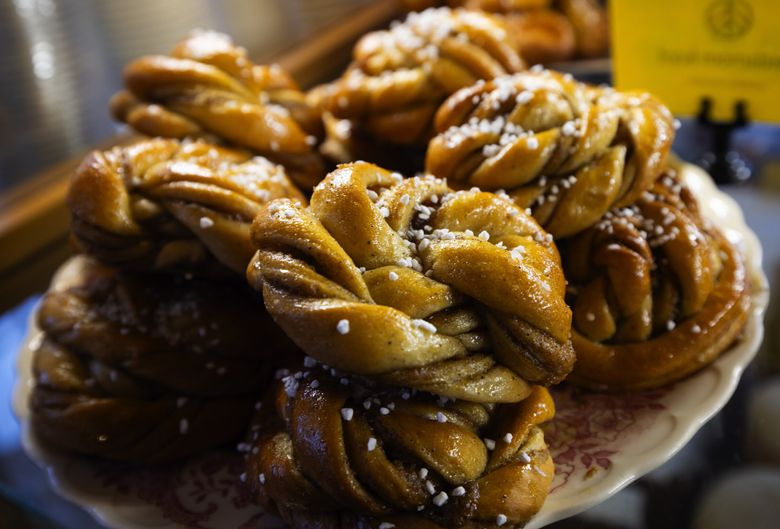
The cardamom knot demonstrates the Scandinavian influence, with fragrant cardamom worked into laminated dough and shaped into an intricate knot. The miso walnut toffee cookie represents the Japanese contribution—savory miso balances the sweetness of toffee while walnuts provide textural contrast. These aren’t fusion for fusion’s sake but thoughtful combinations that honor each culinary tradition while creating something new.
Lines at Saint Bread regularly exceed 20 minutes, particularly on weekends. The location near the University of Washington campus brings a steady stream of students, faculty, and neighborhood residents. Outdoor patios on either side of the bakery provide seating when the weather cooperates, though many customers prefer takeaway, unwilling to delay gratification any longer than necessary.
Coyle’s Bakeshop: French Technique Meets Pacific Northwest Ingredients
8300 Greenwood Ave N, Seattle, WA 98103
When Rachael Coyle left prestigious positions at The Herbfarm and Le Pichet to open her own bakeshop in Greenwood, she admitted to creating “a place making the things I wanted.” The selfishness paid off—it turned out Seattle wanted the same things: meticulously executed French pastries made with Pacific Northwest ingredients, served in an adorably photogenic space.
The mini cardamom kouign amann represents everything Coyle does well. The Breton pastry, traditionally made with layers of butter and sugar, gets an aromatic upgrade with cardamom. The size—petit rather than full-scale—allows customers to sample multiple items without committing to a single large pastry. The pain au chocolat and cream scones demonstrate classical technique without innovation, proving that sometimes the traditional version, executed flawlessly, needs no improvement.
The cretzel—a croissant-pretzel hybrid—gained immediate popularity and helped establish Coyle’s reputation for playful innovation. The combination sounds odd on paper: why cross a delicate French pastry with a chewy German bread? But the execution justifies the concept, creating something neither croissant nor pretzel but definitively Coyle’s.
Three years after opening, Coyle’s has become the kind of neighborhood institution that residents claim proudly, a place that makes Greenwood feel more complete. The Instagram-friendly aesthetics certainly help, but the bakeshop has staying power because the pastries deliver substance alongside style.
Byen Bakeri: Scandinavia in Seattle
Seattle (specific address in the heart of the city)
Byen Bakeri brings Norwegian and Scandinavian traditions to Seattle, filling a niche that few other bakeries occupy. The modern Nordic café specializes in buttery pastries and artisan breads that feel both familiar and exotic—recognizable forms executed with techniques and flavors that seem novel to American palates.
The Skolebrød, a custard-filled cardamom bun topped with vanilla icing and shredded coconut, represents classic Norwegian baking. The name translates roughly to “school bread,” a reference to its popularity with Norwegian children. The cardamom, a signature spice in Scandinavian baking, provides aromatic complexity that elevates the pastry beyond simple sweetness.
Lefse, a soft potato flatbread traditionally served with butter and brown sugar or jam, connects Norwegian immigrants to their heritage while introducing others to a fundamental comfort food. The Kransekake, made from sweet almond dough with a crisp crust and moist interior, appears at Norwegian celebrations—weddings, Christmas, special occasions—and Byen Bakeri makes it accessible year-round.
Each item demonstrates careful attention to ingredients and technique, qualities that both locals and visitors appreciate. The Scandinavian aesthetic—clean lines, natural materials, understated elegance—extends from the baked goods to the café space itself.
Fuji Bakery: Asian-French Fusion
12513 Lake City Way NE, Seattle, WA 98125
Since 2009, Fuji Bakery has served the greater Seattle area with what they call “unique Asian French fusion flavors,” a description that barely captures the creativity and technical skill on display. The interior maintains warmth and invitation, making it equally suitable for a quick breakfast or a leisurely afternoon tea.
The Butter Croissant demonstrates French technique executed by bakers trained in Japanese precision—the result is a pastry with impossibly thin, distinct layers and a butteriness that lingers without feeling heavy. The Crunchy Cream Malasada, Fuji’s signature item, takes a Portuguese donut, coats it with crunchy cornflakes, and fills it with house-made vanilla custard cream. The textural play—crispy exterior, soft dough, smooth custard—creates an experience impossible to achieve through any single culinary tradition.
The bakery’s commitment to “Asian French fusion” isn’t marketing speak but a genuine attempt to honor both traditions while creating something distinctly their own. The croissants taste unmistakably French, but the approach to filling, sweetness levels, and presentation reflects Japanese aesthetics and precision.
The Cultural Impact of Seattle’s Artisan Bakeries
These bakeries represent more than convenient places to purchase carbohydrates. They function as community gathering spots, cultural institutions, and repositories of technical knowledge that might otherwise disappear in an age of industrial food production. When Grand Central Bakery supplies bread to local restaurants, it creates a web of connections that strengthens the entire food community. When Sea Wolf Bakers makes their process visible to customers, they educate a new generation about the labor and skill required to produce real bread.
The economic impact extends beyond the bakeries themselves. Farmers who grow wheat, mill operators who produce flour, dairy farmers whose butter gets laminated into croissants—all benefit from Seattle’s thriving artisan bakery scene. The decision by bakeries like Macrina and Grand Central to prioritize local sourcing creates demand that sustains small-scale agriculture in Washington state.
Seattle’s embrace of artisan bakeries also reflects broader cultural values: a willingness to pay premium prices for quality, an appreciation for craftsmanship, and a desire to support businesses that treat employees fairly and source ingredients responsibly. When Bakery Nouveau provides health insurance and competitive wages, or when Sea Wolf pools tips and distributes them equally among all staff, they demonstrate that profitable businesses can operate ethically.
The diversity of styles and influences—French, Japanese, Scandinavian, Italian—mirrors Seattle’s increasingly multicultural population. These aren’t fusion for fusion’s sake but genuine attempts to bring authentic traditions to a new context. A cardamom knot at Saint Bread or a Skolebrød at Byen Bakeri allows immigrants and their descendants to maintain connections to their heritage while introducing others to flavors and techniques they might never otherwise encounter.
The artisan bakery movement has also elevated Seattle’s overall food culture. When customers develop sophisticated palates for bread and pastries, they bring those same expectations to other dining experiences. The presence of world-class bakeries raises standards across the board, creating pressure on all food businesses to improve or risk irrelevance.
The Future of Seattle’s Artisan Bakery Scene
The continued success of established bakeries like Macrina and Grand Central alongside newer entrants like Saint Bread suggests a sustainable ecosystem rather than a temporary trend. Seattle’s population growth and economic prosperity provide the customer base necessary to support numerous high-end bakeries, while the city’s culinary culture ensures sufficient appreciation for craftsmanship.
Climate change poses challenges for bakeries dependent on local wheat and other ingredients. Variable growing conditions, unexpected droughts or floods, and shifting temperature patterns all affect the raw materials that artisan bakers depend on. The most resilient bakeries will be those that develop relationships with multiple suppliers and maintain flexibility in their offerings.
The labor shortage affecting all sectors of the food industry hits bakeries particularly hard. The work requires early morning hours, physical stamina, and years of training to master. Attracting and retaining talented bakers will require competitive compensation, benefits, and working conditions that respect the difficulty and importance of the craft.
Rising commercial rents in Seattle neighborhoods threaten bakeries that serve as community gathering spots. A bakery that becomes too successful may find itself priced out of the neighborhood it helped revitalize. The challenge is to maintain profitability while resisting the pressure to expand beyond sustainable limits or relocate to cheaper areas that lack foot traffic.
Despite these challenges, Seattle’s artisan bakery scene appears poised for continued growth. The combination of skilled bakers, educated customers, and a culture that values quality over convenience creates ideal conditions for bread-making as craft rather than mere commodity. Each morning, when the first loaves emerge from the ovens at Bakery Nouveau, Sea Wolf, Macrina, and Grand Central, they affirm a simple truth: good bread, made by hand from quality ingredients, will always find an appreciative audience.
The smell of fresh bread has drawn people together for thousands of years. In Seattle’s artisan bakeries, that ancient tradition continues, adapted to modern tastes and techniques but retaining the essential magic of flour, water, salt, and time transformed into something greater than the sum of its parts.