

Seattle’s skyline doesn’t just define the city—it powers it. Behind the glass towers and beneath the constant hum of innovation runs a current of ambition that’s reshaping how the world thinks about energy. This isn’t a story about incremental improvements or modest adjustments to existing systems. Seattle’s clean energy ecosystem represents a fundamental reimagining of energy production, distribution, and consumption, driven by startups attacking problems from angles nobody considered viable a decade ago.
The city ranks fourth among global climate tech hubs and hosts the highest concentration of fusion energy companies in the United States. That’s not an accident. Seattle’s combination of abundant hydroelectric power, deep technical talent, venture capital willing to fund decade-long moonshots, and a cultural commitment to environmental stewardship has created conditions where the impossible becomes merely difficult, and the difficult becomes routine.
The Foundation: Seattle City Light’s Carbon-Neutral Grid
Before examining the startups building tomorrow’s energy infrastructure, understanding Seattle’s existing advantages matters. Seattle City Light became the first electric utility in the United States to achieve zero net greenhouse gas emissions in 2005, maintaining carbon-neutral status every year since. This wasn’t accomplished through accounting tricks or purchasing offsets for business-as-usual operations—it fundamentally changed how the utility sources and delivers power.
Approximately 78% of Seattle City Light’s electricity comes from carbon-neutral hydroelectricity. In typical years, 40% derives from utility-owned hydroelectric projects on the Skagit and Pend Oreille Rivers. The remaining power comes from the Bonneville Power Administration and other renewable sources. The utility’s power supply portfolio contains no coal or natural gas resources, though market purchases when needed may incidentally include fossil fuels—emissions from these purchases get offset through the utility’s greenhouse gas neutrality policy.
This creates a virtuous cycle. Buildings in Seattle that electrify heating, businesses that deploy electric vehicles, and data centers powering AI workloads all tap into predominantly carbon-free electricity. The economic case for electrification strengthens when the grid itself runs clean, accelerating adoption of technologies that would face harder justification in regions dependent on coal or natural gas generation.
Seattle City Light serves approximately 961,000 residents across 131 square miles. Residential customers pay roughly 14 cents per kilowatt-hour—among the lowest rates for comparably-sized U.S. cities. Low-cost, carbon-free electricity provides competitive advantage for energy-intensive industries while making clean energy adoption financially accessible rather than a luxury purchase.
The utility’s commitment to conservation deserves attention. Over twenty years, conservation efforts reduced electricity use by 6.5 million megawatt-hours while cutting customer bills by $215 million. This demonstrates a counterintuitive business model: a utility that actively helps customers consume less of its product. Programs encouraging customers to wrap water heaters, insulate attics, adjust thermostats, and weatherize buildings represent long-term thinking that prioritizes system resilience over short-term revenue maximization.
Helion Energy: Chasing Fusion’s Holy Grail
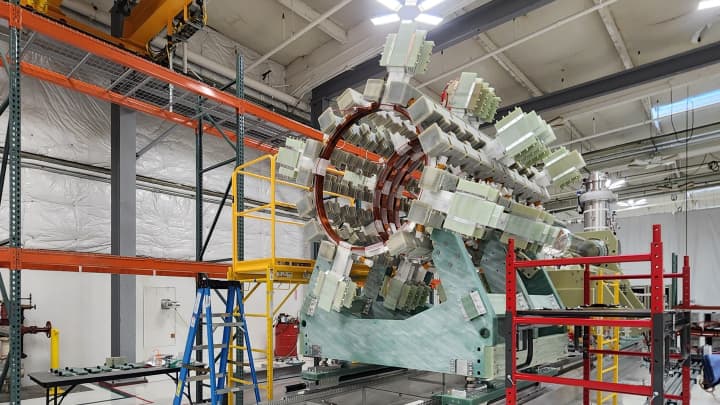
In an industrial facility in Everett, roughly twenty miles north of Seattle, engineers are attempting to harness the power source that fuels stars. Helion Energy, founded in 2013, has raised more than $1 billion to commercialize fusion energy—a technology that could theoretically produce nearly four million times more energy than fossil fuel combustion and four times more per kilogram of fuel than existing fission nuclear power plants.
The company announced a $425 million Series F funding round in January 2025, pushing its valuation above $5.4 billion. New investors include SoftBank, Lightspeed Venture Partners, and an unnamed university endowment. Sam Altman—OpenAI’s CEO and Helion’s longtime board chair—participated in the round after previously investing $375 million in the company.
Helion’s technology differs fundamentally from traditional fusion approaches. Rather than using tokamaks—the doughnut-shaped reactors most fusion projects employ—Helion uses a field-reversed configuration reactor resembling an hourglass. At each end, the system spins plasma into doughnut shapes and shoots them toward each other at speeds exceeding one million miles per hour. When they collide in the middle, additional magnets induce fusion.
What makes Helion’s approach potentially revolutionary is direct electricity generation. When fusion occurs, it boosts the plasma’s own magnetic field, inducing electrical current inside the reactor’s magnetic coils. That electricity gets harvested directly from the machine, eliminating the need to contain and convert fusion heat into lower temperatures to power turbines—a requirement in more common fusion strategies.
The company’s timeline is aggressive to the point of audacious. Helion plans to deliver 50 megawatts of electricity to Microsoft starting in 2028—the first commercial agreement for fusion energy. A separate agreement with Nucor Corporation aims to develop a 500-megawatt fusion power plant at one of Nucor’s manufacturing facilities, targeting operation by 2030.
In July 2025, Helion announced plans to build a 50-megawatt fusion plant near Rock Island Dam in Chelan County, Washington, scheduled to become operational by 2028 to supply power to nearby Microsoft data centers. Washington Governor Bob Ferguson signed legislation in May classifying fusion as a clean energy source and legally distinguishing it from traditional nuclear fission, giving Helion the ability to pursue local permitting for its proposed plant site.
Skeptics abound. Critics note that fusion has promised power generation “within ten years” for the past sixty years, always encountering technical barriers that push timelines further into the future. The Fusion Industry Association reports that 35 of 45 surveyed fusion companies hope to operate commercially viable pilot plants between 2030 and 2035—which means many won’t succeed. The industry acknowledges that consolidation seems inevitable as some companies master the technology while others fail.
Yet Helion has demonstrated tangible progress. In 2021, the company’s Trenta prototype became the first reactor from a private company to reach 100 million degrees Celsius—the temperature necessary for commercial power generation. The newer Polaris prototype is expected to be the first reactor demonstrating fusion-based electricity generation at scale.
The new funding will help Helion expand internal supply chain operations, manufacturing capacitors that power its reactors, producing high-powered magnets used to contain fusion reactions, and developing specialized semiconductors. This vertical integration accelerates development while reducing dependence on external suppliers who may not fully understand fusion’s unique requirements.
LevelTen Energy: Building the Renewable Energy Marketplace
While Helion chases fusion’s future, LevelTen Energy focuses on accelerating deployment of renewable energy available today. Founded in 2016 by Bryce Smith, LevelTen has become the leading provider of transaction infrastructure for the clean energy transition, connecting buyers, sellers, and financiers through an international marketplace powered by trusted data and automation.
Smith cut his teeth at the Bonneville Environmental Foundation, where the first Renewable Energy Certificate transactions were completed. He co-founded OneEnergy Renewables, a national developer of utility-scale solar projects, before launching LevelTen to make renewable procurement simpler and less risky for corporate and non-utility power buyers.
The problem LevelTen solves is accessibility. Until recently, only the world’s largest tech companies could successfully complete renewable energy transactions. The complexity of power purchase agreements, the difficulty of comparing projects across different geographies and technologies, and the risk of poor project performance kept smaller buyers out of the market. LevelTen’s platform enables more buyers to participate, greening the grid more rapidly than possible when only giants like Google and Amazon could navigate renewable procurement.
The LevelTen Marketplace supports power purchase agreements, energy attribute credits, capacity trading, hybrid PPAs, granular certificate trading, and storage. Organizations can execute and manage clean energy transactions with confidence, knowing they’re accessing trusted data and standardized processes rather than negotiating one-off deals in opaque markets.
In December 2023, Microsoft, Google, and LevelTen partnered to create the first marketplace for 24/7 clean energy through the Granular Certificate Trading Alliance. This initiative, developed in collaboration with AES, Constellation, and ICE, aims to enable more precise matching of clean energy generation with consumption on an hourly basis rather than annual averages—a crucial step toward truly decarbonizing electricity grids.
Smith once told Built In Seattle he got into renewable energy because he knew it would become essential infrastructure, adding “if it didn’t, we’d all be screwed anyway.” This pragmatic idealism characterizes many of Seattle’s clean energy entrepreneurs—optimistic about technology’s potential but realistic about the stakes involved.
Ever.green: Democratizing Clean Energy Investment
Seattle-based Ever.green (formerly Evergreen) tackles renewable energy finance from a different angle. The company has raised $11.8 million to build a marketplace for investment tax credits that fund renewable energy projects, enabling tax credit buyers to make financial returns while companies with sustainability goals can commit to forward contracts for high-impact Renewable Energy Certificates.
The insight driving Ever.green is that capital allocation determines renewable deployment rates more than technology availability. Solar panels and wind turbines work reliably and cost-effectively. The barrier isn’t engineering—it’s financing. By creating liquid markets for investment tax credits and RECs, Ever.green channels corporate capital to clean energy projects that need it, speeding financing and deployment while reducing fossil fuel reliance.
The team combines energy executives, tech veterans, designers, and software engineers—the interdisciplinary approach characteristic of successful clean energy startups. Technical expertise alone doesn’t suffice. Companies need people who understand power markets, regulatory frameworks, corporate procurement processes, and user experience design. Ever.green’s ability to translate complex energy finance into accessible platforms determines whether corporate sustainability managers can actually deploy their budgets effectively.
The company ensures and quantifies the impact of every Renewable Energy Certificate traded on its marketplace. This verification matters enormously in markets where “greenwashing” undermines legitimate climate action. When corporations purchase RECs without rigorous verification, they risk buying credits that don’t represent additional renewable generation—essentially paying for renewable energy that would have been built anyway. Ever.green’s emphasis on “high-impact” RECs directs capital to new solar projects in areas with high grid emissions, maximizing climate benefit per dollar invested.
The Fusion Cluster: Zap Energy and CTFusion
Helion isn’t Seattle’s only fusion play. Zap Energy, located just minutes from Helion’s Everett facility, has raised $330 million to fund its fusion operations, including a $130 million round disclosed in federal filings in July 2024. Rather than using high-temperature superconducting magnets or super-powerful lasers, Zap Energy zaps plasma with electric current, which generates its own magnetic field that compresses the plasma until ignition occurs.
The neutrons released by the fusion reaction bombard a liquid metal blanket surrounding the reactor, heating it up. The liquid metal cycles through a heat exchanger producing steam to drive a turbine. This approach differs from both traditional tokamaks and Helion’s direct electricity generation, demonstrating the diversity of technical approaches being pursued simultaneously.
Backers include Bill Gates’ Breakthrough Energy Ventures, DCVC, Lowercarbon Capital, Energy Impact Partners, and Chevron Technology Ventures. The investment syndicate reveals how fusion has attracted diverse capital—from tech billionaires to oil companies recognizing that energy’s future lies beyond hydrocarbons.
CTFusion, another Seattle startup, has raised $3.2 million to pursue fusion using patented Imposed-Dynamo Current Drive technology to generate compact, magnetically-confined fusion plasmas. The company spun out of research at the University of Washington, demonstrating how academic institutions contribute to Seattle’s clean energy ecosystem by providing foundational research that entrepreneurs commercialize.
Seattle now hosts the highest concentration of fusion energy companies in the United States. This clustering creates network effects—engineers with fusion expertise can move between companies, suppliers develop capabilities serving multiple customers, and investors gain familiarity with the technology’s risks and opportunities. Geographic concentration accelerates innovation in ways dispersed efforts cannot match.
Beyond the Giants: Seattle’s Long Tail of Clean Energy Innovation
While Helion and LevelTen attract headlines and massive funding rounds, dozens of smaller startups attack specific niches in Seattle’s clean energy ecosystem. Collectively, they’re as important as the unicorns.
Oscilla Power, which has raised $10.9 million, develops the Triton wave energy converter designed to deliver cost-competitive, utility-scale energy by combining best-in-class energy capture and power production with exceptional reliability and survivability. Wave energy remains largely untapped despite enormous potential—the predictability and energy density of ocean waves could provide baseload renewable power if technical challenges around durability and cost get solved.
XFlow Energy, with $1.8 million in funding, manufactures vertical-axis wind turbines that reduce the cost of wind energy generation. These turbines differ from the familiar horizontal-axis designs dominating wind farms, potentially offering advantages in turbulent wind conditions or constrained spaces where traditional turbines struggle.
Bayou Energy, having raised $1.2 million, operates as a utility data access, actions, and sharing platform connecting clean energy companies to the grid. The challenge isn’t generating renewable energy—it’s integrating it into existing electrical infrastructure designed for centralized fossil fuel plants. Bayou’s platform addresses the data and coordination problems that slow renewable deployment.
Clean Power Research offers cloud solutions supporting solar energy project development and streamlining utility processes. Its software includes tools for managing building electrification programs, enabling accurate solar energy forecasting, and handling utility service requests. These backend systems may lack the glamor of fusion reactors, but they’re essential infrastructure for scaling renewable deployment.
OneEnergy Renewables develops community and utility-scale solar energy projects in North America, delivering projects to communities, utilities, and commercial and institutional customers. Founded by Bryce Smith before he launched LevelTen, OneEnergy demonstrates how successful entrepreneurs often tackle multiple aspects of the energy transition across sequential ventures.
Modern Electron works on new electricity generation methods that eliminate expensive engines and turbines. Hydrobee produces portable power generation devices that charge battery bricks through sun, heat, or movement—potentially providing power capabilities to the billion-plus people living without reliable electricity access.
The Maritime Connection: Washington Maritime Blue
Washington Maritime Blue represents a strategic alliance propelling the Pacific Northwest toward global leadership in ocean-based innovation. The organization fosters collaboration among industry, government, academia, communities, and investors to create sustainable maritime and ocean industries.
Strategic focus areas include maritime decarbonization, renewable ocean energy, sustainable fisheries and seafood, healthy ocean ecosystems, and digital solutions. This work connects directly to Seattle’s clean energy ecosystem—ships powered by hydrogen or batteries, wave energy converters, and sustainable aquaculture all depend on innovations emerging from the region’s startups.
Maritime Blue enables workforce development, acceleration and incubation of Blue Economy startups, and joint innovation projects. The maritime sector faces enormous pressure to decarbonize as international shipping regulations tighten. Seattle’s position as a major port and its concentration of clean energy talent position it to lead this transformation.
Alaska Airlines’ collaboration with companies like Microsoft and Twelve on sustainable aviation fuels, and partnerships with ZeroAvia to develop hydrogen-electric propulsion systems for aircraft, demonstrate how established companies leverage Seattle’s innovation ecosystem to meet climate goals. These partnerships create markets for startup technologies, providing revenue that enables further development.
The University of Washington’s Role: Incubating Innovation
Many of Seattle’s clean energy startups trace lineage to University of Washington research. Zap Energy and CTFusion both spun out of UW research programs. This pipeline from fundamental research to commercialization requires institutional support—technology transfer offices, entrepreneurship programs, and faculty willing to see their research leave the laboratory.
The university’s focus on materials science, electrical engineering, and environmental science creates fertile ground for energy innovation. Graduate students working on next-generation battery materials, more efficient solar cells, or advanced power electronics often become founders of companies commercializing their research. This talent pipeline matters as much as venture capital or corporate partnerships.
Seattle’s startup ecosystem benefits from engineers who understand both fundamental physics and practical engineering constraints. Fusion startups need people who can design high-power capacitors, manufacture specialized magnets, and write control software for systems operating at conditions never before sustained. Universities train that workforce.
The Venture Capital Ecosystem: Patient Capital for Long-Cycle Innovation
Clean energy startups face challenges that scare traditional venture capital. Development timelines span decades rather than years. Capital requirements dwarf typical software startups. Technical risk remains high even for well-executed projects. Yet Seattle has attracted investors willing to fund these ventures.
Sam Altman’s $375 million investment in Helion represents patient capital on a scale rarely seen. Altman became Helion’s board chair in 2015—just two years after the company launched—and recruited it to Y Combinator when he led that accelerator. His continued investment through multiple funding rounds demonstrates commitment beyond typical VC horizons.
Breakthrough Energy Ventures, Lowercarbon Capital, and Capricorn Investment Group all invest actively in Seattle’s clean energy sector. These firms explicitly target climate solutions requiring long development periods and large capital commitments. Their presence in Seattle enables startups to pursue ambitious technical challenges without pressure to pivot toward easier problems with faster returns.
The mix of strategic corporate investors—Chevron investing in Zap Energy, Nucor partnering with Helion—brings industry expertise and potential customers. These relationships de-risk commercialization by ensuring market access if technical milestones get met.
Policy Support: Creating Favorable Conditions
Washington state’s classification of fusion as a clean energy source, legally distinguishing it from traditional nuclear fission, eliminates regulatory uncertainty that could have stalled projects. This policy clarity matters enormously for technologies requiring multi-year development timelines and massive capital investment.
The state’s commitment to renewable energy portfolio standards, building electrification codes, and greenhouse gas reduction targets creates demand that justifies clean energy infrastructure investment. Seattle’s green building requirements, discussed in the context of LEED certification, drive electrification that increases demand for clean electricity.
Federal support also plays crucial roles. The Department of Energy’s ARPA-E program has funded multiple Seattle startups. NASA grants supported early Helion development. These grants de-risk early-stage research, allowing companies to prove technical concepts before seeking private capital.
The Challenges Ahead: Technical, Economic, and Social
Despite impressive progress, Seattle’s clean energy ecosystem faces substantial challenges. Fusion remains unproven at commercial scale—no company has yet demonstrated sustained net energy gain in conditions suitable for grid-connected power plants. The ambitious timelines promoted by Helion and competitors may encounter technical barriers that force delays.
Integration challenges multiply as renewable generation increases. Solar and wind intermittency requires energy storage or demand flexibility that current infrastructure lacks. Seattle City Light’s hydroelectric resources provide valuable grid flexibility, but other regions lack this advantage.
Supply chains for renewable technologies face strain. Manufacturing capacity for batteries, solar panels, power electronics, and specialized fusion components constrains deployment rates. Building this capacity requires investment at scales beyond individual startups.
Workforce development can’t keep pace with industry growth. Fusion companies need plasma physicists, power systems engineers, and specialized technicians—skills not produced by existing educational programs. Universities must expand programs while companies develop internal training.
Public acceptance poses social challenges. Fusion energy, despite generating minimal radioactive waste compared to fission, still requires education to overcome associations with nuclear weapons and reactor accidents. Wave energy projects face environmental reviews and potential conflicts with fishing interests. Even solar and wind projects encounter NIMBY opposition.
The Path Forward: Building an Energy Transition Ecosystem
Seattle’s clean energy advantage stems from ecosystem effects that can’t be replicated quickly elsewhere. The combination of carbon-neutral grid electricity, deep technical talent, patient capital, research universities, supportive policy, and cultural commitment to sustainability creates conditions enabling audacious ventures.
This ecosystem continues evolving. As fusion companies progress toward commercialization, they’ll need manufacturing partners, specialized suppliers, and experienced operators. Companies mastering wave energy or advanced wind turbines will require similar support infrastructure. The marketplace platforms developed by LevelTen and Ever.green must scale to handle exponentially growing renewable transaction volumes.
The next decade will determine whether Seattle’s clean energy startups fulfill their promises. Helion’s 2028 commitment to Microsoft will either validate fusion’s viability or become another cautionary tale of ambitious timelines meeting stubborn reality. LevelTen’s marketplace will either democratize renewable procurement or remain a tool primarily for sophisticated buyers.
What seems certain is that Seattle will remain central to clean energy innovation. The city’s combination of advantages—abundant hydroelectric power, technical excellence, entrepreneurial culture, and environmental commitment—positions it to lead the energy transition regardless of which specific technologies prevail.
When future historians examine how humanity moved beyond fossil fuels, Seattle’s contribution will extend beyond individual companies or technologies. The city will have demonstrated how ecosystems of innovation emerge when universities, startups, established companies, investors, and policymakers align around transformative goals. That model—not any single breakthrough—may prove Seattle’s most important contribution to the clean energy revolution.