

Rainier Beach sits at Seattle’s southern edge, a neighborhood that has absorbed neglect, disinvestment, and broken promises for decades while maintaining community cohesion that wealthier areas purchase through homeowners’ associations and private amenities. The Rainier Beach Action Coalition emerged from this history not as charity organization or government program but as grassroots effort by residents determined to control their neighborhood’s future rather than watch it get shaped by forces that have never lived there and never will. The organization operates with budget that wouldn’t cover a month’s rent for a Capitol Hill startup but accomplishes outcomes that millions in top-down investment failed to achieve—building community power, preserving cultural identity, and ensuring development benefits longtime residents rather than merely displacing them.
Origins in Community Crisis and Response
The Rainier Beach Action Coalition formed in 2008 when violence, disinvestment, and community fracturing reached crisis levels that demanded coordinated response beyond what individual organizations or informal networks could provide. Gang-related shootings, concentrated poverty, failing schools, and physical deterioration created conditions where residents could either organize collectively or watch their neighborhood spiral further into dysfunction. The coalition brought together community members, local organizations, schools, and faith communities around shared commitment to transformation driven by those most affected rather than imposed by outside experts.
The founding context matters for understanding the coalition’s structure and approach. This wasn’t feel-good community building during prosperous times but rather crisis response when conditions demanded action. The urgency created focus and determination that peacetime organizing rarely achieves. The coalition operated with understanding that Rainier Beach’s problems resulted from structural neglect and systemic racism rather than individual failings or cultural deficiencies. This analysis shaped solutions emphasizing community power, institutional accountability, and structural change over programs treating symptoms while ignoring causes.
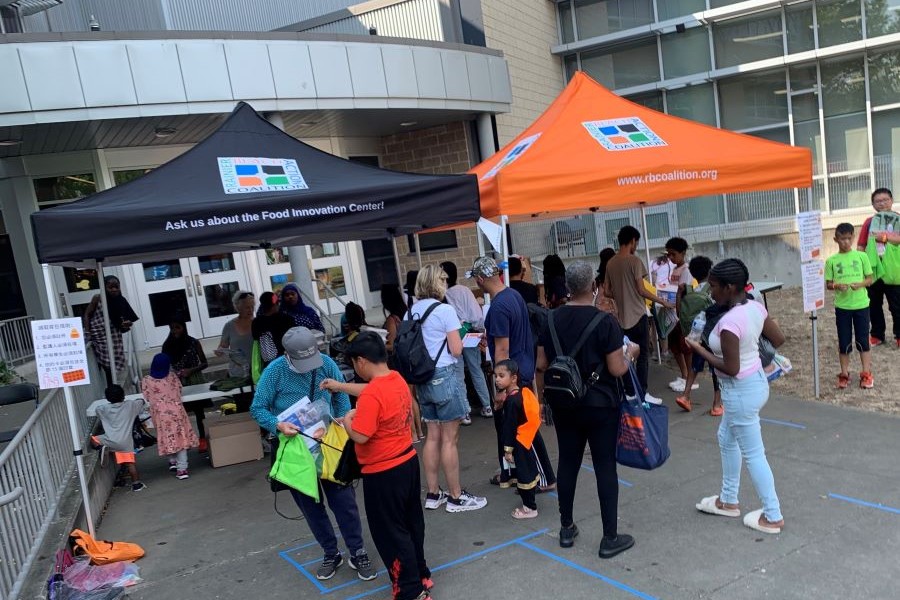
Early organizing focused on immediate safety concerns while also addressing underlying conditions producing violence. The coalition coordinated community walks where residents reclaimed public spaces that gang activity had made threatening. Block parties and cultural events created positive gatherings replacing negative associations with public areas. These visible activities demonstrated community presence and solidarity while also building relationships and trust that deeper organizing requires.
Parallel to street-level organizing, the coalition engaged institutions—police, schools, city government—demanding responsiveness to community priorities rather than top-down programs that ignored resident knowledge and expertise. This institutional engagement required learning bureaucratic processes, building political relationships, and developing sophisticated advocacy that many grassroots organizations struggle to maintain alongside community organizing. The coalition invested in both community mobilization and institutional engagement, recognizing that sustainable change requires pressure from below and access to power structures from above.
The Equity Framework and Community-Driven Development
The coalition operates from explicit equity framework that centers race, acknowledges historical harm, and demands that development and investment benefit communities that have been systematically excluded and exploited. This framework represents more than rhetoric—it shapes decisions about which projects to support, how resources get allocated, and what metrics determine success. The equity commitment distinguishes Rainier Beach Action Coalition from organizations that treat equity as aspiration while operating through conventional approaches that perpetuate disparities.
Community-driven development means residents shape vision and priorities rather than responding to plans created elsewhere. The coalition facilitates community planning processes where Rainier Beach residents articulate what they want their neighborhood to become, what should be preserved, what needs to change, and what development should look like. These planning processes require sustained engagement beyond single meetings, involving multiple formats and languages to include residents with different schedules, abilities, and communication preferences.
The community vision emphasizes affordable housing preservation, small business support, green space expansion, and infrastructure improvements that serve current residents rather than attracting new populations whose arrival would displace existing community. This vision conflicts with conventional development logic prioritizing market-rate housing, retail chains, and amenities designed to increase property values and attract higher-income residents. The coalition’s alternative development model argues that neighborhoods can improve without displacing the people who’ve sustained them through difficult decades.
Implementing community-driven development requires power that grassroots organizations rarely possess. The coalition builds this power through multiple strategies—electoral organizing influencing who holds office, direct action creating political costs for officials who ignore community demands, research documenting conditions and demonstrating community expertise, and partnerships providing resources and legitimacy. The multi-pronged approach recognizes that community organizing requires both grassroots mobilization and institutional access, both confrontation and collaboration.
Youth Leadership Development and Intergenerational Organizing
Youth programs represent central rather than peripheral coalition activities, reflecting understanding that young people both experience neighborhood conditions acutely and will inherit whatever future gets created. The coalition develops youth leadership through organizing training, advocacy campaigns, and governance roles that give young people actual power rather than token participation in adult-controlled processes.
Youth organizers conduct research documenting conditions affecting young people in Rainier Beach—school resource disparities, police interactions, employment barriers, mental health service gaps. The research process teaches organizing skills while also creating evidence that advocacy campaigns use to demand institutional changes. Young people present findings to school boards, city council, and other bodies that typically hear from adults with professional credentials, disrupting whose knowledge gets valued and whose voices shape policy.
Campaigns led by youth organizers have addressed issues including police presence in schools, suspension and expulsion policies, mental health services, and youth employment. These campaigns emerged from young people’s lived experiences rather than adult assumptions about youth priorities. The youth-driven approach produces campaigns that reflect actual needs while also developing leadership skills and political consciousness that participants carry forward throughout their lives.
Intergenerational organizing connects youth with elders who’ve lived in Rainier Beach for decades, building relationships across age divides that urban isolation often prevents. The intergenerational approach recognizes that both youth and elders possess essential knowledge—young people understand current conditions and bring energy while elders provide historical memory and hard-won wisdom about sustaining struggle over decades. The relationships prevent reinventing wheels and help younger organizers learn from previous campaigns’ successes and failures.
Leadership development includes skill-building in facilitation, public speaking, political analysis, campaign strategy, and the practical capacities that effective organizing requires. The coalition invests in training recognizing that leadership doesn’t emerge naturally but requires intentional development through practice, feedback, and mentorship. The investment creates pipeline of community leaders who can sustain organizing beyond any individual campaign or any staff member’s tenure.
Housing Advocacy and Anti-Displacement Organizing
Housing advocacy consumes substantial coalition energy as Rainier Beach faces displacement pressures from Seattle’s growth and skyrocketing housing costs. The neighborhood’s relatively affordable rents attract investors and developers whose projects threaten existing residents with displacement through rent increases, demolition of affordable housing, and neighborhood transformation that makes longtime residents feel unwelcome in places they’ve lived for years.
Anti-displacement organizing operates at multiple levels simultaneously. Immediate crisis intervention helps families facing eviction or unaffordable rent increases, connecting them to legal services, emergency assistance, and resources that might prevent displacement. The direct service addresses urgent needs while also documenting displacement patterns and building relationships with affected families who become constituents for policy campaigns.
Policy advocacy pushes for renter protections including just cause eviction requirements, relocation assistance, and rent increase limits that prevent displacement disguised as market-rate pricing. The coalition works with citywide housing justice organizations while also maintaining specific focus on Rainier Beach conditions and ensuring that policy solutions address South Seattle’s particular dynamics rather than assuming one-size-fits-all approaches work everywhere.
Affordable housing development and preservation represents proactive response rather than just defensive reaction to displacement. The coalition supports community land trusts, nonprofit housing development, and acquisition of at-risk properties for conversion to permanently affordable housing. These strategies remove housing from speculative markets that produce displacement, creating community ownership models that keep housing affordable regardless of market conditions.
Community preference policies attempt to ensure that new affordable housing serves current Rainier Beach residents and those with community connections rather than becoming amenities attracting outsiders to neighborhoods where longtime residents get priced out. The policies face legal and political challenges but reflect coalition commitment to development benefiting existing community rather than displacing it while creating affordable units for newcomers.
Small Business Support and Economic Development
Rainier Beach’s commercial corridors contain family-owned small businesses, many operated by immigrants and people of color who built enterprises serving community needs that corporations ignored. These businesses provide employment, essential services, and cultural anchoring while also facing challenges from competition with chains, rising commercial rents, and neighborhood changes that threaten their customer base and economic viability.
The coalition supports small businesses through advocacy for commercial rent stabilization, access to capital and technical assistance, and community preference in commercial development. The small business focus recognizes that local ownership keeps more money circulating within the community while also preserving cultural character that chain retail erases. Supporting existing businesses prevents displacement while building local economic capacity and ownership.
Workforce development programs connect Rainier Beach residents to employment opportunities while also advocating that construction projects and new businesses employ local workers rather than importing labor from outside the community. The local hire advocacy faces resistance from contractors preferring established relationships but persists based on principle that development should benefit communities where it occurs rather than extracting value while providing minimal local benefit.
Community ownership models including cooperatives represent alternative development that builds wealth within community rather than extracting it for outside investors. The coalition supports cooperative business development providing training, access to capital, and technical assistance that cooperative enterprises require. The cooperative approach allows community members to own businesses collectively, sharing risks and benefits while building economic democracy alongside political organizing.
Small business districts and cultural anchors receive coalition support maintaining Rainier Beach’s character amid pressure to replicate development patterns from other neighborhoods. The coalition argues that Rainier Beach should develop on its own terms reflecting community culture rather than importing models designed for different contexts and populations. This cultural preservation fights homogenization that makes neighborhoods interchangeable while destroying the particular identities that make places meaningful.
Environmental Justice and Green Infrastructure
Environmental justice organizing addresses how pollution, lack of green space, and climate change impacts fall disproportionately on communities of color and low-income neighborhoods like Rainier Beach. The coalition’s environmental work connects ecology to equity, rejecting approaches that treat environmental protection as separate from justice rather than inherently linked to community wellbeing and survival.
Duwamish River contamination affects Rainier Beach through toxic legacy of industrial pollution that created Superfund site requiring ongoing cleanup. The coalition advocates for cleanup that actually remediates contamination rather than containing it while also demanding that cleanup doesn’t displace communities living near the river. The environmental justice frame insists that communities shouldn’t have to choose between health and housing, between contaminated environments and displacement.
Green infrastructure development including street trees, rain gardens, and park expansion addresses both environmental and community benefits. The coalition pushes for green infrastructure that serves existing residents rather than becoming amenity that increases property values and accelerates displacement. The careful framing recognizes that environmental improvements can fuel gentrification unless intentionally designed and protected through anti-displacement measures.
Urban agriculture and food justice work connects to environmental organizing through community gardens, food forest development, and support for local food production. The coalition views food production as cultural preservation, health intervention, and environmental practice simultaneously. Gardens become spaces for community gathering, intergenerational knowledge transfer, and connection to land and growing that urban environments often prevent.
Climate resilience planning ensures that Rainier Beach prepares for climate change impacts including increased flooding, heat events, and air quality degradation. The coalition demands that resilience planning centers community input and addresses how climate impacts intersect with existing vulnerabilities that poverty and systemic racism create. The climate justice approach rejects resilience planning that protects infrastructure and property values while ignoring people and community.
Educational Justice and School Advocacy
School quality concerns motivated early coalition organizing and remain central to community priorities. Rainier Beach High School and feeder schools have struggled with resource gaps, academic outcomes, and stability that reflect systemic inequities in educational funding and support. The coalition organizes parents, students, and community members to demand educational equity and accountability from Seattle Public Schools.
School closures threatened Rainier Beach multiple times as district responded to declining enrollment and budget pressures by consolidating schools. The coalition fought closure proposals arguing that schools serve as community anchors whose value extends beyond enrollment numbers and that closing schools in Black and brown neighborhoods while keeping open schools in white areas perpetuates racism. The anti-closure campaigns succeeded through sustained organizing, political pressure, and demonstrations showing community determination to preserve schools.
Academic program advocacy pushes for offerings comparable to what schools in wealthy neighborhoods provide—AP classes, arts programs, sports, counselors, and resources enabling student success. The coalition documents disparities and organizes to demand that district addresses gaps rather than accepting separate and unequal educational opportunities. The advocacy challenges deficit narratives blaming students and families for achievement gaps while ignoring structural conditions producing disparate outcomes.
Student discipline reform addresses how suspension and expulsion policies disproportionately affect Black students, creating school-to-prison pipeline that criminalizes normal adolescent behavior when exhibited by students of color. The coalition advocates for restorative justice approaches, cultural competence training for educators, and ending zero-tolerance policies that push students out of school for minor infractions. The discipline reform connects to broader organizing around police presence in schools and criminalization of youth of color.
Community schools model positions schools as hubs providing not just academic instruction but also health services, family support, and community programming that addresses barriers to learning. The coalition advocates for community schools approach recognizing that education requires addressing poverty, housing instability, food insecurity, and trauma that students carry into classrooms. The holistic model treats schools as community institutions rather than just instructional facilities.
Arts, Culture, and Community Identity
Cultural organizing preserves and celebrates Rainier Beach’s diverse cultural communities while also creating expressions of shared neighborhood identity across difference. The coalition supports cultural events, public art, and creative expression that reflect community rather than importing art designed for different audiences and contexts.
The Rainier Beach Urban Farm and Wetlands serves as community gathering space hosting markets, festivals, and cultural events celebrating the neighborhood’s diversity. The farm provides food production, environmental education, and public space where community builds relationships across the ethnic and linguistic differences that could fragment organizing. The cultural programming positions food and ecology as common ground where different communities connect.
Public art projects include murals, sculptures, and installations created through community processes where residents shape content and meaning rather than accepting art imposed by outside artists or arts professionals. The community-driven art reflects Rainier Beach’s identity and values while also beautifying public spaces and creating pride in neighborhood. The participatory approach treats everyone as capable of artistic expression rather than dividing populations into artists and audiences.
Youth arts programs develop creative skills while also providing outlets for processing experiences and expressing perspectives that might not emerge through other means. Hip-hop, visual arts, poetry, and other forms become vehicles for youth voice and political expression alongside aesthetic development. The arts programming recognizes creativity as essential rather than supplementary, as political tool alongside recreational activity.
Cultural preservation for immigrant and refugee communities maintains connections to heritage cultures while also navigating adaptation to American contexts. The coalition supports cultural organizations serving Ethiopian, Eritrean, Vietnamese, Latino, and other communities maintaining distinct identities while also participating in neighborhood-wide organizing. The cultural support recognizes that community power requires both celebrating difference and building solidarity across it.
Measuring Success Beyond Conventional Metrics
The coalition’s impact resists easy quantification through metrics that foundations and government funders prefer. Success includes both concrete outcomes—policy changes, housing preservation, employment numbers—and less tangible results including community capacity, political consciousness, and relationships that enable sustained organizing. The coalition maintains commitment to community-defined success measures rather than allowing outside metrics to shape priorities.
Leadership development success shows in community members who’ve moved from participation to leadership roles, from being organized to becoming organizers. The pipeline includes youth who started in organizing programs and now serve in staff positions or leadership roles in other organizations. The leadership multiplication demonstrates sustainability beyond any particular campaign or individual leader.
Policy victories include zoning changes supporting affordable housing, community preference policies, school preservation, and institutional commitments to community priorities. These wins required years of organizing and don’t represent final solutions but rather incremental progress toward larger visions. The policy changes demonstrate that grassroots organizing can shift institutional behavior despite power imbalances and resource disparities.
Cultural shifts in how institutions and decision-makers engage Rainier Beach represent success harder to quantify than policy changes. City officials and developers increasingly recognize they must engage coalition and community rather than imposing plans. This shift from consultation to genuine engagement reflects power that organizing has built, changing relationships and processes beyond any specific policy outcome.
Community cohesion and collective efficacy show in sustained organizing participation, relationships across difference, and shared identity as Rainier Beach residents. The social capital building creates foundation for addressing future challenges through collective action rather than individual survival strategies. The relationships and shared consciousness represent infrastructure as essential as physical improvements.
The Rainier Beach Action Coalition demonstrates possibilities and limitations of community organizing in cities where growth pressures and displacement threaten neighborhoods lacking political power and economic resources. The coalition’s success comes from sustained organizing, leadership development, and strategic sophistication built over years rather than expecting quick wins through individual campaigns. Its struggles reveal how difficult transforming structural inequities remains despite organizing excellence and community commitment. The organization’s future depends on whether Seattle actually prioritizes equity or whether equity rhetoric masks continued concentration of resources and power in wealthy, white neighborhoods while communities like Rainier Beach receive words but not the funding, authority, and support that meaningful change requires.