

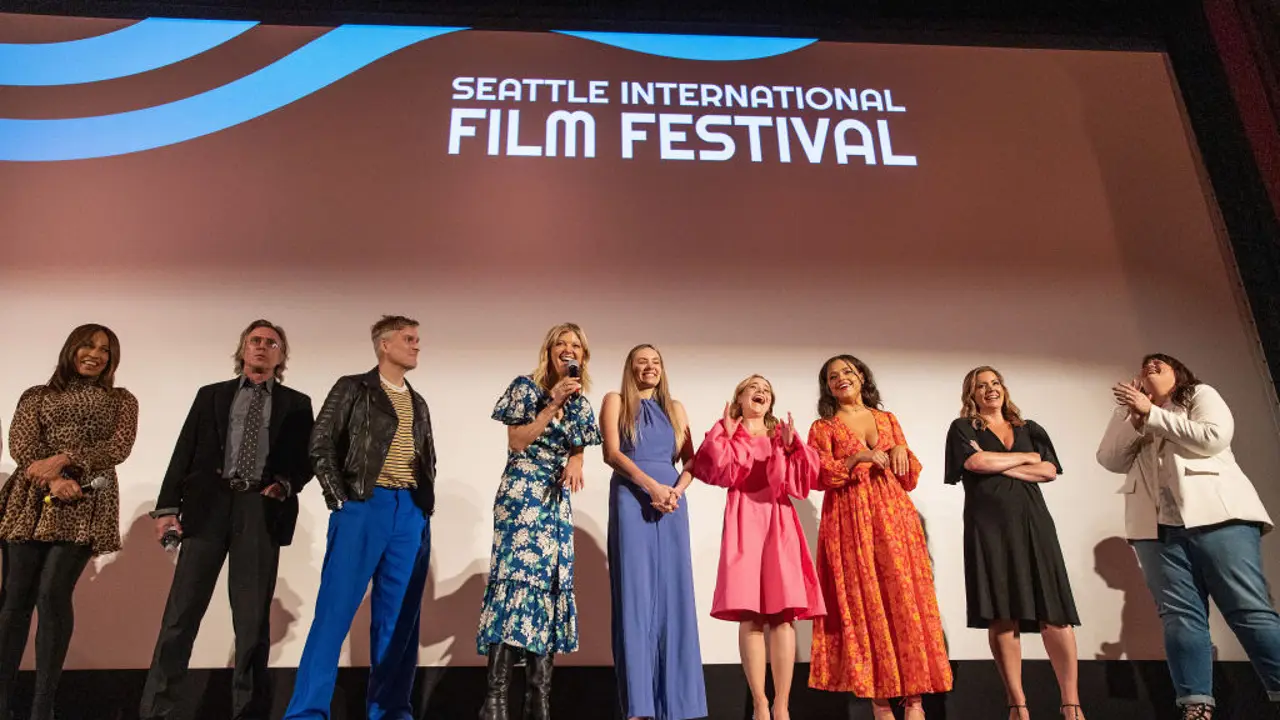
The Seattle International Film Festival opened May 14, 1976 with 18 films over 18 days at the Moore Egyptian Theatre—2nd Avenue and Virginia Street, downtown Seattle. Founders Dan Ireland and Darryl MacDonald had taken over the Moore Theatre previous year, installed new screen and sound system while living in basement, reopened it December 1975 showing classic Hollywood revivals and foreign films. Veteran film exhibitors predicted the festival would flop. Instead, SIFF wowed audiences and became largest, most-attended film festival in United States by 2012—25 days, 400+ films, 150,000 attendees annually, screening titles from 80+ countries.
The 2024 50th anniversary festival occurred amid remarkable expansion. SIFF operates three year-round cinema venues (SIFF Cinema Uptown, SIFF Cinema Downtown in former Cinerama Theatre, SIFF Film Center), screens films daily, presents spotlight festivals throughout year, runs educational programs serving 8,000+ students annually, and maintains SIFFsupports partnership program providing venue rentals and technical support to Pacific Northwest filmmakers and nonprofits. What began as two film-obsessed Canadians’ passion project evolved into Seattle’s defining arts institution—more central to city’s cultural identity than symphony, opera, or visual arts museums.
The festival’s scale defies comprehension until experienced. Three and a half weeks. Dozen venues scattered across Seattle and suburbs. Morning screenings, afternoon screenings, evening screenings, midnight screenings. Secret screenings requiring signed oaths of silence. Filmmaker Q&As. Panel discussions. Parties. Industry events. The schedule requires spreadsheets, strategic planning, rapid transit calculations between venues, meal replacements consumed while sprinting between theaters. Dedicated festivalgoers see 50+ films in 25 days—two per day minimum, often three or four. The marathon creates altered state where normal life suspends, work becomes optional, sleep becomes negotiable, and cinema becomes total immersion experience.
But SIFF’s importance transcends statistics and endurance tests. The festival transformed Seattle’s relationship with film, created infrastructure supporting year-round cinema culture, launched international filmmakers’ American careers, championed independent cinema before “indie film” became marketing category, and demonstrated that audiences existed for challenging, unconventional, non-Hollywood storytelling when gatekeepers claimed otherwise.
The Founders: Two Canadians Living in a Basement
Dan Ireland and Darryl MacDonald weren’t businessmen or nonprofit administrators when they launched SIFF. They were film fanatics from Canada who’d taken over historic but decrepit Moore Theatre, renovated it themselves, and reopened it showing films they loved. The living-in-the-basement detail matters—not metaphorically living for film, but literally sleeping where movies screened above them. The passion bordered on obsession.
Ireland’s subsequent career validated that obsession. After more than decade leading SIFF, he moved to Los Angeles, directed feature films (The Whole Wide World starring Vincent D’Onofrio and Renée Zellweger), produced others, and remained influential in independent film until his 2016 death. MacDonald stayed with SIFF nearly three decades, shaping festival’s growth from scrappy upstart to major international event before his 2020 death.
Their 1976 programming demonstrated sophisticated curatorial vision: Volker Schlöndorff and Margarethe von Trotta’s The Lost Honor of Katharina Blum (opening night), Lina Wertmüller’s All Screwed Up (closing night), Paul Verhoeven’s Cathy Tippel (early Verhoeven before Hollywood), Roman Polanski’s Knife in the Water, Luis Buñuel’s The Phantom of Liberty, Pier Paolo Pasolini’s Teorema, Masaki Kobayashi’s Kwaidan. The lineup skewed European art cinema with Japanese masterworks and emerging Dutch cinema. Rocky Horror Picture Show appeared—already cult phenomenon by 1976, perfect SIFF sensibility mixing high-art appreciation with populist pleasure.
The programming philosophy established SIFF’s enduring character: international focus, director-driven cinema, willingness to program challenging material, belief that Seattle audiences could appreciate films that wouldn’t get commercial distribution. The 1970s Seattle film scene provided fertile ground. Harvard Exit theater opened 1969. Northwest Filmmakers Co-op formed 1969. Randy Finley opened Movie House in University District 1970. Seattle Film Society founded 1970, publishing Movietone News film periodical that author Molly Haskell called “best publication on film in English language.” SIFF didn’t create Seattle’s film culture from nothing—it crystallized and amplified existing energy.
The 1980s: Building Reputation and Infrastructure
SIFF expanded throughout 1980s from two-week event to month-long celebration, screening 70+ films by 1980. When Ireland and MacDonald lost Moore Egyptian lease, they found former Masonic Temple on Capitol Hill, renovated it, renamed it The Egyptian. The theater remains prime SIFF venue today, though 2024 flood and 2025 lease termination closed it temporarily, forcing yet another SIFF adaptation.
The 1983 Secret Festival launch demonstrated SIFF’s playful experimentation. Attendees sign oath promising not to reveal what they’ve seen. No advance information about films. Just trust festival programmers and surrender to unknown. The concept builds anticipation, creates shared conspiratorial experience, and allows programming films that might not attract audiences based on description but work brilliantly as surprise discovery. The oath-taking ritual transforms attendance into initiation ceremony—you’re part of secret society bound by cinematic confidence.
The 1985 Michael Powell retrospective became legendary SIFF tribute. Powell—British director whose career included masterworks like The Red Shoes, Black Narcissus, and Peeping Tom—attended screenings, participated in discussions, presided over all-night marathons. The extended filmmaker presence created intimate connection between audience and artist, demonstrating SIFF’s commitment to treating cinema as art form deserving serious engagement rather than disposable entertainment.
SIFF’s 1980s audiences developed reputation for appreciating films that didn’t fit standard industry niches. Richard Rush’s The Stunt Man (1980) found enthusiastic reception at SIFF despite commercial distribution challenges. The willingness to embrace unconventional narratives, complex moral ambiguities, and formally experimental work attracted filmmakers who felt Hollywood wouldn’t understand their vision.
SIFF became instrumental in Dutch cinema’s American entry. Paul Verhoeven credits SIFF exposure for establishing U.S. foothold before Hollywood career (RoboCop, Total Recall, Basic Instinct). The festival created bridge between European art cinema and American audiences when few such bridges existed. Pre-internet, pre-streaming, pre-DVD, seeing international films required either traveling to film festivals or living in cities with adventurous repertory theaters. SIFF made Seattle that city.
The Growth Years: Becoming America’s Largest Festival
By 2006, SIFF screened 300+ films attracting 160,000 attendees. The festival expanded to neighboring Bellevue (after earlier failed attempt), though it retracted to Seattle-only by 2008. The 2010 festival featured 400+ films shown primarily downtown Seattle and nearby neighborhoods plus Renton, Kirkland, and Juanita Beach Park. The geographic spread responded to Seattle’s sprawling metropolitan footprint—concentrating entirely downtown excludes suburban audiences, but excessive sprawl fragments festival cohesion.
The programmers balanced accessibility and curation. Mainstream American studio premieres alongside obscure international works. Major filmmakers alongside first-time directors. Documentaries, narrative features, short films, experimental work. The eclecticism distinguished SIFF from festivals with narrower aesthetic mandates. Sundance became indie-film marketplace, Cannes remained European art cinema headquarters, Toronto positioned itself as Oscar-race launchpad. SIFF stayed committed to breadth—film discovery for discovery’s sake rather than industry positioning.
Notable world or American premieres at SIFF included Trainspotting, Braveheart, Kiss of the Spider Woman, Poltergeist, The Empire Strikes Back, Return of the Jedi, Donnie Darko. The list demonstrates range from blockbuster franchises to cult classics to art-house darlings. SIFF’s timing—late May and/or early June—often overlaps Cannes Film Festival, reducing industry bigwig attendance but reinforcing SIFF’s identity as “audience festival” rather than “industry festival.”
SIFF’s reputation as audience-focused festival matters. Industry festivals cater to buyers, sellers, distributors, agents, producers making deals. Audiences attend but remain secondary to business function. SIFF reversed that priority. Audiences came first. Industry could attend, sales could happen, distribution deals could close—but festival succeeded or failed based on audience satisfaction, not deal volume. The democratic ethos aligned with Seattle’s cultural values: egalitarian, suspicious of gatekeepers, trusting community judgment over expert proclamation.
The superstitious 13th-season avoidance—festival management counted from 12th to 14th anniversary, skipping 13—captured quirky personality. By 2009’s “35th anniversary” (actually 34th season), SIFF had settled into reliable rhythm: three weeks plus one weekend, 400+ films, multiple venues, predictable late-May timing allowing Seattleites to plan annual pilgrimage.
Year-Round Cinema: SIFF Beyond the Festival
The 2007 opening of SIFF Cinema at McCaw Hall marked crucial evolution. As arthouse cinemas closed across Seattle, SIFF needed year-round presence preventing expertise and audience relationships from lying dormant 11 months annually. The cinematheque-style venue featured limited-run debuts, new-print revivals of classics, mini-festivals. City contributed $150,000 to $350,000 project, acknowledging SIFF’s civic importance.
The 2011 move to Uptown Cinema and SIFF Film Center increased capacity to four screens. The Film Center includes 90-seat multi-use theater, multi-media classroom, exhibition spaces, archives, and offices. The institutional permanence signaled SIFF’s maturation from annual event to cultural infrastructure.
The 2014 acquisition of SIFF Cinema Egyptian (previously leasing) and SIFF Cinema Uptown solidified real estate foundation. Owning versus renting theaters meant controlling programming, building equity, and insulating against lease-termination threats. The Egyptian homecoming carried symbolic weight—returning to venue Ireland and MacDonald created after losing Moore Egyptian.
SIFF’s 2021 acquisition of former Seattle Cinerama Theatre (after 2020 COVID closure) represented major expansion. Rechristened SIFF Cinema Downtown, the beloved venue with legendary chocolate popcorn rejoined active cinema roster. Three permanent venues (Uptown, Film Center, Downtown) plus festival-time temporary locations created comprehensive screening infrastructure.
The year-round programming curates similar range as festival: theatrical releases (mainstream and arthouse), international titles, classic repertory showings, filmmaker retrospectives, genre celebrations. The daily screenings serve dual purposes: sustaining SIFF financially through ticket sales, and maintaining year-round engagement with film community preventing festival from becoming isolated annual event disconnected from daily film culture.
Education and Community: SIFF Beyond Spectatorship
SIFF Education serves 8,000+ students and youth annually through hands-on filmmaking programs. Crash Course Kids (ages 8-13) and Crash Course Student (ages 14-18) provide one-day intensive workshops guiding participants from concept development to final screening. The compressed timeline mimics professional film production’s intensity while remaining accessible to beginners.
The 2012-launched SIFF Mobile Filmmaking Camps offer free workshops exclusively for BIPOC youth ages 10-18, focusing on accessible production techniques in community settings. The specific targeting responds to film industry’s persistent diversity problems and access barriers. Professional filmmaking equipment remains expensive, industry networks remain exclusionary, and career pathways remain opaque to those without connections. SIFF’s educational programs attempt removing barriers by providing equipment, instruction, exhibition opportunities, and entry into film community.
The 2006 SuperFly Filmmaking Experience partnership with Longhouse Media brings youth together from diverse backgrounds working collaboratively on film projects promoting awareness of indigenous issues and mutual understanding of cultures. The indigenous focus acknowledges Seattle’s Coast Salish territory status and ongoing indigenous presence in region while addressing Native representation’s general absence in American cinema.
Futurewave K-12 programming and youth outreach, Screenwriters Salon, Global Lens film series, and SIFF-A-Go-Go travel programs (organized tours to other film festivals) demonstrate comprehensive approach to film education beyond passive viewing. The ecosystem nurtures not just audiences but creators, critics, curators, and industry professionals.
SIFFsupports partnership program (launched 2016) provides discounted venue rentals plus marketing and technical support to Pacific Northwest filmmakers, artists, and nonprofits. The subsidized access acknowledges that filmmaking communities need affordable screening spaces, professional presentation infrastructure, and marketing assistance. By supporting independent screening initiatives, SIFF strengthens broader ecosystem benefiting from vibrant, interconnected film culture.
The Secret Festival and Midnight Movies: SIFF’s Playful Edge
The Secret Festival epitomizes SIFF’s willingness to trust audiences and embrace mystery. The signed oath creates ritual binding participants. The unknown creates possibility—without preconceptions or genre expectations, films can be experienced freshly. The shared secret creates community—everyone who attended knows what happened, but outsiders remain excluded creating temporary insider status.
The midnight movie series tapped into cult film culture’s appeal. Late-night audiences seeking unconventional experiences, communal weirdness, and films that wouldn’t work at 2 PM Saturday matinee. The programming often included genre work (horror, science fiction, exploitation), international oddities, experimental cinema, and anything defying categorization. The midnight slot signaled: this isn’t respectable mainstream cinema, and that’s exactly why we’re showing it.
The all-night marathons—particularly during filmmaker retrospectives like Michael Powell tribute—created endurance challenges bonding participants. Staying awake through consecutive films requires commitment. The shared exhaustion, caffeine consumption, and delirium creates camaraderie. By dawn, you’ve experienced significant percentage of director’s complete filmography, discussed themes and techniques between screenings, and earned bragging rights.
These playful elements prevented SIFF from becoming staid, overly serious, or exclusively highbrow. Yes, the festival screened important political documentaries, challenging art cinema, and films addressing social justice. But it also celebrated pure cinema pleasure, genre thrills, camp aesthetics, and unclassifiable weirdness. The range demonstrated sophisticated understanding that cinema encompasses multitudes—Buñuel and B-movies, Bergman and blockbusters, all valid depending on mood, context, and audience.
The COVID Closure and Recovery: Eighteen Months Dark
The March 2020 pandemic shut down all three SIFF cinemas. Eighteen months dark. The organization survived through virtual programming, streaming partnerships, and community support, but physical theaters remained closed until September 2021 when they reopened launching DocFest—SIFF’s first-ever documentary-dedicated festival.
The closure devastated operations. Ticket revenue disappeared. The 2020 festival cancelled. Staff reduced. Uncertainty about when—or whether—theatrical exhibition would recover. The crisis shared across all arts organizations hit SIFF particularly hard because business model depended entirely on people gathering indoors for extended periods—exactly what pandemic prohibited.
The recovery demonstrated community commitment. When theaters reopened, audiences returned. Not immediately to pre-pandemic levels, but enough to sustain operations. The Cinerama acquisition during pandemic period represented either insane optimism or calculated bet that theatrical cinema would survive streaming competition and pandemic disruption. The bet appears paying off—2024’s 50th anniversary festival projected strong attendance, venues remain active year-round, and SIFF’s future looks secure.
The pandemic accelerated questions about theatrical cinema’s relevance. With streaming services offering vast libraries accessible from couches, why attend festivals? Why travel to theaters? Why conform to fixed schedules? SIFF’s survival argues for cinema’s irreducible communal dimension. Watching film alone on laptop differs qualitatively from experiencing it with hundreds of strangers in dark theater, reacting collectively to images and sounds, discussing afterward, feeling connected to broader cinematic conversation.
The 50th Anniversary: A City’s Film Festival
The 2024 50th Seattle International Film Festival ran May 9-19 (slightly abbreviated from traditional 25 days) with closing night featuring A24’s Sing Sing directed by Greg Kwedar, starring Colman Domingo. Kwedar attended for post-film Q&A along with ensemble cast receiving Golden Space Needle Award for excellence in Ensemble Acting. The birthday-themed closing bash at Museum of History & Industry celebrated 50 years of cinema.
The festival’s longevity in rapidly changing media landscape represents remarkable achievement. Film festivals proliferated worldwide since 1976—hundreds now exist where dozens existed then. Streaming services fragmented audiences. Attention spans shortened. Cultural consensus around “must-see” films dissolved. Yet SIFF persisted, adapted, and thrived by staying true to founding vision: bring extraordinary films from around world to Seattle audiences, create communal experiences around cinema, and trust that people hungry for authentic artistic expression will show up.
Seattle’s relationship with SIFF differs from typical city-festival dynamic. SIFF isn’t annual event Seattle tolerates—it’s institution Seattle cherishes and identifies with. The festival reflects Seattle’s self-image: intellectually curious, globally aware, environmentally conscious, progressive, independent-minded, suspicious of Hollywood formula, appreciative of artistic authenticity. When Seattleites attend SIFF, they’re not just watching movies—they’re participating in civic ritual affirming community values.
The three-week-plus duration allows extended engagement impossible with shorter festivals. By week two, festival rhythms become routine. You recognize fellow attendees at venues. Conversation shifts from “what have you seen?” to comparing notes on performances, debating directorial choices, recommending hidden gems. The temporal duration creates temporary alternative reality where film becomes organizing principle for daily life.
The 400+ film selection ensures nobody sees everything. Even dedicated marathon attendees max out around 60 films. The impossible surplus creates individual pathways through festival—your SIFF differs from neighbor’s SIFF. But the shared infrastructure, overlapping viewings, and collective conversations create community despite divergent individual experiences. Everyone attending SIFF participates in same cultural event while having completely unique personal festival.
The Golden Space Needle Awards: SIFF’s Recognition System
The Golden Space Needle Awards anchor SIFF’s competitive programming, recognizing excellence across categories: Best Film, Best Director, Best Actor, Best Actress, Best Screenplay, Best Documentary, Best Short Film. The trophy’s distinctive shape—Seattle’s defining landmark—brands winners with Seattle connection, creating narrative linking their artistic achievement to city’s cultural identity.
Unlike Academy Awards voting by industry peers or Cannes Film Festival jury of international filmmakers, SIFF awards incorporate audience voting alongside jury decisions for certain categories. The democratic element reinforces festival’s “audience festival” identity—regular filmgoers’ opinions matter as much as expert judgment. The approach occasionally produces different results than conventional film festival awards, privileging accessibility and emotional impact over formal innovation or thematic difficulty.
Past Golden Space Needle winners include films that subsequently became canonical independent cinema touchstones and others that disappeared into obscurity. The unpredictability reflects genuine discovery mission—SIFF awards films before critical consensus forms, commercial success validates choices, or awards-season machinery manufactures inevitability. Sometimes SIFF gets ahead of curve, sometimes bets on films that don’t find larger audiences. The willingness to risk the latter enables the former.
The ensemble acting award—given to Sing Sing cast at 50th anniversary closing—exemplifies SIFF’s values. Rather than privileging individual star performances, the category recognizes collaborative artistry creating greater whole. The choice honors film’s theatrical origins where ensemble performance builds productions, countering cinema’s tendency toward auteur directors and marquee actors.
The International Reach: Seattle as Global Cinema Hub
SIFF’s “international” designation isn’t marketing hyperbole—the festival genuinely functions as conduit between global cinema and American audiences. The 80+ countries represented annually include expected cinema powers (France, South Korea, Japan, United Kingdom, Italy) and under-recognized film cultures (Kazakhstan, Senegal, Philippines, Colombia, Iran despite sanctions).
The programming creates impossible juxtapositions: Kurdish documentary screening before Icelandic thriller before Brazilian musical before Nigerian drama. The rapid-fire cultural shifts produce disorientation—you finish one film in specific cultural context, emotional register, and aesthetic language, then immediately enter completely different cinematic universe. The whiplash forces active engagement. You can’t watch on autopilot when aesthetics keep changing.
For filmmakers from smaller film industries or politically marginalized regions, SIFF represents crucial exposure opportunity. American distribution remains notoriously difficult for foreign-language films—theatrical releases limited to major cities, streaming platforms bury titles in endless scrolling, audiences claim preference for subtitled films but rarely watch them. SIFF provides platform where thousands of Americans will actually watch, creating possibility for distribution deals, festival circuit momentum, and international recognition.
The festival’s timing—overlapping Cannes—initially seemed disadvantageous but produced unique positioning. Films rejected from Cannes or awaiting subsequent festival season found welcoming Seattle venue. Filmmakers choosing SIFF over Cannes-circuit festivals signaled priorities: reaching engaged audiences over industry schmoozing, presenting in festival celebrating film discovery over one validating existing reputations.
The international filmmaker presence at SIFF creates cross-cultural dialogue impossible through isolated viewing. Post-screening Q&As allow audiences asking directors about cultural contexts, production challenges, thematic intentions. The exchanges often reveal misunderstandings or unexpected interpretations—American audiences reading films differently than intended, finding meanings directors hadn’t considered. The fertile misreadings demonstrate cinema’s capacity for generating meaning beyond authorial control.
The Continuing Promise: Film Discovery in Streaming Age
SIFF’s mission statement emphasizes “film discovery”—language acknowledging that in streaming age, films are abundant but curation matters more than ever. With thousands of titles available instantly, how do you find films worth watching? Algorithmic recommendations based on viewing history create filter bubbles. Critics split into countless niche voices. Social media generates hype cycles around commercial releases while ignoring quieter artistry.
SIFF offers alternative: expert curation by programmers who’ve dedicated careers to finding extraordinary films from overlooked corners of global cinema, presenting them in optimal conditions (theatrical screening, filmmaker presence when possible, engaged audiences), and creating context through panel discussions, printed program notes, and post-screening conversations. The human curation produces different results than algorithms—unexpected connections, challenging perspectives, confronting films you’d never select independently.
The 50-year survival validates this promise. If people just wanted easy entertainment, they’d stay home watching Netflix. SIFF’s continued attendance demonstrates desire for something beyond algorithm-fed content: discovery, community, artistic challenge, global perspectives, and cinema experienced as civic practice rather than private consumption.
As Seattle International Film Festival enters sixth decade, the founding gamble endures: enough people care about cinema to spend three weeks in dark theaters watching stories from everywhere, told by everyone, celebrating film’s capacity to expand consciousness, deepen empathy, and create shared experiences transcending individual isolation. Dan Ireland and Darryl MacDonald living in basement below Moore Egyptian betting that Seattle would show up for that vision proved correct. Fifty years later, Seattle still shows up.