Seattle in 1916 was not the tech-saturated metropolis we know today. It was a city of timber barons and fishing boats, where fortunes were carved from old-growth forests and the cold waters of Puget Sound. The air smelled of sawdust and saltwater. Nobody was thinking about airplanes — except one man standing in a barnlike structure on the banks of the Duwamish River, staring at a hand-built seaplane with the kind of intensity usually reserved for gamblers who have pushed every last chip to the center of the table.
His name was William Edward Boeing, and he had just made the bet of a lifetime.
Boeing was not an engineer. He was not a pilot. He was a Yale-educated timber magnate with deep pockets and a dangerous curiosity. After taking a ride in a rickety curtiss-type floatplane over Lake Union, he became consumed by a single, almost irrational conviction: he could build something better. And in an era when flight was still considered a novelty act — something between a circus trick and a death wish — that conviction was either visionary or delusional. History, as it turned out, would side with vision.
On July 15, 1916, Boeing incorporated the Pacific Aero Products Company. A year later, he renamed it the Boeing Airplane Company. The seeds of what would become one of the most consequential industrial enterprises in human history had been planted in the muddy soil of the Pacific Northwest.
The First Wings: Building Planes Nobody Asked For
The early days were humble, bordering on comical. Boeing’s first airplane, the B&W Model 1, was a biplane floatplane built largely from spruce — a material Boeing knew well from his logging days — and linen. It was not a marvel of engineering. It was, by modern standards, a glorified kite with an engine bolted to it. But it flew. And in 1916, that was enough.
The company’s first real break came not from commercial ambition but from war. When the United States entered World War I in 1917, the military needed training aircraft, and it needed them fast. Boeing secured a contract to build fifty Model C trainers for the U.S. Navy. The planes were simple, the margins were thin, and the work was grueling. But the contract did something more important than generate revenue — it taught Boeing how to manufacture at scale. It introduced the company to the rhythms of production, the discipline of specifications, and the unforgiving demands of a government customer.
When the war ended, so did the contracts. The bottom fell out of the aviation market almost overnight. Boeing, like dozens of other fledgling airplane companies, was suddenly building machines nobody wanted to buy. Many of his competitors folded. Boeing survived by pivoting — the company built furniture, sea sleds, and even flat-bottomed boats to keep the lights on. It was inglorious work, but it kept the workforce together and the factory doors open. That willingness to endure the unglamorous seasons would become a defining trait of the company for decades to come.
Airmail and the Business of the Sky
The 1920s changed everything. The U.S. government, through the Kelly Air Mail Act of 1925, began contracting private companies to carry mail by air. This was not glamorous — nobody writes songs about mail planes — but it was transformative. For the first time, there was a reliable, recurring commercial reason to fly. Boeing saw the opportunity with the same instinct that had drawn him to the Duwamish River a decade earlier.
In 1927, Boeing won the contract to fly mail between San Francisco and Chicago. To fulfill it, the company designed the Boeing Model 40A, an airplane that could carry mail in its forward compartment and — critically — two paying passengers in an enclosed cabin behind the wing. It was a modest arrangement, cramped and loud, but it marked a philosophical turning point. Airplanes were no longer just instruments of war or mail delivery. They were becoming vehicles for people.
Boeing went further. He created an airline — Boeing Air Transport — to operate the routes. He acquired engine manufacturers, aircraft companies, and even an instrument maker, folding them all into a sprawling conglomerate called United Aircraft and Transport Corporation. By the early 1930s, Boeing controlled an empire that stretched from manufacturing to operations, from propellers to passenger seats.
It was too much power for Washington’s liking. In 1934, the Air Mail Act forced the breakup of the conglomerate, separating manufacturers from airlines. Boeing walked away from the company that bore his name, reportedly disgusted by what he saw as government overreach. He never returned to the aviation business. But the company he left behind was now a formidable industrial force, stripped of its airline operations but hardened by adversity and rich with engineering talent.
War Machines: Boeing and the Arsenal of Democracy
If the mail contracts gave Boeing a business, World War II gave it a purpose.
The company’s contribution to the Allied war effort was staggering in both scale and consequence. The centerpiece was the B-17 Flying Fortress, a four-engine heavy bomber that became the backbone of the U.S. strategic bombing campaign in Europe. The B-17 was not the fastest plane in the sky, nor the most agile. What it was, however, was tough — legendarily, almost absurdly tough. Crews returned with entire sections of fuselage torn away, engines on fire, control surfaces shredded. The airplane kept flying. It earned a reputation that transcended engineering specifications and entered the realm of myth.
Boeing produced over 6,680 B-17s during the war. But the company was already working on something even more ambitious: the B-29 Superfortress. The B-29 was a quantum leap — pressurized, capable of flying higher and farther than any previous bomber, and equipped with remote-controlled gun turrets that felt like something pulled from a science fiction novel. It was the most technologically complex aircraft of its era and, infamously, the plane that dropped the atomic bombs on Hiroshima and Nagasaki.
The moral weight of that mission would follow Boeing — and America — for generations. But from a purely industrial standpoint, the B-29 program demonstrated something remarkable: Boeing could manage projects of extraordinary complexity under crushing time pressure. The company built a workforce of tens of thousands, erected massive new factories, and delivered an airplane that pushed the boundaries of what was considered possible. The organizational muscles developed during this period — systems engineering, large-scale project management, supply chain coordination — would prove just as important as any airframe design in the decades ahead.
The Jet Age: A Gamble That Reshaped the World
The war ended, and Boeing faced a familiar crossroads. Military contracts were drying up. The company had delivered the B-47 Stratojet and the colossal B-52 Stratofortress to the Air Force, securing its position as America’s premier bomber manufacturer. But Boeing’s leadership understood that the future of aviation was not exclusively military. The future was commercial. The future was jets. And getting there would require the biggest financial gamble in the company’s history.
In 1952, Boeing’s board approved a $16 million investment — roughly a quarter of the company’s net worth — to build a prototype jet transport. The aircraft, known internally as the Dash-80, was a four-engine swept-wing jet designed to serve as both a military tanker and a commercial airliner. It was a breathtaking risk. No airline had ordered a jet transport. No commercial market for one had been proven. Boeing was building an airplane on faith.
The Dash-80 first flew on July 15, 1954 — exactly 38 years after Boeing incorporated his company. Test pilot Tex Johnston famously barrel-rolled the prototype over Lake Washington during a demonstration for airline executives and industry leaders, a stunt that reportedly turned Boeing president Bill Allen’s face white but convinced onlookers that the airplane was sound.
The commercial version, designated the 707, entered service with Pan American World Airways in 1958. It changed everything. The 707 did not merely improve air travel — it reinvented it. Transatlantic crossings that had taken days by ship could now be completed in hours. The world shrank. Tourism boomed. Business became global in a way that had previously been the exclusive domain of multinational shipping companies and diplomatic pouches.
Boeing had not just built an airplane. It had built the architecture of modern globalization.
The 747: Audacity at 30,000 Feet
Fresh off the success of the 707 and its successors — the 727 and the 737, both of which became workhorses of the domestic airline fleet — Boeing embarked on what may be the most audacious project in commercial aviation history.
In 1966, Pan Am’s Juan Trippe approached Boeing with a challenge: build an airplane twice the size of anything currently flying. The airlines were running out of capacity. Airports were congested. Trippe wanted a plane that could carry four hundred passengers across oceans, and he wanted it fast.
Boeing said yes. It was a decision that nearly destroyed the company.
The 747 program was a financial and logistical colossus. Boeing had to build an entirely new factory in Everett, Washington — a structure so large it remains one of the biggest buildings in the world by volume. The engineering challenges were immense. Four engines. A double-deck fuselage. A range capable of crossing the Pacific. Weight targets that seemed impossible. And a deadline that left almost no margin for error.
The strain was enormous. Boeing’s workforce ballooned and then, as cost overruns mounted and the economy turned, contracted violently. In the early 1970s, the company laid off nearly 60,000 employees in the Seattle area. A billboard appeared near the city limits: “Will the last person leaving Seattle please turn out the lights.” It was the darkest chapter in Boeing’s corporate history, a period when survival itself was uncertain.
But the 747 flew. And when it did, it was magnificent — a whale of an airplane that somehow looked graceful, with its distinctive hump and sweeping wings. It democratized international air travel, bringing the price of a transatlantic ticket within reach of the middle class for the first time. The 747 became more than an airplane. It became a cultural icon, a symbol of aspiration, a physical manifestation of the idea that the world was open to anyone with a ticket.
Expansion, Rivalry, and the Long Shadow of Competition
By the 1980s and 1990s, Boeing had settled into a position of commanding dominance in commercial aviation. The 757 and 767 filled the mid-range market. The 777, which entered service in 1995, was the first commercial airplane designed entirely with computer-aided design and became a benchmark for twin-engine long-haul travel. Boeing was not just leading the market — it was defining the categories within it.
But dominance invites competition. Airbus, the European consortium formed in 1970, had grown from a scrappy upstart into a legitimate rival. The A300, A320, and eventually the A330 began chipping away at Boeing’s market share, particularly in narrow-body and medium-range segments. The rivalry between Boeing and Airbus became one of the great industrial duels of the late twentieth century — a contest that played out not only in engineering labs and airline boardrooms but in trade disputes between the United States and the European Union.
Boeing’s response was not always elegant. The 1997 merger with McDonnell Douglas brought military assets and diversified the company’s revenue streams, but many industry observers — and more than a few Boeing veterans — argued that it also imported a culture of financial engineering that gradually eroded the company’s obsessive focus on product excellence. The headquarters moved from Seattle to Chicago in 2001, a symbolic and practical distancing from the factory floor that some saw as a betrayal of Boeing’s engineering-first identity.
These tensions would simmer for years before boiling over in ways that would shake the company to its foundations.
Trials, Tragedies, and the Weight of Legacy
No honest account of Boeing’s rise can avoid the shadows that have accompanied it. The 787 Dreamliner, a revolutionary carbon-composite airplane that promised to reshape long-haul economics, was plagued by years of delays, cost overruns, and supply chain breakdowns when it finally entered service in 2011. Battery fires grounded the fleet less than two years after launch. The program eventually stabilized, and the 787 became a commercial success, but the journey exposed deep cracks in Boeing’s manufacturing and oversight systems.
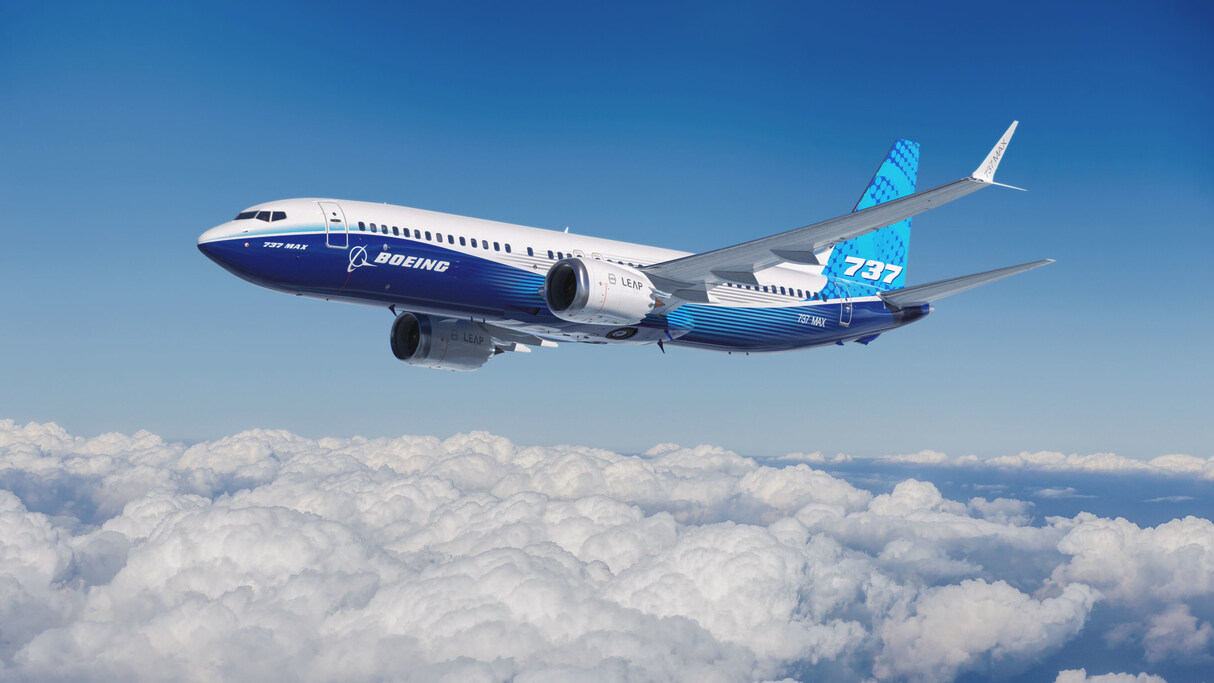
Those cracks became chasms with the 737 MAX. The crashes of Lion Air Flight 610 in October 2018 and Ethiopian Airlines Flight 302 in March 2019 — which together killed 346 people — were not simply engineering failures. Investigations revealed systemic problems: a flawed flight control system called MCAS, inadequate pilot training, insufficient regulatory scrutiny, and a corporate culture that had, in the view of many critics, prioritized speed to market over safety. The 737 MAX was grounded worldwide for nearly two years. Congressional hearings, criminal charges, and billions of dollars in settlements followed.
The MAX crisis forced a reckoning that went beyond any single airplane. It raised fundamental questions about how Boeing made decisions, how it related to its regulator — the Federal Aviation Administration — and whether the company’s drift toward financial optimization had come at the expense of the engineering rigor that had once defined it. For a company whose identity was built on the promise of safe, reliable flight, the damage was existential in nature, even if the business continued to generate revenue.
What Boeing Built — and What It Means
Strip away the stock tickers, the quarterly earnings calls, and the corporate reorganizations, and what Boeing built over the course of a century is something genuinely remarkable. It built the bombers that helped win a world war. It built the jetliners that made the modern global economy possible. It built the rockets — through partnerships with NASA — that carried Americans to space, including the Saturn V first stage that launched the Apollo missions to the Moon. It built the systems, the supply chains, and the institutional knowledge that made all of this achievable at scale.
Boeing’s story is, in many ways, the story of American industry itself — bold, innovative, sometimes reckless, occasionally tragic, and always operating at a scale that defies easy comprehension. The company employed hundreds of thousands of people across generations. It shaped the geography of the Pacific Northwest, the economics of global trade, and the daily reality of how billions of people move across the surface of the Earth.
But Boeing’s story is also a cautionary tale about what happens when the culture that builds great things is slowly replaced by a culture that manages great things. The tension between engineering ambition and financial discipline is not unique to Boeing — it lives inside every technology company that transitions from insurgent to incumbent. But in aerospace, where the stakes are measured in human lives, the consequences of getting that balance wrong are uniquely severe.
Looking Up
As of the mid-2020s, Boeing stands at another crossroads. The 737 MAX has returned to service. The 787 line has stabilized. New leadership has pledged a return to engineering-first principles. The company is competing with Airbus for the next generation of narrow-body aircraft, a decision that will shape commercial aviation for decades. In defense and space, Boeing continues to play a central role in American national security, from fighter jets to satellite systems to the Starliner crew capsule.
Whether Boeing can recapture the spirit that once drove a timber baron to build seaplanes on a muddy riverbank remains an open question. The challenges are real — regulatory scrutiny, workforce rebuilding, supply chain fragility, and a competitor in Airbus that has never been stronger. But Boeing has faced existential threats before. It survived the post-war collapse. It survived the 747 crisis. It survived the MAX tragedy, though not without profound scars.
The Duwamish River still flows through Seattle. The factory in Everett still stands. And somewhere, in a design office or on a factory floor, an engineer is still working on the next airplane, still chasing the same impossible question that drove William Boeing more than a century ago: Can we build something better?
The answer, for better and for worse, has always been yes.