

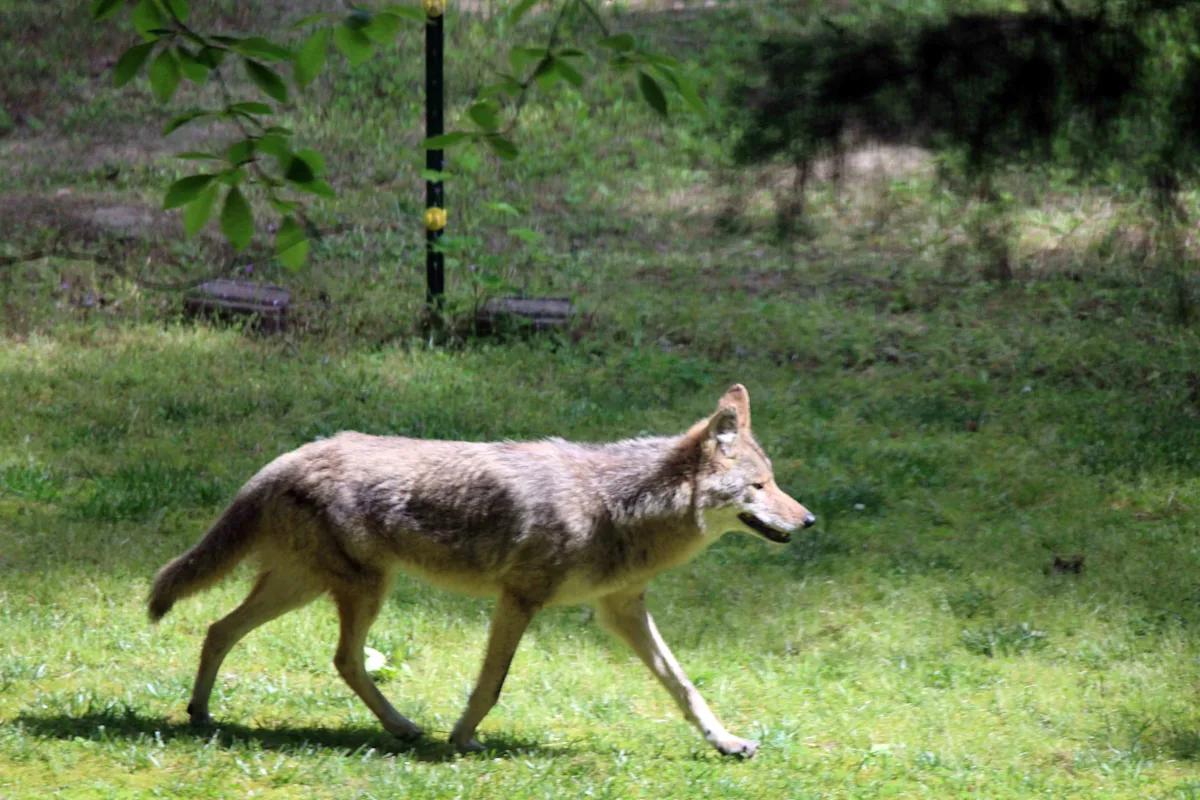
The coyote walked past Sarah Chen’s house in north Capitol Hill at 7:15 AM on Tuesday. She was making coffee when movement through kitchen window caught attention—not dog, wrong gait. Not fox, too large. The animal trotted down sidewalk with practiced confidence of resident who knows neighborhood better than she does. Chen moved to Seattle from San Francisco three years ago. She expected tech bros and rain. She did not expect apex predators commuting through residential streets.
She’s not alone. Seattle Urban Carnivore Project—collaborative research between Woodland Park Zoo and Seattle University—documented coyotes representing 50 percent of all wildlife observed in 2020-2021. Raccoons came second at 23 percent. Surprisingly, river otters were third at 9.7 percent of sightings. The data comes from 25-45 camera traps deployed monthly across greater Seattle area plus thousands of citizen observations reported through Carnivore Spotter app.
The statistics reveal Seattle’s improbable status as urban wildlife haven. The city’s 400+ parks, 130,000 trees, nearly 86 miles of shoreline create abundant habitat. But it’s more than just green space. It’s the particular way Seattle grew—annexing forests and wetlands rather than clearing them completely, preserving ecological corridors accidentally through geography (hills creating unbuildable slopes), and recently through intentional conservation (natural area acquisitions, habitat restoration projects).
The result: 270 bird species in Discovery Park alone, bald eagles nesting in residential neighborhoods, river otters raising pups in urban creeks, black bears occasionally wandering through (then safely relocated), cougars spotted in parks (also relocated), salmon spawning in streams running through city, old-growth forests surviving within city limits, and coyotes—so many coyotes—adapting brilliantly to urban existence.
Seattle’s wildlife isn’t decorative background or distant possibility requiring wilderness expedition. It’s immediate presence, daily coexistence, ongoing negotiation between human habitation and animal territories. The coyote walking past Chen’s house wasn’t lost or confused. It was commuting, using established route through urban landscape it understands as thoroughly as any human resident.
Discovery Park: The Accidental Wilderness
Discovery Park’s 534 acres make it Seattle’s largest green space—forest, meadows, sand dunes, beaches providing vital wildlife corridor. The park is accidental wilderness, repurposed military installation never intended as ecological preserve but now serving exactly that function.
The peninsula occupied by park was originally Fort Lawton, Army base established 1897 to protect Seattle from unnamed enemies. Fort Lawton didn’t see much action until WWII when used as barracks for troops bound for Pacific theater. Over war’s course it held up to 1,400 German and Italian prisoners. When fort was declared surplus property in 1960s, City of Seattle decided turning it into park. Various historic buildings from fort remain, but military infrastructure gave way to ecological restoration.
Discovery Park wasn’t officially inaugurated until 1973. The relatively recent establishment meant park existed during era of environmental consciousness—designed with ecological values rather than just recreational usage. The park maintains balance: human access (trails, viewpoints, educational programs) alongside habitat protection (restricted areas during nesting seasons, native plant restoration, minimal development).
Wildlife is abundant. By far the most abundant mammal remains found in archaeological excavations are deer, followed by elk—both important food sources for people who lived in area 4,500 to 3,550 years before present. Other remains include black bear, bobcat, mountain beaver, beaver, raccoon, plus dolphin and harbor seals. Evidence shows during earliest habitation period people ate larger mammals, but over next 700 years preferentially consumed smaller mammals. Reason for this change remains unclear—could reflect differences in how and when people used site.
Curiously, several animals of yore have reappeared. 2009: visitors saw 140-pound cougar. Wildlife officials trapped and released elsewhere. Same year residents north of park reported black bear, which then apparently headed north. More common are coyotes living throughout park. Family groups successfully raise pups here annually.
The park’s 270 bird species represent extraordinary diversity. Western red cedars, Douglas firs, western hemlocks provide habitat. Fall brings color-changing big-leaf and vine maples offering dramatic showcase of fiery reds, oranges, yellows. Pacific madrones (not magnolias—they were confused when Magnolia neighborhood was named) feature glossy green leaves and red peeling bark providing multiple looks throughout year including red berries late summer and fall.
Turn eyes to sky: bald eagles, chestnut-backed chickadees, spotted towhees with red eyes, various woodpeckers. Five species of owls: great horned, Western screech, Northern saw-whet, barred, barn. Two bald eagle nests, Cooper’s hawk nest, osprey in summer. For mammals: coyotes, raccoons, mountain beavers, muskrats, river otters. The latter live on land but hunt in Puget Sound waters, having raised young otters at Discovery Park in recent years.
Seventeen acres in park’s north are Native American land, home to Daybreak Star Indian Cultural Center—community center for United Indians of All Tribes Foundation, confederation of many Native American tribes in Seattle area. Visitor facilities are limited but spot offers one of best vistas of Sound. The indigenous presence reminds that human habitation and wildlife coexistence aren’t recent inventions but ongoing relationships spanning millennia.
Carkeek Park: Salmon Return to City
Carkeek Park’s 220 acres in northwest Seattle’s Broadview neighborhood encompass forest, meadows, wetlands, beach with breathtaking views of Olympic Mountains, Whidbey Island, Kitsap Peninsula, Puget Sound. Train tracks run along beach—visual reminder of urban setting—while trails crisscross park for plentiful hiking opportunities.
The park’s distinguishing features include restored fruit orchard with heritage apple trees and Piper’s Creek where salmon return in fall to spawn. “When salmon are running, you can even see bald eagles on beach eating salmon,” says Anne Bentley, Seattle Parks and Recreation naturalist. Along with bald eagles, spot 100+ bird species—everything from 14 types of ducks to feisty rufous hummingbird to striking barred owl.
Piper’s Creek Trail runs from one end of park to other, following stream as it descends through canyon. North Bluff Trail has many viewpoints overlooking Puget Sound. Hiking along Piper’s Creek in fall affords chance seeing spawning salmon—extraordinary urban wildlife experience. The salmon’s return represents successful habitat restoration after decades of degradation.
Urban development historically buried, channelized, or polluted many Seattle creeks. Salmon populations crashed or disappeared. Conservation efforts beginning 1990s focused on “daylighting” buried streams, removing culverts creating fish passage barriers, improving water quality, planting native vegetation stabilizing stream banks and providing shade. Piper’s Creek exemplifies these restoration successes.
The creek’s revival demonstrates that urban wildlife habitats aren’t static remnants of pre-development ecology but can be actively created through restoration. The salmon swimming up Piper’s Creek aren’t survivors clinging to marginal habitat—they’re thrivers in intentionally improved ecosystem. The bald eagles feeding on spawning salmon represent trophic cascade: restore salmon runs, predators follow.
Trails traverse hillsides and ravines traveling through wetlands and forests. Kids love swishing through leaves on lawn, playing in nature-inspired playground (with salmon slide!), visiting beach where they can wave at passing trains. The pedestrian bridge over railroad tracks provides access to large sandy beach.
The juxtaposition—salmon spawning while trains pass, eagles hunting while children play—captures Seattle’s particular urban ecology where wilderness and civilization interpenetrate rather than segregate into separate zones.
Seward Park: Old-Growth Survivor
Seward Park’s 300 acres on Lake Washington peninsula contain Seattle’s only remaining old-growth forest within city limits. The massive trees—some over 250 years old—survived because peninsula’s geography made logging difficult and because early conservationists fought protecting it.
The park boasts old-growth forest, paved multi-use trail ringing peninsula, amphitheater, native plant garden, art studio, miles of hiking trails, shoreline, beaches. But main trails running through park’s middle featuring grand old trees and lush undergrowth are what make Seward Park extraordinary.
Many folks familiar with paved trail ringing park’s peninsula are unaware of nature trails through middle—trails wide enough for strollers but with adventurous side trails offering more rustic feel. Kids love climbing on roots and logs, spotting owls in winter and spring, playing on playground and beach on Lake Washington.
The old-growth forest contains Douglas firs, western red cedars, western hemlocks reaching heights impossible in second-growth forests. The canopy creates darkness even on sunny days. Nurse logs support new tree growth. Snags provide habitat for cavity-nesting birds. The forest floor accumulates centuries of organic matter creating rich soil. The ecosystem’s complexity—multiple canopy layers, abundant deadwood, diverse understory—supports wildlife impossible in younger forests.
Bald eagles nest in tall trees. Great horned owls hunt at night. Pileated woodpeckers excavate cavities in snags. The forest’s age creates habitat structure unavailable elsewhere in urbanized Seattle. The trees themselves tell history—surviving indigenous management, pioneer settlement, urban development, and now serving as ecological anchors for surrounding restoration efforts.
Seward Park Audubon Center near entrance provides education about seasonal wildlife. The center is one of 41 Audubon Centers in country inviting public learning about natural world. Programs include daytime nature walks, evening Bat Treks, Owl Prowls. The Center’s presence transforms passive park visitation into active ecological education.
Just over 5 miles of trails wind through park. The peninsula’s location jutting into Lake Washington creates microclimates and habitat diversity. Shoreline areas attract waterfowl. Forest interior shelters terrestrial species. The edge habitats where forest meets water or meadow support species requiring both environments.
The old-growth forest’s survival within city limits represents conservation success and ongoing challenge. The trees are irreplaceable—if lost, centuries would pass before forest regained current complexity. Urban pressures threaten through edge effects (invasive species colonizing from adjacent lands), altered hydrology (development changing groundwater patterns), and climate change (shifting temperature and precipitation affecting growth).
Yet the forest persists, ecological anchor demonstrating that urban wilderness needn’t be oxymoron but can be intentionally protected reality.
The Urban Carnivore Project: Science of Coexistence
Seattle Urban Carnivore Project launched 2019 represents systematic attempt understanding how carnivores—coyotes, bobcats, raccoons, river otters, black bears, cougars, red foxes, opossums—live and interact with people across urban and suburban areas in Seattle region.
The project uses camera traps capturing hundreds of thousands of photographs annually, plus citizen observations reported via Carnivore Spotter. Data analyzed to explore urban carnivore distribution, habitat use and connectivity, population dynamics, and how these species live and interact with people across region.
The project collaborates with University of Washington conducting Seattle coyote diet study. Using genetic analysis, coyote scat analyzed understanding type of prey and its availability in coyote’s ecosystem. The findings challenge assumptions about urban coyote behavior.
Coyotes’ 50 percent representation in wildlife observations indicates remarkable adaptation to urban environment. They’ve learned navigating city streets, timing movements avoiding human activity peaks, utilizing green corridors connecting larger habitat patches, hunting available prey (rabbits, rats, food waste), and raising pups in areas providing sufficient cover.
Raccoons’ 23 percent representation reflects their longtime urban residency. The ultimate urban wildlife, raccoons roam yards and alleyways, are omnivores eating both plants and animals, hunt at night and rest during day in rock piles, hollow trees, crawl spaces, under decks. Kits stay with mother in one place 8 weeks before leaving den, then remain in same territory 13 months before growing independent and venturing further.
River otters’ surprising 9.7 percent representation indicates successful habitat restoration. Otters require clean water and abundant fish—conditions that disappeared from urban Seattle during industrialization but have partially returned through water quality improvements and salmon restoration efforts.
Areas with frequent coyote reports include greenbelt above Shilshole Ave, Golden Gardens, Carkeek Park, west Magnolia and Discovery Park, north Capitol Hill. Proximity to large parks and green spaces like Lake Washington Arboretum and Volunteer Park explains concentrations.
The project aims answering key questions: Do some species act as deterrents to others? Do healthy coyote populations help limit rat numbers? Which neighborhood characteristics attract certain species? How does human behavior (trail use, food waste disposal) affect where negative human-carnivore interactions occur—and don’t occur?
Understanding enables coexistence. Wildlife officials advise: manage garbage, recycling, compost ensuring wildlife can’t access—if animals become too acclimated to human food sources, can lead to them becoming nuisance. Maintain healthy distance—if encountering raccoons or coyotes, make noise yelling or slapping hand on thigh deterring wildlife from coming too close.
During pup season February-July, coyotes become more defensive near dens. Don’t run or turn back if coming across coyote. If one approaches, scare it off shouting or throwing objects.
The project partners with cities and organizations—Issaquah Parks, SHADOW Lake Nature Preserve, Delridge Neighborhood Development Association, Bainbridge Island Land Trust—monitoring wildlife in important places across region. The collaborative approach recognizes urban wildlife management requires coordination across jurisdictions.
The data collection continues building multi-year dataset revealing population trends, habitat preferences, behavioral changes over time. The information informs management policies, public education campaigns, and conservation priorities.
Union Bay Natural Area: Landfill Reborn
Union Bay Natural Area covers 74 acres of restored wetlands and grasslands. The former landfill now hosts over 200 bird species and various mammals. The transformation from waste disposal site to wildlife habitat represents urban ecology’s redemptive possibilities.
Diverse range of resident and migratory bird species makes this location valuable for birding. Observe red-winged blackbirds, great horned owls, numerous waterfowl species. Beavers have returned and built visible dams. Might spot river otters, coyotes, various small mammals.
The landfill’s closure and subsequent restoration involved capping waste with soil, establishing drainage systems preventing contamination, planting native vegetation, and allowing natural succession processes creating diverse habitats. The result: functioning ecosystem on land previously considered permanently degraded.
The area’s location adjacent to Lake Washington creates ecotone—transition zone between aquatic and terrestrial ecosystems—supporting species requiring both environments. Wetlands provide critical habitat for amphibians, waterfowl, wading birds, invertebrates. Grasslands support small mammals, raptors, insects. The habitat diversity within relatively small area concentrates wildlife.
The restoration demonstrates that urban ecology isn’t just about protecting remnant natural areas but actively creating new habitats on degraded lands. Cities contain numerous brownfields, former industrial sites, closed landfills—lands potentially convertible to wildlife habitat through restoration.
The Broader Context: Why Seattle?
Seattle’s wildlife abundance isn’t accidental. Geography provides foundation: Puget Sound’s marine ecosystems, Pacific flyway migration route, Cascade Mountains’ proximity, temperate rainforest climate, complex topography creating microclimates and habitat diversity.
But geography alone doesn’t explain urban wildlife presence. Portland, Vancouver BC, Tacoma share similar geography but don’t necessarily have equivalent urban wildlife. Seattle’s distinction comes from specific conservation choices, historical accidents preserving habitats, and ongoing management prioritizing ecological values.
The 400+ parks weren’t inevitable. They resulted from Olmsted Brothers’ early 20th century master plan mapping city’s green spaces, Forward Thrust bond initiatives funding park acquisitions, and consistent public support for park funding. The 130,000 trees weren’t spontaneous growth but products of urban forestry programs planting and maintaining street trees.
The 86 miles of shoreline remain accessible—not privatized or exclusively industrialized—because of shoreline management regulations protecting public access and ecological functions. The natural areas within parks receive active management: invasive species removal, native plant restoration, salmon habitat improvements, trail maintenance balancing access and habitat protection.
Seattle’s wealth matters. Conservation costs money: land acquisition, habitat restoration, wildlife monitoring, education programs, enforcement. Wealthier cities can afford these investments. Seattle’s tech boom generated tax revenues supporting environmental programs other cities can’t fund.
The political culture matters. Seattle voters consistently approve environmental initiatives: parks levies, green space acquisitions, salmon recovery funding, tree protection ordinances. The electorate values urban nature enough to pay for it.
The timing matters. Seattle grew rapidly during late 20th century when environmental values became mainstream. Earlier cities (Philadelphia, Boston, New York) developed before conservation thinking influenced urban planning. Later cities (Phoenix, Las Vegas) grew in post-environmental backlash era prioritizing different values. Seattle hit sweet spot: large enough to matter, wealthy enough to invest, environmentally conscious enough to prioritize.
The Coexistence Challenge
Living with urban wildlife requires adjustments. Don’t leave pet food outside. Secure garbage in wildlife-proof containers. Don’t feed wildlife—intentionally or unintentionally. Keep pets leashed in areas with coyotes. Supervise children near water where river otters hunt. Report aggressive wildlife behavior to authorities.
The adjustments seem burdensome until considering alternative: sterile urban environment devoid of wildlife, completely dominated by human presence, ecologically dead except for rats, pigeons, and invasive species. That’s not hypothetical—it describes many cities worldwide.
Seattle’s choice—maintaining urban wildlife through active conservation and accepting coexistence challenges—creates city where residents encounter coyotes on morning walks, watch eagles hunt from kitchen windows, hear owls at night, see salmon spawn in urban creeks, and sit silently in forests of towering Douglas firs just over ridge from Interstate 5.
The coyote walking past Sarah Chen’s house represents that choice: Seattle as city where wilderness isn’t distant recreation requiring weekends away but immediate presence woven into daily urban fabric. The animal’s confidence navigating residential streets reflects successful adaptation—both species learning coexistence.
The wildlife isn’t decorative amenity or tourist attraction. It’s indicator of ecological health, measure of conservation success, and reminder that cities can accommodate more-than-human life if designed with intention, managed with care, and valued by residents willing to share space.
Seattle’s wildlife renaissance proves urban ecology needn’t be oxymoron but can be intentionally created reality where 270 bird species thrive in parks, salmon spawn in creeks, old-growth forests survive within city limits, and coyotes confidently commute through neighborhoods they understand as thoroughly as human residents. The question isn’t whether cities can support wildlife—Seattle demonstrates they can—but whether other cities will make choices and investments required creating similar outcomes.
The Fragile Balance: Threats and Opportunities
The wildlife abundance isn’t guaranteed permanence. Development pressure continues. Climate change alters habitats. Invasive species compete with natives. Pollution degrades water quality. Human population growth increases disturbance. Each threat requires ongoing vigilance and active management.
Green Lake Park’s 259 acres surrounding small natural lake illustrate both success and challenge. Favorite hunting ground for runners, personal trainers, artistically tattooed sunbathers, the park attracts enormous human usage potentially conflicting with wildlife habitat. Yet waterfowl still nest, coyotes still hunt at dawn and dusk, the lake supports fish and aquatic insects.
The balance depends on thoughtful management: restricting human access to sensitive areas during nesting, maintaining vegetation buffers between trails and shoreline, educating visitors about wildlife etiquette, and accepting that perfect wildlife habitat and maximum human recreation sometimes conflict requiring compromise.
Volunteer Park’s 48.3 acres on Capitol Hill—designed by famous Olmsted Brothers who architected New York’s Central Park—demonstrates urban park evolution. Originally designed for human recreation and aesthetic pleasure, contemporary management increasingly incorporates ecological values. Trees aren’t just decorative but provide habitat. Lawns aren’t purely recreational but support insects feeding birds. Even formal gardens can host pollinators and small wildlife.
The shift from purely anthropocentric park design to ecologically informed management represents broader cultural change valuing urban nature not just for human benefit but for intrinsic worth and ecological function.
The Educational Imperative: Knowing What We’re Protecting
Seattle’s natural areas serve crucial educational function. Children growing up in city encountering coyotes, watching salmon spawn, hearing owls, exploring old-growth forests develop ecological literacy impossible in cities lacking such experiences.
Seward Park Audubon Center’s programs—nature walks, Bat Treks, Owl Prowls—create opportunities for structured learning. But equally important are unstructured encounters: kid finding salamander under log, family watching eagles hunt, teenager photographing mushrooms, adult sitting quietly hearing forest sounds.
These experiences build constituency for conservation. People protect what they love. They love what they know. Urban wildlife provides opportunity for knowing—immediate, visceral, repeated exposure creating emotional connections generating political support for conservation funding.
The educational benefit extends beyond children. Adults new to Seattle—arriving for tech jobs, graduate school, career changes—often come from places without comparable urban wildlife. Their encounters with eagles, coyotes, salmon generate surprise and delight, forming part of what makes Seattle distinctive. The wildlife becomes part of city’s identity and appeal.
The Daybreak Star Indian Cultural Center in Discovery Park provides indigenous perspectives on human-wildlife relationships. Native peoples maintained sustainable relationships with these species for millennia before European colonization disrupted traditional management. Contemporary conservation increasingly recognizes value of indigenous knowledge and practices.
Understanding that salmon spawning in Piper’s Creek connect to larger histories—geological processes creating streams, indigenous peoples managing salmon runs, industrial development degrading habitat, contemporary restoration efforts reviving populations—transforms simple wildlife viewing into complex ecological and historical narrative.
The Economic Calculus: What Nature Is Worth
Urban wildlife provides economic benefits beyond tourism appeal. Natural areas reduce stormwater runoff through absorption, preventing flooding and water quality degradation. Trees reduce urban heat island effect, lowering cooling costs. Wetlands filter pollutants, reducing water treatment expenses. Green spaces increase adjacent property values. Parks attract businesses and workers valuing quality of life.
These ecosystem services—ecological functions providing economic benefits—justify conservation investments through cost-benefit analysis even for stakeholders unmoved by intrinsic value arguments. Discovery Park’s forests and wetlands provide stormwater management worth millions in avoided infrastructure costs. Salmon runs support commercial and recreational fishing generating economic activity.
The calculation becomes more complex when considering opportunity costs: land used for wildlife habitat could generate property tax revenue if developed. The city forgoes this revenue choosing conservation. The choice reflects prioritization: ecological values outweigh maximum economic extraction.
Seattle’s wealth enables this prioritization. Poorer cities facing budget crises struggle justifying conservation spending. Seattle’s tax base allows funding both human services and environmental protection. The privilege of choice carries responsibility: using that privilege wisely, modeling conservation approaches other cities might adopt as they develop capacity.
The Climate Dimension: Resilience Through Nature
Climate change threatens urban wildlife through multiple pathways: temperature increases stressing species adapted to cooler climates, precipitation pattern changes altering wetland hydrology, sea level rise flooding coastal habitats, extreme weather events causing direct mortality.
Urban natural areas provide climate resilience for both wildlife and humans. Green spaces absorb heat, reducing temperature extremes. Forests and wetlands absorb rainfall, reducing flood risk. Diverse ecosystems demonstrate greater resilience to disturbances than simplified systems.
The old-growth forest in Seward Park, having survived centuries of natural disturbances, possesses resilience impossible in younger forests. The complexity—multiple species, varied age structures, abundant deadwood creating micro-habitats—means if some species decline under changing conditions, others may expand filling ecological roles.
Connectivity between habitat patches enables species range shifts as climate zones move. Wildlife corridors—green belts, stream corridors, linked park systems—allow animals moving to more suitable habitats as conditions change. Seattle’s geography naturally provides some connectivity through topography creating unbuildable corridors. Intentional conservation expands and protects these connections.
The urban wildlife’s presence demonstrates ecosystem functionality. If salmon return and eagles nest and coyotes hunt successfully, the ecosystem retains sufficient health supporting these indicator species. If they disappear, it signals broader ecological degradation requiring intervention.
The Future: What Comes Next
Seattle’s wildlife abundance isn’t permanent achievement but ongoing process requiring continued investment, management, and public support. The success story could reverse through neglect, development pressure, climate change, or shifting political priorities.
Maintaining current wildlife populations requires protecting existing habitats from degradation and development. Expanding wildlife populations requires creating new habitats through restoration. Both strategies need funding, expertise, political will, and public support.
The next generation’s conservation challenges differ from previous eras. Climate change wasn’t significant concern when Discovery Park was established or Olmsted Brothers designed park system. Addressing it requires adaptive management: assisting species migrations, managing for novel ecosystems, accepting that historical conditions can’t be recreated, and focusing on functional diversity over species composition.
The urban wildlife’s presence provides hope. If cities—inherently human-dominated environments—can support such biodiversity through intentional conservation, then ecological restoration remains possible even in heavily modified landscapes. The coyote walking confidently through residential neighborhood isn’t anomaly but indicator of successful coexistence worth replicating elsewhere.
Sarah Chen’s surprise seeing coyote outside kitchen window will fade as observation becomes routine. Familiarity might breed indifference or might deepen appreciation. Whether Seattle’s residents continue valuing and protecting urban wildlife depends partly on whether they maintain capacity for wonder—recognizing that coyote trotting down sidewalk represents ecological achievement worth preserving, not nuisance requiring elimination.
The wildlife doesn’t need Seattle. The species existed before the city and would continue if humans disappeared. But Seattle benefits enormously from wildlife presence: ecological function, educational opportunities, quality of life enhancement, and demonstration that cities can be more than human monocultures but diverse communities accommodating many species.
The story continues writing itself daily: eagles hunting, salmon spawning, coyotes commuting, otters playing, owls hooting, trees growing. The narrative’s continuation isn’t guaranteed but depends on choices—individual choices about coexistence behavior, political choices about conservation funding, societal choices about development patterns and environmental priorities.
Seattle’s urban wildlife renaissance demonstrates what’s possible when geography provides foundation, history creates opportunities, wealth enables investment, and residents value coexistence enough to accept its challenges and costs. That combination isn’t easily replicated, but the model exists: proof that cities and nature needn’t be opposites but can be integrated realities where both thrive.