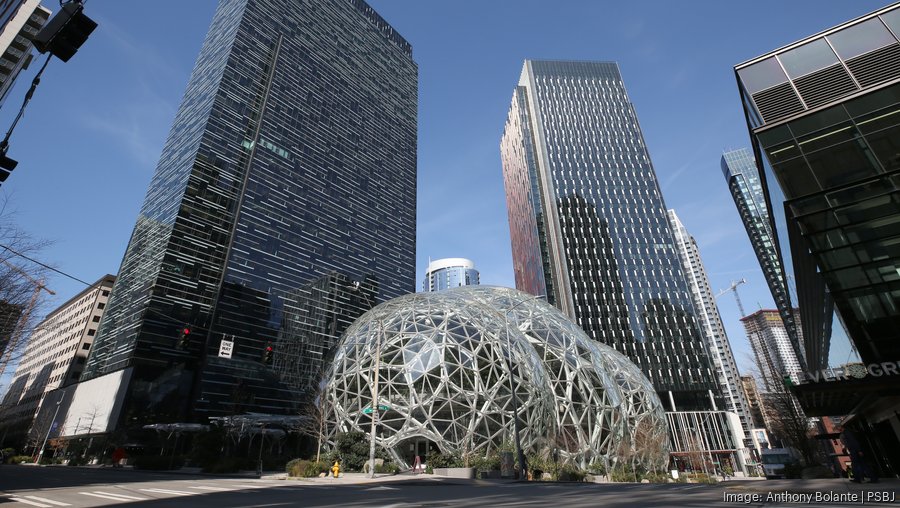
Martin Selig defaulted. Then Unico defaulted. Then Pacific Place Mall, then Dexter Horton Building. Prominent downtown Seattle properties—ones owned by established landlords who’d weathered previous recessions—suddenly unable to service debt. Lenders accepting keys, walking away, writing down losses. Not because of economic downturn. Because of something unprecedented: people simply stopped coming to offices.
Q3 2025: Downtown Seattle Central Business District vacancy rate hit 36.5%. Not typo. More than one in three office square feet sitting empty. Slowly rising. The number represents not peak-pandemic chaos but new normal settling in. For reference: San Francisco at 33%, Portland at 31%, Vancouver BC at 15%. Seattle leads major cities in office market dysfunction.
The statistics worsen with context. 36.5% counts only space officially vacant—listed, marketed, available. Doesn’t count space technically leased but not used. Doesn’t count companies maintaining minimal presence for optics while employees work remotely. De facto vacancy rate almost certainly exceeds 40%. Probably approaches 50% in some submarkets. Pioneer Square: 55.96% officially vacant. More than half empty.
Downtown Seattle Association tracked 90,000+ workers returning to offices per weekday in July 2024—second-highest since March 2020. Progress! Celebration! Except: pre-pandemic levels were 180,000+. Current occupancy barely half of what it was. Four years after pandemic began, recovery stalled around halfway mark with no indication of further movement.
The office market that won’t recover raises uncomfortable questions. What if this IS recovered? What if hybrid work permanently reduced office demand 40-50%? What if those ghost towers stay ghost towers? What if downtown Seattle—city that built identity around being employment center with 7th-largest downtown employee population nationally despite 15th-largest metro area—no longer needs to be employment center?
The answers ripple outward touching everything: city tax revenues, transit ridership, retail survival, restaurant viability, residential development, homelessness services, public safety funding, urban identity. Empty offices don’t just sit there passively. They create cascading failures throughout urban ecosystem. Seattle discovering this daily.
The Numbers That Tell the Story
Before pandemic: Seattle region office vacancy around 6%. Healthy market. Some empty space allowing tenant movement. Not oversupply. March 2020: Everything stopped. Companies sent employees home temporarily. Temporarily became indefinitely. Indefinitely became permanently.
The trajectory since:
- Q4 2021: 12.1% vacancy (first significant rise)
- Q1 2024: 15.1% vacancy (ninth consecutive quarterly increase)
- July 2024: 23.2% vacancy
- Q3 2025: 22.7% vacancy overall (multi-tenant properties over 10,000 SF)
- Q3 2025: 27.3% vacancy Seattle proper
- Q3 2025: 36.5% vacancy downtown CBD specifically
Fifteen consecutive quarterly increases through Q3 2025. Never declining. Only slowing rate of increase. Stabilization appearing as “only” getting 20 basis points worse per quarter versus rapid escalation observed 2020-2023.
Net absorption—total space occupied minus total space vacated—negative every quarter since late 2021. Q3 2025: negative 1.08 million square feet in quarter, negative 2.23 million square feet year-to-date. Companies shrinking footprints faster than new tenants filling empty space. The gap persists despite leasing activity improving.
2024: Puget Sound office market averaged 2.1 million SF per quarter in leasing activity (new leases plus renewals)—highest since 2021. Sounds positive until realizing renewals accounted for roughly 33% of total. Existing tenants staying put (often downsizing) rather than new demand entering market. New leasing insufficient offsetting space being vacated.
Sublease space declined—good news? Total sublease availability dropped from 7.0 million SF in 2024 to 5.3 million SF in Q3 2025 (25% year-over-year reduction). Sublease now 12.8% of total available inventory versus 16.9% same period previous year. But decline reflects leases expiring and not renewing rather than sublease space being absorbed. Companies simply ending leases instead of finding sublet tenants.
Class A vacancy jumped 540 basis points year-over-year to 32.2%. Trophy class buildings fared better at 10.2% vacancy. Flight to quality accelerating—when companies DO commit to office space, choosing best buildings, abandoning middle-tier properties. Creates winner-take-most dynamic where premium buildings outperform while Class B and C buildings spiral.
Seattle has second-highest office vacancy rate nationally at 26.6%, trailing only San Francisco at 25.4% and Houston at 23.8%. Well above national average of 18.5%. Dramatically higher than regional peers: Los Angeles 14.4%, Phoenix 17.8%, Denver 23%.
Overall vacancy rate across all Seattle asset classes: 33.62% in 2024. One-third empty. And slowly worsening.
The Why: Technology, Geography, and Cultural Shift
Seattle didn’t just have office market downturn. Seattle had perfect storm:
Technology concentration: Seattle’s strength as tech hub became vulnerability. F5, Zillow, DocuSign, Qualtrics, countless others headquartered downtown can easily rely on remote work. Software engineering, product management, design, operations—work translates to remote better than manufacturing, healthcare, retail, hospitality. San Francisco shares this vulnerability. Cities with more diversified employment bases recovered faster.
Microsoft and Amazon influence: The giants employ 100,000+ combined in region. When they set hybrid policies (3 days/week initially, recently pushed to 5 days for Amazon in 2025), ripple effects massive. But even with return-to-office mandates, they’ve given up significant downtown space. Microsoft vacated floors. Amazon consolidated. Both demonstrated through actions that full return isn’t happening regardless of policy.
Geographic concentration: Seattle unique among cities its size for how concentrated commercial office space is in downtown towers. Pre-pandemic downtown employee population 7th-largest in U.S. despite 15th-largest metro area. Over half of all office space in city of Seattle located downtown. About half of greater downtown’s office space in CBD: nearly 25 million square feet. Eggs in one basket. When basket dropped, catastrophic concentration risk revealed.
Tower density: Seattle has 53 buildings at least 400 feet tall, 21 over 500 feet tall—numbers nearly 50% greater than Portland, Bellevue, and Vancouver BC combined. All those towers need filling. Suburban office parks distribute demand across geography. Downtown towers concentrate it vertically. When floors empty, entire buildings can tip into distress.
Suburban competition: Bellevue emerged as major competitor. Lower vacancy (10.9% versus 24.9% downtown Seattle in December 2023), newer buildings, easier parking, less homelessness/crime perception, more tech campuses (Microsoft, Meta, others). Recent surge in Puget Sound leasing activity concentrated in Bellevue. Downtown Seattle facing intra-regional competition it didn’t have pre-pandemic.
Cultural shift: Pandemic proved remote work possible for knowledge workers. Once proven, impossible to unprove. Employees gained leverage. “Most companies would prefer workers on site for benefits of in-person collaboration,” one analysis noted, “but they lost lot of leverage once pandemic proved that, for some kinds of workers, work-from-anywhere workforce could perform reasonably well.”
Quality of life calculation: Seattle’s traffic congestion, parking costs, homelessness crisis, retail closures, perception of downtown decline—all made commuting less appealing. Pre-pandemic, companies offset commute pain with office perks. Post-pandemic, perks insufficient. Employees calculating: “Is commute worth it?” Increasingly answering: “No.”
AI acceleration potential: Same occupations easily done remotely also amenable to AI replacement—technology, finance, law, business services. Some analysts predicting AI could further reduce office demand as roles get automated. Speculative but plausible. Would extend timeline to recovery indefinitely.
The Landlord’s Dilemma: Extend and Pretend
Buildings with high vacancy rates worth less—often lot less—than principal owed on mortgages. Straightforward math. But response isn’t straightforward. Some lenders take building, accept losses. Others practice “extend and pretend”—accepting wishful story landlords tell about attracting new tenants soon at same rent, filling building up, resuming payments, paying back rent, having building sellable for enough covering principal.
This story, told for many downtown properties simultaneously, obviously fairy tale. But everyone in whistler’s chorus hoping if they avoid financial haircut now, maybe won’t need one later. Meanwhile: defaults mounting. Martin Selig, legendary Seattle developer whose buildings define skyline, defaulting on loans backed by prominent downtown buildings. Signals this isn’t small landlords failing—this is pillars of Seattle commercial real estate unable to make math work.
Property values collapsed. Sales comparables brutal. One Esterra Park in Redmond acquired for $225M ($912 PSF)—but that’s Eastside, not downtown. Downtown Seattle transactions showing $302 average price per square foot in 2024, up 7.95% from previous year—sounds positive until remembering that’s averaging in distressed sales, foreclosures, properties trading 50-70% below pre-pandemic values.
Landlords avoiding rent cuts despite soft market. Why? Because leases run 5-10 years. Cutting rent today locks in lower revenue for extended period. Better to offer concessions: several months free rent, tenant improvement allowances, flexibility on space size. Upfront giveaways preserve longer-term rental rates. Plus avoiding establishing lower market comps affecting other tenants’ renewals.
The extend-and-pretend works until it doesn’t. Eventually lenders force reckoning. Eventually property sells at real market value, not fantasy value. Eventually someone accepts loss. But timing uncertain. Can persist years. Creates zombie properties—technically functioning but economically underwater, neither recovering nor fully failing, just existing in limbo extracting whatever revenue possible while hoping for miracle.
The miracle would be: office demand rebounds to pre-pandemic levels, filling vacant space, pushing rents higher, restoring property values, making mortgages serviceable again. Five years post-pandemic, miracle looking unlikely. More probable: prolonged period of distressed sales, foreclosures, ownership changes, debt write-downs. Financial pain distributed across lenders, pension funds, REITs, insurance companies holding commercial real estate debt.
The Conversion Dream: Offices to Apartments
Mayor Bruce Harrell proposed solution: convert office buildings to residential use. Addresses two problems simultaneously—vacant offices and housing shortage. Office vacancy rates hit 25% in early 2024 from 5% in 2019. Meanwhile residential rents increased 32% between 2012 and 2022. Urban Institute named Seattle one of top five U.S. cities potentially benefiting most from office-to-residential conversions.
July 2024: Seattle City Council unanimously approved legislation easing conversions. Law allows developers converting buildings to housing to skirt design standards, avoid affordable housing requirements. Washington state created construction sales tax exemption for conversion projects. Combined with city legislation, creates substantial incentive.
The problem: conversions remain more expensive than building new housing. Even with incentives. “Without that tax break and Seattle’s new legislation,” Seattle Office of Planning and Community Development stated, “there would be zero conversions of 10 or more units in and around city’s downtown.”
WITH incentives? City officials expect less than dozen conversion projects resulting 1,000-2,000 new housing units over seven years. Call it 150-300 units annually. For context: Seattle has roughly 25 million square feet downtown office space. Converting 10% would create perhaps 2,500-3,000 apartments. Meaningful but nowhere near solving 36.5% vacancy rate.
Why conversions so challenging:
- Floor plates: Office towers designed with large floor plates, core elevators/utilities in center, open space radiating outward. Apartments need windows. Deep floor plates create apartments with interior rooms lacking natural light. Building codes require egress, ventilation, light. Expensive to reconfigure.
- Plumbing: Offices have minimal plumbing—bathrooms clustered around core. Apartments need kitchen and bathroom per unit. Running new plumbing through 20-40 story building? Massively expensive.
- Ceiling heights: Modern offices have lower ceilings (10 feet or less) optimizing square footage. Apartments benefit from higher ceilings. Converting creates squat, unappealing units unless you reduce floor count—worsening economics.
- Building systems: HVAC designed for office occupancy patterns (daytime, workweek). Residential needs 24/7 climate control. Electrical systems designed for office loads, not cooking, laundry, individual unit needs. Complete system replacement required.
- Economics: After spending millions converting, resulting apartments compete with purpose-built residential—which is cheaper to construct. Unless conversion achieves rent premium (unlikely—tenants don’t pay more for converted offices versus new apartments), math doesn’t work.
Notable successful conversions exist—San Francisco’s Market Street projects, New York’s financial district—but typically in older buildings with more favorable dimensions and where residential demand extraordinarily high. Seattle’s newer towers with efficient (for offices) designs particularly unsuitable.
The conversion dream remains mostly dream. Will happen on small scale. Won’t solve fundamental oversupply problem. Might convert 2-5% of vacant office space over decade. Leaves 30-40% still empty.
The New Office Paradigm: Life Sciences and Neighborhood Hubs
Not all office markets suffering equally. Differentiation emerging:
Life sciences exemption: “You can’t do lab work from home, for the most part,” noted Joanna Callahan of Hess Callahan Grey Group. Northlake Commons—mixed-use, mass-timber building with 175,000 SF office space—originally intended for generic office tenants, redesigned accommodating life sciences sector. Lab space, research facilities, biotech companies—demand remained strong through pandemic. South Lake Union (Fred Hutch Cancer Center, others) showing resilience. This sector somewhat insulated.
Neighborhood office resurgence: “Not downtown” becoming selling point. Properties in Fremont, Ballard, Capitol Hill, Wallingford offering different proposition: walkable neighborhoods, local restaurants, less commute for many, more intimate scale, lower rent. Some tenants abandoning downtown towers for neighborhood locations. Distributes office demand geographically, reduces downtown concentration.
Trophy buildings outperforming: Class A+ assets in downtown Seattle outperforming broader market. When companies commit to office presence, choosing best buildings. Trophy space in low- to mid-$50s range per square foot, rates remaining near pre-COVID levels. Flight to quality creating bifurcated market—winners and losers with little middle ground.
Flexible/coworking spaces: WeWork’s collapse notwithstanding, demand for flexible space persists. Companies uncertain about needs wanting month-to-month options, not 5-year leases. Operators like Regus, IWG, local providers filling niche. Smaller footprints, shorter commitments, more flexibility matching post-pandemic uncertainty.
Corporate consolidation: Amazon, Microsoft, others consolidating employees into fewer buildings with higher density. Abandoning distributed floor plans across multiple towers. Instead: dedicated buildings with all employees present on designated days. Creates ghost floors in vacated buildings while intensifying use in retained ones.
The pattern: office market fragmenting. No longer homogeneous downtown-tower monoculture. Instead: life sciences hubs, neighborhood centers, trophy buildings, flexible spaces, consolidated campuses—each serving different need, different tenant, different economic logic. Downtown CBD towers designed for previous era facing hardest adjustment.
The Transit Problem: Empty Trains to Empty Offices
Sound Transit built light rail betting on downtown employment density. Link Light Rail serves Seattle CBD with multiple stations. Northgate Link, East Link (to Bellevue), future extensions—all predicated on commuters needing downtown access. When offices emptied, trains emptied.
Sound Transit ridership 2024 recovering but still below pre-pandemic levels. Weekday ridership concentrated on non-commute hours, weekends, tourist/recreational trips. Traditional Monday-Friday 8-5 commute pattern—what system was designed for—not recovering proportionally.
Buses similar story. King County Metro seeing ridership growth but composition changed. Less peak-hour crush, more distributed throughout day. Less downtown-focused, more suburb-to-suburb. Routes serving tech campuses in Eastside performing better than routes serving downtown Seattle.
The fiscal implication: transit agencies planned revenue based on ridership projections now unrealistic. Farebox recovery ratios declining. Operating costs remain fixed (labor contracts, equipment maintenance, debt service) while revenue drops. Gap filled by subsidies—meaning taxpayers funding empty trains to empty offices.
Parking revenues collapsed. Downtown parking garages built serving office workers. Monthly parking passes revenue stream dried up. Daily rates dropped trying to attract any usage. Some garages sitting nearly empty. Property values declined. Tax revenues to city decreased. Cascading failures throughout transportation ecosystem supporting downtown employment concentration that no longer exists at previous scale.
The Tax Revenue Crisis: Who Pays for Empty Towers?
Seattle’s commercial real estate generates substantial property tax revenue. When property values decline, tax revenues decline. When buildings go into foreclosure, tax payments become uncertain. When owners petition for reduced assessments citing vacancy/income loss, revenue projections need adjustment.
Mayor-elect Katie Wilson (taking office January 2026) campaigned proposing “well-designed vacancy tax or fine” on empty commercial space incentivizing owners to fill it. Business groups warned this could backfire—pushing more companies to Bellevue, worsening problem. Wilson emphasized openness to input while preparing to govern.
The fundamental tension: city needs revenue. Empty offices generate less revenue. Can’t force tenants to lease space they don’t need. Can tax vacancy but risk driving remaining tenants away. Can reduce services but downtown already struggling with homelessness, retail closures, perceptions of decline. Can’t easily replace lost commercial property tax revenue with residential (which generates less per square foot).
Budget shortfall looming. Services get cut. Police, fire, transportation, parks, homelessness programs—all competing for shrinking resources. Or taxes rise on properties that ARE occupied, making Seattle less competitive. Or city borrows, kicking problem to future. None satisfying.
The ghost towers don’t just sit there. They create negative externalities: perceived blight, reduced foot traffic harming retail, questions about building maintenance, dark windows signaling decline. Every empty floor makes downtown less appealing for remaining occupants. Vicious cycle.
The Bellevue Factor: Eastside Rising
While Seattle CBD vacancy hit 36.5%, Bellevue hovered around 10.9%. Dramatic difference. Why?
- Newer inventory: Bellevue office stock newer on average. Modern systems, better amenities, designed for contemporary work patterns. Seattle’s older towers showing age.
- Tech campus concentration: Microsoft headquarters. Meta campus. Google facilities. T-Mobile. Bungie. Others. Bellevue positioned as Eastside tech hub before pandemic. Momentum continued.
- Parking and access: Bellevue easier driving, more parking, less congestion. For hybrid workers coming in 2-3 days weekly, parking availability matters more than transit access.
- Perceived safety: Fair or not, Bellevue perceived as cleaner, safer, less homelessness visibility than downtown Seattle. Affects where companies locate, where employees prefer commuting.
- Business climate: Bellevue marketed itself as pro-business alternative to Seattle. Lower taxes in some categories, fewer regulations, development-friendly policies. Some companies relocated partially or fully.
- Talent proximity: With Microsoft and other major employers Eastside, talent pool concentrated there. Companies locating near talent rather than assuming talent will commute.
Recent Puget Sound leasing activity surge concentrated in Bellevue. Seattle’s higher availability suggesting slower recovery. Intra-regional competition redistributing office demand. Zero-sum game: Bellevue’s gain is Seattle’s loss. Combined metro area might stabilize but within metro, Seattle CBD losing share.
The political implication: Seattle can’t control Bellevue’s policies. Can’t prevent companies choosing Eastside. Can’t force tenants to prefer downtown. Only can make Seattle more attractive—but with budget constraints limiting ability to improve services, infrastructure, safety, cleanliness.
The Return-to-Office Mandates: Amazon’s Five-Day Gambit
Early 2025: Amazon announced five-day in-office requirement starting Q1. Ended hybrid flexibility, mandated full-time office presence. Other companies watching closely. Would others follow? Would this reverse downtown decline?
Initial reaction mixed. Some employees accepted. Some relocated closer. Some found new jobs allowing remote work. Some complied reluctantly. Impossible knowing yet how many actually showing up five days weekly versus quietly ignoring policy.
Even if perfectly enforced, Amazon already reduced downtown Seattle footprint dramatically. Five days in smaller space equals fewer employees downtown than three days in larger space previously. Net effect on downtown occupancy: unclear, possibly negative.
Microsoft maintains three-day expectation but hasn’t mandated five days. Other tech companies watching Amazon’s retention/recruitment impacts before copying. If Amazon experiences brain drain to competitors offering flexibility, five-day mandates won’t spread. If Amazon’s mandate works without major talent loss, others might follow. Early 2026 as this plays out.
The deeper question: even with return-to-office mandates, is previous office space footprint needed? Companies discovered productivity maintained with less space, fewer amenities, more density on days people are present. Mandate five days but in 60% of previous space? Still leaves 40% vacant market-wide.
Jon Scholes, Downtown Seattle Association CEO, called Amazon’s mandate “influential.” Acknowledges it sets tone. But one company’s policy insufficient reversing market-wide structural shift. Would need coordinated return across multiple major employers. Not happening.
The Future: Three Scenarios
Scenario 1: Gradual Recovery (Base Case)
Vacancy stabilizes 2026 around 25-30%. Slow absorption over 5-10 years as companies slowly grow, some return-to-office mandates stick, conversions remove some supply, distressed properties get repurposed. Downtown remains less vital than pre-pandemic but finds new equilibrium at smaller scale. Retail adjusts. Transit scales back. City accepts permanently smaller downtown employment base. Painful adjustment period but eventually stabilizes.
Probability: 60%
Scenario 2: Continued Decline (Pessimistic Case)
Vacancy continues rising. AI eliminates additional office jobs. More companies embrace remote-first. Bellevue captures growing share of remaining demand. Defaults mount. Building abandonment begins. Downtown enters death spiral where declining conditions drive more exodus driving worse conditions. City unable to maintain services with reduced tax base. Requires dramatic intervention—aggressive conversions, major public investment, policy overhaul.
Probability: 25%
Scenario 3: Unexpected Rebound (Optimistic Case)
Major policy changes or technological shifts reverse remote work trend. Perhaps: in-person collaboration proves crucial for AI development, companies mandate returns succeeding without talent loss, downtown revitalization initiatives work, new industries requiring in-person work cluster downtown, residential conversions succeed beyond expectations creating vibrant 24/7 neighborhood. Vacancy drops to 15-20% by 2030.
Probability: 15%
Most likely: Scenario 1 with elements of Scenario 2. Gradual recovery to new normal at permanently elevated vacancy versus pre-pandemic baseline. Some neighborhoods/submarkets decline significantly. Others find new identities. Overall: decade-long adjustment, permanent downsizing of downtown’s role in regional economy.
What Seattle Learned (and What It Means)
Five years post-pandemic, lessons emerging:
- Geographic concentration creates vulnerability: Betting on downtown employment density created single point of failure. When remote work became viable, entire model collapsed. Diversification across geography, building types, uses would have provided resilience.
- Technology sector unique risks: Software companies can remote work easily. Cities dependent on tech should understand this exposure. Diversifying into sectors requiring physical presence provides insurance.
- Office buildings are not warehouses: Can’t just build supply assuming demand will automatically fill it. Unlike warehouses (which can store anything), offices need specific tenants with specific needs. Overbuilding creates long-term excess supply that markets can’t quickly absorb.
- The office market reflects corporate culture, not just economics: How people want to work matters more than real estate fundamentals. If culture shifts toward remote/hybrid work, office demand follows culture, not vice versa. Can’t force demand through supply.
- Conversions are harder than they sound: Office-to-residential conversions make logical sense, rarely pencil financially. Needs substantial subsidies working in limited cases. Not panacea for vacancy.
- Cities built around single land use fragile: Downtown Seattle optimized for 8-5 office workers. When they left, retail/restaurants serving them failed, creating less reason to return, driving more failure. Mixed-use neighborhoods with residential, retail, entertainment, office proved more resilient.
- Recovery timelines measure in decades, not years: Five years in, still waiting for recovery. Could easily be another five before new equilibrium emerges. Real estate cycles move slowly. Decisions made 2020 still playing out 2025. Decisions made 2025 will affect 2030s.
The 36.5% vacancy rate isn’t temporary disruption—it’s structural shift requiring Seattle to reimagine what downtown is, who it serves, what role it plays in regional economy. The ghost towers contain lessons about urban vulnerability, economic concentration risk, and limits of predicting future work patterns.
Seattle’s office market won’t recover to pre-pandemic normal because pre-pandemic normal no longer exists. Question isn’t when recovery happens but what recovery means in world where hybrid work is permanent, geographic distribution is increased, and downtown employment concentration is reduced. The answer will reshape Seattle fundamentally for decades to come.