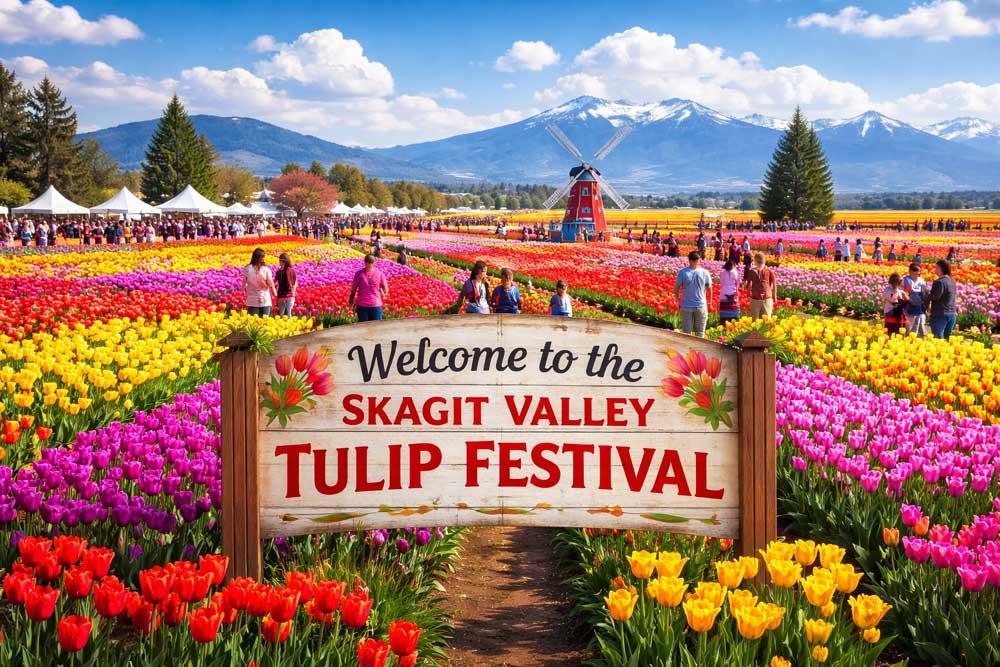
In the fertile embrace of Washington’s Skagit Valley, where the Cascade Mountains meet the Puget Sound, a annual spectacle unfolds that transforms ordinary farmland into a canvas of unparalleled vibrancy. The Skagit Valley Tulip Festival, held every April, draws over a million visitors to witness millions of tulips bursting forth in a riot of colors—crimsons, golds, purples, and pinks stretching across acres of meticulously tended fields. This isn’t merely an agricultural display; it’s a cultural phenomenon that celebrates the region’s Dutch heritage, its resilient farming community, and the sheer joy of spring’s renewal. As editors who have wandered these fields ourselves, we can attest that the festival offers more than floral beauty; it provides a portal into the soul of the Pacific Northwest, where nature’s artistry intersects with human ingenuity.
Organized by the Mount Vernon Chamber of Commerce, the event spans the entire month from April 1 to 30, allowing ample time for exploration amid unpredictable weather patterns that dictate the blooms’ peak. In 2026, as the valley emerges from winter’s grasp, expect the same enchanting lineup of gardens, parades, and community gatherings that have made this festival a bucket-list destination. Economic impacts are staggering: the 2024 iteration alone generated $83 million for Skagit County, underscoring its role as a vital engine for local businesses. Yet, beyond the numbers lies a story of perseverance, from immigrant growers who planted the first bulbs to modern stewards preserving this tradition. Whether you’re a seasoned traveler or a first-time visitor, the festival beckons with promises of serenity amid the blooms and excitement in the surrounding towns.
A Rich Tapestry: The History of Tulip Cultivation in Skagit Valley
The roots of the Skagit Valley Tulip Festival delve deep into the late 19th century, when English immigrant George Gibbs settled on Orcas Island and noticed flower bulbs multiplying in the mild Northwest climate. Intrigued, he corresponded with Dutch growers, who visited and marveled at the potential. By 1899, Gibbs alerted the U.S. Department of Agriculture, sparking experiments in 1905 with 15,000 imported bulbs near Bellingham. Success followed, leading to a 10-acre test garden in 1908 and the inaugural Bellingham Tulip Festival in 1920.
However, nature’s whims intervened. Devastating freezes in 1916, 1925, and 1929, compounded by the Great Depression, shuttered the Bellingham event by 1930. Growers pivoted south to Skagit County, where richer soils and a more temperate microclimate promised better yields. The modern era dawned in 1946 with William Roozen’s arrival from the Netherlands. Hailing from a lineage of bulb cultivators spanning six generations, Roozen established a farm in 1950 and acquired the Washington Bulb Company by 1955, elevating it to North America’s premier producer of tulips, daffodils, and irises.
Informal bulb displays dotted the valley for decades, but the formal festival launched in 1984 as a modest three-day affair to spotlight the blooms. Organized by the Mount Vernon Chamber, it quickly ballooned into a month-long extravaganza, earning accolades like KING-TV’s “Best of the Northwest” in 2010. Attendance swelled from thousands to over 500,000 by 2003, reaching estimates of 400,000 to 500,000 in recent years. Challenges arose, notably in 2020 when the COVID-19 pandemic forced cancellation, prompting virtual tours and flower donations to hospitals. Today, the festival honors this legacy through community programs like the Tulip Ambassador initiative, where local fourth and fifth graders represent the event, fostering a new generation of enthusiasts.
This history isn’t just archival; it’s alive in every petal. The Roozen family’s Roozengaarde garden, established in 1985, stands as a testament to that enduring spirit, blending commercial prowess with public delight. As we reflect on these milestones, the festival emerges not as a fleeting event but as a enduring narrative of adaptation and bloom.
The Endless Horizons: Exploring the Tulip Fields
Venturing into the Skagit Valley’s tulip fields feels like stepping into a living painting, where rows of flowers unfurl like brushstrokes across the landscape. Spanning hundreds of acres, these fields are the festival’s heartbeat, planted with tens of millions of bulbs each fall by dedicated growers. The colors shift with the light—fiery reds at dawn, soft pastels under overcast skies—creating a dynamic spectacle that changes daily.
The fields rotate annually to maintain soil health, a practice rooted in sustainable agriculture. Visitors often pull over on rural roads to admire them from afar, but remember: these are private working farms. Trespassing is strictly prohibited to protect the crops, which are harvested for bulbs rather than cut flowers. For closer encounters, the festival’s bloom map guides you to prime viewing spots, updated weekly based on weather—warmer springs hasten the peak, typically mid-April.
Amid these expanses, the interplay of tulips with the valley’s backdrop—snow-capped mountains, winding rivers, and historic barns—elevates the scene to poetic heights. Drones capture sweeping vistas, but even a simple stroll along designated paths reveals intricate patterns: stripes of yellow daffodils bordering purple tulips, or monochromatic blocks evoking abstract art. The air carries a subtle sweetness, mingled with earth, reminding us of the labor behind this beauty—tractors tilling, workers planting by hand in autumn’s chill.
In 2026, with climate patterns in flux, early scouting via the official bloom status page will be key. These fields aren’t static; they’re a testament to the growers’ expertise, ensuring the valley’s floral legacy endures.
Blooms Up Close: The Iconic Gardens of the Festival
While the fields offer grandeur, the festival’s four main gardens provide intimate, curated experiences where visitors can immerse themselves among the flowers. Each boasts unique features, from artistic displays to family-oriented amenities, making them essential stops.
RoozenGaarde reigns as the largest and most renowned. Spanning 350 acres of tulips and 450 of daffodils, its 5-acre display garden is a masterpiece of design, hand-planted annually with over a million bulbs in intricate patterns. Windmills and Dutch-inspired architecture nod to heritage, while paths wind through themed sections—perhaps a sea of crimson tulips fading into ivory. Admission runs $15 on weekdays, $17 weekends, with fresh bouquets available daily. It’s a photographer’s paradise, with opportunities for macro shots of dew-kissed petals or wide angles capturing the Cascade foothills.
Tulip Town, founded in 1984 by Dutch immigrants and now locally operated, offers a more relaxed vibe on its 6 acres. Home to over 55 tulip varieties, it features tractor rides through the fields and a trolley for easy access to displays—though note the four stairs limit wheelchair use. Dog-friendly (leashed, with cleanup stations), it’s ideal for families, complete with an indoor barn shop stocking local artisanal goods. Tickets start at $18 for adults, with discounts for kids and seniors. Special touches include murals and seasonal events, blending whimsy with the blooms.
Garden Rosalyn, a family-friendly newcomer on 7 acres, emphasizes picnic areas and food trucks amid rows of colorful tulips. At $17 admission (free for under 5), it’s a spot for leisurely afternoons, with ample photo ops around every bend. Tulip Valley Farms stands out with 20 acres and 140 varieties, offering u-pick tulips, a beer and wine garden, and the unique Night Bloom experience under lights. Tickets range $16-$30 depending on packages, catering to varied interests.
These gardens aren’t just attractions; they’re hubs of creativity, where growers experiment with hybrids and layouts. In 2026, expect redesigned displays, perhaps incorporating the festival’s poster art by local artist Kylie Fair Anderson, whose vibrant rainbow-tulip scene captures the essence. Visiting all four reveals the diversity of tulip cultivation, from traditional to innovative.
A Calendar of Joy: Events and Community Celebrations
The festival transcends flowers, weaving in events that spotlight Skagit Valley’s vibrant community. In 2026, the lineup promises a mix of tradition and novelty, starting with the Annual Tulip Parade on April 11 in downtown La Conner—a procession of floats adorned with fresh blooms, marching bands, and antique tractors. It’s a nod to the valley’s agricultural roots, drawing crowds for its small-town charm.
Art enthusiasts will flock to the Tulip Festival Art Exhibit, running April 4-12 in Anacortes and April 16-30 in Mount Vernon. Featuring local creators, it includes the official poster unveiling and juried shows inspired by the blooms. The Tulip Festival Street Fair, April 17-19 in Mount Vernon, transforms streets into a bustling market with over 150 vendors, live music, and artisan crafts—recognized as Washington’s largest such event.
Family-friendly activities abound, from sports tournaments to music festivals, ensuring something for every age. The Tulip Ambassador Program kicks off with auditions in January, empowering young locals to promote the festival. Scattered throughout are free events like farm tours and bloom walks, fostering connections between visitors and growers. These gatherings amplify the festival’s communal spirit, turning a floral showcase into a cultural mosaic.
Navigating the Valley: A Visitor’s Essential Guide
Planning a trip to the Skagit Valley Tulip Festival demands strategy, especially with crowds peaking on weekends. Aim for weekdays or early mornings to avoid the “Skagit Valley Traffic Festival” moniker locals jest about. Located about an hour north of Seattle, the valley is accessible via I-5, but consider scenic routes like Highway 20 for views of the Skagit River.
Tickets for gardens are purchased onsite or online; a multi-garden pass isn’t available, so prioritize based on interests. Bloom timing varies—check the official map and status updates, as tulips may peak early or late. Accommodations fill quickly; book in Mount Vernon or La Conner for charming B&Bs, or opt for camping amid the scenery. Budget tips include free field views and events, with paid gardens offering the best immersion.
Weather can be fickle—pack layers and rain gear, as April showers enhance the blooms’ luster. Accessibility varies; RoozenGaarde has paved paths, but fields are muddy. For a three-day itinerary, start with gardens, add a parade, and end with a street fair. With these pointers, your visit becomes seamless, maximizing the valley’s allure.
Savoring the Season: Local Cuisine Amid the Blooms
No festival experience is complete without indulging in Skagit Valley’s culinary bounty, where farm-fresh ingredients shine brighter than the tulips themselves. During tulip season, food trucks at gardens like Tulip Valley Farms serve everything from gourmet burgers topped with local cheeses to seafood tacos featuring fresh Dungeness crab, often paired with crisp local brews from nearby cideries. For a more immersive taste, head to Terramar Brewstillery in Edison, where wood-fired pizzas incorporate valley-grown herbs and vegetables, washed down with small-batch ciders distilled on-site. These mobile and pop-up eateries capture the essence of the season, blending the floral backdrop with hearty, on-the-go fare that sustains wanderers through the fields.
In Mount Vernon, Skagit River Brewery stands out with its craft beers like the Sculler’s IPA, complemented by pub classics such as beer-battered fish and chips made from regional catches—perfect for post-bloom refreshment amid the lively taproom atmosphere. Rachawadee Thai Cafe delights with authentic curries, including a standout green curry loaded with seasonal veggies from local farms, offering a spicy contrast to the cool spring air.
Il Granaio brings Italian elegance through pastas like house-made tagliatelle with valley-sourced mushrooms and prosciutto, emphasizing simple yet profound flavors. Over in La Conner, Nell Thorn showcases sustainable seafood, such as the wild salmon Nicoise salad bursting with organic greens, herbs, and Mama Lil’s peppers—a dish that truly encapsulates the region’s freshness and commitment to tide-to-table dining. For heartier options, Cady’s Cocina at the McLean Road Minimart serves up exceptional Mexican fare, like carne asada tacos praised for their authenticity, drawing comparisons to San Diego’s best.
The farm-to-table ethos prevails across the valley, with spots like Waverly Stone emphasizing smoked meats from local ranchers paired with microbrews, or Mariposa in Edison for burritos stuffed with fresh, organic ingredients. Don’t miss strawberries from berry farms or cauliflower roasted with Skagit spices, often spotlighted in seasonal specials at places like Calico Cupboard Cafe, known for its cinnamon rolls and hearty breakfasts. This fusion of blooms and bites—perhaps a picnic with cheeses from Slough Food or a stop at the Skagit Valley Food Co-op for organic produce—elevates the festival to a full sensory feast, where every meal tells a story of the land.
Capturing the Magic: Photography Tips for Aspiring Shutterbugs
The Skagit Valley’s visual splendor makes it a haven for photographers, but success requires finesse and respect for the landscape. Distinguish between vast fields for wide landscapes, where telephoto lenses compress colorful rows into mesmerizing patterns, and intimate gardens for detailed compositions—macros excel at capturing petal intricacies and dew drops up close.
Arrive at sunrise for golden light that bathes the blooms in warm hues and fewer crowds, or opt for overcast days to soften shadows and ensure even exposures without harsh contrasts. Never enter tulip rows—shoot from the edges or designated paths to respect working farms and avoid damaging crops. Use shallow depth-of-field for dreamy isolates that blur backgrounds into soft color washes, or employ tilt-shift lenses for sharp panoramas that keep entire scenes in focus. For families, position kids beside flowers rather than in them, leveraging cloudy skies for flattering, diffused portraits that highlight joyful expressions without squinting. Experiment with low angles to make rows appear endless, or use a tripod in Aperture Priority mode for stability during longer exposures.
Drones add aerial drama, revealing sweeping vistas of fields against mountain backdrops, but always check local regulations and garden policies—no drones allowed in places like Roozengaarde.
With these techniques, from golden-hour wide-angles to macro details, your shots will rival the festival’s official galleries, preserving the valley’s ephemeral beauty.
Blooming Responsibly: Sustainability in the Tulip Industry
Skagit Valley growers prioritize sustainability, employing crop rotation across over 90 crops to preserve soil fertility—tulips often follow potatoes or barley, preventing nutrient depletion and disrupting pest cycles. This practice, vital in a region boasting diverse agriculture like spinach seeds and berries, enhances resilience against pests, diseases, and erratic weather patterns.
Innovative machinery, such as precision planters and harvesters, aids efficient bulb production while minimizing soil compaction and environmental impact. Partnerships with dairy farms recycle nutrient-rich manure to enrich fields, further supporting holistic practices. Tourism stewardship initiatives, including low-impact visitor guidelines and support for local markets, protect natural resources while fostering community ties.
Organizations like Viva Farms provide training in organic methods and access to land for emerging growers, addressing farm succession challenges amid aging farmers and land pressures. As climate shifts intensify, these integrated approaches—balancing commercial output with ecological care—ensure the festival’s longevity, harmonizing beauty with responsible stewardship.
Eternal Spring: Reflections on the Festival’s Enduring Appeal
As the tulips fade each May, the Skagit Valley Tulip Festival leaves an indelible mark—a vivid reminder of nature’s rhythmic cycles and the profound harmony between humans and the land that sustains them. This event, rooted in Dutch immigrant ingenuity and evolved through decades of adaptation, symbolizes resilience: from early freezes that reshaped the industry to modern sustainability efforts that safeguard its future.
In 2026, amid ongoing economic boosts and community pride, it promises renewed wonder, drawing visitors to not just admire the colors but to connect with the valley’s agricultural soul. Whether chasing vibrant petals across rotating fields, savoring farm-fresh meals, or capturing fleeting moments through a lens, the festival invites all to partake in this blooming legacy. Here, in the shadow of the Cascades, the valley awaits, ever vibrant and eternally spring-like, whispering tales of growth, renewal, and shared human endeavor.