Seattle is a city defined by water. Flanked by Puget Sound to the west and Lake Washington to the east, laced with smaller lakes, canals, and inlets, the Emerald City offers an embarrassment of riches when it comes to waterfront access. And yet, when most visitors think of Seattle, they think of coffee, rain, and tech campuses — not beaches. That’s a mistake. Seattle’s beaches are among the most quietly spectacular urban shorelines in the United States, and they deserve far more attention than they typically receive.
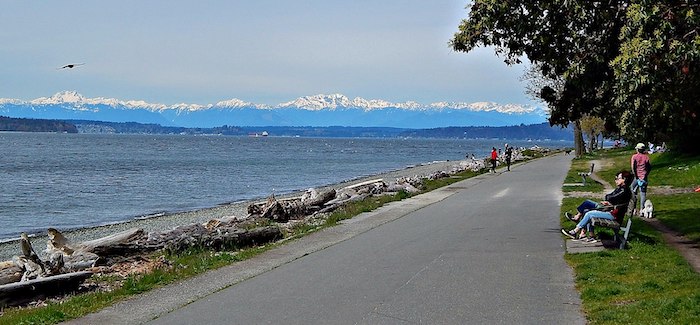
This isn’t a guide to sunbathing. The Pacific Northwest doesn’t really do sunbathing, at least not with the same bronzed enthusiasm as Southern California. What Seattle’s beaches offer instead is something arguably more valuable: solitude, natural beauty, and the kind of meditative calm that comes from walking along a pebbled shore while the Olympic Mountains dissolve into a pink and copper sunset. These are beaches for thinkers, for wanderers, for anyone who finds peace in the rhythm of small waves lapping against driftwood.
Here are the best beaches in Seattle for walking and relaxing — each one a reminder that this rain-soaked city hides some of the most beautiful coastline in the country.
Alki Beach: Seattle’s Original Waterfront Playground
Alki Beach is the closest thing Seattle has to a classic boardwalk beach, and it remains the city’s most popular stretch of sand for good reason. Located in West Seattle, Alki runs for about 2.5 miles along Elliott Bay, offering a paved promenade that draws joggers, cyclists, dog walkers, and couples strolling hand in hand on any given evening.
The beach faces due east across the bay, which means it serves up one of the finest views of the downtown Seattle skyline available anywhere. On a clear day — and Seattle has far more of those than its reputation suggests — the Space Needle, Columbia Center, and the cluster of skyscrapers along the waterfront look close enough to touch. At night, the skyline lights up across the dark water like a postcard you didn’t know was real.
Walking Alki is an experience that shifts with the seasons. In summer, the promenade buzzes with energy: food trucks line the street, volleyball nets go up on the sand, and the scent of sunscreen mingles with salt air. In winter, the crowd thins dramatically, and the beach takes on a quieter, moodier character. The wind picks up. The clouds sit low and heavy over the water. And somehow, it becomes even more beautiful.
For the best walking experience, start at the Alki Point Lighthouse on the western end and head northeast toward Duwamish Head. The full out-and-back covers roughly five miles, making it a solid afternoon walk. Along the way, you’ll pass the Statue of Liberty replica (yes, Seattle has one), several excellent fish-and-chips shops, and a series of benches positioned perfectly for sitting and watching ferries cross the Sound.
Alki is also one of the better beaches for tide pooling during low tide. The rocky sections near the lighthouse reveal small pools teeming with sea anemones, hermit crabs, and the occasional starfish. It’s a small but genuine thrill, especially if you bring kids along.
Golden Gardens Park: Where the Mountains Meet the Sea
If Alki is Seattle’s social beach, Golden Gardens is its contemplative one. Tucked into the Ballard neighborhood at the northern end of the city, Golden Gardens Park occupies a long, curving stretch of sand and gravel beach that looks out across Puget Sound toward the Olympic Mountains.
The sunsets here are legendary. On a summer evening, the sky above the Olympics turns through shades of gold, tangerine, and deep violet, and the entire beach seems to hold its breath. Locals bring blankets, thermoses of coffee or wine, and camp out on the driftwood logs that line the upper beach. There’s a communal, almost ceremonial quality to the way people gather here to watch the day end.
But Golden Gardens is not just a sunset destination. The beach itself is excellent for walking, with a long, flat stretch of sand that extends from the boat launch at the southern end to a series of rocky tide pools at the northern end. The park also includes a wooded upper section with trails that wind through a wetland area, offering a completely different walking experience — quiet, shaded, and fragrant with cedar and salal.
The beach is divided into an upper and lower section. The upper beach, closer to the parking lot, features picnic shelters and fire pits, and it’s where most of the weekend barbecue crowd gathers. The lower beach, accessed by walking down a short path, is wilder and more serene. This is where the serious beach walkers and the solitude seekers tend to end up, and it’s where you’ll find the best driftwood for sitting and the best views for thinking.
One note for visitors: Golden Gardens can get very crowded on summer weekends, especially around sunset. If you’re looking for peace and quiet, come on a weekday or visit during the shoulder months of April, May, September, or October, when the light is still beautiful and the crowds are manageable.
Discovery Park and North Beach: Seattle’s Wildest Shoreline
Discovery Park is Seattle’s largest public park, covering 534 acres of forest, meadow, sea cliff, and beach on the Magnolia peninsula. It feels less like an urban park and more like a nature preserve that happens to be located within city limits. The beach at its base — reached by a winding trail that drops through old-growth forest — is one of the most remarkable stretches of shoreline in any American city.
The main route to the beach is the Loop Trail, a 2.8-mile path that circles the park’s perimeter and eventually descends to the West Point Lighthouse, a working lighthouse that has stood at the tip of the Magnolia peninsula since 1881. The trail passes through dense forest, across open meadows with views of both the Cascades and the Olympics, and finally down a steep bluff to the sand.
The beach itself is wild and largely undeveloped. There are no concessions, no volleyball nets, no paved promenade. What you get instead is a long, quiet stretch of sand and gravel littered with driftwood, the occasional seal hauled out on a rock, and the constant company of seabirds — great blue herons, bald eagles, and pigeon guillemots among them.
Walking the beach at Discovery Park is a profoundly grounding experience. The trail from the lighthouse extends in both directions along the shore, and you can walk for a considerable distance before the terrain becomes impassable. To the south, the beach wraps around toward the Ballard Locks. To the north, it stretches toward the cliffs of Magnolia, where erosion has carved dramatic formations into the sandy bluffs.
This is not a beach for those who need amenities. The walk down from the parking lot takes 20 to 30 minutes, and the walk back up is a genuine workout. But for anyone who values wildness, quiet, and the feeling of being somewhere genuinely remote, Discovery Park delivers in a way that no other Seattle beach can match.
Madison Park Beach: A Freshwater Gem on Lake Washington
Not all of Seattle’s best beaches face the saltwater of Puget Sound. Madison Park Beach, located on the western shore of Lake Washington in the upscale Madison Park neighborhood, offers a completely different but equally rewarding beach experience.
The beach is small — just a crescent of sand and grass fronting a calm, clear stretch of lake — but its charm is considerable. The water here is fresh and surprisingly warm in summer, at least by Pacific Northwest standards. The views across the lake take in the Bellevue skyline and, on clear days, the snowcapped peak of Mount Rainier rising improbably above the suburban sprawl to the south.
Madison Park Beach is less about long walks and more about lingering. The grassy areas above the sand are perfect for spreading a blanket and reading a book. The swimming area is roped off and lifeguarded in summer, making it one of the better options for a casual dip. And the surrounding neighborhood is dotted with cafés and bakeries, making it easy to combine a beach visit with a leisurely brunch or afternoon coffee.
That said, the waterfront path that extends north from the beach toward the Washington Park Arboretum is a lovely walk, especially in spring when the Arboretum’s famous azaleas and rhododendrons are in bloom. The path is flat, shaded, and quiet, and it connects to a network of trails that can keep you walking for hours if you’re so inclined.
Carkeek Park Beach: Where Salmon Return to the City
Carkeek Park, located in the Broadview neighborhood of northwest Seattle, is one of the city’s best-kept secrets. The park covers 220 acres of forest, creek, and beach, and it’s best known for the annual return of chum salmon to Piper’s Creek, which runs through the park and empties into Puget Sound.
The beach is reached by crossing a pedestrian bridge over the railroad tracks that run along the shoreline — a crossing that adds a slightly industrial, slightly adventurous quality to the experience. Once across, you find yourself on a broad, pebbly beach with views of the Sound and the Olympics that rival anything at Golden Gardens.
Walking the beach at Carkeek is a quieter affair than at Alki or Golden Gardens. The crowd here tends to be smaller and more local, and the beach has a wilder, less manicured feel. Driftwood piles up in enormous tangles along the high-tide line, and the sand is mixed with smooth, wave-polished stones in shades of grey, green, and rust.
The park’s trail system also offers excellent walking above the beach. The Piper’s Creek Trail winds through a lush second-growth forest, crossing the creek on small bridges and passing through stands of western red cedar and bigleaf maple. In autumn, when the salmon are running and the leaves are turning, this trail is one of the most beautiful walks in Seattle.
The beach at Carkeek also offers some of the best low-tide exploration in the city. When the tide drops, a wide expanse of sand and rock is exposed, revealing tide pools, crab holes, and the intricate patterns left by receding water. It’s a place that rewards patience and attention — qualities that any good beach walk demands.
Seward Park Beach: A Loop Around the Peninsula
Seward Park occupies a 300-acre peninsula that juts into the southern end of Lake Washington, and its 2.4-mile loop trail is one of the most popular walking routes in the city. The trail hugs the shoreline for most of its length, offering continuous views of the lake, the Cascades, and Mount Rainier.
The beach areas along the park’s western shore are the best spots for relaxing. The water is calm, the views are expansive, and the old-growth forest that covers the park’s interior provides a dramatic green backdrop. Swimming is popular here in summer, and the grassy areas above the beach are ideal for picnics and afternoon naps.
What makes Seward Park special, though, is the forest. The park contains one of the last remaining old-growth forests in Seattle, a dense, cathedral-like stand of Douglas fir, western red cedar, and bigleaf maple. Walking through it feels like stepping back several centuries. The air is cool and damp, the light filters through the canopy in long, golden shafts, and the silence is broken only by birdsong and the occasional rustle of a Douglas squirrel in the underbrush.
The combination of beach and forest makes Seward Park one of the most complete walking destinations in Seattle. You can spend an hour circling the loop trail, pausing at the beach to rest and admire the view, then cutting through the forest on one of several interior trails. It’s a place that invites you to slow down, pay attention, and remember that Seattle is, at its heart, a city built in the middle of a wilderness.
Practical Tips for Beach Walking in Seattle
A few practical notes for anyone planning to explore Seattle’s beaches on foot.
Dress in layers. Seattle’s weather is famously changeable, and conditions at the beach can shift from sunny and mild to windy and cool in a matter of minutes. A lightweight waterproof jacket is essential, even in summer.
Check the tides. Many of Seattle’s best beach walking experiences are tide-dependent. At high tide, some beaches narrow significantly or become impassable. The NOAA tide charts for Puget Sound are available online and are worth consulting before you head out.
Bring binoculars. Seattle’s beaches are excellent for wildlife watching. Bald eagles, great blue herons, harbor seals, and even the occasional orca can be spotted from shore, especially at Discovery Park and Carkeek Park.
Respect the driftwood. It’s tempting to climb on the enormous driftwood logs that line many Seattle beaches, but these logs can roll unpredictably, especially in the surf zone. Enjoy them from a safe position and use them as natural benches rather than climbing structures.
Go in the off-season. Seattle’s beaches are beautiful year-round, and the fall and winter months offer a moody, atmospheric quality that summer can’t match. A November walk along Alki in a light rain, with the city skyline blurred through mist, is an experience that stays with you.
The Quiet Magic of Seattle’s Shoreline
Seattle is a city that reveals itself slowly. Its best qualities — the light, the mountains, the deep green of the forests — don’t announce themselves the way the landmarks of flashier cities do. They accumulate, gradually, over the course of long walks and quiet afternoons.
The beaches are a perfect expression of this character. They aren’t tropical. They aren’t glamorous. They don’t promise warmth or luxury or escape. What they offer instead is something more durable: a sense of place, a connection to the natural world, and the simple, restorative pleasure of walking along the edge of the water while the city hums quietly in the background.
Whether you choose the social energy of Alki, the sunset grandeur of Golden Gardens, the wilderness of Discovery Park, or the forested tranquility of Seward Park, you’ll find a beach that rewards your attention and invites you to stay a little longer than you planned. That’s the quiet magic of Seattle’s shoreline. It doesn’t demand anything from you. It just waits, patient and beautiful, for you to show up and walk.