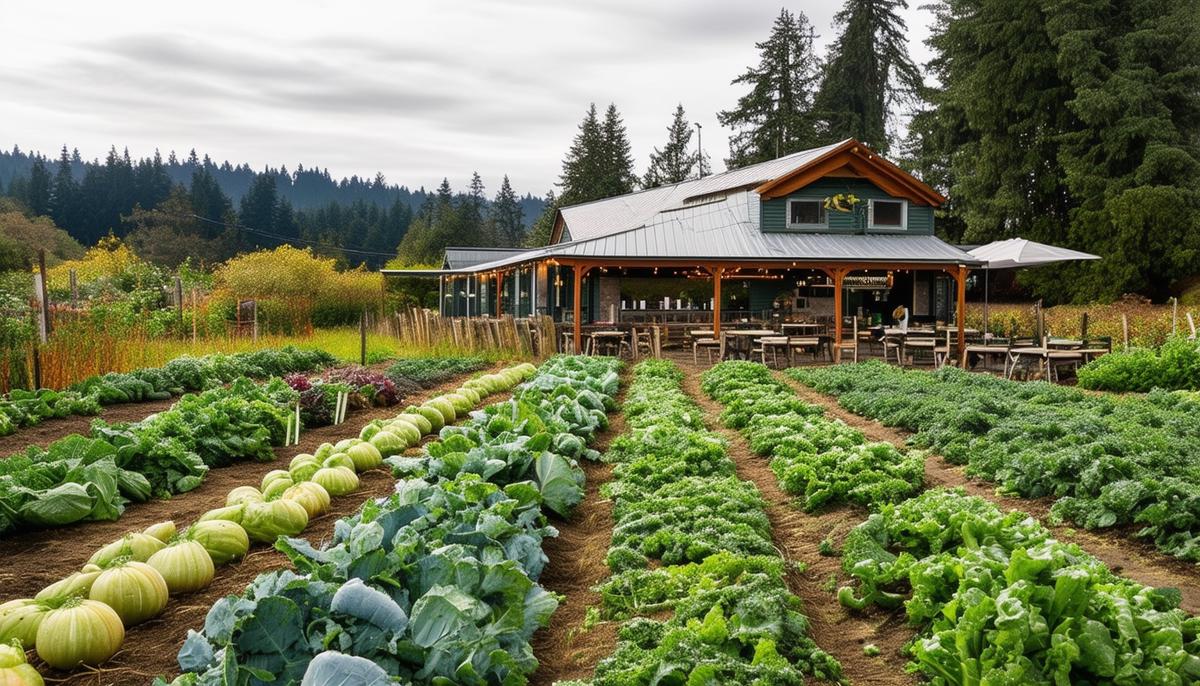
The rain hasn’t let up for three days, and the air smells like wet cedar and turned earth. In a narrow strip of farmland just east of the Cascade foothills, a farmer named Koji is pulling the last of his winter brassicas from soil so dark it looks like coffee grounds. By tomorrow evening, those cabbages will be charred over hardwood coals in a Ballard restaurant kitchen, dressed in nothing more than brown butter, a squeeze of yuzu, and a scattering of toasted hazelnuts grown forty miles south. No middleman. No cold storage warehouse. No transcontinental trucking route. Just dirt, hands, a short drive, and a chef who knows the farmer’s first name.
This is Seattle’s farm-to-table movement in its most honest form — not a marketing slogan slapped on a menu, but a living, breathing network of relationships between the people who grow food and the people who cook it. And while the term “farm-to-table” has been co-opted, diluted, and occasionally mocked in food media circles, what’s happening in the Pacific Northwest’s largest city is something worth paying real attention to.
The Geography of Flavor
Seattle didn’t become a farm-to-table city by accident. The geography practically demands it.
Within a two-hour drive of downtown, you can reach high-desert wheat fields in Eastern Washington, dairy farms on the Skagit Valley flats, oyster beds in Hood Canal, and salmon runs in a half-dozen rivers. The volcanic soil left behind by Mount Rainier’s ancient eruptions is absurdly fertile. The maritime climate — cool, moist, and mild — supports an almost embarrassing diversity of crops: from the stone fruits of Yakima to the mushrooms that erupt from old-growth stumps on the Olympic Peninsula.
Few American cities sit at the intersection of so many distinct agricultural ecosystems. Los Angeles has the Central Valley. New York has the Hudson Valley and Long Island. But Seattle has mountains, valleys, coastline, rainforest, and high desert all within striking distance, each producing ingredients that would make any chef’s pulse quicken. The bounty isn’t theoretical. It shows up, every week, at farmers markets that operate year-round — a detail that surprises people who assume the Pacific Northwest shuts down gastronomically once the rain starts in October.
The University District Farmers Market keeps its stalls open through the darkest months of winter. So does the Ballard Farmers Market, arguably the city’s most beloved. In January, you’ll find storage apples, overwintered root vegetables, fresh eggs from pastured hens, artisan cheeses, and smoked salmon. The selection is narrower than the July explosion of berries and tomatoes, but it’s there — proof that eating locally in Seattle isn’t a summer hobby but a year-round commitment.
A Brief, Necessary History
The roots of Seattle’s food consciousness stretch back further than most people realize. Long before anyone used the phrase “farm-to-table,” the Coast Salish peoples who inhabited this region for thousands of years practiced a form of food stewardship that was, by definition, local and seasonal. Salmon, shellfish, camas root, berries, venison — everything came from the surrounding land and water, managed through burning, cultivation, and sustainable harvesting practices that modern agriculture is only now beginning to understand and respect.
The modern farm-to-table movement in Seattle began taking shape in the 1970s and 1980s, influenced by the same counterculture currents that produced Berkeley’s Chez Panisse and the broader “California cuisine” revolution. Pike Place Market, which had been operating since 1907, served as a crucial anchor. When the market narrowly survived a demolition threat in the early 1970s — saved by a citizen initiative — it became more than a place to buy fish and flowers. It became a symbol of the city’s relationship with its food producers, a daily reminder that farmers and fishers were part of the urban fabric.
By the 1990s, chefs like Tom Douglas and Thierry Rautureau were building menus around Pacific Northwest ingredients with a seriousness that went beyond novelty. They weren’t just sourcing locally for the aesthetics. They were forging direct purchasing relationships with farmers, attending to seasonality with genuine discipline, and proving that world-class dining could be built on what grew and swam and grazed within the region.
The 2000s brought a second wave. Restaurants like Sitka & Spruce, The Walrus and the Carpenter, and Willows Inn on Lummi Island pushed the philosophy even further, sometimes into territory that bordered on the radical. At Willows Inn, chef Blaine Wetzel built entire tasting menus around ingredients foraged or harvested within walking distance of the dining room — beach roses, sea lettuce, reindeer lichen, spot prawns pulled from traps that afternoon. The message was clear: the most exciting flavors weren’t being imported from Europe or flown in from tropical farms. They were right here, hiding in plain sight.
The Supply Chain Is a Relationship
What separates Seattle’s farm-to-table scene from its imitators elsewhere is the density and maturity of its supply-chain relationships. This isn’t about a single celebrated restaurant making a pilgrimage to one photogenic farm. It’s about an entire ecosystem of producers, distributors, chefs, and eaters who have built something durable over decades.
Organizations like the Puget Sound Food Hub act as logistical bridges, aggregating products from small and mid-sized farms and delivering them to restaurants, schools, and institutions that might not have the capacity to manage dozens of individual farmer relationships. It’s unsexy infrastructure work — the kind of thing that never makes it onto an Instagram story — but it’s what allows the movement to scale beyond a handful of high-end kitchens.
Then there are the farms themselves. Operations like Full Circle, Nash’s Organic Produce in Sequim, Alvarez Organic Farms in the Skagit Valley, and Tonnemaker Family Orchards in Royal City represent a generation of growers who oriented their businesses around direct-to-restaurant and direct-to-consumer sales. Many of these farms are certified organic. Some practice biodynamic agriculture. Others reject certification labels entirely, preferring to let their relationships with chefs and customers speak for the quality of their practices.
The trust goes both ways. Chefs who commit to local sourcing accept constraints that their nationally sourcing competitors don’t face. If the early frost kills the tomatoes, there are no tomatoes. If the salmon run is weak, there’s no salmon. This forces a kind of creative agility that, at its best, produces some of the most exciting cooking in the country. Menus change not weekly but sometimes daily, driven by what arrives at the back door that morning.
It also produces a different kind of kitchen culture. Line cooks at farm-to-table restaurants in Seattle often visit the farms they source from. They learn to break down whole animals, because buying whole from a local rancher is more economically viable than ordering specific cuts. They develop an intimacy with ingredients that a cook working from a Sysco catalog simply cannot replicate.
The Farmers Market as Public Square
Seattle’s farmers markets deserve their own discussion, because they function as far more than retail outlets. They are civic institutions — places where the farm-to-table ethos becomes tangible and democratic.
The Ballard Farmers Market, which operates every Sunday year-round, draws thousands of visitors each week. On a good summer day, the crowd is a cross-section of the city: young families, elderly immigrants, restaurant chefs with rolling carts, tech workers in fleece vests, and food-obsessed tourists following tips from food blogs. The vendors range from third-generation farming families to first-generation immigrants growing specialty crops — Thai chili peppers, Hmong bitter melon, Mexican herbs — that reflect Seattle’s evolving demographics.
What matters about these markets is that they create space for direct conversation between grower and eater. You can ask the mushroom vendor how the chanterelle season is looking. You can learn from the flower farmer that the dahlias are peaking two weeks early because of an unusual warm spell. These interactions might seem trivial, but they build a kind of food literacy that no grocery store aisle can replicate. They reconnect urban dwellers with the reality that food comes from somewhere, that it has a season, and that the people who produce it have names and stories and mortgages.
Seattle also benefits from a robust network of community-supported agriculture programs, or CSAs, which allow households to buy shares directly from farms and receive weekly boxes of whatever is in season. Programs like those run by Oxbow Farm & Conservation Center or Whistling Train Farm in Kent have loyal subscriber bases that span years, even decades. For these families, eating locally isn’t a trend. It’s just how they eat.
The Seafood Dimension
Any honest accounting of Seattle’s farm-to-table culture has to grapple with the fact that “farm” is only part of the equation. This is a waterfront city, and its food identity is inseparable from the sea.
The wild salmon runs of the Pacific Northwest are the most iconic element, of course. Sockeye, king, coho, chum, and pink salmon all pass through regional waters at different times of year, and the best Seattle restaurants treat the salmon calendar with the reverence that Burgundy grants to its grape harvest. When Copper River kings arrive in late May or early June, it’s a culinary event — not because of marketing hype, but because the fish are genuinely extraordinary, their flesh marbled with fat from the long upstream journey ahead.
Beyond salmon, Seattle’s proximity to pristine shellfish beds gives it access to ingredients that most American cities can only dream of. Oysters from Willapa Bay, Hama Hama, and Taylor Shellfish Farms. Geoduck clams — those absurd, magnificent creatures that look like they were designed by a surrealist — harvested from Puget Sound. Dungeness crab, spot prawns, Manila clams, mussels. The variety is staggering, and the supply chains are short. A geoduck pulled from the Sound in the morning can be on a restaurant plate by evening, its sweetness still carrying the cold brine of the water it came from.
What’s particularly notable is how Seattle chefs have moved beyond the predictable preparations. Sure, you can still get a classic pan-fried salmon fillet. But you’re just as likely to encounter salmon collar grilled over alder wood, geoduck crudo with pickled ramps, or smoked mussel conserva served on house-baked sourdough. The local-sourcing philosophy has pushed chefs to explore the full range of what the waters offer, including species and cuts that might otherwise go overlooked.
The Challenges No One Wants to Talk About
For all its virtues, Seattle’s farm-to-table movement is not without serious tensions and contradictions.
The most obvious is cost. Eating locally and sustainably is expensive — more expensive than the industrial food system that most Americans rely on. A dinner at one of Seattle’s celebrated farm-to-table restaurants can easily run $80 to $150 per person. A weekly CSA box costs more than a comparable haul from a conventional grocery store. This creates an uncomfortable class dimension that the movement has struggled to address. When farm-to-table becomes shorthand for affluent dining, it risks becoming irrelevant to the very communities that would benefit most from better food access.
Some organizations are working to bridge this gap. The Fresh Bucks program, for instance, matches SNAP benefits at farmers markets, effectively doubling the purchasing power of low-income shoppers. Gleaning programs collect surplus produce from farms and distribute it to food banks. Community gardens in neighborhoods like Rainier Valley and the Central District provide growing space for residents who might not otherwise have access to fresh produce. These efforts are meaningful, but they operate at a scale that’s dwarfed by the need.
There’s also the question of labor. The farms that supply Seattle’s restaurants depend on workers — many of them immigrants, many of them undocumented — who do backbreaking physical labor for wages that rarely reflect the true cost of their effort. The farm-to-table narrative tends to celebrate the farmer and the chef while rendering the farmworker invisible. A genuinely ethical food movement has to reckon with this, and Seattle’s version of that reckoning is still incomplete.
Land access is another growing pressure point. As the Seattle metropolitan area expands, agricultural land on its periphery faces relentless development pressure. Farmland in the Snoqualmie Valley, once reliably rural, now sits in the shadow of new housing developments. The Skagit Valley, one of the most productive agricultural regions in the state, faces its own battles over zoning and water rights. Without strong land-use protections, the very farms that make farm-to-table possible could be paved over within a generation.
The Next Chapter
Despite these challenges, there are reasons to be genuinely optimistic about where Seattle’s food culture is heading.
A new generation of farmers and chefs is pushing the movement in directions that feel less precious and more inclusive. Food trucks and casual counter-service spots are incorporating local sourcing without the white-tablecloth price tag. Restaurants like Salare in Ravenna and Musang in Beacon Hill are weaving farm-to-table principles into menus that draw on Filipino, East African, and other culinary traditions, broadening the movement’s cultural vocabulary beyond its historically European-American roots.
Urban farming is gaining momentum as well. Beacon Food Forest, a seven-acre public food forest in the Beacon Hill neighborhood, is one of the largest in the country. It’s a radically democratic experiment — anyone can harvest fruit, nuts, and herbs from the shared plantings — and it embodies a vision of local food that doesn’t require a restaurant reservation or a farmers market budget.
Technology is playing a role too, though a quieter one than you might expect in a city dominated by tech companies. Small-scale hydroponic and vertical farming operations are beginning to supply restaurants with hyper-local greens and herbs grown inside city limits. Apps and online platforms are making it easier for consumers to connect directly with farmers for purchasing and delivery. These tools don’t replace the soil-to-hand-to-mouth chain that gives farm-to-table its soul, but they can help extend its reach.
Why It Matters Beyond the Plate
At its core, Seattle’s farm-to-table movement is about something larger than good food — though the food is very, very good. It’s about maintaining a functional relationship between a city and the land that surrounds it. It’s about economic structures that keep money circulating within regional communities rather than funneling it to distant corporations. It’s about ecological stewardship, because farms that sell directly to local restaurants have stronger incentives to maintain healthy soil, clean water, and biodiverse landscapes than farms locked into commodity markets.
And it’s about pleasure. That’s the part that sometimes gets lost in the earnest policy discussions and sustainability white papers. The reason people keep showing up at the Ballard market on rainy November Sundays, the reason chefs keep driving out to the valley to pick up boxes of awkwardly shaped heirloom squash, the reason a line cook will spend an hour hand-picking through a crate of wild nettles — is that the food tastes better. Not metaphorically better. Not morally better. Actually, physically, on-the-tongue better. A dry-farmed tomato from Ayers Creek has a depth of flavor that a hydroponic hothouse tomato from Mexico simply cannot match. A Samish Bay oyster eaten minutes after shucking carries the mineral tang of its home waters in a way that no oyster shipped across the country in a refrigerated box can replicate.
That flavor difference isn’t sentimental. It’s chemistry. It’s biology. It’s what happens when food is grown well, in the right soil, in the right climate, and doesn’t spend days or weeks in transit before it reaches you.
Seattle understood this early, and the city has spent decades building the infrastructure — cultural, logistical, economic — to make that understanding actionable. The result is a food scene that feels rooted in its place in a way that few American cities can match. Not perfect. Not without contradictions. But real.
And in a food landscape increasingly dominated by homogeneity and distance, real is worth fighting for.
Seattle’s farm-to-table movement isn’t a trend waiting to expire. It’s a deeply embedded part of how the city feeds itself — a living argument that the distance between the plot and the plate matters, and that closing that distance makes everything on both ends better.