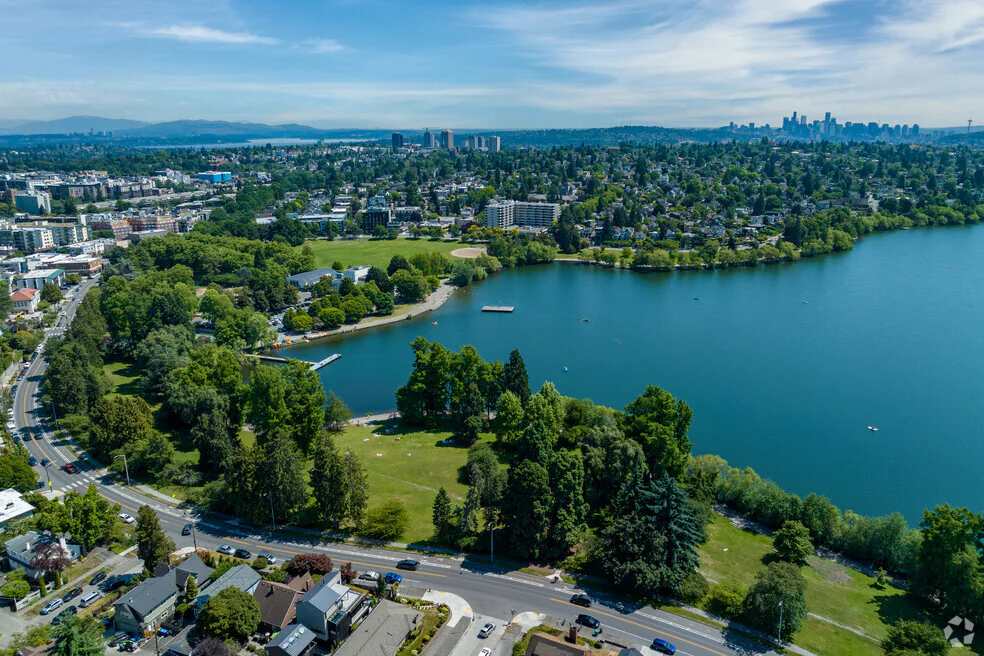
Seattle is a city defined by water. The Puget Sound wraps around its western edge, Lake Washington stretches along the east, and the Ship Canal cuts through its middle like a liquid seam. But tucked into the northern residential neighborhoods, far from the tourist-packed waterfront and the gleaming towers of downtown, there sits a body of water that belongs not to visitors or postcards, but to the people who call this city home. That body of water is Green Lake — and it has been the emotional and recreational center of Seattle life for well over a century.
Green Lake is not grand in the way that national parks demand reverence. It is not remote. It is not particularly large. What it is, however, is essential. It is the kind of place that shapes daily routines, anchors weekend rituals, and quietly becomes the backdrop against which entire lifetimes unfold. To understand Seattle beyond its tech campuses and coffee culture, you need to spend a morning — or an evening, or a lazy Sunday afternoon — at Green Lake.
A Lake Carved by Ice and Time
The geological origins of Green Lake date back roughly 50,000 years, to the Vashon glaciation period when a massive ice sheet crept down from what is now British Columbia and carved out the lowlands of the Puget Sound region. As the glacier retreated, it left behind a series of depressions that filled with meltwater. Green Lake was one of them — a modest kettle lake formed in the glacial till, roughly 259 acres in size and no deeper than about 30 feet at its maximum.
For thousands of years before European settlement, the lake and its surrounding wetlands were central to the lives of the Duwamish people, who fished its waters and harvested the plants that grew along its marshy edges. The lake’s original character was wilder, swampier, and significantly larger than what exists today. Its waters drained naturally into Ravenna Creek and eventually into Lake Washington, part of a network of waterways that sustained both ecosystems and communities long before the city of Seattle was even a concept.
When settlers arrived in the mid-1800s, the lake became a resource of a different kind. Logging operations cleared the surrounding forests. Farms sprung up in the lowlands nearby. And as Seattle grew from a frontier outpost into a proper city, the lake began its slow transformation from a natural feature into a public amenity.
The Making of a City Park
The story of Green Lake as a public park begins in earnest in 1905, when the City of Seattle officially acquired the lake and its surrounding land. This was part of a broader vision for the city’s park system, heavily influenced by the Olmsted Brothers — the legendary landscape architecture firm that had already shaped parks in cities like Boston and Louisville. The Olmsteds saw Green Lake as a critical piece of Seattle’s green infrastructure, a natural gathering place that could anchor the northern neighborhoods the way Volunteer Park served Capitol Hill and the Arboretum served the south end of Lake Washington.
Over the following decades, the city invested heavily in shaping the park. The lake’s water level was lowered by about seven feet in the early 1900s to reduce swampland and create more usable shoreline. A formal path was built around the perimeter. Playfields, a community center, a swimming pool, and picnic areas were added over time. The Aqua Theater, a floating performance stage built in 1950 for hydroplane races and variety shows, became one of the park’s most iconic (if short-lived) features before falling into disrepair and being demolished in the early 1970s.
Each generation left its mark. By the mid-twentieth century, Green Lake had become one of the most visited parks in the entire state of Washington — a status it holds to this day.
The Loop: Seattle’s Favorite 2.8 Miles
If Green Lake has a single defining feature, it is the loop — the 2.8-mile paved path that circles the lake’s perimeter. On any given day, this path is a living cross-section of the city. Joggers in neon shoes pass dog walkers with golden retrievers. Parents push strollers alongside cyclists who weave through with practiced ease. Elderly couples stroll arm-in-arm. College students from nearby universities walk with earbuds in, lost in podcasts. Rollerbladers — yes, they still exist here — glide past with a retro confidence that somehow fits the setting perfectly.
The path is divided into two lanes: one for wheels, one for feet. This arrangement is sacred. Violating it — walking in the bike lane, cycling in the pedestrian lane — is one of the few social transgressions that can earn you a look of genuine disapproval from otherwise easygoing Seattleites.
What makes the loop special is not just its utility but its consistency. It is flat, it is scenic, and it is exactly the right distance for a meaningful walk or run without feeling like an endurance event. For many Seattle residents, the Green Lake loop is a daily practice, as embedded in their routine as morning coffee. There are people who have been walking that loop every single day for decades. It is less a trail and more a communal treadmill — except the scenery changes with the seasons, the light shifts with the clouds, and there is always something new happening on or around the water.
The Ecology of a Living Lake
Beneath its calm surface, Green Lake is a complex and sometimes troubled ecosystem. The lake is classified as eutrophic, meaning it has high nutrient levels that promote dense plant and algae growth. In warm summer months, this can lead to blooms of cyanobacteria — blue-green algae — that occasionally force the city to post advisories warning swimmers and dog owners to stay out of the water.
These blooms are not new. Green Lake has grappled with water quality challenges for decades, a consequence of its shallow depth, urban runoff, historical phosphorus loading, and the fact that it is essentially a closed system with limited natural flushing. The city has tried various interventions over the years, including alum treatments to bind phosphorus in the sediment, aeration systems to improve dissolved oxygen levels, and stormwater management projects to reduce pollutant inflow.
Despite these challenges, the lake supports a surprisingly diverse array of wildlife. Great blue herons stand motionless along the shore, waiting for fish with the patience of seasoned monks. Canada geese are everywhere — sometimes controversially so, given their prolific droppings on the path. Turtles sun themselves on fallen logs. Red-winged blackbirds call from the cattails. Ospreys have been spotted diving for fish, and bald eagles occasionally circle overhead, a reminder that even in the middle of a major metropolitan area, the Pacific Northwest’s wild heritage is never far away.
The lake is also stocked periodically with rainbow trout by the Washington Department of Fish and Wildlife, making it a popular spot for urban anglers. On opening day of trout season each spring, the shores are lined with fishers of all ages, casting lines into water that reflects the still-bare branches of the surrounding trees.
The Neighborhoods Around the Lake
Green Lake is not just a park — it is the nucleus of a neighborhood that shares its name. The Green Lake neighborhood, which wraps around the northern and eastern shores, is one of Seattle’s most desirable residential areas. It has the walkable, slightly crunchy, unpretentious character that defines the best of Seattle living. Independent coffee shops, Thai restaurants, vintage stores, and yoga studios line the nearby commercial strips along Green Lake Way and Woodlawn Avenue.
To the south, the park borders the Wallingford neighborhood, another residential gem with a strong sense of community identity. To the west lies Phinney Ridge, home to the Woodland Park Zoo, which is technically part of the same contiguous green space. You can walk from Green Lake through a wooded corridor and arrive at the zoo entrance without ever crossing a major road — a feat of urban park planning that still impresses.
The residential streets surrounding the lake are a mix of early-twentieth-century Craftsman bungalows, mid-century ramblers, and newer townhomes reflecting Seattle’s ongoing density boom. Property values here are predictably high. Proximity to Green Lake adds a premium that real estate agents describe in almost spiritual terms: lake views, lake access, lake lifestyle. For many buyers, it is worth every penny.
The social fabric around the lake is notably intergenerational. Young families are drawn by the playgrounds and the wading pool. Retirees have been walking the loop since before many of those families were born. Twentysomethings come for the pickup basketball courts, the summer volleyball scene, and the simple pleasure of lying on the grass with a book and a cold drink. It is one of the few places in a rapidly changing city where different demographics still consistently occupy the same physical space.
Summer at Green Lake: The Annual Transformation
Seattle summers are short, precious, and aggressively celebrated. When the weather turns warm — truly warm, not the optimistic-but-still-55-degrees kind of warm — Green Lake becomes the city’s living room. The grassy slopes on the lake’s east side fill with sunbathers, picnickers, and frisbee throwers. The designated swimming beach at East Green Lake draws hundreds of people on peak days, families and solo swimmers alike wading into water that ranges from refreshingly cool to bracingly cold, depending on your tolerance and the whims of the season.
Paddleboarders and kayakers dot the lake’s surface. The small boat rental shop near the community center does brisk business in pedal boats and canoes. Kids splash in the wading pool. The smell of charcoal grills drifts from the picnic areas. Somewhere, someone is playing a guitar badly, and no one minds.
These summer days at Green Lake carry a particular emotional weight for Seattleites because they know how fleeting they are. The city’s reputation for rain is slightly exaggerated — it actually receives less annual rainfall than New York or Atlanta — but the gray, overcast months from October through May are real and relentless. Summer at Green Lake is not just recreation. It is emotional sustenance, a seasonal bank deposit against the long withdrawal of winter darkness.
The annual community events around the lake reinforce this sense of collective joy. The Seafair Milk Carton Derby, a charmingly absurd boat race in which participants build vessels out of milk cartons and attempt to navigate the lake, has been a summer tradition since 1972. The Green Lake Pathway of Lights, a winter solstice celebration featuring luminaries around the loop, offers a gentler counterpoint when the days are shortest.
Challenges and Controversies
No beloved public space exists without friction, and Green Lake is no exception. The park has been at the center of several heated debates in recent years, reflecting the broader tensions shaping Seattle as a whole.
Homelessness has been a persistent and visible issue. Encampments have periodically appeared in the park’s more wooded areas, prompting contentious debates about public space, compassion, enforcement, and the city’s responsibility to both unhoused residents and park users. These conversations are rarely simple and almost never resolved to everyone’s satisfaction.
The algae blooms, mentioned earlier, remain an ongoing environmental concern. Climate change is expected to exacerbate the problem, as warmer temperatures promote more frequent and more intense cyanobacteria events. Some environmental advocates have pushed for more aggressive restoration efforts, including the possibility of reconnecting the lake to its historical outflow to improve water circulation.
There have also been debates about the path itself — whether it should be widened, whether e-bikes and electric scooters should be allowed, and how to manage the increasing congestion on busy days when the loop feels less like a peaceful walk and more like a slow-moving highway. The city has studied various options but progress has been incremental, as it often is in a city where public process is both deeply valued and painfully slow.
Through all of this, the lake endures. The debates are, in their own way, a testament to how much people care about this place. You do not argue passionately about things that do not matter to you.
Green Lake in the Rain
It would be dishonest to write about Green Lake without acknowledging what it looks like for the majority of the year: gray, damp, and cloaked in low clouds. The Seattle rain is not the dramatic, thunderous kind. It is a persistent mist, a soft drizzle, a sky that looks like it has been rubbed with an eraser. On these days, the lake takes on a different beauty — quieter, more introspective, more honest.
The crowds thin. The loop belongs to the diehards: the runners in waterproof jackets, the dog walkers who know their animals do not care about the weather, the retirees with sturdy umbrellas and nowhere urgent to be. The trees — the Douglas firs, the western red cedars, the big-leaf maples — drip steadily, and the lake’s surface is pocked with a million tiny circles where the rain meets the water.
There is something meditative about Green Lake in the rain. It strips away the social energy of summer and leaves something more personal. The loop becomes a walking meditation. The lake becomes a mirror — not of the sky, which is uniformly gray, but of whatever you bring to it. It is in these quiet, damp moments that the lake reveals why it has endured as the heart of this city. It is not about spectacle. It is about presence.
Why Green Lake Matters
Cities need places like Green Lake the way bodies need lungs. They are spaces where the density and pressure of urban life can exhale. They are democratic in the truest sense — open to everyone, owned by no one, shaped by the collective habits of the community.
In an era when so much of urban life is mediated by screens, algorithms, and transactions, Green Lake remains stubbornly analog. You cannot experience it through an app. You cannot subscribe to it. You have to show up, put your feet on the path, feel the air on your face, and share the space with strangers who are doing the same thing for their own reasons.
Seattle has changed enormously in recent decades. The tech boom has rewritten the city’s demographics, economics, and skyline. Neighborhoods that were sleepy and affordable a generation ago are now expensive and bustling. Longtime residents sometimes struggle to recognize the city they grew up in. But Green Lake remains. The loop is still 2.8 miles. The herons still fish. The geese still honk. The sun still breaks through in July, and the rain still returns in October.
Green Lake is not Seattle’s most dramatic landscape. It is not the mountain. It is not the Sound. But it is, perhaps, the city’s most intimate one — the place where Seattle meets itself, day after day, season after season, in all its messy, beautiful, ever-changing ordinariness.
And that is exactly what makes it irreplaceable.
Green Lake Park is located at 7201 East Green Lake Drive North, Seattle, WA 98115. The park is open daily and free to the public. For current water quality advisories and event information, visit the Seattle Parks and Recreation website.