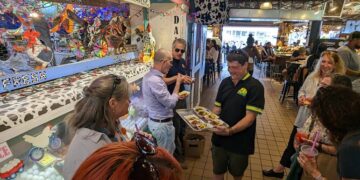


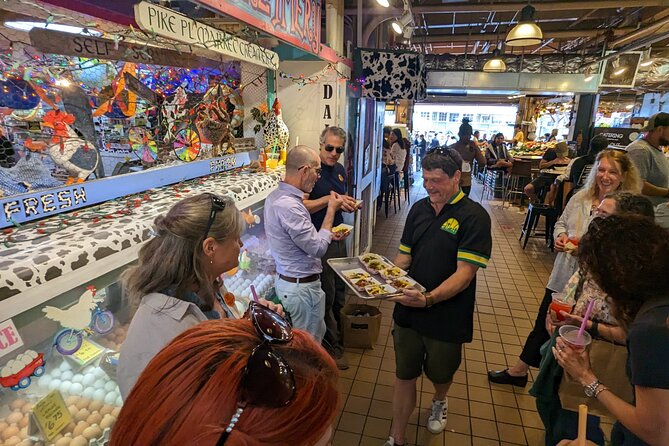
The neon sign glows red against Seattle’s pewter sky. Below it, a fishmonger hurls a twenty-pound king salmon over the heads of cheering tourists. The fish lands — thwack — in the arms of a colleague behind the counter, and just like that, you’ve stepped into Pike Place Market, a place where food isn’t just consumed but celebrated, thrown, argued over, and loved with an intensity that borders on religious devotion.
Pike Place Market has been the beating heart of Seattle’s food culture since 1907, making it one of the oldest continuously operated public farmers’ markets in the United States. But calling it a “farmers’ market” is like calling the Pacific Ocean a puddle. Spread across nine acres and multiple levels — some of which most visitors never discover — Pike Place is a sprawling, sensory-overloading cathedral of taste. It is where Seattle goes to eat, and where the rest of the world comes to understand why this rain-soaked city punches so far above its weight when it comes to food.
This is not a travel brochure. This is a full-throated, fork-in-hand exploration of what it actually feels like to eat your way through Pike Place Market, from the first sip of morning coffee to the last crumb of a late-afternoon pastry.
The Morning Ritual — Coffee That Changed the World
Any honest conversation about Pike Place Market starts with coffee. Not because it’s the most interesting food story here — it isn’t — but because the market is, quite literally, the birthplace of the modern American coffee obsession.
The original Starbucks opened at 1912 Pike Place in 1971. The storefront is tiny, perpetually crowded, and still features the original brown siren logo that the company eventually sanitized for global consumption. The line snakes down the cobblestone street most mornings, filled with people who want to say they drank coffee where it all began. The coffee itself is fine. It’s Starbucks. You know what you’re getting.
But here’s the thing seasoned Pike Place visitors know: the real coffee at the market isn’t at Starbucks. It’s at the half-dozen independent roasters and cafés tucked into the market’s labyrinthine corridors. Ghost Alley Espresso, hidden in the lower levels near the infamous Gum Wall, pulls shots with a quiet intensity that makes the Starbucks line seem almost tragic by comparison. Their espresso is dark, bold, and unapologetically strong — the kind of coffee that doesn’t need oat milk and vanilla syrup to justify its existence.
Then there’s Storyville Coffee, perched above the market with enormous windows overlooking Elliott Bay. Their pour-over is meticulous, their pastries are excellent, and the view alone is worth the visit. If you want to understand how Seattle thinks about coffee — not as fuel but as craft — Storyville is where you sit down and pay attention.
The morning coffee ritual at Pike Place isn’t just about caffeine. It’s about choosing your allegiance. Tourist or local. Convenient or intentional. Fast or slow. The market asks you this question before you’ve even eaten a bite of food, and your answer shapes everything that follows.
The Fish Guys — Theater, Tradition, and Incredibly Fresh Seafood
No discussion of Pike Place Market is complete without Pike Place Fish Market, the famous fish-throwing stall that has been entertaining crowds and selling spectacularly fresh seafood since 1930. The fishmongers here are part athlete, part comedian, part salesperson — and entirely Seattle.
The throwing started as a practical solution. The fish display sits far from the wrapping station, and rather than walking back and forth all day, someone decided it was faster to just throw the damn fish. It stuck. Now it’s a choreographed performance, with mongers calling out orders in a sing-song chant, the crowd gasping as a glistening Copper River sockeye sails overhead, and the whole thing feeling less like a transaction and more like a street show that happens to end with you taking home dinner.
But strip away the spectacle and what you’re left with is genuinely extraordinary product. The salmon — king, sockeye, coho — comes in fresh from Alaska and the Pacific Northwest, often arriving at the market within hours of being caught. The Dungeness crab is sweet, briny, and piled high. The spot prawns, when they’re in season, are so fresh they’re still twitching. This is seafood at its absolute peak, and the fishmongers know it. They’ll tell you exactly how to cook what you’re buying, how long it’s been out of the water, and why you should never, under any circumstances, overcook their salmon.
For visitors who can’t bring a whole fish back to their hotel room, several stalls and restaurants in and around the market serve the same product cooked to order. You can get a bowl of clam chowder from Pike Place Chowder that has won more awards than most restaurants accumulate in a lifetime. Their New England-style chowder is thick, creamy, and loaded with tender clams — a bowl of pure Pacific Northwest comfort that tastes even better when it’s consumed standing up in the rain, which in Seattle is most of the time.
The Craft Stalls — Where Small Producers Become Legends
One of Pike Place Market’s founding principles, established in its 1907 charter, is that vendors must make, grow, or produce what they sell. No resellers. No middlemen. This rule has been enforced with varying degrees of strictness over the decades, but its spirit remains the market’s backbone — and it’s the reason the food here feels so fundamentally different from what you’ll find at a conventional grocery store or food hall.
Walk through the main arcade and you’ll pass tables stacked with heirloom tomatoes in colors that don’t exist in a Safeway — deep purple, striped green, sunset orange. Local farmers from the Skagit Valley and beyond bring produce that was in the ground yesterday. The berries in summer are almost obscenely good. Washington state grows some of the finest raspberries, blueberries, and strawberries on earth, and at Pike Place, you can buy a pint for a few dollars and eat them like candy while you walk.
The honey vendors deserve special mention. Ballard Bee Company and other local apiaries sell raw, unfiltered honey in varieties that reflect Seattle’s diverse urban landscape — blackberry blossom, wildflower, fireweed. Tasting them side by side is a quiet revelation, a reminder that honey is not a monolith but a spectrum, shaped by the specific flowers a specific group of bees visited on a specific set of days.
Then there are the cheese makers. Beecher’s Handmade Cheese operates a full production facility right in the market, with enormous glass windows that let you watch the curds being cut and pressed. Their flagship “Flagship” cheese — a semi-hard cow’s milk cheese with a sharp, nutty bite — has become a Seattle icon. But the real move at Beecher’s is the mac and cheese. Served from a window on the side of the shop, it’s made with their own cheese and baked until the top is golden and crackled. It is, without exaggeration, one of the best macaroni and cheese preparations in the country. Rich without being heavy, cheesy without being cloying, and served in portions generous enough to constitute a full meal.
The International Corridor — A World of Flavor Below Street Level
Most Pike Place visitors stick to the main level, the one with the fish throwers and the flower stalls and the golden pig statue named Rachel. This is a mistake. The market extends downward, into a series of lower levels that house some of its most interesting and affordable food.
The lower floors — sometimes called the DownUnder — are where Seattle’s immigrant food traditions come alive. You’ll find tiny stalls selling hand-pulled Chinese noodles, Vietnamese bánh mì stacked with pickled daikon and jalapeño, Ethiopian injera platters bright with berbere-spiced lentils, and Mexican tamales wrapped in corn husks and steaming gently under heat lamps.
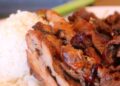
Mee Sum Pastry, a stall that has operated in the market for decades, sells pork hum bao — steamed buns filled with sweet-savory barbecue pork — that are legendary among locals. The buns are pillowy, the filling is sticky and fragrant, and at a few dollars each, they represent one of the best value propositions in the entire market. Regulars buy them by the half dozen.
The international corridor also houses a collection of spice shops that would make any serious home cook weep with joy. World Spice Merchants and MarketSpice carry hundreds of varieties, from smoked Spanish paprika to grains of paradise to the market’s own famous MarketSpice cinnamon-orange tea, which has a cult following and a scent so potent you can smell it from thirty feet away. These shops are worth visiting even if you don’t buy anything, just for the education. The staff will talk to you about the difference between Saigon cinnamon and Ceylon cinnamon, about why your turmeric should stain your fingers, about the proper way to bloom cumin seeds in hot oil. It’s a masterclass disguised as a shopping trip.
The Sweet Tooth — Pastries, Donuts, and the Butter Question
Pike Place Market has a complicated relationship with sugar. On one hand, this is a market that celebrates whole, unprocessed, farm-fresh food. On the other hand, it is home to some of the most aggressively delicious pastries and sweets in the Pacific Northwest, and nobody seems interested in resolving this contradiction.
Daily Dozen Doughnut Company is a prime offender. Operating from a tiny stall with a window that faces the main arcade, they produce miniature cake donuts in plain, cinnamon sugar, and powdered sugar varieties. You buy them by the bag — a baker’s dozen for a few dollars — and eat them warm, standing in the crowd, powdered sugar dusting the front of your jacket. They are not gourmet. They are not artisan. They are small, hot, sweet, and perfect, and they have launched a thousand arguments about whether they constitute a snack or a meal.
Piroshky Piroshky, the Russian bakery near the main entrance, takes a different approach to sweetness. Their savory piroshki — beef and cheese, smoked salmon and cream cheese — get most of the attention, and rightfully so. But their sweet options, particularly the chocolate cream hazelnut roll, are extraordinary. The pastry is laminated, buttery, and flaky in a way that suggests someone in the back kitchen takes their work very, very seriously. The chocolate is dark and not too sweet. The hazelnuts add a roasted crunch. It is the kind of pastry that makes you close your eyes involuntarily.
For those seeking something more refined, Le Panier is a full French bakery that has anchored the market’s north end since 1983. Their croissants are made with European-style butter and proofed slowly, resulting in a shatteringly crisp exterior and a soft, layered interior that pulls apart in sheets. The almond croissant, filled with frangipane and topped with sliced almonds and a snowfall of powdered sugar, is worth a special trip. Le Panier doesn’t cut corners, and you can taste the commitment in every bite.
The Sit-Down Experiences — When You Need a Chair and a Full Plate
While much of Pike Place Market’s food is designed to be eaten standing up or walking around, the market and its immediate surroundings also house several sit-down restaurants that deserve attention.
The Athenian Seafood Restaurant and Bar, famously featured in the film Sleepless in Seattle, occupies a prime spot on the market’s main floor with sweeping views of Puget Sound and the Olympic Mountains. The food is straightforward — fish and chips, seafood platters, burgers — but the setting is unbeatable. Grabbing a stool at the bar, ordering a local IPA, and watching the ferries cross the Sound is one of Seattle’s great simple pleasures.
Matt’s in the Market, located on the upper floor of the Corner Market Building, is a more ambitious proposition. Chef Shane Ryan sources almost everything from the market’s own vendors, creating a menu that changes with the seasons and reflects what’s best on any given day. A spring meal might feature halibut from the fish stalls downstairs, fiddlehead ferns from a forager’s table, and morel mushrooms gathered from the Cascade foothills. It’s farm-to-table dining in the most literal sense possible — the farm is directly below you.
For breakfast, Lowell’s Restaurant offers three floors of seating with increasingly dramatic views as you ascend. The crab omelette, made with Dungeness crab sourced from the market, is a local favorite. The restaurant has been operating since 1957 and carries the comfortable, slightly worn-in feeling of a place that has nothing to prove.
The Unwritten Rules — How to Eat Pike Place Like a Local
Every great food destination has its unspoken etiquette, and Pike Place Market is no exception. Understanding these rules won’t just improve your experience — it will fundamentally change what you eat and how you eat it.
First, go early. The market opens at 9 a.m. most days, and the first hour belongs to the regulars — the restaurant chefs buying their daily produce, the retirees who have been coming every Tuesday for thirty years, the market’s own vendors grabbing coffee before the rush. The energy is quieter, the vendors are chattier, and you can actually make eye contact with the person selling you a peach.
Second, eat seasonally. Pike Place Market’s greatest strength is its connection to the agricultural calendar of the Pacific Northwest. In summer, that means stone fruits, berries, and wild salmon. In autumn, it’s apples from Eastern Washington, chanterelle mushrooms, and Dungeness crab season opening in December. In winter, root vegetables and hearty soups dominate. Eating what’s in season isn’t just a philosophical choice here — it’s a practical one. The seasonal stuff is better, cheaper, and more abundant.
Third, talk to the vendors. This sounds obvious, but most tourists treat the market like a museum, looking but not engaging. The vendors at Pike Place are, almost without exception, passionate experts in what they sell. The cheese maker will cut you a sample. The fruit seller will tell you which apple variety is best for pie versus eating raw. The fishmonger will draw you a diagram of how to debone a trout. This knowledge is free, and it’s worth more than anything you’ll read in a guidebook.
Fourth, explore the lower levels. It bears repeating. The majority of visitors never go below the main arcade, which means the lower levels are less crowded, more affordable, and full of surprises. Some of the market’s oldest and most interesting vendors operate in these semi-hidden corridors, and finding them feels like discovering a secret room in a house you thought you already knew.
The Bigger Picture — Why Pike Place Still Matters
In an era of algorithmically optimized food delivery apps, ghost kitchens, and corporate food halls designed to look artisanal while being anything but, Pike Place Market is a stubborn anachronism. It is loud, inefficient, hard to park near, and occasionally smells like fish guts. It is also one of the last places in America where the person who grew your food hands it to you directly, looks you in the eye, and tells you how to cook it.
The market survives because Seattle has chosen, again and again, to protect it. When developers threatened demolition in the 1960s and 1970s, citizens fought back and won. When the pandemic shuttered restaurants across the city, the market’s vendors adapted — setting up online ordering, launching delivery services, doing whatever it took to keep the lights on and the fish flying. The market endures because it is not a business. It is a public trust, a civic institution, a place that belongs to the people who shop there and the people who sell there in equal measure.
To eat at Pike Place Market is to participate in something older and more meaningful than a meal. It is to stand in a place where food is still treated as a relationship — between grower and eater, between ocean and plate, between a city and its own best self. The chowder is fantastic. The coffee is world-class. The donuts will ruin you for all other donuts. But the real nourishment at Pike Place Market is the feeling of being connected, however briefly, to the human chain that brings food from the earth to your hands.
That’s what keeps people coming back. Not the fish throwing. Not the original Starbucks. Not even the macaroni and cheese, though it helps.
It’s the feeling that in this loud, crowded, rain-slicked market, food still means something.
Pike Place Market is located at 85 Pike Street, Seattle, WA 98101. The market is open daily, with hours varying by vendor. For the fullest experience, plan to spend at least three to four hours exploring — and come hungry.