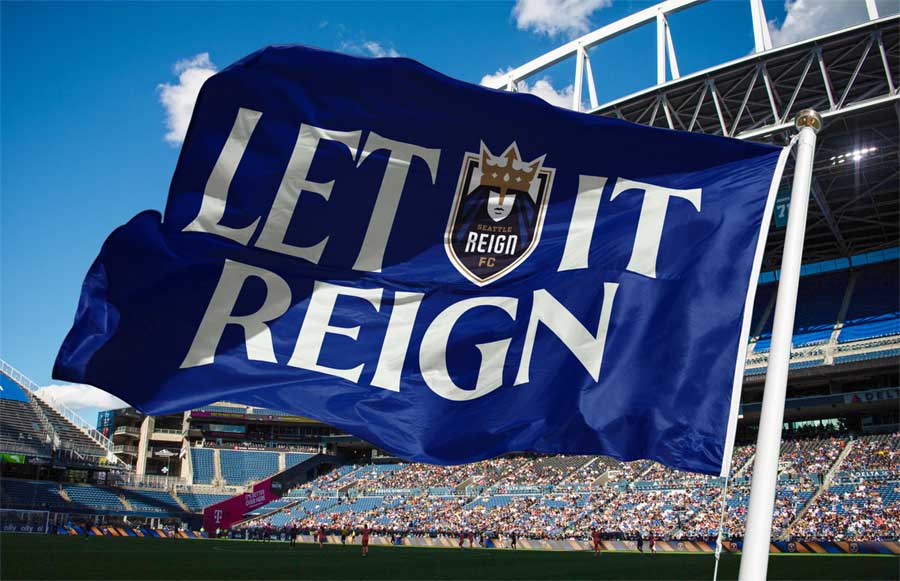
There is a certain kind of sports franchise that exists not just to win, but to mean something. To become inseparable from a city’s identity, to outlast boardroom upheaval and ownership transitions and the slow, grinding indifference of a culture that wasn’t yet sure it cared about women’s football. Seattle Reign FC is a professional women’s soccer team based in Seattle, Washington, competing in the National Women’s Soccer League — the highest level of women’s club soccer in the United States. But to reduce them to that sentence is to miss the point entirely. The Reign are the story of American women’s football told in one franchise: the idealism of the beginning, the glory of a dynasty, the chaos of reinvention, the humility of collapse, and the quiet, disciplined work of building something that lasts.
The Beginning: A Fragile Dream on Wet Grass
On November 21, 2012, Seattle was officially announced as a founding member of the National Women’s Soccer League, to begin play in 2013. With a clear mission to become one of the best women’s soccer clubs in the world, the club began its journey and garnered the support of loyal Seattle soccer fans. Eight teams. A vision. A league that everyone quietly prayed wouldn’t fold the same way the Women’s Professional Soccer league had done the year before.
On December 21, 2012, the team announced Laura Harvey as its first head coach. Harvey was head coach of Arsenal L.F.C. from 2010–2012 after serving as an assistant for two years. It was a hire that would define a decade. Harvey, precise and demanding and deeply principled, would come to be synonymous with Reign football — not just tactically, but culturally.
Lauren Barnes had no intention of being an NWSL player. After being drafted by the Philadelphia Independence of Women’s Professional Soccer in 2011 and moving across the country, her rookie season was riddled with uncertainty about the viability of the league and a feeling of homesickness, and she never saw the field during the club’s 18-game season. After the league folded, she returned to California and got a job coaching at UC Riverside, thinking her professional days were behind her.
When Harvey called her with a vision for Seattle, something clicked. Barnes took a chance, entered the NWSL Supplemental Draft, and was selected by the Reign. It was the beginning of the most improbable loyalty story in American women’s football.
On January 11, 2013, Kaylyn Kyle, Teresa Noyola, Megan Rapinoe, Amy Rodriguez, Jenny Ruiz, Hope Solo, and Emily Zurrer were named to the team as part of the NWSL Player Allocation. The roster read like a who’s who of American women’s soccer. Rapinoe, whose dyed hair and unapologetic presence would become as integral to the Reign brand as the crown on the badge. Solo, the best goalkeeper in the world. Rodriguez, the composed finisher. On paper, it looked brilliant. On the pitch in 2013, it was something closer to organised chaos.
The Reign ended the 2013 NWSL season seventh in the league with a 5–14–3 record. The season was complicated by player absences for international duty, a roster still finding its chemistry, and the general uncertainty of a league that was still figuring out whether it had a future. But the culture was forming. The foundation was real, even if the results weren’t.
The Dynasty: Unbeaten Records and Back-to-Back Shields
What happened next remains one of the most remarkable runs in American women’s football history. During the 2014 season, the Reign set a league record unbeaten streak of 16 games. During the 16-game stretch, the Reign compiled a 13–0–3 record. Something had clicked. Harvey’s system — high pressing, technically precise, ruthlessly organized — was being executed by some of the most gifted players in the world.
Under coach Laura Harvey, the team won back-to-back NWSL Shields in 2014 and 2015 for finishing with the best regular-season record. These achievements solidified their reputation as one of the most competitive and skillful teams in the league. Kim Little, the brilliant Scottish midfielder, won the Golden Boot and Most Valuable Player in 2014. Jess Fishlock, the Welsh midfielder who had signed as a free agent in 2013, was establishing herself as one of the most technically gifted players in the league. And Barnes was doing what Barnes always did: the relentless, unglamorous, essential work of holding everything together at the back.
But the Shields came without the championship. In 2014, the Reign were defeated 2-1 by FC Kansas City in the final. In 2015, they fell again, 1-0 to the same opponent. It was the beginning of a strange but defining Reign narrative: a team that consistently proved its excellence across long seasons, only to be denied the ultimate prize in the short, high-pressure knockout rounds. This pattern would haunt them for nearly a decade.
The Long Middle: Identity Lost and Found
The years between the back-to-back Shields and the 2022 resurgence are a complicated chapter — not without their own moments of brilliance, but defined more by institutional turbulence than by trophies.
The Reign moved to Memorial Stadium in Seattle for the 2014 season and stayed there until a move in 2019 to Cheney Stadium, a minor league ballpark in Tacoma, that coincided with a rebranding to Reign FC. The team was renamed to OL Reign after the French OL Groupe purchased a majority stake later in the year. The French connection brought European prestige and global ambitions, but it also meant the team was no longer purely rooted in Seattle. Stripped of the city’s name, relocated to a converted baseball park, the Reign were searching for their identity.
OL — an abbreviation for Olympique Lyonnais — stripped the Reign of their branding and relocated the team from Memorial Stadium to Cheney Stadium in Tacoma. For supporters who had spent years building a community around this team, it felt like a kind of theft. Not of assets, but of belonging.
Yet even during these years, the football was often excellent. In 2021, Jess Fishlock received the NWSL Most Valuable Player award with the Reign. That honour — the highest individual award in the league — was a recognition of what those who watched the Reign every week already knew: Fishlock was producing some of the best football of her career, which itself was saying something.
And then 2022 arrived. The team returned to Seattle, to Lumen Field. In their final regular-season match, the Reign won the 2022 NWSL Shield, the team’s third. The Reign moved their training facility to Starfire Sports. A third Shield. Three Shields in a decade. And yet, the championship remained elusive.
The 2023 season would bring them closer than ever. The team finished the 2023 season as runners-up in the NWSL Championship, losing 2–1 to NJ/NY Gotham FC. At the end of this season, forward Megan Rapinoe announced her retirement after eleven seasons with the club.
Rapinoe’s farewell was the kind of moment that transcends sport. Until this month, the Reign held the single match NWSL attendance record, with 34,130 in attendance at Lumen Field for Megan Rapinoe’s final 2023 regular season game. 34,130 people came to watch a footballer say goodbye. That number is not just an attendance record. It is a statement about what women’s football can mean to a city when it is allowed to take root.
The People Who Made It
No story of Seattle Reign FC can be told without dwelling on the individuals who gave it its character. Three players — Rapinoe, Barnes, and Fishlock — were the original architects of the club’s culture, the ones who were there from the very beginning and who, through sheer presence and excellence, made Seattle feel like a destination.
Rapinoe’s contributions extended far beyond football. Her activism, her outspokenness, her refusal to be a quiet professional athlete — these things made the Reign politically and culturally significant in a way few sports franchises achieve. She was the most famous face of the club, the one who made casual fans stop and pay attention.
But Barnes was the spine. A 2016 Defender of the Year and four-time Best XI or Second XI honoree, she helped lead the Reign to three NWSL Shields — quietly stacking a resume that rivals any U.S. national team star. The word that comes up again and again when people talk about Barnes is culture. Reign General Manager Lesle Gallimore credits Barnes first and foremost with being the cornerstone of that culture. “This club is Lu,” Gallimore explained. “Laura [Harvey] took a little blip in the middle somewhere… when you talk about Lu Barnes, she is the stalwart of the team. This team, the standard, the standard of play, the demeanor, the acceptance, the inclusion, that’s all Lu.”
Barnes is also the league’s all-time leader in games played with 250 caps and is the first player to reach 100 regular season wins. Those are records that may never be broken, not because players lack the talent, but because the loyalty they require is almost extinct in modern professional sport.
Teammate Jess Fishlock, the only other player to spend all 13 NWSL seasons with one club, put it plainly. “Lu has been, in my eyes, underrated by almost everybody in the world. In my eyes, she’s been one of the best players for the last decade.”
Fishlock herself deserves her own monument. Fishlock is the club’s all-time regular-season assist leader, ranking second all-time in games played, games started, minutes played, and goals for Seattle Reign FC. Last season, she became the third player in NWSL history to play 15,000 regular season minutes. She is a Welsh international, Wales’s all-time record goal scorer, an MBE, an MVP. She is 38 years old going on 39, and she is still the best player on the pitch more often than not. She has made the NWSL’s Best XI seven times and has 48 goals and 30 assists for Seattle, the most goal contributions in club history.
When the 2025 season ended, Barnes announced her retirement. Fishlock signed on for one more year. “There’s something about going through this journey with a singular club — going through the highs and the lows and going through the rebuild, going through moving around Washington to try and find and connect with the fan bases,” Fishlock said. “It’s something about that and that whole journey and relationship that I think makes everything so much better when it happens.”
That is not a quote about football. That is a philosophy of loyalty.
The Dark Year: 2024 and the Price of Transition
Every franchise has a nadir, a season so dissonant with its own history that it feels almost incomprehensible. For the Reign, that was 2024.
Reign FC finished the 2024 regular season with 23 points (6-15-5), falling short of the NWSL playoffs by nine points. The club listed 25 different starting lineups in its 26 matches and attracted 14 new players throughout the campaign. Twenty-five different starting lineups in twenty-six matches. That is not a sign of tactical flexibility. It is a sign of structural instability — a team that could not find its own identity from week to week.
The causes were multiple and compounding. The Reign had significant roster turnover from 2023 to 2024, with Megan Rapinoe retiring and U.S. Women’s National Team players Rose Lavelle and Emily Sonnett heading to Gotham in free agency. The Reign also lost some key players to the NWSL expansion draft. The Reign, previously owned by Olympique Lyonnais in France, were also up for sale for more than a year (April 2023-June 2024), causing a lot of uncertainty in the offseason and early part of the season.
That last factor is perhaps the most underappreciated. An ownership limbo lasting more than a year is not just a business inconvenience. It is a recruitment freeze, a planning paralysis, and a psychological drain on everyone from the coaching staff to the players. How do you plan a long-term project when you don’t know who will be paying for it?
Despite promising young players and experienced veterans, the team finished 13th in the NWSL regular season standings — a disappointing position for a club with such a storied history. There were individual bright spots. Emeri Adames broke a record, becoming the youngest player in Reign history to score a goal at just 18 years old. Jordyn Huitema, at 23, was beginning to show the consistency her talent had always promised. But youth and individual brilliance cannot compensate for an absence of system and stability.
The Rebirth: New Owners, Old Values, and a New Era
In June 2024, Seattle Reign FC was officially sold to Seattle Sounders FC and the Carlyle Group. The $58 million price tag is a dramatic increase in valuation of the team. OL Groupe had bought the Reign for about $3.5 million in 2019. That sixteen-fold increase in valuation in five years is not an anomaly. It is the story of what has happened to women’s football as a global commercial proposition — and the Reign, with their history, their fanbase, and their Lumen Field home, were worth every dollar of it.
The new ownership brought not just capital but commitment. The new ownership group has already helped the Reign add another assistant coach and a full-time video analyst, and grow their medical and performance staff. The two clubs are now sharing resources and staff positions. These are not flashy signings. They are the investments that actually win football games — the marginal gains that compound over a season.
To define the Reign’s brand for this new era, the club launched RISE — a storytelling and social impact platform grounded in advancing equity, protecting the Salish Sea, and championing women and gender-diverse people. The initiative stemmed from internal reflections on what truly defined the club. It was not invented from scratch. It was excavated from what the club had always been — the values that Rapinoe embodied, that Barnes quietly modelled, that Fishlock carried into her second decade in Seattle.
“You’re going to hear a lot about it being a new era for Reign,” said Reign chief business officer Maya Mendoza-Exstrom. “It’s not about dissociating from the legacy and all of the change that has happened, but it’s about really cementing an aspiration of where we want to be — and we want to be a leader in global women’s football. We want to be a top five club in the world.”
That is an ambitious statement. It is also one that is backed up by the trajectory of everything the club has done over the last two years.
2025: Belief Returns to Seattle
Buoyed by offseason investment, roster additions, and determination, the Reign bounced back from the disappointing 2024. Seattle sat seventh in the league standings so far with three wins, two losses and two draws. Looking beyond the scorelines further shows just how different things are this time around.
The roster built for 2025 represented a conscious attempt to blend experience with the energy of the new generation. A strong forward group took the field for the Reign, led by recent offseason acquisition Lynn Biyendolo from NY/NJ Gotham. She recorded 12 goals in 40 appearances with Gotham, including an NWSL championship in 2023. Biyendolo — previously Lynn Williams — brought not just goals but a winning culture, having lifted the championship just two years prior.
Claudia Dickey’s dominance in goal returned for another season with the Reign after she recorded 18 starts and 61 saves last season, the sixth-most saves by a Reign FC goalkeeper in a single season in club history. Behind her, the defensive structure had the solidity that was so conspicuously absent in 2024.
And Fishlock, now in her thirteenth Seattle season, led the team in scoring. Fishlock, who turns 39 in January, led the Reign in scoring in 2025 with six goals and two assists. The woman who has been here since before the league had an established identity, who has watched teammates come and go, who has carried the club through ownership changes and relocations and Championship heartbreaks — she was still the best player on the pitch. That is either remarkable or impossible, and Fishlock keeps refusing to let it be anything other than remarkable.
The 2025 season ended with the Reign reaching the playoff quarterfinals before falling to the Orlando Pride. It was not a championship. Fishlock said that even if she entertained the idea of playing somewhere else and winning a trophy, it would not mean as much. Progress is progress, especially when it is built on the right foundations.
Lumen Field and the Question of Home
The team returned to Seattle in 2022 and now plays at Lumen Field, which they share with Seattle Sounders FC of Major League Soccer and the Seattle Seahawks of the National Football League. Lumen Field, with a full capacity of 68,740, is configured for roughly 10,000 for NWSL matches — but that number has been exceeded regularly when the occasion demands it. The 34,000 who turned up for Rapinoe’s farewell are proof that there is an enormous latent appetite for women’s football in Seattle. The task now is to convert those peak moments into consistent, growing weekly attendance.
Filling the lower bowl of Lumen Field consistently is a realistic target for the Reign, but Mendoza-Exstrom and Popov both understand that what works for the Sounders might not be the right approach for the Reign. This is wisdom. The Reign have their own history, their own fan culture, and their own way of being in Seattle. They should grow on their own terms.
The first supporters group formed for the Reign is the Royal Guard. Founded by Matt Banks and Kiana Coleman in April 2013, the group became the first organized supporters group for a women’s professional sports team in Washington state’s history. That fact is easy to overlook, but it matters enormously. The Reign did not inherit a ready-made supporter base. They built one, from the ground up, in the years when the league was uncertain and the wages were barely livable. That base is real, and it is deeply loyal.
What the Reign Represent
Ask anyone who has been involved with this club over its thirteen years, and you will hear the same words: culture, excellence, inclusion, loyalty. These are not marketing buzzwords. They describe something that was actually built, in actual rooms, through actual seasons.
There has been a lot of change at the Reign over the years — different stadiums, different coaches, different ownership — but one thing that remained a steady and guiding focus through all of that upheaval was the three remaining original Reign players, Lauren Barnes, Jess Fishlock, and Megan Rapinoe.
Now Barnes has retired. Rapinoe retired before her. Fishlock remains, perhaps one more season, carrying the thread back to 2013 alone. When she finally hangs up her boots in Seattle, it will be the end of something that will not be replicated in women’s football for a very long time: a player who chose one city, one club, one vision, and gave it thirteen-plus years of her life.
“That joy is real. No one manufactures that,” said Mendoza-Exstrom, referring to how much the team celebrated when a player scored her first career goal.
That sentence is a better description of what makes the Reign what they are than any list of trophies. The joy is real. The loyalty is real. The culture is real. The three NWSL Shields are real. The three championship runner-up finishes are a wound that has not fully healed. And the ambition — to be a top five women’s club in the world, to fill Lumen Field, to finally end the longest wait in the franchise’s history and hoist that championship trophy — is as real as it has ever been.
Seattle Reign FC is not just a football team. It is a sustained argument that women’s sport, given proper investment, genuine care, and a city that believes in it, can be one of the most powerful things in sport. They have been making that argument since 2013. The case has never been stronger.
The Reign’s 2026 NWSL season begins in March. Jess Fishlock, the last original, will be there.