October 21, 1962: Seattle’s six-month Century 21 Exposition—the World’s Fair—ended. Left behind: 800-seat Seattle Playhouse on fairgrounds at 201 Mercer Street. Designed by architect Paul Kirk. Empty. Purpose: unclear.
The Cirque Playhouse wanted it. Gene Keene’s company had produced “Teahouse of the August Moon” at the venue during the fair—author was Keene’s old army buddy, Keene reportedly inspired key character Captain Frisby. The Cirque among cadre of groups angling to use Playhouse after fair ended. City of Seattle initially said Playhouse would be used for “community” groups. The Cirque represented exactly that: popular musicals and comedies for local audiences.
But some civic leaders envisioned something else. They wanted Seattle to have first-rate nonprofit drama company like those cropping up in Minneapolis, San Francisco, other cities. Regional theater movement sweeping America. Seattle needed legitimate theater—not community theater, not touring shows, not Cirque’s light entertainment. Serious theatrical organization. Permanent company. Resident actors. Classical repertoire. Professional ambitions.
The competition for the space was soon won by major, new, still-in-the-planning-stage theatrical group: Seattle Repertory Theatre. Founded 1963. The Cirque lost the building. Would move locations multiple times over next decades before folding 1981. The Rep took the Playhouse. Changed Seattle theater forever.
Legend holds that Hal Holbrook—one of many performers appearing at Playhouse during World’s Fair—suggested it would make excellent home for repertory theater company. Holbrook declined job as Seattle Rep’s first artistic leader. But his colleague, Stuart Vaughan, signed on. Actor-director from New York. Assembled core group of local and East Coast actors. His motto: “The only reason to be in the American Theater is to change it.”
November 13, 1963: Seattle Repertory Theatre company made debut before near-capacity crowd. Production: William Shakespeare’s “King Lear.” First performance of first production of first season by new company in new theater.
Seattle Post-Intelligencer’s coverage almost giddy. Seattle Times expressed “tremendous excitement” over theatrical team’s potential, described Rep as “That most noble of experiments,” saluted effort declaring “Long may it live.” Arts patron Hans Lehmann recalled that first show as “harbinger of great theater for years to come.”
First season opened with over 9,000 subscribers—at that time largest audience for any Seattle cultural institution. According to Bagley Wright: “Seattle proved itself as theater town. What satisfied me most was you could see really first-rate theater being produced by resident company in Seattle.”
The empty Playhouse problem solved. But that was just beginning.
Bagley Wright: The Businessman Who Wanted Shakespeare
Bagley Wright: born 1924, died 2011. Seattle businessman and arts patron. President of Rep’s first board of trustees 1963-1970. Real estate developer. Made fortune but believed money should build culture not just buildings.
Wright led efforts to establish Seattle’s first serious theatrical organization after World’s Fair. Raised money. Recruited artistic leadership. Convinced other civic leaders that Seattle needed permanent theater company. Not just for entertainment—for civic identity. Cities known for their theaters. Minneapolis had Guthrie Theater. San Francisco had American Conservatory Theater. What did Seattle have?
Wright’s vision: professional repertory company rivaling best in New York. Bold ambition for city of 550,000 people. But World’s Fair proved Seattle could think big. Fair brought 9.6 million visitors, left legacy of institutions: Pacific Science Center, Space Needle, Opera House, Playhouse. Physical infrastructure existed. Cultural infrastructure needed building.
The fundraising: Wright and others soliciting donations from Seattle’s business elite, arts patrons, civic boosters. Convincing them that legitimate theater was investment in Seattle’s future. City wanting to be taken seriously culturally—not just Boeing town, not just logging and shipping, but sophisticated city with arts institutions matching ambitions.
Vaughan brought actors from across nation and world. Thomas Hill, Anne Gerety, Vernon Weddle, Stephen Joyce, Archie Smith, Kay Doubleday, Conrad Bain, Ruth Sobotka, William Myers, Pauline Flanagan, George Vogel. Also locals: Marjorie Nelson, John Gilbert. Mix of established professionals and emerging talent. They would perform “rolling rep”—rotating plays with same actors appearing in multiple productions simultaneously.
First season repertoire: “King Lear” (Shakespeare), “The Firebugs” (Max Frisch). Classical and contemporary. Serious drama. Vaughan’s vision was artistic not commercial. Quality over popularity. Challenging audiences not pandering to them.
The theater seated 800. Intimate space. Good sightlines. Designed originally for fair performances now repurposed for resident company. Would serve as Rep’s home for two decades.
The Headlines Tell the Story: Nearly Dying Repeatedly
1967: “Big deficit perils Rep” 1969: “The Seattle Repertory Theatre in trouble” 1970: “Rep in limbo, faces change” 1973: “Perils at the Rep” 1979: “Rep will grow through error…” 1980: “The Rep on the ropes” 1980: “Sluggish funds jeopardize Rep theater”
As with most arts institutions, Seattle Rep faced economic challenges constantly. Nonprofit theater economics brutal: ticket revenue covers fraction of operating costs. Remainder comes from donations, grants, government support. If any funding source falters, organization faces crisis.
1966: Stuart Vaughan exited. Allen Fletcher replaced him as artistic director. 1967: Group launched contemporary works series “Off-Center” in various halls around town. Expanding programming beyond main stage. Reaching different audiences. Generating additional revenue streams.
1970: Peter Donnelly moved up from general manager to producing director. W. Duncan Ross took artistic director slot. Leadership changes reflecting financial pressures and artistic evolution. Finding leaders who could balance artistic ambitions with fiscal realities.
1971: Ford Foundation grant provided welcome monetary support. Critical kudos for performances of Shakespeare’s “Richard II” featuring noted Hollywood actors. Foundation support and critical success helped stabilize organization. But challenges persisted.
1974-1975 season: Seattle Arts Commission joined with Rep making live professional theater available to larger audience by underwriting special matinees of each mainstage production. Free tickets available. Public subsidy expanding access. Partnership between city government and arts institution. Recognition that theater served public good beyond ticket buyers.
Despite struggles, Rep persisted. Each crisis navigated. Each headline about trouble followed eventually by headline about survival. The organization proved resilient—combination of community support, artistic quality, leadership determination, belief that Seattle needed what Rep provided.
The economic challenges weren’t unique to Seattle Rep. Regional theaters nationwide faced similar issues. Question was whether Seattle community valued theater enough to sustain it through difficult periods. Answer proved to be yes—barely, repeatedly, but consistently yes.
The Bagley Wright Theatre: 842 Seats and a Baseball Diamond
1977: Seattle citizens passed $19 million bond issue. $4.8 million designated for construction of new resident theater with proscenium stage and complete theatrical support plant. Public investment in arts infrastructure. Voters approving tax dollars for theater building. Remarkable vote of confidence in Rep’s importance to city.
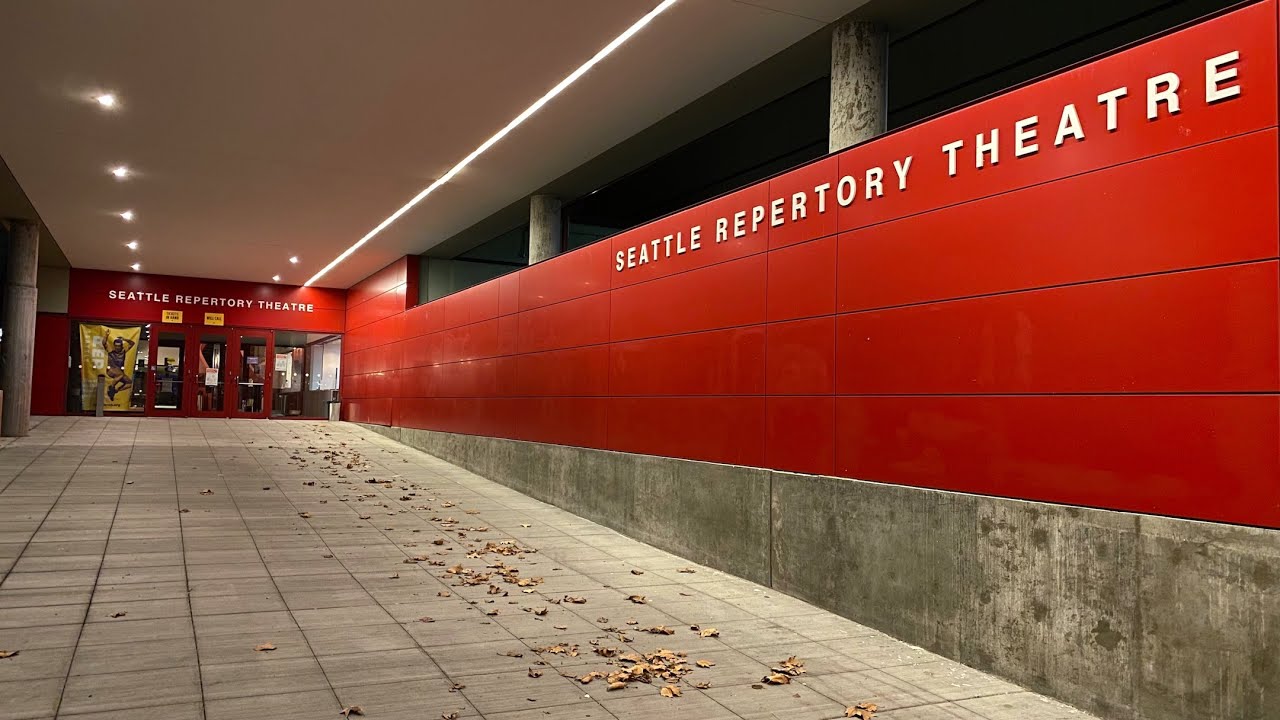
October 13, 1983: Bagley Wright Theatre opened at 155 Mercer Street—right next door to old Playhouse. Named honoring Wright’s leadership during Rep’s formative years and ongoing support. 842 seats. Total seating designed so distance from stage to last row measured approximately five feet longer than distance from pitcher’s mound to home plate on standard baseball diamond—peculiar but memorable specification.
Opening production: world premiere of Michael Weller’s “The Ballad of Soapy Smith” directed by Robert Egan. Cast of Seattle actors: Dennis Arndt in title role, John Aylward, Frank Corrado, Paul Hostetler, Richard Riehle, Michael Santo, Marjorie Nelson, Ted D’Arms, Kurt Beattie, Clayton Corzatte, William Ontiveros. Local talent christening new venue with new work.
The building represented permanence. No longer guest in World’s Fair leftover. Own purpose-built theater. Architectural statement that Rep belonged at Seattle Center alongside other major cultural institutions. Investment in physical infrastructure enabling artistic ambitions.
Design featured proscenium stage—traditional theater configuration where audience faces stage framed by arch. Complete theatrical support plant meant backstage facilities for scenery construction, costume shop, rehearsal spaces, dressing rooms, administrative offices. Everything needed for professional theater operation under one roof.
The 842-seat capacity strategic. Larger than 800-seat Playhouse but not massive. Intimate enough that last row still felt connected to stage. Large enough to generate significant ticket revenue. Regional theaters typically range 300-1,000 seats. Too small: insufficient revenue. Too large: impersonal, difficult to fill. 842 hit sweet spot for city Seattle’s size.
Daniel Sullivan became artistic director 1981. Would lead Rep through most successful period. Under Sullivan: high-profile premieres, national tours, Broadway transfers, Tony Award recognition. Sullivan’s tenure 1981-1997 established Rep’s national reputation.
1990: The Tony Award and August Wilson
1990: Seattle Repertory Theatre received Tony Award for Outstanding Regional Theatre. Highest honor regional theater can receive. Recognition from American theater establishment that Rep achieved national stature. Sullivan told Seattle Times: “I think it’s as much recognition of whole Seattle theater community as it is of Rep.”
The Tony came during period of remarkable productivity. Rep premiering significant new works, attracting major talent, sending productions to Broadway, establishing Seattle as serious theater city. Award validated decades of struggle, confirmed that investment in Rep paid dividends beyond Seattle.
Also 1990: August Wilson moved to Seattle. November 16, 1990. Playwright already nationally prominent. “Fences” won Pulitzer Prize 1987. “The Piano Lesson” won Pulitzer Prize 1990. Two Pulitzers before age 45. In midst of composing monumental 10-play cycle chronicling African American life in twentieth century—each play set in different decade.
Wilson came to Seattle following breakup of second marriage summer 1990. Looking for “relaxed, civilized” place to settle. Found Seattle. Moved to Capitol Hill neighborhood. 1994 married third wife Constanza Romero, costume designer at Yale Repertory Theatre for first production of “The Piano Lesson.”
Wilson developed working relationship with Seattle Repertory Theatre. Would write plays in Seattle. Rep would stage several including premieres. Wilson’s presence elevated Rep’s artistic profile. Having one of America’s greatest playwrights as resident artist—extraordinary asset. Wilson’s plays attracting national attention. Rep productions of Wilson works reviewed by New York critics, drawing comparisons to Broadway productions, establishing Rep as destination theater not just regional company.
The American Century Cycle plays: “Gem of the Ocean” (1904), “Joe Turner’s Come and Gone” (1911), “Ma Rainey’s Black Bottom” (1927), “The Piano Lesson” (1936), “Seven Guitars” (1948), “Fences” (1957), “Two Trains Running” (1969), “Jitney” (1977), “King Hedley II” (1985), “Radio Golf” (1997). Monumental achievement in American theater. Multiple plays premiered or developed at Seattle Rep before moving to other venues.
2003: Wilson debuted one-man show at Seattle Rep—working title “How I Learned What I Learned.” Wilson making acting debut in own work. Drawing upon his life for stories about struggle of artist “at crossroads of black and white culture.” Performance marking deepening of Wilson-Rep relationship.
October 2, 2005: August Wilson died. Seattle lost adopted son. Rep lost artistic partner. American theater lost giant. By time of death, Wilson considered one of great playwrights of twentieth century—compared to Eugene O’Neill and Arthur Miller.
2008: Pedestrian promenade running through Seattle Center campus from Warren Avenue to Marion Oliver McCaw Hall named August Wilson Way. Free-standing stone door frame with red door and image of Wilson playfully invites pedestrians to walk through. Plaque shares lines from “King Hedley II”: “The people wandering all over the place. They got lost. They don’t even know the story of how they got from tit to tat. Aunt Ester know. But the path to her house is all grown over with weeds, you can’t hardly find the door no more. The people need to know that. The people need to know the story.”
The Wilson years transformed Seattle Rep. Association with playwright of Wilson’s stature brought credibility, attracted audiences, generated critical attention, established artistic legacy. The Tony Award recognized past achievements. August Wilson represented Rep’s present and future.
The Leo K: A Second Stage for Different Stories
December 1996: Leo Kreielsheimer Theatre (“Leo K”) opened as Seattle Rep’s second stage. Made possible by $2 million gift from Kreielsheimer Foundation, $1 million gift from then board chair Marsha S. Glazer, leadership of capital campaign chairs Ann Ramsay-Jenkins and Stanley Savage.
282 seats total: 192 orchestra level including loge, plus 90 balcony and box seats. Approximately 25 feet from stage to rear wall. Intimate space for different theatrical experiences than main stage could offer.
Orchestra seating: 139 seats in 9 rows, 8-20 seats per row. Loge adds 51 seats in 2 rows. Balcony provides additional 88 seats in 3 rows. Additionally 4 box seats at balcony level. 5 wheelchair locations. ADA accessibility throughout.
Opening production 1997: “The Cider House Rules, Part 2” by Peter Parnell—adaptation of John Irving novel. Daniel Sullivan’s vision of second venue realized. Smaller space allowing more experimental works, new plays, intimate dramas, one-person shows, chamber pieces not suited to 842-seat main stage.
Second stage crucial for artistic range. Major productions need major venues. But not all theater is big. Some stories demand intimacy. Some plays work better with 282 people than 842. Some artists developing new works need lower-risk environment than main stage provides. Leo K filled this need.
Economics also mattered. Operating two theaters year-round means more productions, more ticket sales, more diverse programming, more opportunities to attract different audiences. Some patrons preferring smaller Leo K for sightlines and atmosphere. Others wanting grandeur of Bagley Wright. Both theaters serving different niches while sharing administrative overhead, marketing infrastructure, subscriber base.
The two-theater model became standard for larger regional theaters. Seattle Rep joining ranks of theaters like Goodman in Chicago, Guthrie in Minneapolis, Berkeley Rep in California—all operating multiple venues. Demonstrated institutional maturity and financial stability. Organization confident in ability to sustain expanded programming.
The Stars Who Walked the Boards
Since founding 1963, actors walking Seattle Rep stages: Laurence Fishburne, Lily Tomlin, Samuel L. Jackson, Meryl Streep, Richard Gere, Richard Chamberlain, Jessica Tandy, Christopher Walken, Bill Irwin. National names bringing celebrity but also artistic credibility.
1969/70 season: 19-year-old Richard Gere getting professional start as part of Seattle Rep acting company. Years before “American Gigolo,” “An Officer and a Gentleman,” “Pretty Woman.” Young actor learning craft on Rep stage.
1986: Samuel L. Jackson in Rep production of August Wilson’s “Fences.” Before “Pulp Fiction,” before Marvel films, before becoming highest-grossing actor of all time. Jackson performing Wilson’s Pulitzer Prize-winning play in Seattle.
But more importantly: Rep served as artistic home for countless Seattle artists. Suzanne Bouchard, David Pichette, John Aylward, R. Hamilton Wright building careers on Rep stages. Local actors sustaining professional careers without moving to New York or Los Angeles. Regional theater movement’s promise: theater work available outside Broadway. Seattle Rep delivering on this promise.
The resident acting company model: group of actors employed full season, appearing in multiple productions, building ensemble chemistry. Sullivan abandoned this model 1997 cutting rising costs. Controversial decision. Resident companies expensive—actors paid whether appearing in current production or not. Also limiting—couldn’t always cast best actor for role if constrained to company members.
Trade-off between ensemble continuity and casting flexibility. Many regional theaters phasing out resident companies by 1990s for financial and artistic reasons. But loss meant end of certain type of theater magic: actors who worked together repeatedly developing shorthand, chemistry, shared vocabulary. Something irreplaceable about ensemble performing together across multiple productions.
Bill Irwin—frequent Rep performer, Tony Award winner—described place: “I’ve always thought the place had great respect around the country. You feel blessed to go to work there.”
The Premieres That Changed American Theater
Rep premiered plays by August Wilson, Neil Simon, John Patrick Shanley, Wendy Wasserstein, Sarah Ruhl. Some of world’s top directors, designers, artisans bringing shows to life. Over 300 different plays produced since founding including debut of almost 100 brand-new pieces.
1985: Herb Gardner’s “I’m Not Rappaport” premiered at Rep. Show moved to Broadway acclaim. Established Rep as incubator for promising new works. Productions premiering in Seattle then transferring to New York—reversing traditional flow where regional theaters staged scaled-down versions of Broadway hits.
1988: Bill Irwin’s “Largely/New York” premiered at Rep. Irwin’s unique physical comedy and theatrical innovation finding home in Seattle.
1989: Wendy Wasserstein’s “The Heidi Chronicles” premiered at Rep. Would win Pulitzer Prize, Tony Award. Wasserstein’s chronicle of women’s movement and one woman’s journey resonating with audiences. Seattle premiere demonstrating Rep’s commitment to contemporary voices.
1991: Daniel Sullivan and Rep’s original play “Inspecting Carol” debuted. Following year took it on national tour. Rep creating own works not just presenting others’. Demonstrated artistic confidence and institutional capacity.
1994: Wasserstein’s “The Sisters Rosensweig” premiered at Rep. Wasserstein returning to Seattle after “Heidi Chronicles” success. Trust in Rep’s ability to develop new work.
1995: “The Cider House Rules” adapted by Peter Parnell from John Irving’s novel. Two-part production requiring two separate performances. Ambitious undertaking. Artistic risk. Commercial success leading to film adaptation years later.
2001: “Proof” directed by Daniel Sullivan (who returned to Rep after leaving 1997). Won Sullivan Tony Award while on Broadway. National tour began. Rep production launching work to national prominence.
2015: “Come From Away” by Irene Sankoff and David Hein. One of pre-Broadway tryouts at Seattle Rep. Huge hit. Emotionally wrecking audiences. Would become massive Broadway success running 2017-2022. Touring production returned to Rep 2025 with local cast. Full-circle moment.
The premieres demonstrated Rep’s artistic mission: not just preserving theater tradition but creating new tradition. Every classic play was once new play. Contemporary theater needed venues willing to take risks on untested work. Rep provided this. Playwrights trusting Rep with world premieres. Directors wanting to develop work there. Actors eager to create roles in new plays rather than recreate established interpretations.
The Current Reality: New Leadership and Changing Times
Artistic directors chronology: Stuart Vaughan (founding, 1963-1966), Allen Fletcher (1966-1970), W. Duncan Ross (1970s), Daniel Sullivan (1981-1997), Sharon Ott (1997-2004), David Esbjornson (2005-2008), Jerry Manning (2008-2015), Braden Abraham (2015-2022), Dámaso Rodríguez (2022-present).
Managing directors: Benjamin Moore prominent during Sullivan years (1985-2008), Jeffrey Herrmann current managing director.
Each leadership transition bringing different artistic vision. Sullivan’s era: Broadway-bound premieres, star casting, Tony Award recognition. Sharon Ott (former Berkeley Repertory Theatre leader, 1997-2004): innovative directors, broadening aesthetic and ethnic diversity. Stephen Wadsworth, Mary Zimmerman, Ping Chong, legendary Peter Brook directed shows under Ott. Different theatrical language than Sullivan years.
Challenges persisting. 2009: supporters raised $1 million in new or increased gifts successfully securing Seattle Repertory Theatre Foundation’s pledged matching loan, balancing fiscal budget during challenging economic times. Recession threatening arts organizations nationwide. Rep navigating financial pressures through community support.
Current programming reflecting evolved mission. Rep’s nationally recognized programs: New Play Program (continuing premiere tradition), Public Works Seattle (community engagement through participatory theater), August Wilson Monologue Competition (honoring Wilson’s legacy, supporting young Black actors), Pay What You Choose ticketing (accessibility initiative), numerous audience enrichment opportunities including post-play panels, discussions, community events.
300 performances annually. Approximately 9,500 subscribers. Estimated $12 million direct impact on region’s economy. Important role in Northwest’s cultural realm quantifiable but also intangible. How measure value of having professional theater company producing world-class work? How calculate impact of plays provoking conversations about social issues? How price artistic legacy building over decades?
2025 season includes mix of classics, recent Broadway hits, cutting-edge new works. Balancing tradition and innovation. Serving diverse audiences—subscribers wanting familiar works, adventurous patrons seeking challenging new voices. Economic reality requiring popular titles subsidizing riskier projects. Artistic mission demanding more than commercially safe programming.
The Rep operates in changed theatrical landscape. Streaming entertainment competing for leisure time. Ticket prices rising faster than inflation. Younger audiences having different consumption habits. Diverse communities wanting seeing their stories represented. Technology enabling new theatrical experiences but also creating expectations traditional theater can’t meet.
Yet theater persists. Something irreplaceable about live performance. Actors and audience sharing space, energy flowing between stage and seats, collective experience creating community. Rep continuing providing this despite challenges. Adapting while maintaining core mission.
The Empty Playhouse That Became a Theater City
What if Cirque Playhouse won competition for Seattle Center Playhouse after World’s Fair? What if civic leaders hadn’t pushed for serious theatrical organization? What if Bagley Wright focused on business instead of arts? What if Hal Holbrook never suggested building for repertory company? What if Stuart Vaughan said no?
Different Seattle. Possibly no regional theater movement here. Perhaps no A Contemporary Theatre (founded 1965), no Intiman Theatre (founded 1972), no other companies inspired by Rep’s existence. The Rep created ecosystem. Other theaters emerged in its wake. Actors, directors, designers, technicians developed careers. Audiences cultivated. Theater culture established.
The New York Times calling Rep “this city’s flagship theatre.” Hans Lehmann calling it “this city’s first important legitimate theater” and “national treasure.” Not hyperbole. Rep fundamentally changed Seattle’s cultural landscape.
The empty Playhouse problem of 1962 became solution: 62 years of professional theater, 300+ productions, nearly 100 world premieres, countless artists launched, audiences numbering millions, Tony Award recognition, August Wilson partnership, two purpose-built theaters, ongoing artistic innovation.
What seemed uncertain in 1963—whether Seattle could sustain serious theatrical organization—now seems inevitable in retrospect. Of course Seattle has professional theater company. Of course Rep succeeded. But nothing was certain. Every headline about financial peril was real crisis. Every leadership transition risked losing momentum. Every artistic risk threatened alienating subscribers. Every economic downturn endangered survival.
That Rep not only survived but thrived, not only existed but achieved national prominence, not only presented theater but created theater, not only served Seattle but influenced American theater broadly—this wasn’t inevitable. This resulted from vision, leadership, community support, artistic excellence, financial acumen, adaptability, persistence, belief that theater matters.
The empty Playhouse became Bagley Wright Theatre and Leo Kreielsheimer Theatre. Became August Wilson Way. Became Seattle’s flagship theater. Became place where Richard Gere started professional career, where Samuel L. Jackson performed August Wilson, where Wendy Wasserstein premiered Pulitzer Prize-winning plays, where “Come From Away” tested before Broadway, where hundreds of Seattle artists built careers, where millions of audience members experienced theater, where community gathered around stories.
All because civic leaders in 1962 looked at empty building and saw possibility. All because Bagley Wright believed Seattle deserved better than community theater. All because Hal Holbrook made suggestion. All because Stuart Vaughan came west with motto about changing American theater. All because audiences showed up November 13, 1963 to see “King Lear” and kept showing up.
The empty Playhouse wasn’t problem. Was opportunity. Seattle Repertory Theatre proved it.