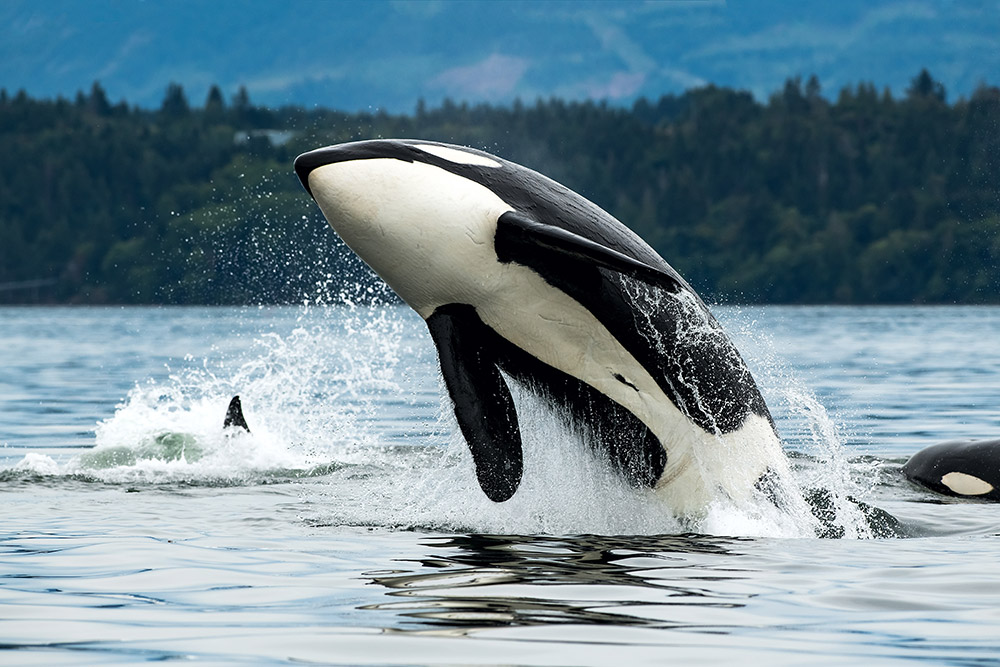
The Salish Sea doesn’t reveal its secrets to just anyone. You have to earn them — by waking up early, layering on fleece and Gore-Tex, and standing at the bow of a boat while salt spray stings your cheeks. But when a thirty-foot orca breaches fifty yards off the starboard side, launching its seven-ton body clear of the steel-gray water before crashing back in a thunderclap of white foam, every inconvenience vanishes. There is nothing else in the world but that moment.
A whale and orca boat tour near Seattle ranks among the finest wildlife encounters available anywhere in North America. The convergence of geography, marine biology, and sheer luck that makes these tours possible is extraordinary — and increasingly, visitors from around the globe are discovering what Pacific Northwest locals have known for generations. The waters surrounding Seattle are alive with some of the ocean’s most magnificent creatures, and getting out among them changes you in ways that are difficult to articulate but impossible to forget.
Why Seattle Is a World-Class Whale Watching Destination
Seattle sits at the doorstep of one of the most biologically productive marine ecosystems on earth. The Salish Sea — that vast, interconnected network of waterways comprising Puget Sound, the Strait of Juan de Fuca, and the Georgia Strait — acts as a massive feeding corridor for whales, dolphins, porpoises, and pinnipeds. Cold, nutrient-rich currents sweep through these channels, supporting enormous populations of fish and krill that draw marine mammals from hundreds of miles away.
The geography itself is part of the magic. The San Juan Islands, a scattering of nearly 200 islands and rocky outcroppings just north of Seattle, create a labyrinth of narrow passages and deep channels. These constrictions funnel prey into concentrated areas, turning the archipelago into an all-you-can-eat buffet for apex predators. It’s no coincidence that the San Juan Islands have been the spiritual home of orca research for more than half a century.
What separates Seattle from other whale watching destinations — Monterey Bay, Bar Harbor, Reykjavik — is accessibility married to consistency. You don’t need a bush plane or a multi-day expedition to reach these waters. From downtown Seattle, you can be on a whale watching vessel in under an hour, and operators report whale sighting success rates that hover between 90 and 97 percent during peak season. Those are extraordinary numbers in the wildlife tourism world.
The Stars of the Show: Orcas, Humpbacks, and More
Southern Resident Killer Whales
The Southern Resident orcas are the celebrities of the Pacific Northwest. Three family groups — known as J, K, and L pods — have called these waters home for thousands of years, and their complex social structures, sophisticated hunting techniques, and distinct cultural traditions have fascinated scientists and the public alike.
These are fish-eating orcas, specialists who feed primarily on Chinook salmon. Each pod has its own vocal dialect, its own travel patterns, its own personality. J pod, the most frequently sighted group near Seattle, tends to stay closer to the inland waters year-round, while K and L pods range farther out into the open Pacific during winter months before returning in late spring.
The Southern Residents are also endangered. Their population currently hovers around 75 individuals, down from historical numbers that were likely several times higher. Vessel noise, pollution, and declining salmon runs have put enormous pressure on these whales, and every tour operator worth their salt will explain both the wonder and the precariousness of what you’re witnessing. Seeing a Southern Resident orca in the wild carries an emotional weight that goes beyond spectacle — it feels like a privilege, and increasingly, like an act of bearing witness.
Transient (Bigg’s) Killer Whales
If the Southern Residents are the beloved hometown heroes, the transient orcas — now formally called Bigg’s killer whales, after pioneering researcher Michael Bigg — are the wild cards. These are mammal-eating orcas, and their hunting behavior is as dramatic as anything you’ll see on a nature documentary.
Bigg’s orcas travel in smaller groups, often just two to six individuals, and they hunt harbor seals, sea lions, porpoises, and occasionally even other whales with coordinated, tactical precision. They move in near-silence, communicating minimally to avoid alerting their prey, then erupt into explosive chases that can leave passengers breathless. A Bigg’s orca hitting a harbor seal at full speed is a raw, elemental thing — nature operating at its most visceral.
The good news for tour-goers is that Bigg’s orca populations have been booming. Their numbers in the Salish Sea have increased dramatically over the past two decades, and on many tours, it’s the transients rather than the residents who steal the show. Naturalists on board can often identify individual whales by their saddle patches and dorsal fin shapes, adding a narrative dimension to the encounter. That’s not just an orca — that’s T65A2, a young male known for his acrobatic breaches, traveling with his mother and siblings.
Humpback Whales
The humpback whale’s return to Puget Sound is one of the great conservation comeback stories of the modern era. After being hunted nearly to extinction in the North Pacific, humpbacks have rebounded spectacularly since international whaling moratoriums took effect. In recent years, they’ve been appearing in the inland waters around Seattle in numbers not seen in living memory.
Humpbacks bring a different energy to a whale watching tour. They’re enormous — adults can reach 50 feet and weigh 40 tons — and they tend to be more demonstrative than orcas, frequently breaching, tail-slapping, and spy-hopping. When a humpback lifts its tail flukes before a deep dive, the silhouette against the Olympic Mountains or Mount Baker is the kind of image that ends up framed on living room walls.
Their feeding behavior is equally spectacular. Humpbacks in the Salish Sea have been observed lunge-feeding on schools of herring and sand lance, their massive mouths expanding to engulf thousands of fish in a single gulp. On lucky days, tour passengers witness bubble-net feeding, a cooperative strategy in which multiple whales work together to corral prey — a behavior that speaks to an intelligence and social coordination that rivals the orcas’.
Gray Whales, Minke Whales, and Supporting Cast
Depending on the season, tours may also encounter gray whales migrating between their breeding grounds in Baja California and their feeding grounds in Alaska. Some gray whales — affectionately called “sounders” by locals — actually skip the full migration and spend their summers feeding in the shallow bays around Whidbey Island and the San Juans.
Minke whales, the smallest of the baleen whales found here, are elusive and quick, offering brief but exciting glimpses as they surface to breathe. Dall’s porpoises, which look like miniature orcas and can hit speeds of 35 miles per hour, often ride the bow wave of tour boats. Harbor seals lounge on rocky haul-outs. Bald eagles circle overhead. Steller sea lions bark from offshore rocks. The entire ecosystem is on display, and the whales are simply the headliners of a much larger production.
Choosing the Right Tour: What You Need to Know
Departure Points
Most whale watching tours near Seattle depart from one of several locations, each with its own advantages.
Seattle Waterfront: Several operators run tours directly from the downtown waterfront, which is obviously the most convenient option for visitors staying in the city. The trade-off is a longer transit time to reach prime whale habitat — typically 60 to 90 minutes each way through Puget Sound and Admiralty Inlet. Total tour duration usually runs five to six hours.
Anacortes: This small city about 80 miles north of Seattle serves as the gateway to the San Juan Islands and puts you significantly closer to the best orca habitat. Many seasoned whale watchers consider Anacortes-based tours to be the sweet spot between accessibility and time on the water.
Friday Harbor and San Juan Island: If you’re willing to take the Washington State Ferry to San Juan Island, you’ll find yourself at ground zero for orca encounters. Friday Harbor-based tours can reach the westside of San Juan Island — the single best stretch of orca habitat in the entire Salish Sea — in minutes rather than hours. The extra effort to get here is almost always worth it.
Vessel Types
Tour operators offer a range of vessel options, and the choice matters more than most people realize.
Large catamarans and cruisers (50–100+ passengers) offer stability, enclosed cabins, onboard restrooms, and sometimes even food service. They’re the best choice for families with young children, anyone prone to seasickness, or passengers who want a comfortable, low-stress experience. The downside is less intimacy and maneuverability.
Small rigid-hull inflatable boats (RHIBs) and zodiac-style vessels (12–24 passengers) sit lower to the water, move faster, and can reposition quickly when whales change direction. The experience is more immersive and more adventurous — you feel the spray, hear the breathing, smell the fishy exhale of a surfacing whale. These boats aren’t ideal for passengers with mobility issues or very young children, but for able-bodied adults seeking the most visceral encounter, they’re hard to beat.
Season and Timing
Whale watching near Seattle is technically a year-round activity, but the prime season runs from roughly April through October, with peak orca activity typically occurring between May and September.
Early season (April–May) tends to bring gray whale sightings as the northward migration passes through, along with increasing humpback activity. Mid-season (June–August) is when Southern Resident orcas are most reliably present in the inland waters, and Bigg’s orca activity remains strong throughout. Late season (September–October) often delivers some of the most spectacular humpback encounters, as the whales feed aggressively to build energy reserves before their own southward migration.
Weather-wise, summer offers the best odds of calm seas and clear skies, but the Pacific Northwest being what it is, you should always prepare for the possibility of wind, rain, and fog regardless of the forecast. Some of the most atmospheric whale encounters happen under moody, overcast skies — there’s something about a black dorsal fin cutting through silver water beneath low clouds that feels almost mythic.
What to Expect on the Water
A typical whale watching tour begins with a safety briefing and a short naturalist presentation covering the species you might encounter, the ecology of the Salish Sea, and the guidelines for responsible whale watching. Federal and state regulations require vessels to maintain a minimum distance of 300 yards from Southern Resident orcas and 200 yards from humpbacks, and reputable operators take these rules seriously.
Once underway, the captain and naturalist work together using a combination of real-time sighting networks, hydrophone data, and old-fashioned binocular scanning to locate whales. The sighting network is remarkably effective — commercial operators, research vessels, and shore-based observers share information continuously, so captains often have a good idea of where whales are before they even leave the dock.
The first sighting is always electric. Someone spots a blow — that distinctive puff of mist that marks a whale’s exhalation — and the boat shifts course. Passengers crowd the rails. Cameras come up. And then the whales appear, and everything gets very quiet for a moment before the excitement takes over.
What happens next depends entirely on the whales. Sometimes they’re traveling purposefully, moving in a steady direction at four or five knots, and the boat parallels their course at a respectful distance while passengers watch dorsal fins rise and fall in rhythm. Sometimes the whales are socializing — rolling, spy-hopping, tail-slapping — and the energy on the boat becomes jubilant. And sometimes, on the very best days, the whales come to you, surfacing unexpectedly close to the vessel in moments that feel almost impossibly intimate.
Naturalists on board provide running commentary, identifying individual whales, explaining behaviors, and placing everything in ecological and conservation context. The best naturalists are part scientist, part storyteller, and part stand-up comedian, and their narration transforms a wildlife sighting into a genuine educational experience.
The Conservation Dimension
No honest account of whale watching near Seattle can avoid the conservation challenges facing these waters. The Southern Resident orcas are endangered, and the threats they face — salmon depletion, underwater noise pollution, toxic contaminants, and climate change — are serious and interconnected.
Responsible whale watching tours address this directly. Many operators donate a portion of ticket revenue to orca research and salmon habitat restoration. Several partner with organizations like the Center for Whale Research, Orca Network, and the Whale Museum in Friday Harbor. The naturalists don’t sugarcoat the situation — they explain what’s at stake and what passengers can do to help, from supporting salmon-friendly policies to reducing household chemical use.
There’s a meaningful argument that well-managed whale watching actually aids conservation by creating public ambassadors for marine wildlife. People who have looked an orca in the eye from fifty yards away become invested in that animal’s survival in a way that no documentary or social media post can replicate. The emotional connection forged on a whale watching boat translates into political will, charitable giving, and personal behavior changes that benefit the entire ecosystem.
That said, the industry must continue to hold itself to high standards. Vessel noise and disturbance are legitimate concerns, and operators who crowd whales, exceed speed limits, or violate approach distances deserve to be called out. As a passenger, choosing a tour operator with strong environmental credentials — membership in the Pacific Whale Watch Association, adherence to the Be Whale Wise guidelines, investment in quieter vessel technology — is one of the most impactful decisions you can make.
Practical Tips for an Unforgettable Experience
Dress in layers. Even on warm summer days, conditions on the water can be dramatically cooler and windier than on shore. Bring a waterproof outer layer regardless of the forecast.
Bring binoculars. Most operators provide some shared optics, but having your own pair allows you to scan independently and catch distant activity that others might miss. A compact 8×42 pair is ideal.
Take motion sickness seriously. If you have any history of seasickness, take preventive medication at least an hour before departure. The Salish Sea can be glassy calm or genuinely choppy, and there’s no way to predict conditions with certainty.
Put the camera down occasionally. This might be the most important advice anyone can give you. Spend at least some of your time simply watching with your own eyes, letting the scale and beauty of these animals register without the mediation of a screen. The footage on your phone will never capture what your nervous system recorded in the moment.
Listen. When the captain cuts the engines and the boat goes quiet, listen. The sound of an orca exhaling — that explosive, resonant whoosh — is one of the most extraordinary sounds in nature. You can sometimes hear it from hundreds of yards away, and it carries an almost spiritual quality that photographs cannot convey.
Ask questions. Naturalists live for curious passengers. Don’t be shy about asking why a whale is behaving a certain way, how researchers identify individuals, or what the biggest threats to the population are. These conversations are often the most memorable part of the entire trip.
A Final Word
A whale and orca boat tour near Seattle is not just a tourist activity. It’s an encounter with wildness in one of its most concentrated and accessible forms. The Pacific Northwest has always been defined by its relationship with the sea — by salmon and cedar, by tides and currents, by the great animals that move through these waters on ancient, unbroken rhythms. Getting out on a boat and witnessing that relationship firsthand connects you to something much larger than yourself.
The orcas were here long before Seattle existed. With care, commitment, and a little bit of luck, they’ll be here long after the skyline has changed beyond recognition. Every tour that heads out into the Salish Sea carries with it not just passengers, but a small, powerful act of hope — the belief that seeing these animals matters, that knowing them matters, and that fighting for their future is a fight worth having.
Book the tour. Get on the boat. Stand at the rail. And when that first dorsal fin rises from the deep, let it change you. It will.