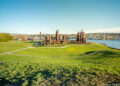
Seattle has always had a complicated relationship with nature. It’s a city built on timber money and salmon runs, carved into hillsides that overlook volcanic peaks and cold, deep water. The same industries that brought wealth to the Pacific Northwest also scarred its forests, polluted its rivers, and displaced the Indigenous communities who had stewarded the land for millennia. And yet, out of that tension — between exploitation and reverence, between growth and preservation — Seattle has emerged as one of the most environmentally conscious cities in the United States.
But calling Seattle “green” and leaving it at that would be a disservice to the thousands of activists, scientists, tribal leaders, and ordinary residents who have fought — and continue to fight — for every acre of protected land, every reformed policy, and every degree of corporate accountability. The story of environmental activism in Seattle is not a neat narrative of progress. It’s messy, contentious, and ongoing. And it matters now more than ever.
The Roots Run Deep: Seattle’s Conservation Origins
Long before sustainability became a buzzword, Seattle’s geography practically demanded environmental awareness. Nestled between the Cascade Range and the Puget Sound, the city exists within one of the most ecologically diverse corridors in North America. Temperate rainforests, alpine meadows, saltwater estuaries, and freshwater river systems all converge within a short drive of downtown.
The region’s earliest conservation impulses were shaped by the catastrophic logging of the late 19th and early 20th centuries. Old-growth forests that had stood for centuries were cleared at industrial speed, and the consequences were swift: landslides, decimated salmon populations, and a landscape stripped of its identity. These visible scars galvanized early preservation efforts. The creation of Mount Rainier National Park in 1899 and Olympic National Park in 1938 were direct responses to the reckless extraction that had defined the region’s economy.
Seattle’s urban parks system, too, was born from conservation-minded thinking. The Olmsted Brothers firm was hired in 1903 to design a network of green spaces that would weave nature into the fabric of the city. That plan, which connected parks through boulevards and greenways, laid the groundwork for Seattle’s enduring belief that cities and nature don’t have to be adversaries.
But it would be decades before that belief was tested by the full force of modern environmentalism.
The Turning Point: Activism in the 1960s and 1970s
The environmental movement in Seattle hit its stride during the same era it exploded nationally. The publication of Rachel Carson’s Silent Spring in 1962 had jolted Americans into reckoning with the chemical poisoning of the natural world, and Seattle — with its proximity to both pristine wilderness and industrial pollution — became fertile ground for organized resistance.
One of the earliest and most consequential battles was over Lake Washington. By the mid-20th century, the lake had become an open sewer, choked with algae blooms fueled by raw and partially treated sewage from surrounding municipalities. The stench was unbearable. Swimming was inadvisable. The lake was, by almost any measure, dying.
Enter James Ellis, an attorney and civic leader who spearheaded the creation of Metro, a regional agency tasked with cleaning up the lake. Through a series of hard-won public votes and engineering feats, sewage was diverted away from Lake Washington and into the Puget Sound — treated, this time — and the lake began its slow recovery. Today, Lake Washington is swimmable, fishable, and often stunningly clear. It stands as one of the great urban environmental success stories in American history, and it happened because Seattle residents chose to act when the easier path was to look away.
The 1970s brought new battles. The passage of the National Environmental Policy Act, the Clean Water Act, and the Endangered Species Act gave activists powerful legal tools, and Seattle’s growing community of environmental lawyers and nonprofit organizations put those tools to aggressive use. Groups like the Sierra Club’s Pacific Northwest chapter and the newly formed Washington Environmental Council began challenging timber sales, dam projects, and development plans that threatened sensitive ecosystems.
This was also the era when Seattle’s relationship with salmon became a defining feature of its environmental identity. The decline of Pacific salmon species — driven by dam construction, habitat loss, and overfishing — struck a nerve in a city that had always defined itself by its connection to the water. Salmon recovery would become, and remains, one of the most complex and politically charged conservation efforts in the region.
The Spotted Owl, the Timber Wars, and the National Stage
No discussion of Seattle’s environmental activism is complete without addressing the Northern Spotted Owl controversy of the late 1980s and early 1990s. The owl, a shy, old-growth-dependent species, became the unlikely face of a brutal showdown between conservationists and the timber industry.
When the U.S. Fish and Wildlife Service listed the spotted owl as threatened under the Endangered Species Act in 1990, it triggered restrictions on logging in millions of acres of federal forest across the Pacific Northwest. Timber communities were devastated. Mill workers lost their jobs. Bumper stickers reading “Save a Logger, Eat an Owl” became common sights on rural highways.
Seattle, as the region’s urban center and home to many of the environmental organizations driving the litigation, found itself at the epicenter of a national debate about jobs versus the environment. The city’s activists argued — correctly, as subsequent research confirmed — that the old-growth forests were already being logged at unsustainable rates and that the industry’s collapse was inevitable regardless of owl protections. But that argument offered little comfort to families watching their livelihoods disappear.
The timber wars left lasting scars on the Pacific Northwest’s political landscape, but they also produced tangible conservation victories. The Northwest Forest Plan, adopted in 1994 under President Clinton, established new protections for old-growth forests and set a framework for managing federal lands that balanced ecological and economic concerns. It was imperfect, as all compromises are, but it represented a seismic shift in how the region thought about its forests.
Salmon, Dams, and the Fight for the Rivers
If the spotted owl defined the forest battles, salmon have defined the water wars. And in Seattle, the water wars never really ended.
Five species of Pacific salmon are listed as threatened or endangered in the Puget Sound region. Their decline is the result of a cascading series of human impacts: dams that block migration routes, development that destroys spawning habitat, stormwater runoff that poisons streams, and ocean conditions altered by climate change. Saving salmon requires not just protecting individual fish, but fundamentally rethinking how the region manages its land and water.
Seattle has taken some remarkable steps. The city’s Cedar River Watershed, which supplies drinking water to 1.5 million people, is also one of the most important salmon habitats in the region. In 2003, the city completed the Landsburg Dam fish passage project, which reopened miles of spawning habitat on the Cedar River for the first time in over a century. The return of salmon to the upper Cedar River was celebrated as a triumph of long-term planning and interagency cooperation.
But the larger fight remains daunting. The debate over the Snake River dams in eastern Washington — four massive federal structures that have devastated Idaho’s salmon runs — has raged for decades. Environmental groups, tribal nations, and a growing number of scientists argue that breaching the dams is the only way to save the fish. Agricultural interests, barge operators, and some political leaders counter that the dams provide irreplaceable benefits in irrigation, transportation, and hydropower.
Seattle-based organizations like the Wild Fish Conservancy and Earthjustice have been at the forefront of the legal and political battle over the Snake River dams. It’s a fight that encapsulates everything difficult about environmental activism: the science is clear, the economics are contested, the politics are brutal, and the stakes — for both the fish and the communities that depend on the dams — are enormous.
Urban Sustainability: Walking the Talk at Home
While the headline-grabbing battles often involve federal lands and endangered species, some of Seattle’s most meaningful environmental work has happened within the city limits. Over the past two decades, Seattle has positioned itself as a national leader in urban sustainability, though not without controversy and setbacks.
The city was one of the first major American municipalities to commit to the Kyoto Protocol’s carbon reduction targets, even after the United States withdrew from the agreement. Seattle’s former mayor Greg Nickels launched the U.S. Mayors Climate Protection Agreement in 2005, which eventually attracted more than 1,000 signatories from cities across the country. It was a deliberate act of defiance against federal inaction on climate change, and it signaled Seattle’s willingness to lead from the local level.
Seattle City Light, the municipal electric utility, has been carbon-neutral since 2005, powered almost entirely by hydroelectricity. The city has invested heavily in energy efficiency programs, green building standards, and public transit expansion. The LEED certification program has flourished here, with Seattle consistently ranking among the top cities in the nation for green building.
The city’s waste reduction efforts have also drawn national attention. Seattle’s ban on single-use plastic bags, implemented in 2012, was among the first in the country. The city has since expanded restrictions on plastic straws, utensils, and polystyrene foam containers. Composting is mandatory for residents and businesses, and Seattle regularly diverts more than half of its waste from landfills.
These policies haven’t been universally popular. Business owners have complained about the costs of compliance. Some residents have bristled at what they see as government overreach into personal choices. And critics have pointed out that Seattle’s sustainability achievements are easier to accomplish when your electricity comes from dams rather than coal plants — a fair point that underscores the limits of local action in addressing a global crisis.
Environmental Justice: The Unfinished Agenda
For all its green credentials, Seattle has a troubling environmental justice record that activists have increasingly forced into the public conversation. The Duwamish River, which runs through the city’s industrial south end, is one of the most polluted waterways in the Pacific Northwest. It was designated a Superfund site in 2001, contaminated by decades of industrial dumping that left the riverbed laced with heavy metals, PCBs, and other toxic chemicals.
The communities most affected by the Duwamish’s pollution are disproportionately low-income and communities of color. South Seattle and the neighborhoods along the river have long borne the environmental burdens that the city’s wealthier, whiter neighborhoods have been spared. This pattern — where pollution and environmental degradation are concentrated in marginalized communities — is not unique to Seattle, but the city’s progressive reputation makes the disparity especially glaring.
Organizations like the Duwamish River Cleanup Coalition and Got Green have pushed for faster cleanup timelines, stronger pollution controls, and greater community involvement in decision-making. They’ve also broadened the conversation about what environmentalism means, arguing that it can’t just be about protecting forests and salmon — it has to be about protecting people, too.
The rise of the environmental justice movement in Seattle has challenged the traditional environmental establishment to confront its own blind spots. For too long, the city’s green movement was dominated by white, middle-class voices whose priorities — while important — didn’t always reflect the concerns of the communities most directly harmed by environmental degradation. That is changing, slowly and sometimes painfully, but it is changing.
The Climate Crisis and a New Generation of Activists
Climate change has reframed every environmental conversation in Seattle, just as it has everywhere else. But in the Pacific Northwest, the impacts feel particularly acute. The region’s glaciers are retreating. Wildfire smoke has become a regular summer presence, turning Seattle’s famously gray skies into an apocalyptic orange. Heat domes, once considered meteorological anomalies, have killed hundreds and shattered temperature records.
The summer of 2021 was a watershed moment. A heat dome parked over the Pacific Northwest pushed temperatures in Seattle to 108 degrees Fahrenheit — a figure that would have seemed absurd a generation ago. Hundreds of people died across the region, most of them elderly, unhoused, or otherwise vulnerable. The event was a visceral reminder that climate change is not a future threat but a present emergency.
Seattle’s response has been a mix of ambitious policy and grassroots mobilization. The city has committed to achieving net-zero carbon emissions by 2050. New building codes require electrification of heating systems, phasing out natural gas. The city’s transportation investments are increasingly oriented toward transit, cycling, and pedestrian infrastructure rather than automobile capacity.
But the most striking feature of Seattle’s contemporary environmental movement may be its youth. The Fridays for Future marches, inspired by Greta Thunberg, drew tens of thousands of young people to the streets of downtown Seattle. High school and college students have organized divestment campaigns, lobbied the city council, and launched their own nonprofit organizations. They bring an urgency and moral clarity that the older generation of activists sometimes struggles to match.
These young activists are also more attuned to intersectionality than their predecessors. They understand that climate change is inseparable from racial justice, economic inequality, and Indigenous sovereignty. They are pushing for solutions that address all of these dimensions simultaneously, and they are impatient with incrementalism.
Tribal Leadership and Indigenous Sovereignty
Any honest account of environmental activism in Seattle must center the role of tribal nations. The Coast Salish peoples — including the Duwamish, Muckleshoot, Suquamish, Tulalip, and others — have been stewards of this land since time immemorial. Their ecological knowledge, legal rights, and moral authority have been indispensable to conservation efforts in the region.
The Boldt Decision of 1974, which affirmed tribal treaty rights to half the salmon harvest in Washington state, was a landmark ruling that reshaped natural resource management across the Pacific Northwest. It also established tribes as co-managers of fisheries, giving them a powerful seat at the table in decisions about habitat protection, dam operations, and water quality.
More recently, tribal nations have been leading the push for dam removal and habitat restoration. The Elwha River dam removal project, completed in 2014, was driven in large part by the advocacy of the Lower Elwha Klallam Tribe, who had watched the dams destroy their salmon runs for a century. The river’s recovery since the dams came down has been nothing short of extraordinary, with salmon returning to reaches they hadn’t accessed in over a hundred years.
In Seattle itself, the Duwamish Tribe — which still lacks federal recognition despite being the city’s original inhabitants — has been a tireless advocate for the cleanup of the Duwamish River and the restoration of the estuary habitats that once sustained their way of life. Their fight is not just about environmentalism; it’s about justice, sovereignty, and survival.
What Comes Next: The Road Ahead for Seattle’s Green Movement
Seattle stands at an inflection point. The city has accomplished a great deal — cleaner water, protected forests, ambitious climate targets, a culture of sustainability that permeates daily life. But the challenges ahead are staggering. Climate change is accelerating. Biodiversity loss continues. Environmental injustice persists. And the political will required to match the scale of these crises is never guaranteed.
The path forward will require Seattle to do what it has always done at its best: lead from conviction, confront uncomfortable truths, and bridge the divides between communities that often find themselves on opposite sides of environmental debates. It will require wealthy neighborhoods to accept density and development. It will require tech companies to look beyond carbon offsets and confront the full scope of their environmental footprints. It will require the city to listen to — and follow — the leadership of tribal nations and communities of color who have been fighting these battles longest and with the most at stake.
Seattle’s environmental movement has never been the work of any single organization or generation. It’s the accumulated effort of countless people who refused to accept degradation as the price of progress. From the lawyers who cleaned up Lake Washington to the teenagers marching for climate justice, the thread that connects them is a stubborn belief that this place — this rain-soaked, mountain-ringed, salmon-rich corner of the world — is worth fighting for.
That belief has been tested before. It will be tested again. But if history is any guide, Seattle will answer.
The Emerald City earned its name. Now it has to keep earning it — one policy, one protest, one restored river at a time.