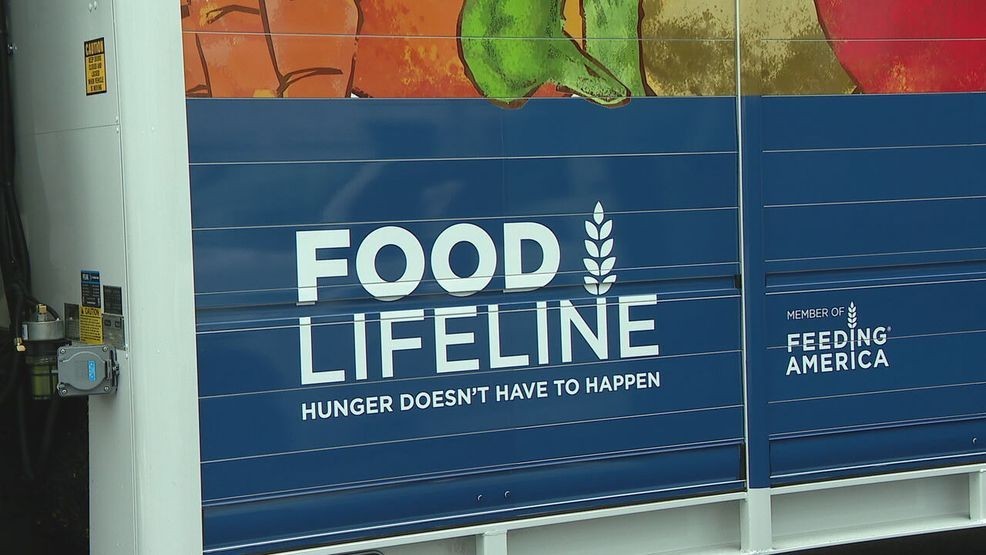
The semi-truck from Skagit County arrives at Food Lifeline’s Hunger Solution Center carrying 40,000 pounds of potatoes—misshapen, slightly too small, perfectly edible produce that grocery stores won’t buy. Within hours, volunteers sort the potatoes into smaller boxes. Within days, those boxes ship to food banks across Western Washington. Within a week, families in Bellingham, Olympia, and dozens of communities between will cook those potatoes for dinner. This cycle—rescue, repack, redistribute—repeats daily at the massive warehouse on 815 S 96th Street in Seattle’s SoDo neighborhood, transforming food waste into 280,000 meals every single day.
Food Lifeline has operated this conversion process since 1979, when elected officials, corporate leaders, and North Seattle food banks formed a pilot program called Food Oversight Operation Distribution (F.O.O.D.). That pilot has long since taken flight. The organization now distributes 75 million pounds of food annually to 300 partner food banks, shelters, and meal programs across 17 Western Washington counties. Twenty thousand volunteers move food through the warehouse every year. And 1.7 million people—one in four Western Washington residents—visited Food Lifeline’s partner food banks in 2024, a number that continues climbing as costs rise faster than wages.
But Food Lifeline’s story goes beyond logistics and statistics. It reveals uncomfortable truths about America’s food system: forty percent of food goes to waste while millions go hungry, abundance and scarcity coexist by design rather than accident, and addressing hunger requires confronting poverty, inequity, and systemic injustice. Food Lifeline feeds people experiencing hunger today while working to end hunger tomorrow—a dual mission that makes the organization both emergency response and social change agent.
The Numbers That Define the Crisis
Before the pandemic, Food Lifeline served approximately 800,000 people annually. When COVID-19 hit, that number surged to 1.1 million as unemployment spiked and food insecurity exploded. Most observers expected demand to decline as the pandemic receded and economy recovered. Instead, demand continued climbing: 1.5 million people in 2023, 1.7 million in 2024. Food bank visits rose 25% in 2024 alone—10 million visits compared to 8 million the previous year.
These numbers reflect broader economic realities affecting Western Washington. Food costs have risen 20% since 2021, making Seattle’s grocery bills fourth-highest in the nation. Housing costs continue escalating—rent or mortgage payments in Seattle rank among the country’s most expensive. Wages for low- and middle-income workers remain stagnant despite cost-of-living increases. The math simply doesn’t work for growing numbers of households: when rent consumes 50% or more of income and food costs keep rising, families run out of money before running out of month.
The geography of food insecurity has expanded beyond historically high-need areas like the Central District and Chinatown-International District. The West Seattle Food Bank experienced 30% annual demand increases since 2020. The Ballard Food Bank, Edmonds Food Bank, and Eastside locations in Bellevue, Kirkland, and Redmond—communities associated with wealth and tech workers—see sustained high demand. Food insecurity no longer concentrates in predictable neighborhoods but spreads across the region as housing affordability crisis and rising costs affect broader populations.
Food Lifeline Marketing Director Mark Coleman describes the shift: people who once visited food banks once or twice monthly when running short now rely on food assistance weekly. The emergency safety net has become permanent support system for families unable to afford both rent and adequate food.
The Hunger Solution Center: Industrial Scale Compassion
Food Lifeline’s operations center on the Hunger Solution Center, a 190,000-square-foot warehouse completed in 2016 at 815 S 96th Street in Seattle’s SoDo neighborhood. The facility represents Food Lifeline’s consolidation from two previous warehouses in Shoreline and SoDo into single purpose-built operation. The scale reflects the organization’s ambition: capacity to distribute 100 million pounds of food annually, though current operations move approximately 75 million pounds.
The warehouse operates like precision logistics operation. Receiving docks accommodate semi-trucks delivering bulk food from farmers, manufacturers, and retailers. Refrigerated and frozen storage areas maintain perishable items at proper temperatures. Dry goods fill floor-to-ceiling shelving. Volunteer sorting stations break bulk shipments into food bank-sized portions. Packing areas assemble mixed boxes meeting partner agencies’ specific needs. Loading docks stage outbound deliveries on routes covering Western Washington.
Nothing sits still for long. The entire inventory turns over every 30 days. Perishable items move even faster—produce arriving Monday might ship to food banks by Wednesday. This rapid turnover reflects both operational necessity (food spoils if stored too long) and demand reality (partner food banks need constant resupply to meet visitor demand).
The Shop the Dock program adds flexibility to Food Lifeline’s distribution model. Partner agencies can “shop” for additional items beyond their standard orders, selecting food close to shelf-life limits but still perfectly usable. This free first-come-first-served system helps agencies customize offerings for their communities while ensuring nothing edible gets wasted.
Two to three volunteer sessions operate daily, each lasting two hours. Groups of ten to fifty volunteers sort potatoes, repack rice, organize canned goods, and assemble mixed boxes. The ease of scheduling—online registration, short time commitment, no special skills required—makes Food Lifeline one of Seattle’s most accessible volunteer opportunities. Bailey Ellison told KOMO News that he and his brother repackaged 300 pounds of rice in two hours, food that shipped to partner agencies within days.
The Food Rescue Model: Abundance and Waste Coexisting
Food Lifeline’s fundamental premise challenges American food system economics: we produce enough food to feed everyone but waste approximately forty percent before it reaches consumers. This waste occurs at every supply chain stage: farms, processing facilities, distribution centers, grocery stores, restaurants, and consumer homes. Food Lifeline intercepts edible food before it becomes waste, redistributing it to people who need it.
The Grocery Rescue program partners with retail chains like QFC and Fred Meyer to collect food considered unsellable: items approaching sell-by dates, produce with cosmetic imperfections, packages with damaged labels, products discontinued or overstocked. This food remains safe and nutritious—grocery stores simply can’t sell it profitably. Food Lifeline picks it up, sorts it, and redistributes it to food banks. One grocery store’s trash becomes another family’s dinner.
Seattle’s Table, operating since 1989, rescues prepared food from restaurants, schools, hotels, and corporate cafeterias. Leftover catered meals, buffet items, kitchen overproduction—all would typically go to landfills. Instead, Seattle’s Table collects this prepared food and delivers it to 50 meal programs throughout King County that serve hot meals to people experiencing hunger or homelessness. The program operates on tight timelines given prepared food’s limited shelf life, but successfully diverts substantial quantities from waste stream.
Farmer partnerships provide seasonal produce at scale. That 40,000-pound potato delivery from Skagit County represents just one transaction among dozens throughout growing season. Farmers donate produce that’s too large, too small, oddly shaped, or simply surplus to market demand. These “seconds” feed thousands of families who don’t care whether potatoes match grocery store aesthetic standards.
Manufacturing and distribution partnerships yield bulk quantities of shelf-stable items. A food manufacturer discontinuing a product donates remaining inventory rather than destroying it. A distributor with damaged pallets contributes salvageable items. A retailer clearing seasonal items contributes excess stock. Food Lifeline aggregates these donations, creating diverse food offerings for partner agencies.
The environmental impact complements hunger relief. Every pound of food rescued represents avoided landfill waste and associated greenhouse gas emissions. Food waste in landfills generates methane, a potent climate pollutant. Diverting food to hungry people instead of landfills simultaneously addresses hunger and climate change—the win-win that recent Washington legislation (House Bill 2301) recognizes by requiring organic waste diversion to food donation and composting.
The Partner Network: 300 Organizations Serving Communities
Food Lifeline doesn’t distribute food directly to individuals—it functions as wholesale supplier to 300 food banks, shelters, and meal programs across Western Washington. These partner agencies handle direct client services, understanding their communities’ specific needs, cultural preferences, and logistical constraints.
Partner agencies range from tiny neighborhood food pantries operating from church basements to large operations like West Seattle Food Bank serving thousands of households monthly. Some focus on specific populations: Kids Cafe addresses childhood summer hunger, senior centers serve elderly residents, homeless shelters provide meals to people without housing. Others serve broader geographic communities, becoming neighborhood institutions where residents access food assistance.
The partnership model allows Food Lifeline to operate at scale while partner agencies provide localized, culturally appropriate service. A food bank serving predominantly Latinx community can order more rice, beans, and fresh produce while requesting less pasta. A program serving Asian communities can emphasize rice varieties and vegetables common in Asian cuisines. An agency serving elderly residents can prioritize easy-to-prepare items and smaller portions.
Partner agencies order food through Food Lifeline’s online system, selecting from available inventory based on their needs and storage capacity. Agencies pay subsidized prices—cents per pound rather than retail rates—allowing them to stretch limited budgets. Food Lifeline handles logistics, delivering orders to agencies’ locations across 17 counties from Whatcom to Grays Harbor.
This distribution model creates multiplication effect. Food Lifeline’s 75 million pounds distributed annually becomes 280,000 meals daily because partner agencies prepare and serve those meals. The organization’s 127 employees leverage 20,000 volunteers and 300 partner agencies to reach 1.7 million people annually—scale impossible for any single organization operating alone.
The Advocacy Work: Addressing Root Causes
Food Lifeline’s mission statement commits to “feeding people experiencing hunger today while working to end hunger tomorrow.” The second half—ending hunger—requires addressing systemic causes rather than just treating symptoms. This work manifests in policy advocacy, community organizing, and coalition building.
Food Lifeline’s advocacy team tracks legislation affecting food security, poverty, and social safety nets. They mobilize supporters to contact lawmakers, testify at hearings, and pressure elected officials on hunger-related issues. Recent victories include House Bill 2301 (organic waste diversion), which nearly doubles surplus food available for hunger relief statewide while reducing landfill waste.
The organization convenes stakeholders across Washington’s food system—food banks, farmers, distributors, retailers, hunger relief organizations—to align strategies and coordinate efforts. These convenings produced groundbreaking policy proposals that recognize food access as human right and poverty as hunger’s root cause.
Town hall events bring together lawmakers, hunger relief organizations, and people with lived experience of food insecurity. Recent town halls addressed military family hunger (food insecurity among service members stationed in expensive areas like Joint Base Lewis-McChord) and pandemic-exacerbated inequities affecting communities of color. These events create political pressure for systemic change while educating policymakers about hunger’s realities.
The Balance Our Tax Code Coalition, which Food Lifeline supports, advocates for progressive tax policies that generate revenue for social programs while reducing inequality. This work recognizes that addressing hunger requires tackling poverty through living wages, affordable housing, accessible healthcare, and economic justice.
The advocacy approach reflects philosophical commitment: Food Lifeline believes abundance and scarcity coexist “by choice and not by chance.” The organization aims to dismantle systems and policies fostering food insecurity by confronting poverty, racial inequity, and social injustice. This positions Food Lifeline as social change organization, not just charitable food distributor.
The Volunteer Army: 20,000 People Moving Food
Food Lifeline’s operations depend fundamentally on volunteer labor. Twenty thousand volunteers annually provide the human power sorting, repacking, and organizing food. Without volunteers, the warehouse would gridlock—food arriving faster than staff could process it, partner agencies unable to receive timely deliveries, the entire system breaking down.
Volunteer sessions accommodate individuals, families, and corporate groups. Two-hour shifts scheduled throughout the week make participation accessible for people with varying schedules. Tasks require no special skills—volunteers receive brief training then work under staff supervision. The work proves physically active (standing, lifting, moving boxes) but not strenuous, suitable for ages 10 and up.
Corporate volunteer programs bring teams from Seattle’s tech companies, financial institutions, and professional services firms. These groups provide concentrated volunteer power during single sessions while building team cohesion and demonstrating corporate social responsibility. Some companies make Food Lifeline volunteering annual tradition, returning year after year.
The volunteer experience balances meaningful work with social interaction. Volunteers see tangible results—300 pounds of rice repackaged in two hours directly feeds families within days. The sorting and packing work allows conversation and connection, building community among strangers united in common purpose. Staff coordinators maintain upbeat atmosphere, ensuring volunteers feel welcomed and appreciated.
The volunteer model also serves educational function. Middle-class professionals volunteering alongside retirees and students gain exposure to food insecurity’s scale and hunger’s local reality. Many volunteers didn’t previously understand that 1.7 million Western Washington residents rely on food assistance. The warehouse experience—endless pallets of food moving through daily, still insufficient to meet demand—makes the crisis visceral rather than abstract.
The Financial Reality: $800,000 in Purchased Food
Food Lifeline’s operational model combines donated food with purchased food, grants and donations funding operations and advocacy work, and volunteer labor reducing costs. The organization’s 2024 financials reveal both scale and constraints.
In 2024, Food Lifeline spent an additional $800,000 purchasing food to supplement donations. This unplanned expenditure reflected increasing demand outpacing donated food supply. When partner agencies request more food than donations provide, Food Lifeline buys wholesale quantities ensuring agencies can meet community needs. The $800,000 represents gap between ideal (sufficient donations to meet demand) and reality (donations insufficient, requiring purchased food).
This gap matters because purchased food costs money that could otherwise fund advocacy work, facility improvements, staff expansion, or operational reserves. The organization faces constant pressure balancing immediate food distribution needs against long-term capacity building and systemic change work.
Fundraising becomes critical during periods when donations decline. January through early spring traditionally sees reduced food and cash donations as holiday giving surge ends and donors focus on other priorities. Yet demand remains constant or increases during these months. Food Lifeline must raise funds to purchase food filling the gap.
The organization’s revenue sources include individual donations, corporate partnerships, foundation grants, and special events. The annual Food Frenzy competition (July 12-26 each year) engages businesses in two-week fundraising and volunteer mobilization. In 2024, 67 teams collected food and raised money providing 2.4 million meals for summer childhood hunger when school meal programs aren’t operating.
Corporate partnerships like Sound Community Bank (eight-year Food Frenzy presenting sponsor), State Farm, Greystar, and others provide both financial support and volunteer engagement. The Seahawks partnership and Kick Hunger Challenge (collaboration with Chef John Howie) raised $83,000 in 2014 and won national competition three consecutive years.
Foundation support includes grants from Kroger Zero Hunger Zero Waste Foundation ($150,000), KeyBank Foundation (matching donations up to $100,000), and others. These institutional funders provide financial stability allowing Food Lifeline to plan operations rather than constantly scrambling for emergency funds.
The 2025 Challenge: Record Demand, Limited Resources
Food Lifeline entered 2025 facing perfect storm: record demand, declining donations, volunteer shortages, and economic pressures affecting the entire hunger relief sector. The organization projects one in four Western Washington residents will experience food insecurity in 2025—approximately 2 million people up from 1.7 million in 2024.
The demand increase stems from compounding economic factors. Rents and mortgages continue rising. Food costs remain elevated despite some commodity price stabilization. Wages for service sector, retail, and entry-level workers haven’t kept pace with inflation. Federal pandemic-era assistance programs (expanded child tax credit, enhanced SNAP benefits, rental assistance) have ended, removing safety nets that kept families afloat.
Meanwhile, donations face headwinds. Individual donors reducing giving as their own budgets tighten. Corporate food donations decreasing as companies optimize supply chains and reduce waste (ironically, efficiency improvements that reduce commercial food waste also reduce donations available for hunger relief). Grant funding remaining static or declining as foundations face investment portfolio pressures.
Volunteer availability fluctuates seasonally and economically. When people worry about job security or work longer hours, volunteering declines. When schedules fill with competing obligations, two-hour warehouse shifts get deprioritized. Food Lifeline requires constant volunteer recruitment to maintain 20,000 annual participants.
The organization responded by focusing on communities they serve, customizing food offerings and distribution methods to meet specific cultural and dietary needs. This community-centered approach recognizes that effective hunger relief requires understanding populations served rather than applying one-size-fits-all solutions.
The Cultural Shift: From Charity to Justice
Food Lifeline’s evolution over 46 years reflects broader shifts in how hunger relief organizations understand their work. The organization began in 1979 as F.O.O.D. (Food Oversight Operation Distribution)—a name emphasizing logistics and operations. Early work focused primarily on collecting and distributing food, treating hunger as distribution problem solvable through better supply chain management.
This charitable model positioned Food Lifeline as benevolent intermediary connecting surplus food with hungry people. The framing implied that hunger resulted from coordination failures rather than systemic injustice. If only food moved more efficiently from farms to families, hunger would diminish.
Decades of experience taught harder lessons. Efficient food distribution proved necessary but insufficient. Communities with excellent food bank access still experienced persistent hunger because people lacked money to buy food. Families receiving emergency food assistance one year needed it again the next year, and the year after, because underlying economic conditions didn’t improve.
This realization drove Food Lifeline’s expanded mission incorporating advocacy and systemic change. The organization now frames access to food as human right rather than charitable privilege. This rights-based approach shifts responsibility from individual circumstances (why can’t you afford food?) to systemic failures (why don’t wages cover basic needs?).
The cultural shift manifests in language, priorities, and partnerships. Food Lifeline increasingly centers voices of people with lived experience of food insecurity rather than speaking for communities. The organization prioritizes culturally relevant food reflecting communities served rather than generic commodity distributions. And advocacy work tackles root causes—poverty, racial inequity, economic injustice—rather than just expanding emergency food capacity.
The Path Forward: Feeding People, Changing Systems
Food Lifeline’s dual mission—feeding people today, ending hunger tomorrow—creates constant tension between immediate response and long-term change. Every dollar spent purchasing food is dollar not spent on advocacy work addressing hunger’s root causes. Every hour staff spend coordinating volunteers is hour not spent organizing communities for policy change. Yet both activities prove essential to the mission.
The organization’s theory of change holds that hunger stems from poverty, inequity, and injustice—systemic issues requiring systemic solutions. Food distribution provides critical immediate relief preventing malnutrition and suffering. But unless underlying systems change, hunger persists regardless of how much food gets distributed.
This perspective positions Food Lifeline alongside rather than above the communities it serves. The organization advocates for living wages, affordable housing, accessible healthcare, and progressive taxation because these policies address hunger more effectively than emergency food distribution. Food Lifeline recognizes its own work as symptom treatment while fighting to cure the disease.
The 190,000-square-foot Hunger Solution Center at 815 S 96th Street represents both achievement and admission. Achievement: Food Lifeline built capacity to distribute 100 million pounds annually, more than tripling pre-2016 capacity. Admission: Western Washington needs industrial-scale hunger relief infrastructure because systems producing food insecurity remain intact.
That semi-truck from Skagit County keeps arriving with 40,000 pounds of misshapen potatoes. Volunteers keep sorting them into boxes. Partner agencies keep distributing them to families. And 1.7 million people keep visiting food banks because they cannot afford to buy adequate food despite living in one of America’s wealthiest regions. Food Lifeline will continue feeding people experiencing hunger today. But the organization remains committed to solving hunger tomorrow—a tomorrow when abundant food reaches everyone not as charity but as right, when warehouse capacity sits unused because need no longer exists, when 75 million pounds of food annually represents historical memory rather than current requirement.