

The paintings hanging in Charles Frye’s meatpacking plant offices survived one of Seattle’s most devastating industrial disasters. On February 18, 1943, a top-secret Boeing XB-29 Superfortress bomber crashed into the Frye & Company building at 2305 Airport Way South during a test flight, killing all 11 crewmen, 20 Frye workers, one firefighter, and at least 80 hogs. Flames consumed the facility. Smoke filled elevators, trapping victims. The plane’s debris destroyed sections of the building housing the art that Charles and Emma Frye—both already dead by 1943—had specified in their will should become a free public museum.
Yet most of the 230 paintings survived. The Munich School landscapes, the portraits by Franz von Lenbach, the allegorical scenes reflecting late-19th-century European realism hung salon-style in the plant offices—they endured smoke, fire, and destruction. Walser Greathouse, executor of the Frye estate and future museum director, salvaged the collection from the wreckage. Nine years later, in 1952, the Frye Art Museum opened at 704 Terry Avenue in Seattle’s First Hill neighborhood, fulfilling Charles and Emma’s stipulation that their art collection belong to Seattle in perpetuity, with admission always free.
Seventy-two years after opening, the Frye remains Seattle’s free art museum. That commitment—central to Charles Frye’s vision and legally binding through his will—shapes everything about the institution. Museums charging $20-$30 admission can use ticket revenue to fund exhibitions, acquisitions, and operations. The Frye cannot. Museums can adjust hours to maximize revenue. The Frye operates Wednesday through Sunday, 11 a.m. to 5 p.m. (Thursdays until 8 p.m.), welcoming anyone who walks through the doors without payment.
The free admission mandate created both limitation and liberation. The Frye developed differently than Seattle Art Museum or the region’s university museums. It cultivated different relationship with community, different financial model, and—eventually—different curatorial vision that transformed Munich School conservatism into contemporary art progressivism while honoring the German immigrant meatpackers who made it possible.
The Munich Connection: Art, Immigration, and Aspiration
Charles H. Frye (1858-1940) and Emma Lamp Frye (died 1934) were children of German emigrants who grew up in Scott County, Iowa farming communities. They married in Davenport in 1885, then joined the westward migration to Seattle in 1888. Charles opened meat markets, then partnered with his brother Frank and friend Charles Bruhn to incorporate Frye-Bruhn Meat Packing Company in 1891 on 15 acres of tide flats in south Seattle—near where the Seahawks stadium would eventually rise.
The timing proved fortuitous. The 1898 Klondike Gold Rush created massive demand for preserved meat. Miners heading to Alaska needed provisions. Frye-Bruhn supplied them. The company expanded into cattle ranching and agricultural operations. Charles diversified into real estate, building industrial warehouses for Frigidaire and Buick Motor Company. Not all ventures succeeded—an industrial-scale lettuce farm on 2,000 Monroe acres with narrow-gauge railroad tracks and 200-ton-per-day ice plant collapsed during the Depression—but the meat-packing plant and real estate holdings survived, eventually becoming the museum’s primary revenue source.
As wealth accumulated, the Fryes turned to art. Their first purchase may have been at the 1893 Chicago World’s Fair, where late-19th-century European realism dominated American taste. Over four decades, they acquired more than 230 paintings, traveling to Munich six times between 1914 and 1925 for extended stays viewing art, meeting artists, and purchasing directly from studios.
Munich’s significance requires historical context. From 1870 to 1900, Munich ranked among Europe’s premier art centers, briefly rivaling Paris. The city attracted artists and collectors globally through its museums, international exhibitions, and artistic associations. For German-Americans and German immigrants in early-20th-century America, promoting Munich School art served cultural and social purposes beyond aesthetics. Displaying German art demonstrated refined cultural knowledge from the “old country” while establishing credentials as successful Americans who’d maintained European sophistication.
The Fryes collected two generations of Munich artists. First, painters associated with the Münchener Künstlergenossenschaft (Munich Artists’ Association), founded 1868, which mounted democratic exhibitions containing thousands of paintings: Franz von Defregger, Franz von Lenbach, Wilhelm Leibl, Friedrich August von Kaulbach. Second, artists who formed the Munich Secession in 1892, frustrated with the Künstlergenossenschaft’s quantity-over-quality approach: Ludwig Dill, Hugo von Habermann, Otto Hierl-Deronco, Franz von Stuck, Wilhelm Trübner, Fritz von Uhde, Heinrich von Zügel. The Secession promoted stylistic experimentation, individualism, and excellence.
Beyond German artists, the Fryes acquired works from Austria, Denmark, England, France, Hungary, Italy, Netherlands, Norway, Russia, and the United States. The collection featured romantic landscapes, allegorical imagery, evocative portraiture, scenes of everyday life—art reflecting late-19th-century taste for narrative realism and technical mastery.
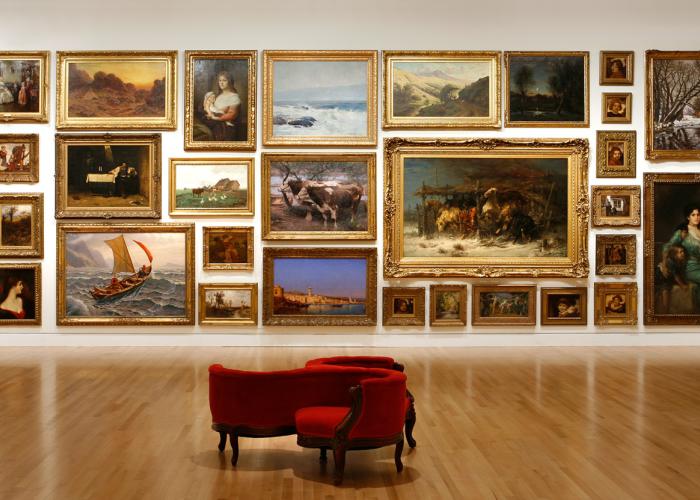
The Fryes hung their paintings floor-to-ceiling, salon-style, in a specially built gallery attached to their First Hill home. When that space filled, paintings moved to Charles’s meatpacking plant offices, where European masterworks hung amid the business of slaughtering, processing, and distributing meat. The juxtaposition—romanticized peasants with cattle in Adolphe Marais paintings displayed where actual cattle became commodity—carried unintended irony that scholars would later examine.
The Will’s Requirements: Constraints That Shaped Legacy
Charles Frye died May 1, 1940, leaving detailed instructions for his art collection. Emma had died in 1934. The couple had no children. Charles’s will specified that the collection and estate fund a free public art museum. The requirements were specific and restrictive:
- Admission must be free
- All paintings must be on permanent display
- Galleries must use natural light
- No abstract art could be displayed alongside the collection
The Fryes first offered their collection to Seattle Art Museum, which declined. The permanent display requirement meant SAM couldn’t rotate works into storage. The natural light specification created conservation challenges. The no-abstract-art prohibition conflicted with modernist movements gaining prominence. And free admission eliminated revenue stream museums increasingly relied upon.
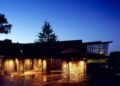
Realizing the Fryes’ vision fell to Walser S. Greathouse, Charles’s attorney, friend, and estate executor. After twelve years navigating legal requirements, securing funding, and commissioning architect Paul Thiry’s design, the Frye Art Museum opened February 8, 1952, on First Hill blocks from the Fryes’ former home.
Greathouse served as first director until his 1966 death. His widow, Ida Kay Greathouse, succeeded him and directed the museum until 1994—forty-two years of Greathouse family stewardship establishing the museum’s character, financial stability, and collection development approach.
Under Walser Greathouse, the collection expanded beyond European art to include American representational work. Annual buying trips to New York added Thomas Eakins, Thomas Hart Benton, George Bellows, George Inness, Winslow Homer, and John Marin. Seattle artists joined the collection: Mark Tobey, Albert Fisher, William Cumming. The Frye became repository for 19th and 20th-century representational art—not cutting-edge contemporary work, but substantial historical collection documenting American and European realism.
Ida Kay Greathouse expanded the collection more dramatically. She added French landscapes, interiors, and still lifes by Pierre Auguste Renoir, Jean-Baptiste Corot, and Eugène Louis Boudin, “tempering the autocratic aura of the German core collection” (as critics noted). She acquired works by women artists including Mary Cassatt and Mary Hinkson—addressing previous collection’s gender imbalance. The Wyeth family joined prominently: N.C., Andrew, and Jamie Wyeth. Regional artists from the Northwest and Alaska broadened geographic representation.
By Greathouse’s 1994 retirement, the permanent collection had grown from 232 paintings to more than 1,200. She managed museum finances shrewdly, building endowment and ensuring institutional stability. But her outspoken, often reactionary views on art and politics generated controversy. She dismissed abstraction, championed realism against modernist trends, and brushed off criticism of her iconoclastic tastes. As she told interviewers: “We built it all from nothing, we stood alone at times, with tremendous jealousy and resentment. But now, I hope it will be successful.”
The Transformation: From Realism to Contemporary Engagement
Ida Kay Greathouse’s 1994 retirement marked inflection point. Richard West became the Frye’s first professional director in January 1995—ending four decades of family stewardship and beginning institutional professionalization. The mid-1990s expansion and renovation, designed by Rick Sundberg of Olson Sundberg Kundig Allen Architects, added 142-seat auditorium, education studio, and modernized galleries while respecting Paul Thiry’s original architecture.
But the more significant transformation involved curatorial direction. The Frye began after 2007 to present contemporary art, including forms Charles Frye’s will explicitly prohibited: conceptual art, abstraction, installation work, video, photography, performance. This shift—contrary to founding restrictions—elicited comparisons to the Henry Art Gallery’s contemporary focus and raised questions about fidelity to donor intent.
Yet the evolution made institutional sense. A museum committed to free admission needed public relevance. Showing only 19th-century Munich School paintings and American representational work attracted limited audience in Seattle’s increasingly diverse, globally connected, technology-driven culture. Contemporary art engaged current conversations about identity, technology, environment, social justice. Contemporary artists reflected Seattle’s demographics and concerns in ways 19th-century European painters could not.
The strategic shift reinterpreted rather than abandoned the Fryes’ legacy. Charles and Emma collected contemporary art of their time—living Munich artists creating new work, not historical masters. They hung paintings salon-style, creating visual conversations between works. They opened their home gallery to visitors, creating cultural crossroads. The Frye Art Museum of today claims inspiration from “the salon as cultural crossroads” and positions itself as “place where Seattle gathers, celebrates creative expression and exchange, and welcomes all people to commune with the art and artists of our time.”
This framing honors the Fryes’ collecting spirit while acknowledging that “our time” demands different art than their time did. The founding collection remains accessible—visitors can still view Munich School landscapes and Wyeth family works—but temporary exhibitions now dominate the museum’s public profile.
The Joseph Rosa Era: Equity, Ambition, and COVID
Joseph Rosa’s appointment as director/CEO in 2016 accelerated contemporary engagement. Rosa brought curatorial experience from Art Institute of Chicago, San Francisco Museum of Modern Art, Carnegie Museum of Art, and National Building Museum, plus University of Michigan Museum of Art directorship. His architecture and architectural photography scholarship—seventeen books, fifty exhibitions—suggested design-focused vision.
But Rosa emphasized diversity, equity, inclusion, and community partnership. Under his leadership (2016-2022), the Frye affirmed vision “to reflect Seattle’s evolving identity as forum for relevant social dialogues.” The curatorial team grew the museum’s internationally recognized exhibition program while emphasizing local artist support. Strategic traveling exhibitions established critical institutional partnerships: “Black Refractions: Highlights from The Studio Museum in Harlem,” Christina Quarles (largest presentation of the Los Angeles artist’s work to date), and Romare Bearden retrospective.
The museum presented work by artists achieving major international recognition shortly after Frye exhibitions: Tschabalala Self, Amie Siegel, Tavares Strachan. This pattern—identifying emerging artists before broader recognition—demonstrated curatorial acumen and positioned the Frye as talent incubator rather than follower of trends set by larger institutions.
Rosa named new department heads in finance, curatorial, development, and education. Net assets increased nearly 30% during his tenure. But 2020 pandemic testing challenged all cultural institutions. The Frye closed for in-person visits, launched “Frye From Home” digital programming, and navigated uncertainty about when reopening would be possible or safe.
Rosa noted the Frye’s advantage during pandemic: as free museum, it didn’t face admission revenue loss that devastated institutions dependent on ticket sales. The free admission model—constraint in normal times—became asset during crisis, allowing the museum to focus on mission rather than revenue generation.
In February 2022, Rosa announced his March 31 departure at contract conclusion. Board President Jennifer Potter praised his “financial acumen, strength of vision, and deep roots in the field” and his emphasis on “caring for the Frye community—staff, volunteers, artists, and partners” during the pandemic. Rosa positioned his departure as creating space for other voices, acknowledging his career arc through multiple institutions and seeing transition moment as appropriate.
Thomas Mitchell (CFO) and Amanda Donnan (Chief Curator) served as co-directors during search for Rosa’s successor, ensuring institutional continuity while board conducted international search.
The Present Moment: Contemporary Vision, Historic Foundation
Current exhibitions reflect the Frye’s contemporary focus. “Hayv Kahraman: Look Me in the Eyes” (organized by Institute of Contemporary Art San Francisco, October 2024-April 2025) examines Iraqi-Swedish-American artist’s work exploring identity, displacement, and cultural hybridity. “Recent Acquisitions” showcases new collection additions. The Boren Banner Series features site-specific installations on the museum’s exterior Terry Avenue facade, providing large-scale public art visible to passersby.
The museum hours—Wednesday through Sunday, 11 a.m. to 5 p.m., Thursdays until 8 p.m.—balance accessibility with operational capacity. MariPili at Café Frieda (collaboration with Seattle’s MariPili Tapas Bar) serves Galician-inspired sandwiches, salads, wine, beer, and espresso, Wednesday-Sunday 11 a.m.-4 p.m., Thursdays until 8 p.m. (7:30 p.m. last call), with Thursday 5-7:30 p.m. happy hour specials.
The museum shop offers exhibition materials, Pacific Northwest designer items, and innovative objects, with proceeds supporting museum operations. Bloomberg Connects provides digital guides, audio content from artists and curators, and enhanced visitor experience through mobile platforms.
Transportation options include King County Metro bus routes 3 and 4 (James Street and 8th Avenue), Route 60 (9th Avenue and Columbia Street), RapidRide G (Madison Street and Terry Avenue), First Hill Streetcar (nearest stop Broadway & Marion, running every 10-15 minutes), and Link light rail (Pioneer Square station at 3rd Avenue & James Street, approximately half-mile walk up steep incline). Paid public street parking exists along Terry Avenue, 9th Avenue, Columbia Street, Marion Street, and Cherry Street, with several paid lots nearby. Ongoing neighborhood construction projects periodically disrupt Terry Avenue, Cherry Street, and Columbia Street, potentially impacting street parking availability.
The board of trustees includes professionals from technology, real estate, architecture, scientific research, and arts sectors, reflecting Seattle’s economic base and cultural diversity. Board members like Lele Barnett (art advisor and curator, Meta Reality Labs), Vittorio Gallo (Senior VP and Chief Scientific Officer, Seattle Children’s Research Institute), and Rafael Soldi (Peruvian visual artist) bring contemporary art world connections and community engagement.
The Endowment Question: Revenue Without Admission
The Frye operates as 501(c)(3) private operating foundation with annual budget around $4.5 million (as of recent public information). The primary revenue source remains real estate holdings from Charles Frye’s estate—the prudent land investments that survived when lettuce farming ventures failed. This endowment structure allows free admission while funding operations, but creates resource constraints compared to museums with admission revenue, major membership programs, or substantial government funding.
The 2024 Annual Report notes six land purchases and conservation easements totaling 240+ acres—wait, wrong institution. The Frye’s 2024 Annual Impact Report (available on their website alongside 2023 and 2025 reports) details institutional activities, attendance, exhibition programming, and community engagement. The reports demonstrate accountability to public mission while building donor confidence in financial stewardship.
Free admission creates complex dynamics. Without ticket revenue, the museum depends more heavily on philanthropy, grants, endowment income, and ancillary revenue (café, shop, event rentals). This can make programming more risk-averse—controversial exhibitions might alienate donors—or more adventurous—without ticket sales to protect, curators can pursue challenging work without commercial pressure.
The Frye’s exhibition choices suggest the latter. Presenting Hayv Kahraman’s work exploring Iraqi-American identity and cultural displacement, showcasing Christina Quarles’s paintings examining queer identity and embodiment, and featuring Harlem Studio Museum highlights addressing Black artistic expression demonstrates commitment to contemporary social dialogues over safe programming designed to maximize attendance.
The Visitor Experience: Democracy Through Design
Walking into the Frye Art Museum creates immediate contrast with Seattle’s other major art institutions. Seattle Art Museum downtown charges $32.99 for adults ($29.99 online). The museum’s Olympic Sculpture Park remains free, but the main collection requires payment. Henry Art Gallery at University of Washington charges $10 general admission, $6 for seniors and students. Tacoma Art Museum charges $15 general admission. MoPOP charges $38 for adults.
The Frye charges nothing. No ticket booth. No admission desk transaction. Visitors enter directly into gallery space without financial exchange. This removes psychological and practical barriers many museums unconsciously erect. Low-income families don’t calculate whether museum admission fits tight budgets. Students don’t choose between museum visits and textbooks. Tourists don’t weigh whether $30 per person for family of four justifies seeing a collection they know nothing about.
The spatial experience reflects thoughtful design. Olson Sundberg Kundig’s 1990s renovation created light-filled galleries connecting to central courtyard—indoor-outdoor transition characteristic of Pacific Northwest architecture. The 142-seat auditorium hosts artist talks, lectures, performances, film screenings. Education studios accommodate workshops and classes. The Frye Salon recreates the floor-to-ceiling hanging style Charles and Emma used in their home gallery, allowing dense presentation of founding collection works in conversation with each other.
Gallery sizes vary—large spaces for major exhibitions, intimate rooms for focused presentations. This variation creates different viewing experiences: monumental installations commanding attention, small works rewarding close examination, thematic groupings building narrative. Natural light—where conservation allows—supplements artificial illumination, fulfilling Charles Frye’s original vision when possible while protecting artworks from UV damage.
MariPili at Café Frieda transforms museum dining from afterthought to destination. Galician-inspired cuisine brings northern Spanish culinary tradition to First Hill through chef collaboration with MariPili Tapas Bar. The menu features sandwiches, salads, small plates, Spanish wines, and espresso—food matching museum’s European art heritage while supporting contemporary local restaurant scene. Thursday happy hour (5-7:30 p.m.) makes the museum social gathering space beyond exhibition viewing.
The museum shop curates objects extending exhibition themes and supporting Pacific Northwest makers. Unlike museum shops primarily selling exhibition posters and mass-produced souvenirs, the Frye emphasizes unique items from regional designers, artists’ books, thoughtfully selected design objects. Proceeds support museum operations—every purchase directly funds free admission, exhibition programming, and educational initiatives.
The Continuing Paradox: Honoring Restriction Through Violation
The fundamental paradox defining the Frye involves honoring Charles Frye’s will by violating its specific terms. The will prohibited abstract art. The museum shows conceptual and abstract work. The will required natural light. The museum uses controlled artificial lighting protecting artworks from UV damage. The will demanded permanent display of the entire collection. The museum rotates works and dedicates most gallery space to temporary exhibitions.
Yet the museum maintains fidelity to the will’s deeper intent: providing free public access to art, serving Seattle’s community, creating space where people encounter aesthetic experience without financial barriers. Charles Frye wanted his collection accessible to everyone, believing art enriched lives and communities. That democratic impulse—art as public good rather than luxury commodity—animates the contemporary Frye more than specific aesthetic preferences or display requirements from 1940.
The 232-painting founding collection remains accessible through rotating gallery displays and collection presentations. Visitors can still encounter the Munich School landscapes Charles and Emma purchased directly from artists’ studios. The Wyeth family works Ida Kay Greathouse acquired remain in holdings. The founding vision persists through free admission and First Hill location.
But the museum’s vitality comes from contemporary engagement—from presenting Degenerate Art Ensemble performances, Duane Linklater’s First Nations indigenous art, and multimedia installations Charles Frye couldn’t have imagined. The institution evolved from mausoleum preserving 19th-century taste into living cultural space reflecting 21st-century Seattle’s diversity, concerns, and creative energy.
The bomber crash that destroyed the Frye meatpacking plant but spared the paintings created unintended metaphor: the art survived catastrophe because it mattered beyond its original context. The Munich School paintings outlived the meatpacking business, the Fryes’ First Hill mansion, the industrial Seattle that created Frye wealth. They survived because Walser Greathouse salvaged them from wreckage, because the will mandated museum creation, because succeeding generations found value in maintaining free access to art.
The Frye Art Museum at 704 Terry Avenue continues that survival through adaptation. The institution the Fryes endowed transformed beyond recognition while honoring their core commitment. Walk through the doors any Wednesday through Sunday, 11 a.m. to 5 p.m. (Thursdays until 8), and admission costs nothing—just as Charles Frye specified in 1940. The art inside reflects our time rather than his. That’s not betrayal of legacy. That’s how legacies live.