Hal Griffith’s bank wasn’t interested. Actually, his bank at the time was “not too enthused about the wheel idea,” as Griffith diplomatically phrased it years later. “It was a little too foreign to their thinking.” The year was 2010, and Griffith wanted to build 175-foot Ferris wheel on Pier 57—the same pier he’d purchased from the City of Seattle in 1989, the same location where he’d been trying to build Ferris wheel since 1984, the same vision that had been meeting resistance for nearly three decades.
The timing seemed particularly absurd. Seattle was about to begin most disruptive construction project in city’s history. State Route 99 tunnel would bore two miles under downtown. Alaskan Way Viaduct—the double-decker elevated highway that had dominated waterfront since 1953—would be demolished. Seawall dating to 1910s would be replaced. Construction would last years. Access would be nightmare. Businesses would suffer. And Griffith wanted to build massive tourist attraction requiring visitors to navigate construction chaos reaching it?
Wells Fargo saw what others missed. The bank became “very supportive of the idea,” according to Griffith. “Through further discussion, we became, in essence, collaborators in putting the wheel up.” Wells Fargo’s Brian Bilanski explained their approach: “We were able to make the Griffiths’ dream a reality by working closely with them and coming up with strategic plan. By looking at their existing financial assets, which included restaurants and properties in Washington and California, we could support the financing both in short term and long term. Many banks took very narrow approach that focused exclusively on valuation of just the Ferris wheel.”
June 29, 2012: Seattle Great Wheel opened to public. Joan Griffith, Hal’s wife, performed ribbon-cutting ceremony. University of Washington Marching Band provided music. U.S. Coast Guard presented colors. Mayor Michael McGinn delivered speech. Approximately 200 people lined up for first ride. Dustin Boehlke, 21-year-old UW student, received pass to VIP gondola for being first in line. First paying customer was Vince Wilson, longshoreman from Roy, Pierce County, arriving at 10:30 AM before ticket windows even completed installation.
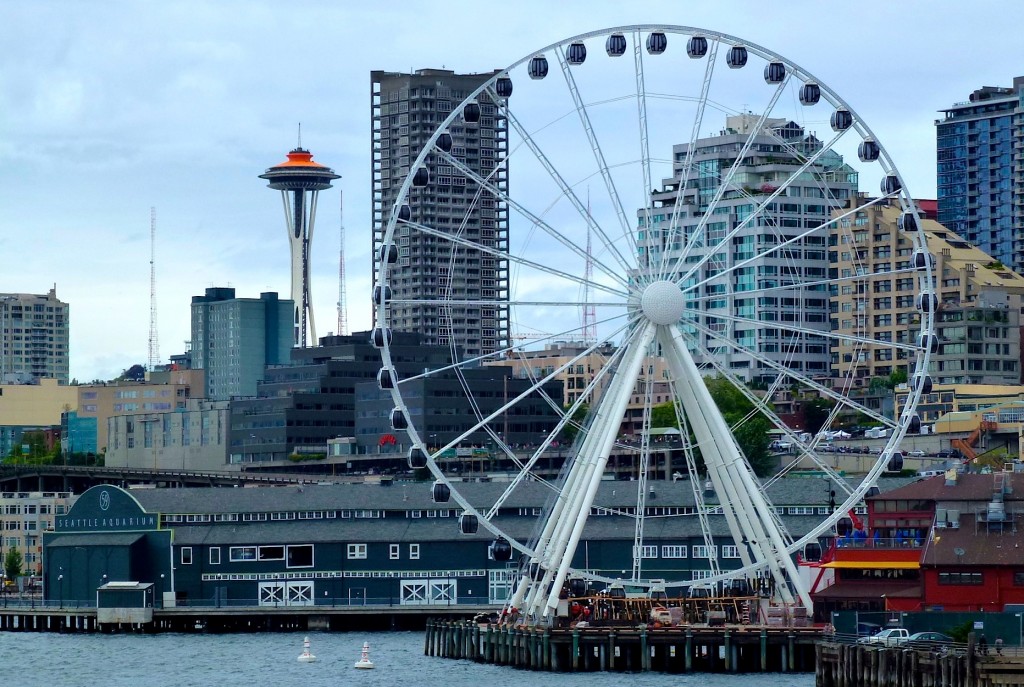
Tickets cost $13. The wheel was 175 feet tall—tallest Ferris wheel on West Coast at opening. Featured 42 climate-controlled gondolas—41 standard seating up to eight passengers, one VIP gondola with red leather seats and glass floor seating four. Located at end of Pier 57 extending over Elliott Bay. Weight: 280,300 pounds. Foundation: 550 tons of concrete. Capacity: 300+ riders simultaneously. Rotation time: 10-20 minutes for three full revolutions.
The Great Wheel quickly became Seattle icon, appearing frequently in televised sporting event footage, postcards, souvenirs. By August 2013—just over year after opening—the wheel had achieved one million riders. Within months it rivaled Space Needle as photographic subject and symbol of city.
Hal Griffith’s gamble worked. While Seattle dug, the wheel spun.
The Thirty-Year Dream: Hal Griffith’s Waterfront Vision
Albert Sperry “Hal” Griffith Jr. was born 1937. By 1968 he’d begun leasing space at Pier 57 opening import shop and developing restaurants. When city planned removing piers—including Pier 57—to make way for waterfront park in early 1970s, Griffith opposed the demolition. November 1970: Seattle City Council approved purchasing Pier 57 from Port of Seattle, with Hal Griffith noted as “only objector to purchase of the piers.”
He argued park should be limited to vacant area between Piers 57 and 59 (which had been Pier 58, formerly Schwabacher’s) rather than displacing businesses occupying existing piers. City council didn’t agree. Griffith kept fighting. He formed or joined associations with other waterfront business owners advocating preservation. Eventually city abandoned most aggressive demolition plans.
1984: Griffith unveiled major new plans for Seattle’s central waterfront. He bought half interest in Piers 62 and 63 (located below Pike Place Market few blocks north of Pier 57) from Razore Enterprises, formed partnership with Razore to renovate pier sheds into large complex named Bay Pavilion—shops, restaurants, fresh-fish market, historic carousel. They envisioned aerial tramway carrying visitors from downtown to piers over Alaskan Way Viaduct, and possibly “even… a Ferris wheel.”
The Bay Pavilion vision didn’t materialize there, though Griffith and partners spent $7 million restoring pilings and decks. But Ferris wheel idea stuck. Throughout late 1980s Griffith proposed small Ferris wheel for Waterfront Park, thinking it would make good attraction for people visiting that area near Seattle Aquarium. Seattle parks department rejected several proposals.
1989: Griffith purchased Pier 57 from city. He remodeled it, adding carousel and other attractions, eventually calling it Miners Landing—collection of restaurants and shops leased to tenants. Beyond Seattle, Griffith expanded into California, opening restaurants on several public piers. He leased space for restaurants at Seattle Center and Washington State Ferry Terminal on Pier 52.
Early 2000s: City officials making plans to tear down viaduct and rebuild seawall. Griffith and sons Kyle and Troy worried construction projects would have major impact on their business. They decided to build large wheel on family’s pier. The decision wasn’t just defensive—it was affirmative vision that major attraction could anchor waterfront during and after construction disruption.
To support massive ride, end of pier had to be torn down and rebuilt using galvanized steel pilings three feet in diameter. Next came foundation built by Issaquah-based B&T Design and Engineering using 550 tons of concrete. GeoEngineers, led by principal engineer Lyle Stone, conducted subsurface explorations and test-pile program. Pier and foundation had to support 280,300-pound wheel plus 54,500 pounds of riders. Challenge was reinforcing Pier 57—originally built 1902 and deteriorated by decades of saltwater exposure—to handle dynamic loads from rotating gondolas.
November 2010: Griffith applied for building permits. Great Wheel itself purchased from Kansas-based Chance Rides, company making rides for amusement parks worldwide. Project took approximately three years to complete. Cost: $20 million.
The Viaduct Problem: Seattle’s 60-Year Barrier
Understanding Great Wheel’s significance requires understanding what it replaced—or rather, what disappeared around same time.
Alaskan Way Viaduct was elevated section of State Route 99 built 1950s-1960s. Double-decker freeway traveled through Downtown Seattle and SoDo along western waterfront facing Elliott Bay. Two highway decks each carried two to four lanes measuring as narrow as 9 feet 6 inches wide. Northbound traffic on upper deck, southbound traffic on lower deck with vertical clearance 14 feet. Viaduct was 60 feet tall, had 3-foot concrete railings, supported by 400 columns spaced approximately every 51 feet.
Originally designed for 60,000 vehicles daily. By early 2000s: carrying close to 110,000 vehicles daily—sometimes 100,000 according to some estimates. Due to proximity to waterfront and central location, north-south passageway carried 20-25 percent of traffic through downtown Seattle, crucial for transit and freight operations to and from surrounding industrial sites and nearby port.
But viaduct had long been viewed as barrier between downtown and city’s waterfront. Proposals to replace it dated to 1960s. The structure was physically imposing—60 feet of concrete blocking views, creating shadow, generating noise and roadway debris. Psychologically: it severed connection between city and Elliott Bay.
Questions of seismic vulnerability raised after several earthquakes damaged similar freeways in other cities. 1989: Loma Prieta earthquake destroyed similarly designed Cypress Street Viaduct in Oakland, California—42 lives lost.
February 28, 2001: 6.8-magnitude Nisqually Earthquake struck Puget Sound region. Viaduct suffered damage and settlement. Engineers agreed: if earthquake lasted few moments longer, viaduct would have collapsed. Crews stabilized structure. Washington State Department of Transportation invested $14.5 million in emergency repairs. But continuing inspections discovered continuing settlement damage. Experts gave 1-in-20 chance viaduct could be shut down by earthquake within next decade. By 2007, University of Washington researchers and faculty urged mayor to close viaduct within four-year timeframe.
Supporting Alaskan Way Seawall—completed 1934, built on wood piling—also damaged. Gribbles (marine pests) had consumed wooden supports in some places despite efforts to prevent damage when seawall designed. State Department of Transportation stated 1-in-20 chance seawall could be shut down by earthquake within next decade.
The decision: both viaduct and seawall had to be replaced.
The Tunnel Solution: Bertha and the Big Dig
State and city governments considered several options: rebuilt elevated structure, surface boulevard, cut-and-cover tunnel. Couldn’t compromise on final choice. Deep-bored tunnel selected 2009.
The project was estimated at $4.25 billion eventually, with state, city, and county promised funding well short of estimate. State would fund boring tunnels. City and county would fund surface street improvements and repairs to Alaskan Way Seawall. Announcement did little to quell long and heated debate over viaduct’s replacement—several factions expressing criticism over tunnel decision.
2011: Southern section of viaduct demolished, replaced with six-lane, single-deck freeway through SoDo industrial area. But main waterfront section remained—looming presence as tunnel boring began.
July 30, 2013: Boring began using tunnel boring machine nicknamed “Bertha” (after Seattle’s first female mayor, Bertha Knight Landes). Roadway initially scheduled to open December 2015.
December 6, 2013: Tunneling stopped. Bertha struck steel pipe obstructing path 1,083 feet into route. Investigations revealed machine had struck pipe installed 2002 as part of exploratory well measuring groundwater during planning phases. The irony: future project’s planning equipment destroying that project’s execution equipment.
Excavation took years longer than planned, completed 2017 after two years of delays. January 11, 2019: Viaduct closed permanently. February 4, 2019: New tunnel opened—three weeks later. Demolition of main viaduct deck began weeks later. Completed early 2020 with remaining demolition at southern approach ramp through 2020.
Total Alaskan Way Viaduct Replacement Program consisted of 30+ projects transforming SR 99 corridor through downtown Seattle and along central waterfront. Over $2 billion allocated to SR 99 tunnel project alone.
The Waterfront Seattle Program: $1.2 Billion Transformation
Waterfront Seattle Program began as community vision to remove viaduct and reconnect city to waterfront. Planning efforts began 2003. Then-mayor Paul Schell and Seattle City Council established program’s guiding principles in Resolution 31264 in 2011. 2012: Endorsed Waterfront Concept Design, Framework Plan and Strategic Plan.
“Waterfront Seattle was imagined by civic leaders as way to capitalize on incredible opportunity created by Alaskan Way Viaduct and Seawall Replacement programs, which opened up Seattle’s central waterfront for development as premier public space,” explained Angela Brady, head of Office of Waterfront and Civic Projects.
2010: City selected consultants to begin developing comprehensive framework and design for construction of 1.5 miles of Seattle’s Waterfront, spanning 26 city blocks. Over 10,000 people participated in visioning sessions, community meetings, walking tours, environmental reviews.
The seawall replacement—though less famous than tunnel—was backbone for waterfront redevelopment, hidden from public view. “Waterfront actually started back in 2013 with construction of new seawall,” explained Jody Robinson, construction management joint-venture manager with HNTB/Jacobs. “Old, aging seawall was wood, and timber piles were built back in 1910s.”
New seawall consists of 6,500+ jet grout columns running for mile under new waterfront. Engineers moved existing seawall back 11-13 feet to reclaim fish habitat. Created additional habitat with light-penetrating sidewalk glass blocks embedded in Park Promenade. “Fish do not like dark, so we created additional habitat with light-penetrating sidewalk glass blocks. So now fish go under there, whereas they never traveled under all these old piers.”
Seawall rebuild project estimated at $350 million as part of overall waterfront redevelopment budgeted 2012 at $1.07 billion. Funded by bond measure approved by Seattle voters November 2012 general election. Construction began 2013, completed 2017—more than year late, costing $410 million.
After viaduct demolition: “It took around nine months to get viaduct down, and we were able to start construction of our new waterfront sometime in fall of 2019,” Brady said. “We’ve been under construction ever since. We have about 25 projects that city has built to tune of $1.2 billion.”
Program includes: park promenade along water, new surface street along Alaskan Way, rebuilding Pier 58 and Pier 62, elevated connection from Pike Place Market to waterfront, improving east-west connections between downtown and Elliott Bay. Resolution 31399 formed Friends of Waterfront Park as nonprofit partner leading programming, fundraising.
Specific improvements: 2017 MarketFront opened—first piece of new pedestrian connection between downtown and waterfront. Overlook Walk connecting aquarium and Pike Place Market to city core (approximately $68 million, completed by Hoffman Construction). Ocean Pavilion—$160 million, two-level structure designed by LMN Architects with rooftop public park on 38,000-square-foot strip of city land in old Alaskan Way right-of-way, features new aquarium. Pier 58 rebuilt with 25-foot jellyfish-inspired climbing structure play space. Habitat Beach providing waterfront access and improving marine habitat. Protected bike lane along waterfront. Historic FitzGerald fountain restored and reinstalled on Pier 58.
Key east-west access improvements strengthened connections between downtown and waterfront by joining different neighborhoods. Each connecting improvement has unique character designed to be accessible, comfortable, welcoming.
Ordinance 126444 designated portions of Alaskan Way, Elliott Way, Railroad Way, and Union Street as Park Boulevard(s), authorized transfer of jurisdiction from Seattle Department of Transportation to Seattle Parks & Recreation.
The transformation: approximately $1.2 billion in infrastructure investments collectively known as Waterfront Seattle—turning what had been industrial, barrier-dominated waterfront into gracious promenade with gathering spaces, recreation, play areas, cultural activations, programming, transportation options for all users. “Seattle’s front porch” and gateway for residents and visitors.
The Great Wheel’s Perfect Timing: Icon During Chaos
Hal Griffith’s sons Kyle and Troy understood their father’s vision perfectly. “We’re very proud of pier, and we work hard to make it place that people want to visit,” Kyle said. “It’s transformed what was industrial area to people-friendly, family-oriented amusement park right in heart of Seattle’s waterfront.”
The Great Wheel opened June 29, 2012—just as tunnel boring was about to begin (July 2013), years before viaduct would come down (2019), amidst seawall reconstruction (2013-2017). Griffith’s concern that “without large tourist attraction, many waterfront businesses would suffer and go out of business during construction” proved prescient.
The wheel provided beacon—literally and figuratively—during years of disruption. At 175 feet tall, visible from throughout downtown and Puget Sound, Great Wheel became landmark orienting visitors during period when waterfront was construction zone. The illuminated wheel at night—featuring LED lighting creating various colors and patterns—offered visual counterpoint to industrial construction machinery.
More fundamentally: Great Wheel represented what waterfront could become. While tunnel boring and seawall replacement were infrastructure—necessary but utilitarian—Great Wheel was experiential. It offered panoramic views of city skyline, Puget Sound, Olympic Mountains. Fully enclosed, climate-controlled gondolas meant comfortable ride rain or shine (though wind and lightning would stop operations). The experience lasted 10-20 minutes for three full rotations—enough time to see views from multiple angles, take photographs, experience Elliott Bay from unique perspective.
VIP gondola with red leather seats and glass floor offered enhanced experience for special occasions. The wheel hosted proposals, celebrations, became popular spot for tourists and locals wanting aerial perspective on city.
Within year: one million riders. Annual ridership stabilized around one million. The wheel contributed to influx of tourists spending on rides, dining, merchandise at Pier 57. Economically: bolstered broader Waterfront Seattle project by funneling visitors toward complementary attractions.
The timing—opening before major disruption but after commitment to transformation—meant Great Wheel became associated not with old industrial waterfront but with emerging destination. It represented private-sector investment complementing public infrastructure spending. Where city and state invested billions in seawall, tunnel, surface improvements, Griffith invested $20 million in attraction drawing people to experience results.
The Transformation Complete: Before and After
Before: Double-decker Alaskan Way Viaduct dominated waterfront. Gray concrete structure blocked views, created shadows, generated noise. Elevated highway physically and psychologically separated downtown from Elliott Bay. Aging seawall on deteriorating wooden pilings. Industrial character. Limited public access to water. Barrier preventing pedestrian movement between city and bay.
After: Park promenade along water with wide walking spaces. Protected bike lanes. Pedestrian bridges connecting Pike Place Market to waterfront, connecting downtown to Elliott Bay at multiple points. Rebuilt piers hosting events, concerts, gathering spaces. Aquarium with Ocean Pavilion and rooftop park. Habitat Beach for sitting and marine habitat improvement. Public art including Oscar Tuazon’s “To Our Teachers deqʷaled (Houseposts)” and other permanent artworks. Restored historic FitzGerald fountain. Play spaces including jellyfish climbing structure. Improved marine habitat with light-penetrating glass blocks in promenade, textured seawall surfaces. 1.2-mile protected bike lane. Vibrant gathering areas. Cultural programming. New Alaskan Way surface street providing multimodal connections.
Seattle Great Wheel anchoring southern section—visible landmark, tourist attraction, experiential destination. Surrounded by Miners Landing restaurants, shops, carousel, Seattle Aquarium nearby, ferry terminal providing transportation connections.
The investment: over $1.2 billion public spending plus private investments like Griffith’s $20 million wheel. Timeline: planning beginning 2003, seawall construction 2013-2017, tunnel boring 2013-2017, viaduct demolition 2019, waterfront construction 2019-2025 with projects wrapping up summer 2025.
Result: Complete transformation of 1.5-mile waterfront, 26 city blocks. From barrier to connection. From industrial to recreational. From gray concrete to vibrant public space. From cutting city off from water to providing access, programming, amenities reconnecting Seattle with Elliott Bay.
The Legacy: What the Wheel Represents
Thirty years Hal Griffith dreamed of Ferris wheel on Elliott Bay. Proposed it 1984 as part of Bay Pavilion vision. Proposed smaller wheel for Waterfront Park repeatedly through late 1980s-1990s—parks department kept rejecting. Purchased Pier 57 in 1989. Developed Miners Landing. Waited for right moment.
That moment came when everything seemed wrong: viaduct coming down, tunnel boring under city, seawall being replaced, years of construction chaos ahead. Griffith’s bank thought idea was foreign to their thinking. Wells Fargo saw opportunity.
Great Wheel opened June 29, 2012. Within year: one million riders. Quickly became icon rivaling Space Needle. Appeared in televised sports footage, postcards, promotional materials. Photographed millions of times. Became must-see attraction for tourists and locals.
The wheel represents several things simultaneously:
- Private enterprise complementing public investment: While government spent over $1.2 billion on infrastructure, Griffith spent $20 million creating attraction activating that infrastructure.
- Vision persisting through obstacles: Three decades of proposals, rejections, waiting for right moment demonstrates long-term commitment transcending immediate setbacks.
- Experiential destination versus utilitarian infrastructure: Tunnel and seawall were necessary. Wheel was delightful. Both essential for waterfront success.
- Tourist attraction driving economic activity: One million annual riders spending money at Pier 57 and surrounding businesses, supporting waterfront economy during transition period.
- Icon emerging from transformation: Great Wheel didn’t exist during old industrial waterfront era. It arrived as waterfront transformed, became symbol of new character.
- Beacon during disruption: When waterfront was construction zone, illuminated wheel provided orientation point, promise of what was coming.
But perhaps most importantly: Great Wheel represents understanding that cities need both practical infrastructure and experiential amenities. Seattle invested heavily in replacing failing seawall, removing seismically vulnerable viaduct, building tunnel, creating surface connections, improving pedestrian and bike access. All necessary. All expensive. All primarily functional.
Griffith invested in joy. The wheel doesn’t solve transportation problems or prevent earthquake damage or improve marine habitat. It offers views. Entertainment. Photograph opportunities. Proposals at VIP gondola. Celebrations. Simple pleasure of rotating above Elliott Bay while enclosed in climate-controlled gondola.
Cities need both. Infrastructure without experience is sterile. Experience without infrastructure is unsustainable. Seattle’s waterfront revival succeeded because it combined massive public investment in structural improvements with complementary private investment in attractions, programming, activation.
The Present and Future: Waterfront Realized
2025: Waterfront Seattle Program approaching completion. Most projects finished. Infrastructure in place. Programming beginning. Friends of Waterfront Park managing activations. Visitors discovering rebuilt waterfront.
Great Wheel continues spinning. 175 feet tall. 42 gondolas. Three rotations per ride. Views of downtown skyline, Elliott Bay, Olympic Mountains, Mount Rainier on clear days. Illuminated at night. Photographed constantly. Approximately one million riders annually.
Pier 57 houses Miners Landing—restaurants, shops, carousel, entertainment. Adjacent Seattle Aquarium with new Ocean Pavilion. Ferry terminal providing transportation. Pike Place Market connected via Overlook Walk. Habitat Beach providing waterfront access. Protected bike lanes enabling cycling length of waterfront. Park promenade offering walking paths. Public art throughout. Play spaces for children. Event spaces for concerts and gatherings.
The transformation is complete—or rather, reaching milestone. Waterfronts never complete. They evolve continuously. Piers require maintenance. Attractions need refreshing. Programming must adapt. Climate change will affect seawall and beach. Economic conditions will influence business viability. Tourism patterns will shift.
But fundamental transformation from barrier to connection, from industrial to recreational, from inaccessible to activated—that’s achieved. Seattle reconnected with Elliott Bay after 60+ years of viaduct separation. The 1.5 miles, 26 blocks, $1.2 billion investment created “Seattle’s front porch.”
And spinning at center—well, southern end—of transformation: 175-foot Ferris wheel that Hal Griffith dreamed about for thirty years, proposed repeatedly, finally built during period when most people thought timing was terrible.
The wheel that spun while Seattle dug. The beacon during disruption. The icon of transformation. The private investment complementing public infrastructure. The experiential attraction activating functional improvements.
Three decades of vision. Three years of construction. Three rotations per ride. One million riders annually. Countless photographs. Endless views of city and bay and mountains beyond.
The Great Wheel keeps spinning. The waterfront keeps evolving. Seattle keeps reconnecting with Elliott Bay—aided by billion-dollar infrastructure investments and twenty-million-dollar Ferris wheel that some bank thought was too foreign to their thinking.