

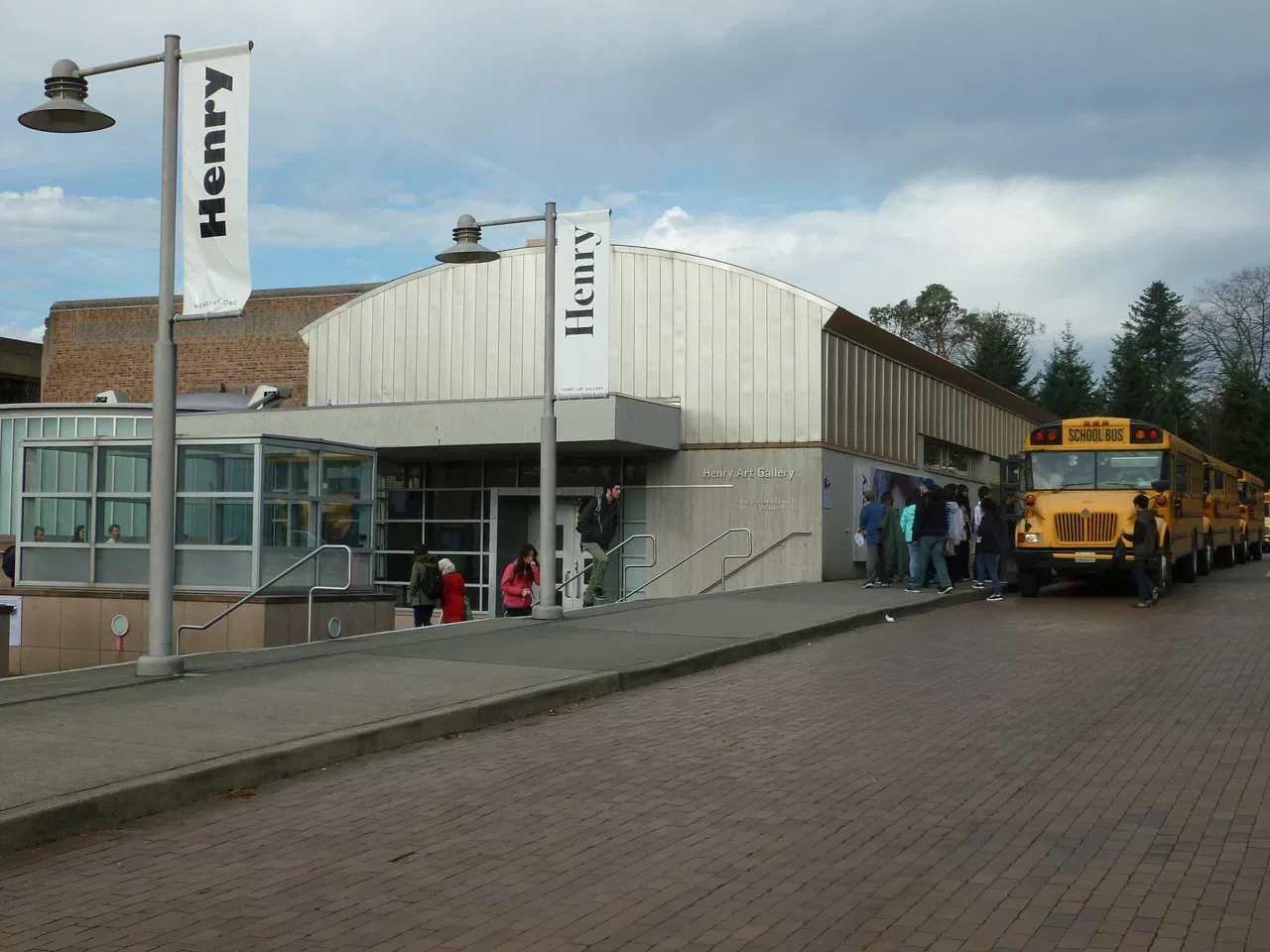
Horace Chapin Henry survived a Confederate bullet at Gettysburg, nearly died from tuberculosis in his twenties, built two railroads across the Cascades, founded a sanatorium after losing his son to the same disease that almost killed him, and arrived in Seattle just two years after the Great Seattle Fire with railroad contracts and a fortune ready to invest. On February 10, 1927, sixteen months before his death at age 84, he stood at the opening of the Henry Art Gallery at the University of Washington—the first public art museum in Washington State—watching visitors admire 178 paintings he and his late wife Susan had collected, mostly Impressionist landscapes by American and French artists.
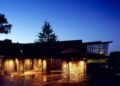
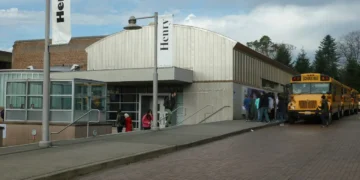
The Gothic red brick building designed by Carl F. Gould (who co-founded UW’s Department of Architecture) housed works by Winslow Homer, William Merritt Chase, and William Bouguereau. The opening celebration marked the high point of Henry’s life, according to his 1960 biographer. Seventy years after founding, the museum would seem unrecognizable to him—not just physically, though the 1997 Gwathmey Siegel expansion quadrupled the museum from 10,000 to 40,000 square feet—but philosophically.
The Henry no longer shows Impressionist landscapes. It presents James Turrell’s skyspace where visitors sit quietly experiencing uninterrupted sky through an egg-shaped aperture. It exhibits contemporary artists exploring identity, technology, sound, silence, and perception. It champions emerging talent before major museums notice them. The collection has grown from 178 paintings to nearly 30,000 objects emphasizing photography and contemporary art rather than 19th-century European paintings.
The transformation from regional museum showing what a railroad magnate liked in 1890s Paris to internationally recognized contemporary art institution reflects both intentional curatorial vision and institutional survival instinct. Museums founded on single donors’ tastes face existential choice: preserve that taste as mausoleum, or evolve into living cultural force. The Henry chose evolution. Whether that choice honors or betrays Horace Henry’s vision depends on understanding what he actually intended.
The Railroad Builder Who Loved Art
Horace Chapin Henry came west from Bennington, Vermont—farming country that produced more than crops. He’d survived Pickett’s Charge at Gettysburg fighting for the Union, then contracted tuberculosis during post-war recovery. Doctors gave little hope, but he survived. In 1891, he arrived in Seattle with his family, pockets lined with railroad construction company success, ready to participate in Seattle’s post-fire expansion.
His firm, Henry & Balch, had accepted a Northern Pacific Railroad contract to build the Lake Washington Belt Line. More railroad contracts followed. Henry formed Pacific Creosoting Company on Bainbridge Island, boosting his fortune further. He became champion of adopted city, launching Provident Loan Company offering low-interest loans to poor, helping organize the 1909 Alaska-Yukon-Pacific Exposition, and founding Firland Sanatorium for tuberculosis patients in what’s now Shoreline after his son Walter died at 26 from the disease.
Personal tragedy marked Henry’s life. His daughter Florence died in her twenties from burst appendix while at Massachusetts college. Henry had the Florence Henry Memorial Chapel built in Shoreline’s Highlands in her memory. After Walter’s tuberculosis death in 1911, he built Firland Sanatorium. These weren’t vanity projects—Henry knew tuberculosis intimately and wanted others to survive.
He built massive Tudor-style mansion at Harvard and Spring on Capitol Hill in 1894. He and Susan began filling it with art. Their first purchase may have been at the 1893 Chicago World’s Fair—the Columbian Exposition that introduced many Americans to European art. Over following decades, they acquired primarily late-19th and early-20th-century French and American landscapes and portraits.
Henry added gallery space to his Capitol Hill home, and from 1917 until the Henry Gallery’s 1927 founding, he effectively operated private museum, opening his collection to visitors. This detail matters—Henry didn’t collect art for private enjoyment but wanted sharing it with public. The donation to University of Washington simply formalized what he’d already practiced.
In 1926, he donated 172 works (some sources say 178) plus construction funds to the University. The gift represented vision that art stimulates inquiry, fosters knowledge, and builds healthy community. Carl Gould designed the building. On February 10, 1927, the Henry Art Gallery opened to universal praise as Washington’s first public art museum.
Among the collection’s gems: Winslow Homer’s “An Adirondack Lake” (1870)—now the most famous painting from Horace Henry’s collection, frequently loaned to other museums. William Merritt Chase’s “Over the Hills and Far Away.” William Bouguereau’s “A Child at Bath.” These works reflected Henry’s taste for representational art emphasizing natural grandeur, everyday life scenes, and technical mastery.
Sixteen months later, on June 28, 1928, Henry died. The Seattle Fine Arts Society moved into the rest of his Capitol Hill residence. Six years later, his surviving sons Langdon and Paul donated their parents’ mansion to the City of Seattle. The Henry Gallery remained at the University, beginning its journey from donor’s private taste to institutional identity.
The Blue Four: Immediate Transformation Signal
The Henry Gallery’s founding mission emphasized being museum “to feature art of the present time.” Horace Henry collected contemporary art of his era—living artists creating new work. He didn’t seek old masters but painters active during his lifetime. Understanding this distinction illuminates what followed.
In 1927—the year the Henry opened—the museum presented the Blue Four: German Expressionists Lyonel Feininger, Alexej von Jawlensky, Wassily Kandinsky, and Paul Klee. This exhibition marked the first time these avant-garde artists appeared west of the Mississippi. The work was considered daring, edgy, experimental—nothing like Henry’s Impressionist landscapes.
The Blue Four exhibition demonstrated institutional interpretation of Henry’s vision. He wanted “art of the present time.” In 1927, the present meant Expressionism, abstraction, modernism—movements that horrified traditionalists but excited progressive curators. The Henry’s willingness to show the Blue Four months after opening with Impressionist paintings signaled that the museum understood its mission as engaging contemporary art, not preserving 1890s taste.
This curatorial boldness established pattern continuing nearly a century. The Henry became known for presenting world-renowned contemporary artists first in the region and championing emerging talent. The museum’s location on university campus—with student audiences, academic freedom, and educational mission—enabled risk-taking that commercial galleries or donor-dependent private museums might avoid.
The 1997 Expansion: Architectural Collision
By the mid-1990s, the Henry Gallery faced space constraints limiting ambitious programming. The original 10,000-square-foot building (with only 5,000 square feet of exhibition space) couldn’t accommodate large installations, traveling exhibitions, or growing permanent collection. The museum needed expansion but faced challenge: how to add contemporary architecture to 1927 Gothic red brick collegiate building without destroying its character?
Gwathmey Siegel & Associates Architects—led by Charles Gwathmey—proposed bold solution: don’t try harmonizing old and new. Instead, create intentional architectural dialogue through contrast. The three-story addition used glass, textured stainless steel, and cast stone—materials screaming contemporary against Gothic brick. The pedestrian bridge crossing busy 15th Avenue NE was redesigned as part of the project.
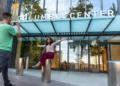
LMN Architects (the Seattle firm later designing Benaroya Hall) served as consulting architects. The expansion, costing $17.3 million, was part of larger $25 million fundraising effort including endowment for programs and exhibitions. Illsley Ball Nordstrom (1912-1996), widow of Nordstrom executive Lloyd Nordstrom, donated significant funds. The Faye G. Allen Center for the Visual Arts became the addition’s formal name.
The 1993-1997 construction quadrupled exhibition space from 5,000 to 14,000 square feet. The expansion added 154-seat auditorium, multimedia gallery, café, bookstore, sculpture court, additional storage, collections research facilities, children’s art studio, and educational group facilities. The collection had grown to approximately 18,000 items worth over $25 million by 1996.
Gwathmey’s design won praise and criticism. Supporters celebrated the confident contemporary addition refusing to mimic historical styles. Critics found the contrast jarring, arguing the addition overwhelmed the original building. The architectural collision—old brick meeting new steel and glass—became visual metaphor for the museum’s mission: honoring historical foundation while engaging contemporary practice.
The expansion also acknowledged practical reality: contemporary art often requires different spaces than 19th-century paintings. Large video installations, sound art, performance pieces, site-specific sculptures demand different ceiling heights, lighting systems, acoustic treatment, and floor loading than paintings hanging on walls. The new galleries provided technical infrastructure for contemporary art’s diverse media.
Light Reign: Experiencing Sky as Art
In July 2003, the Henry unveiled James Turrell’s Skyspace, “Light Reign,” in the sculpture court—a permanent installation that became one of Seattle’s most distinctive art experiences. Turrell, renowned for light and space art movement, had decades-long collaborative relationship with the University of Washington. The Skyspace, one of only four public Skyspaces in the United States at that time, represented major gift to the permanent collection.
The structure floats eleven feet above ground on two concrete columns—an elliptical pavilion with egg-shaped aperture in the ceiling allowing visitors to view uninterrupted sky. The experience is meditative, contemplative, quietly transformative. Up to 18 visitors at once sit in the enclosed circular space that feels like “quiet sauna” without heat, looking upward through the aperture seeing pure sky—no buildings, no cranes, no visual interference from Seattle’s changing skyline.
The Skyspace includes retractable dome covering the aperture during rain or snow. When closed, the dome glows blue like “pure piece of sky,” creating Ganzfeld effect—evenly illuminated featureless space appearing to be solid surface but isn’t. Even in bad weather, the Skyspace remains Turrell art experience.
Exterior lighting adds another dimension. The translucent exterior shell incorporates LED lighting (state-of-the-art in 2003, designed for energy efficiency) slowly changing colors over time. The structure glows softly at night and on cloudy days, visible from the pedestrian bridge crossing 15th Avenue NE and from the street. The slowly transforming colors suggest sunrise and sunset cycles independent of actual solar patterns.
Bruce Donnelly, lead architect for the 1997 Henry Gallery addition, worked with Turrell on the structure’s design. KrekowJenningsInc served as general contractor. Richard Andrews, then Henry director, emphasized the collaborative perfection: “Jim had his vision for the Skyspace, and then we had this incredible team that was in sync with what Jim wanted to do. Everyone put a lot of energy and time and ideas into it. They were committed to doing it perfectly.”
Major donors made the Skyspace possible. Bill and Ruth True pledged $500,000. Lynn and Jerry Grinstein, Jon and Mary Shirley Foundation, Susan and Jeffrey Brotman, and others contributed substantial gifts. Andrews called the project “artistic landmark for the city.”
The Skyspace has hosted meditation sessions, Quaker silent meetings, performance art pieces, audio installation by artist Steve Roden, and thousands of individual visits. Combining architecture, sculpture, and atmosphere, the work became integral to the building’s architecture, not merely art placed in building. Visitors experience light and perception differently—Turrell’s consistent exploration for three decades.
The installation represents Henry Art Gallery’s evolution perfectly. Horace Henry would never have imagined sitting in elliptical pavilion watching sky through aperture as art experience. But he valued art’s power to stimulate inquiry and foster knowledge. Turrell’s work does exactly that—forcing viewers to reconsider assumptions about seeing, perception, and experience of fundamental elements like sky and light.
The Photography Collections: Accidental Strengths
The Henry’s collection includes over 28,000 objects today (some recent sources cite nearly 30,000). Photography represents major strength—somewhat accidentally. The partial gift and purchase of the Joseph and Elaine Monsen collection brought substantial historical and contemporary photography holdings. In 1982, the Henry inherited sizable collection from University of Washington’s former Costume and Textile Study Center, adding ceramics, costumes, and textiles.
These collections—acquired through circumstances rather than systematic strategy—created unexpected curatorial opportunities. The Monsen photography collection enabled the Henry to mount significant photography exhibitions and attract photography-focused audiences. The costume and textile holdings supported exhibitions exploring fashion, cultural identity, and material culture.
Collections of particular note include: Albert Feldmann Collection of European Master Prints, Joseph and Elaine Monsen Collection of Photography, Stimson-Bullitt Collection of 19th-century prints, Bill and Ruth True Collection of Contemporary Art, and Washington Arts Consortium Collection of American Photographs 1970-1980.
The Eleanor Henry Reed Collection Study Center—named for Horace Henry’s granddaughter Eleanor Henry Reed and her husband William G. Reed—makes the permanent collection accessible to scholars, educators, students, artists, and community. Works can be viewed by appointment. The Study Center and museum’s university campus location make the Henry key cultural resource and training ground in visual arts.
Recent exhibitions demonstrate contemporary focus: Hank Willis Thomas exploring identity and culture, Raúl de Nieves creating immersive visual storytelling experiences, Christine Sun Kim investigating intersections of sound and silence, Ann Hamilton, Maya Lin, Lynn Hershman Leeson, Doug Aitken—internationally recognized artists presented at the Henry often before major museum recognition.
The Institutional Challenge: University Museum Economics
The Henry operates within University of Washington’s Arts Division, College of Arts and Sciences. This administrative structure creates advantages and constraints. University affiliation provides stability, credibility, and access to student audiences. Faculty collaborations enhance exhibitions with scholarly research. Educational mission aligns naturally with university values.
But university bureaucracy constrains flexibility. Fundraising competes with university-wide campaigns. Staffing follows university human resources policies. Programming must balance educational mission with popular appeal. Budget allocations depend on university priorities that may not prioritize art museum needs.
The museum’s strategic plan 2026-2030 identifies five targeted imperatives: fiscal sustainability, strengthening local and national visibility, ensuring relevant collections and programming, increasing engagement, and maintaining optimal artist support. These goals reflect both ambition and anxiety—becoming nationally visible contemporary art museum while maintaining financial stability and serving local community.
Admission to the Henry is free—following many university museum practices and removing financial barriers. But free admission eliminates revenue stream that commercial museums depend on. The museum relies on university support, grants, individual donations, corporate sponsorships, endowment income, facility rentals, café and bookstore revenue, and program fees.
The Brink Award—biennial art award for emerging artist from Washington, Oregon, or British Columbia worth $12,500—exemplifies the Henry’s commitment to championing regional talent. Such programs build relationships with local art communities but require funding beyond admission revenue that doesn’t exist.
The Contemporary Mission: Equity, Access, and Transformation
The Henry’s current mission statement: “to engage all people in the transformative power of contemporary art and ideas.” The emphasis on “all people” and “transformative power” reflects institutional values beyond simply showing art. The museum commits to racial equity, inclusivity, and awareness across exhibitions, programs, and operations.
The mission acknowledges work remains ongoing: “We are actively committed to racial equity and to building a strong foundation of inclusivity and awareness in all we do. We value discourse that brings forward voices and positions that have been—and continue to be—oppressed. We do not tolerate hate speech or actions. We recognize that we are in the process of embodying these values across our exhibitions, programs, and operations; this is our ongoing work.”
This language—direct acknowledgment of incomplete progress rather than claiming achieved equity—reflects institutional self-awareness. Museums historically excluded many communities from both audiences and artistic representation. Changing that reality requires sustained effort, not merely policy statements.
Contemporary exhibitions increasingly center artists from historically marginalized communities, address social justice themes, and employ participatory practices engaging diverse audiences beyond traditional museum visitors. The museum’s University District location—more accessible via public transit than Seattle Art Museum downtown or Frye Art Gallery on First Hill—serves neighborhoods with diverse demographics.
Programming includes artist talks, workshops, performances, family activities, and educational initiatives designed for varied audiences. The 154-seat auditorium hosts lectures, film screenings, panels, and events extending exhibitions beyond visual displays. The museum serves as cultural hub where ideas are debated, not merely gallery where art is viewed.
The Horace Henry Question: Betrayal or Fulfillment?
Would Horace Chapin Henry recognize or approve of what bears his name? The question isn’t rhetorical. Museums named for donors face ongoing tension between honoring founding vision and remaining culturally relevant. Some museums preserve founder’s taste as historical document—viewing collections as time capsules showing what wealthy Americans valued in particular era. Others interpret founder’s vision more broadly, asking what values animated the gift rather than what specific artworks were donated.
The Henry Art Gallery clearly chose the latter interpretation. The original 178 paintings remain in the collection—Winslow Homer’s “An Adirondack Lake” still gets loaned to other museums. But those works no longer define institutional identity. The museum became vehicle for engaging contemporary art and ideas rather than shrine to 1890s Impressionism.
Evidence suggests this interpretation aligns with Horace Henry’s actual values. He collected art of his present time, not historical masters. He opened his private collection to public before founding the museum, demonstrating belief in art’s public value. He donated to University of Washington—educational institution committed to inquiry and knowledge—rather than creating independent foundation controlling the collection in perpetuity.
His stated principle—”that art stimulates inquiry, fosters knowledge, and builds a healthy community”—emphasizes art’s function rather than specific aesthetic. Contemporary art challenging viewers’ assumptions arguably stimulates more inquiry than beautiful Impressionist landscapes demanding little beyond appreciation. The Henry’s exhibitions featuring emerging artists, experimental media, and social justice themes might build healthier community than showing only historical paintings.
The Blue Four exhibition in 1927—months after opening—demonstrates the institution immediately interpreted its mission as engaging contemporary practice rather than preserving donor taste. That curatorial direction has remained consistent for nearly a century.
Still, the tension persists. Horace Henry donated Impressionist paintings. The museum shows James Turrell’s light installations and Christine Sun Kim’s explorations of sound and silence. The disconnect between donor’s collection and current programming is real, even if philosophically justifiable.
Museums increasingly grapple with these questions as founding generations’ tastes age poorly. Art that seemed universal in 1927—French and American landscapes by white male artists—now seems limited, exclusive, and disconnected from Seattle’s contemporary demographics. The Henry’s evolution reflects broader museum field recognizing that serving diverse publics requires diverse artistic perspectives.
The Next Century: University Museum in Changing Seattle
As the Henry enters its second century, challenges multiply. Seattle’s rapid growth and changing demographics create both opportunities and pressures. More residents mean larger potential audiences but also higher operating costs, competition from other cultural attractions, and need for programming reflecting diverse communities.
University of Washington’s campus location once seemed advantageous—stable institutional home, student audiences, academic credibility. But campus locations also limit accessibility. Parking is difficult. Public transit requires planning. Visitors need reason to travel to University District rather than attending downtown museums.
The museum’s collection of nearly 30,000 objects requires ongoing care, conservation, and storage. Climate control, security, pest management, handling protocols—all cost money and expertise. The Eleanor Henry Reed Collection Study Center provides access to collections, but most objects remain in storage rather than display.
Fiscal sustainability—first imperative in the strategic plan—acknowledges economic pressures. Universities face budget constraints. Government arts funding remains precarious. Individual philanthropy fluctuates with economic cycles. Earned revenue from programs, facility rentals, and ancillary services can supplement but not replace core funding needs.
Yet the Henry possesses advantages. The James Turrell Skyspace draws visitors specifically to experience that installation. The contemporary focus differentiates the museum from Seattle Art Museum’s encyclopedic collection and Frye Art Gallery’s free admission European paintings. The university connection provides intellectual credibility and student programming opportunities.
The railroad builder who loved art and believed it built healthy communities gave Seattle its first public art museum ninety-eight years ago. The Gothic red brick building he funded still stands on 15th Avenue NE, now adjoined by glass and steel addition housing light installations, contemporary photography, and experimental art he couldn’t have imagined. Whether that evolution represents betrayal or fulfillment of his vision depends on believing institutions should preserve donor taste or honor donor values. The Henry chose values—inquiry, knowledge, community—over taste. The choice made all the difference.