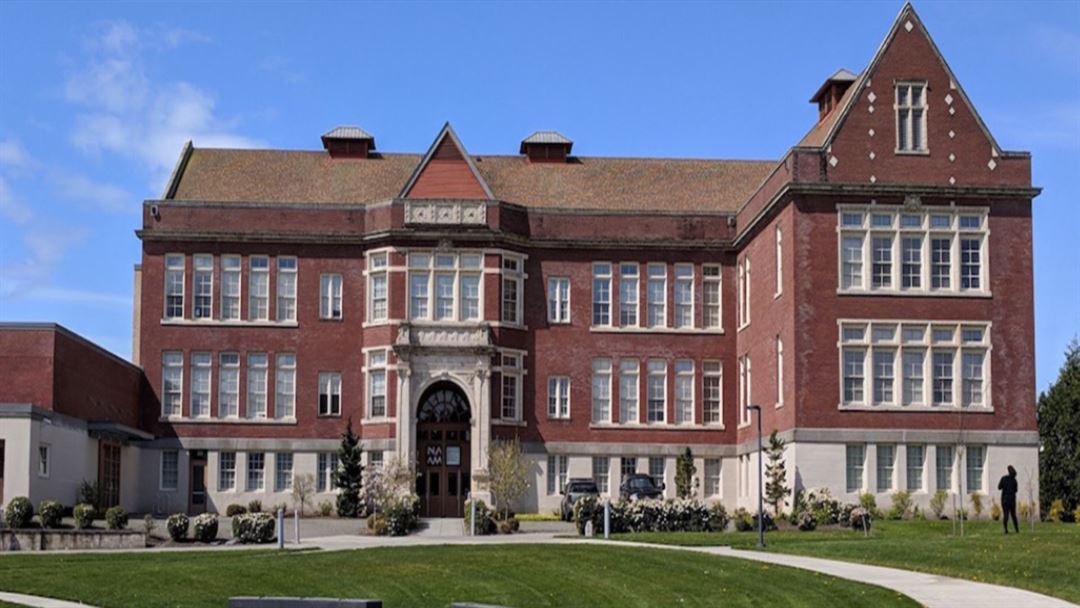
The Northwest African American Museum opened March 8, 2008 with estimated 3,000 visitors swarming surrounding neighborhood—cars jamming streets, hundreds converging on foot from all directions to the old Colman School at 2300 South Massachusetts Street in Seattle’s Central District. Governor Christine Gregoire, Senator Maria Cantwell, Representative Jim McDermott, Mayor Greg Nickels, King County Executive Ron Sims, Councilman Larry Gossett—the political establishment turned out celebrating what community had dreamed about for more than two decades.
But Wyking Kwame Garrett—whose father Omari Tahir-Garrett spent eight years occupying the abandoned building to claim it for an African American museum—seized the microphone during opening ceremonies. He called the Urban League-led museum a “disgrace,” a “scam,” “not what we sacrificed our lives for.” He refused to leave. He refused to be quiet. Police arrested him.
That disruption revealed what official celebration obscured: the museum’s 27-year gestation involved profound conflicts over who controls Black cultural institutions, what stories they tell, who benefits from their existence. The Northwest African American Museum didn’t emerge from consensus—it was born from occupation, struggle, factionalism, lawsuits, fistfights, and competing visions of what African American cultural space should be.
The building now houses 17,000 square feet of museum on ground floor, 36 affordable housing apartments on upper stories, galleries featuring Jacob Lawrence and contemporary Black artists, educational programs, community events, and ongoing tensions about gentrification displacing the historically Black Central District community the museum ostensibly serves. Understanding NAAM requires understanding not just what it became but what it might have been—and what original occupiers believe was stolen from them.
The Building: Colman School and the Central District’s Demographic Arc
James Stephen designed Colman School in Jacobean architecture style, built 1909 on 2.2 acres. The three-story red brick building contained 17 classrooms serving 500 students with 15 teachers. Named 1918 for James Murray Colman (1832-1906)—Scottish immigrant arriving Seattle 1869, engineer who developed waterfront and built Colman Dock terminal for Washington State Ferries. Anna B. Kane served as principal 1912-1940, one of longest principal tenures in district.
The school’s history mirrors Central District’s demographic transformations. Initially serving Seattle’s most racially, ethnically, and culturally diverse neighborhood: African Americans from eastern and southern U.S., immigrants from Asia, Jews and Catholics from eastern Europe. Discriminatory housing patterns—restrictive covenants prohibiting people of color from buying homes in most Seattle neighborhoods, redlining denying mortgages in areas with Black residents—concentrated diversity in Central District.
World War II brought massive changes. Federal government built large housing project nearby swelling enrollment. Japanese American families—who’d lived in Central District creating thriving Japantown—were forcibly removed to internment camps. African Americans seeking Boeing and shipyard defense work migrated from South creating Great Migration’s Pacific Northwest chapter. By war’s end, Central District had become predominantly Black neighborhood.
The 1960s Seattle Urban League designated Colman as one of seven Central Area schools having disproportionate number of minority students—terminology revealing how “minority” meant “problem” in educational discourse. The designation acknowledged segregation while avoiding responsibility for creating it.
Colman closed as elementary school 1979. Summit K-12 alternative school operated 1979-1985. Then vacancy. Interstate 90 expansion threatened demolition. The abandoned building sat empty while Central District grappled with urban renewal’s destructive effects, white flight accelerating decline, and economic disinvestment creating visible neighborhood deterioration.
The Occupation: 1985-1993, Eight Years of Claiming Space
In 1981, Community Exchange—multiracial coalition—proposed African American museum to Mayor Charles Royer. 1984 formal task force established. Seattle School Board decommissioned Colman School 1985. Task force shortlisted it as museum location. But demolition loomed from I-90 expansion.
Earl Debnam, Michael Greenwood, Charlie James, and Omari Tahir-Garrett—task force subgroup—refused letting that happen. 1985 they occupied disused Colman School claiming building as desired museum location. Tahir-Garrett’s son Wyking (then known as Kwame) later joined occupation continuing eight years.
The eight-year occupation represented longest act of civil disobedience in United States according to some accounts. Seattle School District told occupiers they were trespassing but made no effort dislodging them. The strategic non-confrontation avoided violent showdown while preventing demolition through constant presence.
The Citizens Support Committee for African American Heritage Museum/Cultural Center used several rooms displaying books, artifacts, artwork. They sponsored community activities including AIDS forums, Kwanzaa celebrations, workshops teaching African heritage to youth. Omari brought artifacts from Africa. They “led workshops, held concerts, engaged with youth to be proud of their heritage so they would not turn to the streets.”
The motivation centered youth—countering gang violence, drugs, dropout rates by connecting young Black Seattleites to African heritage and cultural pride. The occupiers envisioned grassroots community space run by and for Central District residents, emphasizing African diaspora connections, youth empowerment, and cultural authenticity over professional museum standards.
The occupation ended 1993 when City of Seattle agreed funding museum. But agreement didn’t resolve fundamental questions: Who would control museum? What vision would prevail? How would professionalization affect community access?
The Split: Activists versus Traditional Leadership
The museum effort fractured into competing groups. Original occupiers wanted African American Heritage Museum and Cultural Center—grassroots, community-controlled, emphasizing African heritage, serving neighborhood youth. Traditional Black leadership wanted professional museum with credentialed staff, Smithsonian standards, broader appeal beyond Central District activists.
Mayor Norman Rice’s office formed nonprofit 1993: African American Heritage Museum and Cultural Center with Board of Directors selected to oversee project. 1995 Rice appointed Robert Flowers (Washington Mutual VP) as board chairman. James Fearne (U.S. Department of Housing and Urban Development official) also chaired at different times between 1993-2000 under guidance of Denice Hunt (1948-1997), mayoral liaison.
By 2000, Fearne admitted: “It’s been really difficult thing to work with. There have been lawsuits, there have been fistfights. There has been so much difficulty and controversy about museum at this site. Maybe it’s better to regroup and look someplace else than keep fighting these battles.”
The conflict embodied class tensions within Black community. Professional Black elites—corporate executives, government officials, credentialed administrators—versus working-class activists who’d physically occupied building for eight years. The former had access to philanthropy, political connections, institutional legitimacy. The latter had moral authority from sacrifice, grassroots community support, and original vision.
Meanwhile city, school district, and activists explored alternative locations. Black Heritage Society petitioned Walt Hundley (Superintendent Parks and Recreation) for room at Langston Hughes Cultural Arts Center. He instead offered small WPA shelter house on Colman playfield. They declined.
The Urban League Takeover and 2008 Opening
Urban League of Metropolitan Seattle became involved 2001 under CEO James Kelly’s leadership. 2003 ULMS purchased Colman School from Seattle Public Schools for $800,000. Unlike Flowers’s group, Urban League had no continuity from original occupiers—leading to split among African American activists.
The Urban League proposed museum on ground floor with upper floors converted to low-income affordable housing. Total project cost: $22.6 million including $8.1 million museum construction. Donald King Architects (DKA)—local Black-owned firm—selected for museum conversion. Rico Quirindongo of DKA served as lead architect. The redesign maintained Jacobean architecture exterior while modernizing interior for museum/housing dual function.
Carver Gayton appointed executive director 2004. Former Boeing executive, FBI agent, state employment security commissioner, UW football star—member of prominent African American family whose grandfather John Thomas Gayton (1868-1954) arrived Seattle 1889. Through Gayton’s efforts, contributions came from Microsoft, Safeco, Boeing, Key Bank, Washington Mutual, Bill and Melinda Gates Foundation.
Barbara Earl Thomas appointed deputy director/curator 2004-2005. Seattle native, artist and writer with University of Washington advanced degrees. Former Seattle Arts Commission program director, Bumbershoot festival director, Elliott Bay Book Company marketing manager. Her curatorial vision shaped museum’s contents emphasizing professional exhibition standards, artistic excellence, historical accuracy.
Brian Carter, education director—Yakima native with Stanford degree and UW museum studies master’s—traveled throughout Northwest gathering African American material from historical societies and museums in Northwest states and British Columbia.
Building nominated for landmark status 2005 by Seattle Landmarks Preservation Board. Became officially designated Seattle landmark 2009. Ground broken spring 2006.
March 8, 2008 opening drew political establishment, community members, media. But Wyking Kwame Garrett’s disruption exposed continuing resentment. Original occupiers felt excluded from museum they’d sacrificed for. The Urban League leadership—though Black—represented outside institution imposing vision rather than organic community development.
The Inaugural Exhibition: Jacob Lawrence and James W. Washington Jr.
The opening exhibit featured Jacob Lawrence (1917-2000) and James W. Washington Jr. (1911-2000)—two internationally acclaimed African American artists who made Seattle homes. The pairing demonstrated NAAM’s ambition: world-class art anchoring regional museum, local artists achieving global recognition.
Lawrence’s stunning 108 × 216 inch panel “Games” loaned from 4Culture and King County Arts Collection had been installed in Kingdome stadium. His five-panel George Washington Bush Series commemorated Washington State’s first African American settler—connecting Black history to Pacific Northwest specifically rather than generic African American experience.
Washington’s sculpture including “The Young Queen of Ethiopia” (1956) carved from Mexican volcanic stone, “Tribute to Mark Tobey” loaned from Becky and Jack Benaroya Collection. The artists came from different backgrounds, explored different mediums and topics. But curator Barbara Earl Thomas noted: “one thing they held in common was firm belief in their own direction as artists. Their work moves us because they were clearly compelled to do it, to communicate deep social or inner truths. Both Lawrence and Washington did painful work of finding their authentic voice as artists, hard journey that few accomplish and which in itself sets them apart.”
The exhibition succeeded artistically while raising questions politically. World-class art elevated museum’s prestige, attracted broader audiences, generated favorable reviews. But did emphasizing celebrated artists serve Central District youth—original occupation’s primary concern? The curatorial choice prioritized artistic excellence over grassroots accessibility, professional museum standards over community control.
The Housing Component: 36 Affordable Apartments
The second and third floors contain 36 affordable housing units—studios, one-bedroom, two-bedroom apartments for low-income families. The mixed-use approach addressed Central District’s affordable housing crisis while generating rental income helping sustain museum operations.
The housing component fulfilled original occupiers’ emphasis on serving community material needs. Museums typically exist separately from housing—cultural consumption divorced from survival necessities. NAAM’s integrated model acknowledged that people need shelter as much as culture, that low-income residents deserve living in landmark buildings with cultural significance.
The Urban League Village concept—combining museum, affordable housing, outdoor artist studio, public sculpture garden and park—created comprehensive community resource. The approach differed from purely commercial development or purely cultural institution. It attempted addressing multiple community needs simultaneously.
But housing also generated complications. Tenants and museum visitors shared building creating maintenance challenges, security concerns, noise conflicts. Some original occupiers questioned whether affordable housing justified their exclusion from museum governance—was housing component genuine community service or strategic compromise buying legitimacy?
The Central District context matters. Seattle’s most rapidly gentrifying neighborhood by 2000s. Black population declining from 73% in 1970 to under 20% by 2010. Rising rents, property values, development pressure displacing longtime residents. The 36 affordable units couldn’t counter broader displacement forces, but they provided some stability.
The Collections and Exhibitions: Balancing Excellence and Community
NAAM’s 17,000 square feet includes bookstore/gift shop, galleries for temporary and permanent exhibitions, rentable community spaces. The Northwest Gallery, Journey Gallery, and Legacy Gallery (2,340 square feet hosting meetings, events, traveling exhibitions, artist workspace) provide flexible programming capacity.
Past exhibitions demonstrated range: “Making a Life, Creating a World” (inaugural Jacob Lawrence/James W. Washington Jr. show), “We Are One” (exploring Central Area’s historical cultural diversity paying homage to communities of color), “Funky Turns 40” (Black character revolution in 1970s Saturday morning cartoons), Tuskegee Airmen traveling exhibition, African American printmaking collection featuring Romare Bearden, Aaron Douglas, Charles White, Elizabeth Catlett.
Inye Wokoma’s exhibit examined archived family photographs, artifacts, oral histories illuminating how building community and claiming space allowed materializing aspirations during Great Migration. Layered narratives examined how shifting systemic oppression facilitated erasure of Black presence defining Central District. The exhibit urged recognizing relationship between redlining, racial restrictive covenants, inaccessible resources and current displacement.
Contemporary exhibitions engage current issues: Black Lives Matter, gentrification, experiences of new generations, African immigrant communities from Ethiopia, Sudan, Somalia. “Colors of Life—African American Abstract Art and the Regathering of Community” featured four Black Pacific Northwest artists. The curatorial approach balances historical preservation with contemporary relevance.
The “IndiVisible” exhibit added Julia Jacob’s story—labeled “Negro” at birth but adopted by Chief Jacob of Suquamish tribe early 1870s. Julia learned tribal lifeways: medicine making, basket weaving, speaking Lushootseed. Passed knowledge to descendants who continue Suquamish traditions. The exhibition probed African American Native American cultural intersections—complicating simplistic racial categories.
The COVID Closure and 2023 Reopening
NAAM closed approximately three years due to COVID-19 pandemic challenges. While physical buildings closed to public, museum remained active throughout. January 16, 2023 reopening on Martin Luther King Jr. Day symbolically connected museum to broader civil rights legacy.
The pandemic’s impact on cultural institutions hit NAAM particularly hard. Unlike major museums with substantial endowments, NAAM operates on tight budgets depending on admissions, donations, grants. Three-year closure devastated finances. The recovery required community support, emergency funding, operational restructuring.
The 2023 reopening under President/CEO LaNesha DeBardelaben (named 2018) emphasized resilience. DeBardelaben explained: “History of Northwest African American Museum is history of tension, struggle and overcoming [adversity] in Northwest Pacific African American community. After activists occupied building there were many voices and perspectives that began to shape what museum would look like.”
The acknowledgment of tension distinguished NAAM from institutions obscuring conflicts. DeBardelaben’s framing treated struggle as feature not bug—museums born from consensus lack urgency born from necessity.
The Gentrification Context: Cultural Anchor in Changing Neighborhood
NAAM sits adjacent to Jimi Hendrix Park (named for Seattle’s greatest musician with Central District roots) within Sam Smith Park (named for Seattle’s first African American city council member). The parkland location creates green space connecting museum to neighborhood recreation.
But Central District underwent massive demographic transformation. The historically Black neighborhood—created by racist housing policies confining Black Seattleites to specific areas—ironically became desirable to white residents once Black culture made it “cool.” Light rail construction, new development, Amazon employees seeking “authentic” urban living, rising property values, longtime Black residents priced out.
NAAM operates as cultural anchor attempting preserving historical memory and identity amid rapid change. Drawing visitors to area contributes local economy but also risks accelerating gentrification through cultural tourism. The museum faces impossible balance: remaining relevant to displaced original community while engaging new arrivals, preserving history while addressing present, serving neighborhood without commodifying Blackness for white consumption.
Lectures explore gentrification’s impact on Central District through historical lens. Panel discussions examine racial equity in education, healthcare disparities, future of Black arts. These forums position NAAM as venue for public discourse on race beyond passive exhibition viewing.
Juneteenth celebrations feature live music, food vendors, family activities, educational programming—creating community gathering space. Martin Luther King Day experiences, descendants’ series highlighting influential African Americans’ legacies (Ida B. Wells, others), monthly programs maintain year-round engagement.
The Continuing Struggle: Whose Museum Is It?
The 2020 occupation protest—descendants of original occupiers reclaiming building temporarily—demonstrated ongoing tensions. Protesters argued current museum doesn’t fulfill original intentions, isn’t “supporting community.” They wanted African-centered cultural space emphasizing youth connection to heritage preventing street violence.
The critique raises fundamental questions: What obligations do cultural institutions have to communities they’re ostensibly serving? When professional museum standards conflict with grassroots accessibility, who decides? How do predominantly white funding sources (corporate philanthropy, government grants, foundation support) shape museums serving communities of color?
Seattle’s white cultural power structure hasn’t embraced NAAM the way it supports Seattle Art Museum, Frye Art Museum, or Seattle Symphony. Attendance at NAAM programs reveals ongoing segregation—Black museum serves Black community while white cultural institutions serve predominantly white audiences despite diversity rhetoric.
Yet NAAM persists. Free admission first Thursday monthly removes financial barriers. Educational programs engage youth. Exhibitions connect historical injustices to present challenges. The museum provides space for difficult necessary conversations about race, displacement, equity.
The housing component—36 affordable units—offers concrete material support beyond cultural programming. Unlike museums treating communities as content to extract, NAAM attempts addressing survival needs alongside cultural affirmation.
The Future: Between Commemoration and Gentrification
NAAM faces existential challenge: preserving Black Central District history as Black Central District disappears. The museum documents community while community undergoes displacement. Future visitors may encounter museum as archaeological site explaining vanished culture rather than living institution serving thriving neighborhood.
The funding challenges continue. Museums require resources for collection care, climate control, exhibition development, educational programming, skilled staff. Economic downturns or philanthropic priority shifts directly impact operations. Maintaining individual donor bases demands continuous effort competing with larger better-funded institutions.
LaNesha DeBardelaben frames mission: “We want people to know who they are and who they can be. As our community thrives, we thrive. If our community is fractured, we are hurting. We believe we are one with our community.”
The statement asserts museum’s fate intertwines with community’s fate. If gentrification completes Central District’s transformation into predominantly white neighborhood with expensive housing, NAAM becomes memorial to displaced population. If community survives—through affordable housing, anti-displacement organizing, economic development—museum serves living culture.
The original occupiers’ vision—grassroots African-centered cultural space empowering youth—wasn’t entirely realized. But nor was it entirely betrayed. NAAM synthesizes professional museum standards with community service, artistic excellence with accessibility, historical preservation with contemporary engagement.
Wyking Kwame Garrett’s 2008 disruption expressed legitimate grievance. Eight years occupying building, sacrificing stability for dream of community museum, then being excluded from realization—that’s genuine loss deserving acknowledgment. The arrest symbolized how institutions control narrative even when occupiers forced institutions’ hands.
Yet NAAM exists. The Colman School wasn’t demolished. African American art, history, culture have dedicated space in Pacific Northwest. The 36 affordable apartments house low-income families. Youth programs engage neighborhood children. Exhibitions challenge white supremacy, document Black excellence, preserve threatened histories.
The museum’s imperfection—its contested origins, ongoing tensions, incomplete realization of original vision—makes it more honest than institutions claiming seamless consensus. NAAM’s history of tension, struggle, and overcoming mirrors African American experience it documents. The occupation, lawsuits, fistfights, competing visions, protests—all that messy conflict produced real cultural institution serving real community needs.
Eight years in a building. Twenty-seven years from dream to opening. Seventeen years of operations with three-year COVID closure. Ongoing displacement threatening community. Continuing debates about institutional control, cultural authenticity, gentrification’s impact.
The Northwest African American Museum isn’t perfect memorial to vanished community. It’s imperfect anchor for community fighting to survive, using culture as resistance, asserting that Black life, art, and history matter in Pacific Northwest despite centuries of erasure and ongoing displacement. That’s not the museum anyone initially envisioned. But it’s the museum Seattle’s Central District built through occupation, struggle, and refusing to disappear.