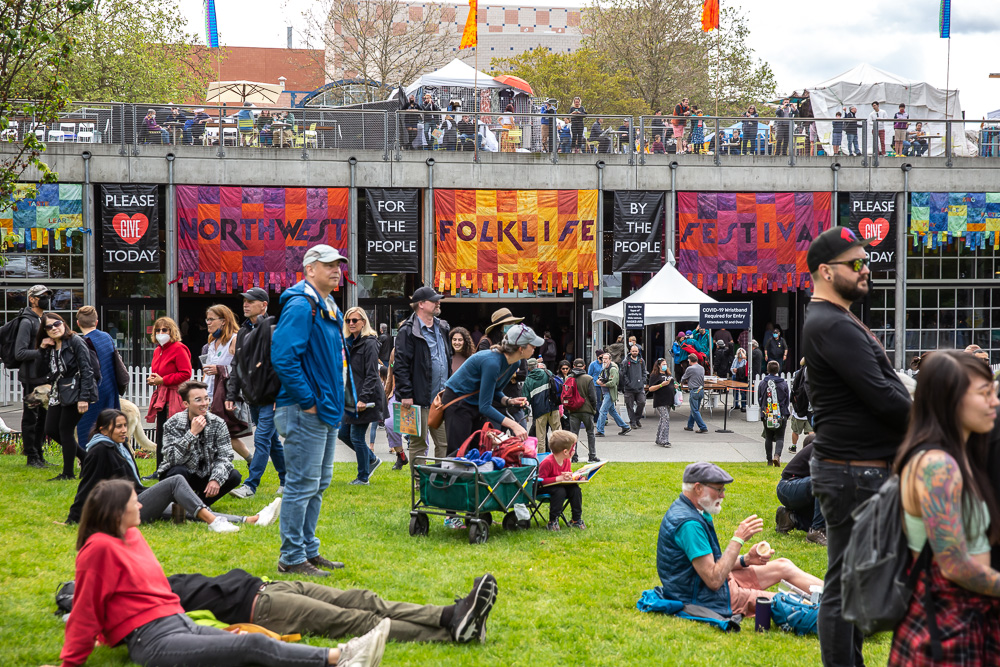
The theory was simple enough to test. Phil Williams explained it to National Folk Festival Association representative Leo Bernash walking the grounds of the first Northwest Folklife Festival, Memorial Day weekend 1972: “If you give a person an opportunity to perform, if they believe they’ve got something to perform, they will do it. And if you get enough people together who want to do it, then other people will come and watch or participate.”
Bernash—who managed large foreign dance troupes with Columbia Artists Management, had hands in folk festivals nationwide—asked the question bothering him all day: “How did you ever audition all these people?” He’d counted 300 performers, groups, craftspeople participating in festival. The question presumed professional gatekeeping: expert curators determining who possessed sufficient skill for public presentation.
Phil Williams chuckled giving same answer he’d give for next 29 years: “We didn’t audition a single one.”
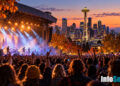
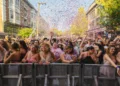
That founding philosophy—no auditions, no headliners, no mandatory admission, just open platform for anyone believing they had traditional art worth sharing—proved either brilliantly democratic experiment or recipe for disaster depending on who you asked. Fifty-three years later, Northwest Folklife Festival draws 250,000 participants annually to Seattle Center over Memorial Day weekend, remains donation-powered without mandatory fees, features 6,000+ volunteer performers across 25 stages, and continues testing whether living-room music and enthusiastic amateurs can sustain major urban arts festival in age of professionalized entertainment and commercial festivals charging $400 for weekend passes.
The answer so far: precarious sustainability punctuated by financial crises, passionate community defense, and stubborn refusal charging admission even when going broke.
The Origins: National Park Service and Living Room Music
The idea began larger scale. National Park Service launched urban outreach program allowing Northwest Region people (including Alaska) publicly presenting what they “make for their own use and do for their own entertainment.” The Park Service partnered with National Folk Festival Association developing regional festivals. Others launched in Lexington Kentucky, San Francisco, El Paso. Seattle’s would become most successful.
1971: National Park Service and National Folk Festival Association proposed regional festival of traditional music, dance, folk arts to be held Seattle late May 1972, providing sufficient local interest shown. Coalition formed: Seattle Folklore Society, Seattle Center, Scandia Folk Dance Society, alternative radio KRAB-FM, Washington Old-Time Fiddlers, REACH (Recreation, Entertainment and Creative Help nonprofit providing entertainment to retirement homes).
Much organization occurred in mad rush weeks before Memorial Day target. May 14, 1972: Seattle Times article announcing first-ever Northwest Folk-Life Festival (hyphen included early years), May 26-29 at Seattle Center. Organizers decided early including more than folk music and folk dancing—festival of all “ethnic folk arts found in Northwest,” both foreign and domestic, giving area people opportunity seeing rich heritage of traditional arts.
Budget: $6,000 going almost entirely to reimbursing performers for travel expenses. Performers volunteered. Free admission except indoor motorcycle race and Retina Circus performance. The festival featured 150 exhibits and events.
May 26-29, 1972: Four days clear skies—Seattle meteorological miracle. Over 123,000 people attended. Fiddles, banjos, guitars predominated. Also music from Middle East and Rhodesia (now Zimbabwe), folk arts like wood carving. Rock groups sponsored by City Youth Division pulled 500-2,000 people to grass in front of Food Circus. “At times, it looked like ad hoc rock festival.” Largest Seattle Center crowd since 1962 World’s Fair.
Phil Williams and wife Vivian Williams—Seattle Folklore Society founders—envisioned festival as chance presenting broad spectrum of things people could actually do themselves. Both classically trained musicians who’d explored traditional music in Darrington community, they found music “rang real responsive chord immediately.” Phil thought: “there must be lot of people wandering around out there that would like to be doing something they don’t even know exists. If you can present it to them, it may ring responsive chord, and they’ll find something that may change their lives.”
The populist accessibility mattered philosophically. Folk arts belonged to everyone, not elite professionals. Living-room music—what people played for own amusement among friends—deserved public platform equal to concert-hall performances. Ethnic traditions practiced by immigrant communities constituted legitimate art, not quaint cultural curiosities. The festival’s egalitarian vision rejected hierarchies distinguishing “high” art from “low” art, professional from amateur, worthy from unworthy.
The Growth and Evolution: 1973-1990s
1973: Festival expanded to five days (August 22-26), renamed Bumbershoot… wait, wrong festival. 1973 actually brought “Bumbershoot” name to different Seattle Center festival launched 1971. Folklife remained “Northwest Folk-Life Festival” (hyphen eventually dropped). 1973 saw first film festival component, jazz emphasis (Cal Tjader, Joe Venuti, Bill Smith), 200,000+ attendance.
By 1980s, hyphen disappeared: Northwest Folklife Festival. One of four National Folk Festival Association regional festivals, Seattle version proved most successful—perennial Memorial Day institution drawing 100,000+ even down years, sometimes quarter-million.
The festival evolved reflecting Pacific Northwest’s changing demographics. Early years: predominantly white folk music (bluegrass, old-time, contra dancing, Scandinavian). Bluegrass Hill next to Center House became iconic—fiddles and banjos ringing out annually, unchanged from 1972. But Seattle’s immigrant populations diversified. Festival expanded incorporating African drummers, Middle Eastern dancers, Asian performance traditions, Latin American music.
1990s: Seattle hit stride, Folklife too. Bigger names, larger crowds. The no-headliner philosophy bent slightly for special occasions. 1997 proved watershed. Festival attracted biggest name in folk-music history: Pete Seeger.
The Pete Seeger Exception: 1997 Labor Music Focus
Festival director Scott Nagel had pursued Seeger for years. Seeger finally agreed after learning 1997 festival’s special focus would be labor-movement music, local labor chorus forming for event. At 78, Seeger’s management team requested scheduling time for rest and naps. From moment Seeger stepped on festival grounds, rest seemed last thing on mind.
Seeger energized by multicultural nature, labor theme, sheer scope of free event: “He said he had never seen anything like it before—and that’s because there was nothing like it,” Nagel recalled. Seeger scrapped careful scheduling: “He said, ‘I want to play as much as I can. I want to play all weekend. We won’t tell anybody. I’ll just go play.'”
Announced performances at Mercer Arena and Mural Amphitheater drew large enthusiastic crowds. Mercer Arena: “If I Had a Hammer.” Mural Amphitheater: Seattle Labor Chorus singing gospel “Amen” with words “union” and “freedom” substituting for “amen.” The Labor Chorus became permanent organization continuing next two decades.
Seeger appeared unannounced at one festival’s smallest outdoor stages performing whole set of “naughty” and risqué songs. He showed up with banjo at Bluegrass Hill—festival’s unofficial jam-session site—playing along with dozens of local pickers. At one point, swept up in enthusiasm, he jumped on stair railing at Seattle Center and slid all the way down holding banjo. The Seeger weekend became “life-changing experience” for Nagel and thousands who saw legendary singer free.
The 1997 Seeger appearance didn’t violate no-headliner philosophy—it fulfilled it. Seeger didn’t play big star demanding special treatment. He appeared because festival’s labor-music focus aligned with lifelong political commitments. He performed everywhere spontaneously, mingled with crowds, joined jam sessions. The appearance demonstrated festival could attract major names without commercializing, could honor folk legends without creating celebrity hierarchy.
As of 2025, festival hasn’t tried replicating Seeger booking. The lesson wasn’t “book more famous people.” The lesson was “when perfect alignment happens between artist’s values and festival’s mission, magic results.”
The Financial Crises: Surviving Without Tickets
1992 identity crisis: Seattle Center asked festival start charging admission. Center eventually backed down after “irate Makah dancers, Scandinavian folk singers and Zimbabwean marimba players packed hearings at City Council, insisting that volunteer and community nature of Folklife would die unless it remained free.”
The community defense proved crucial. Folklife’s free admission wasn’t incidental feature—it was core identity. Mandatory ticketing would exclude low-income people, families, immigrants who made festival diverse and vital. Donation-powered model aligned with democratic values: those who could afford contributing did; those who couldn’t participated anyway.
But donation-powered models face inherent instability. Weather significantly impacts revenues—food sales and beer gardens constitute major income sources, both vulnerable to rain. Memorial Day weekend can be gloriously sunny or miserably wet. Seattle’s capricious May weather determined festival’s fiscal health.
1998: Michael Herschensohn took over as festival director beginning “rescue operation.” Festival now requested $5 donation at gate. Donations helped stabilize revenues though most attendees failed pitching in. By 2001, future brightened but organization remained in debt.
Northwest Folklife organization expanded beyond annual festival. 1997: helped create and stage Festál—annual series of ethnic festivals at Seattle Center. Later launched Seattle Children’s Festival. The programming diversification attempted creating year-round revenue and maintaining organizational capacity between Memorial Day weekends.
2017: Another tipping point. Seattle Times reported: “if folks don’t start shelling out more and bigger donations when they come, there will be no 2018 Folklife Festival.” The threat generated outcry. Nearly 250,000 attendees contributed sufficient donations allowing festival continuing. The crisis revealed depth of community investment—when survival threatened, people responded.
Music critic Paul de Barros once called festival “motley child of ’60s—free, idealistic, communitarian, egalitarian and avidly anti-commercial.” 2017, he noted festival “for all of its changes and expansion, had remained surprisingly true to its original ‘very utopian and anti-hierarchical vision… it’s important that it has survived.'”
The survival required constant advocacy, repeated community rescue missions, creative revenue strategies. But survival also vindicated founding philosophy. People wanted free accessible folk arts festival. They’d defend it when threatened. They’d contribute when asked. The donation model worked—barely, precariously, but consistently enough.
The Cultural Focus: Festivals Within Festivals
For 30+ years, Northwest Folklife presented Cultural Focus—”festival within festival” featuring specific Pacific Northwest community through special performances, panels, workshops, exhibitions, demonstrations, activities. The annual themes ranged widely:
2000: “Carnival Arts of the Caribbean.” 2004: “Traditions from the Horn of Africa.” 2006: “Arab Communities of the Pacific Northwest.” 2014: “India and Its People.” 2015: “Beats, Rhymes and Rhythms”—hip-hop, art form not even named when festival founded 1972.
Recent themes shifted philosophical: “Metamorphosis,” “Lagom” (Swedish concept of balance), “Meraki” (Greek concept of doing something with soul/creativity/love), 2025’s “Ikigai” (Japanese concept meaning “life worth living”).
The Cultural Focus programming served multiple purposes. Spotlighted specific communities deserving deeper attention. Educated broader audiences about cultural traditions. Created space for cultural expression and pride within communities being focused on. Demonstrated “folk” encompassed everything—not just Appalachian bluegrass but West African drumming, Arab dances, South Asian music, hip-hop battles.
The 2015 hip-hop focus proved significant. Hip-hop—urban, contemporary, commercial—seemed antithetical to “folk” conception as rural, traditional, non-commercial. But “Traditional Roots of Hip Hop” theme examined hip-hop as folk culture: community-created, orally transmitted, constantly evolving expression of lived experience. MCs, DJs, breakdancers, graffiti artists practiced folk arts as much as fiddlers and quilters.
The Cultural Focus evolution tracked changing understanding of “folk.” Not frozen museum pieces from past. Not exclusively rural white traditions. Folk meant living cultural practices passed through communities, adapted by practitioners, expressing group identities and individual creativity. That expansive definition kept festival relevant as Seattle’s demographics transformed.
The Participatory Democracy: Jams, Circles, Dances
Northwest Folklife distinguished itself through participatory emphasis. Many festivals featured performances—audiences watching professional acts on stages. Folklife included performances but equally valued participatory music-making, dancing, crafts.
Bluegrass Hill: Unofficial jam-session site where anyone could sit down with instrument and join. No auditions, no permission needed. Bring fiddle, banjo, guitar, mandolin—just show up and play. The organic music-making created constantly shifting ensembles, teaching opportunities (experienced players showing newcomers techniques), and democratic musical community.
Drum circles: Similar principle. Anyone could join, contribute rhythms, learn from others. The circles sometimes featured experienced West African or Middle Eastern drummers providing structure. Other times they were chaotic free-for-alls where enthusiasm mattered more than technique.
Participatory dancing: Fisher Pavilion and Armory hosted contra dances, international folk dancing, swing, blues, zydeco. Dance callers taught steps, welcomed beginners. Recent years: non-gendered dance callers using “Larks and Ravens” rather than “Ladies and Gents”—adapting traditional forms for contemporary inclusivity.
The participatory model aligned with festival’s founding philosophy: folk arts are what people do, not what they watch. The distinction between performer and audience should be permeable. Anyone could become dancer, musician, artist through participation. Living-room music belonged in living rooms but also in public squares where people gathered.
The buskers added another participatory layer. Street performers—musicians, jugglers, circus performers, magicians—performed along Seattle Center walkways for donations. Recent years: festival asked buskers donating 15% earnings (tips and CD sales) to festival—same percentage asked of vendors. The policy generated controversy: buskers argued they weren’t official festival acts so shouldn’t pay, organizers countered buskers benefited from festival’s crowds and infrastructure.
The Challenges: Size, Commercialization, Weather
Festival’s magnitude created management challenges. Twenty-five stages, 6,000 performers, 800 volunteers, 200 food and craft vendors, 250,000 attendees over four days—logistical complexity defied original living-room-music simplicity.
Weather remained constant vulnerability. Glorious sunshine: record attendance, robust food/beer sales, financial success. Steady rain: attendance dropped, food vendors struggled, revenues plummeted. The festival couldn’t control Seattle’s notoriously unpredictable late-May weather.
Commercialization pressures increased. Corporate sponsors wanted visibility. Food vendors needed profitable locations. Craft vendors competed for prime spots. The organic chaos of early festivals gave way to formalized vendor processes, sponsorship agreements, crowd-control measures.
The 2020-2021 COVID cancellations devastated finances like other festivals. Two-year absence, lost revenues, uncertain future. The 2022 return demonstrated resilience—attendance rebounded, community support remained strong.
The perpetual challenge: balancing accessibility with sustainability. Free admission maximized inclusivity but limited revenues. Requested donations generated insufficient income. Sponsorships required compromises. The festival perpetually teetered between democratic ideals and financial realities.
The Community Defenders: Why Folklife Survives
Folklife survived fifty-three years because people defended it. When 1992 Seattle Center demanded admission fees, community packed City Council meetings. When 2017 fiscal crisis threatened cancellation, attendees donated. When COVID closed festival, organization maintained programming anticipating return.
The festival mattered to specific constituencies: traditional musicians (bluegrass, old-time, contra), ethnic communities (showcasing cultural heritage), families (free affordable entertainment), buskers (making livelihood), craft vendors (selling work), political activists (labor, environmental, social justice themes), Seattle residents nostalgic for less-commercial era.
One attendee reminisced: “It was thing I most looked forward to all year, even more than being out of school. I remember coming home after Folklife on bus… in 2011, and it was like coming back to airport after vacation. The remarkable atmosphere of festival comes as true retreat from everyday life in city.”
Another noted: “I think Folklife is something we shouldn’t take for granted. Unlike many festivals of this day, it hasn’t succumbed to becoming corporate event. Each time I have attended, I’ve discovered amazing artists I wouldn’t have found otherwise, and I’ve gotten to soak up multitude of cultures that come together during event.”
The 1999 Library of Congress selection as “Local Legacy” for Library’s 200th Anniversary recognized national significance. Festival stimulated interest and activity in traditional arts throughout Northwest. Became major focal point for traditional and ethnic performing groups and communities.
The community defense worked because Folklife served genuine needs: cultural expression for ethnic communities, performance opportunities for amateur musicians, accessible entertainment for families, gathering space for people who valued traditional arts, reminder that not everything required commercialization or professionalization.
The Paradox: Free Festival in Expensive City
Northwest Folklife exists as free accessible arts festival in Seattle—one of America’s most expensive cities. Tech boom drove housing costs to absurd levels. Working artists priced out. Cultural institutions increasingly served wealthy patrons. Yet Folklife maintained free admission, donation-powered model, volunteer performers.
The paradox revealed tension between Seattle’s self-image (progressive, egalitarian, community-oriented) and economic reality (stratified, expensive, exclusionary). Folklife represented what Seattle wanted to be, not what it had become.
The festival’s survival depended on people believing idealistic vision remained possible. That free accessible arts festivals could exist. That amateur musicians deserved public platforms. That ethnic traditions mattered as much as mainstream culture. That community mattered more than profit.
Phil Williams’s original theory—give people opportunity to perform and they will, get enough performers and audiences will come—kept proving correct. Fifty-three years, countless performers, millions of attendees. The experiment succeeded not despite amateur performers and free admission but because of them.
Bluegrass Hill still rang out with fiddles and banjos just as 1972. Drum circles still gathered spontaneous rhythms. Dancers still learned traditional steps. Ethnic communities still showcased heritage. Buskers still played for donations. Families still brought kids for affordable weekend entertainment.
The festival remained, Paul de Barros noted, “motley child of ’60s.” That 1960s idealism—communitarian, anti-commercial, egalitarian—seemed hopelessly outdated in 2025 Seattle. Tech money dominated. Corporate festivals charged hundreds. Professionalization defined cultural production.
Yet Northwest Folklife persisted, donation-powered and defiantly democratic, testing same theory every Memorial Day weekend: what happens when you create open platform for folk arts, charge no mandatory admission, and trust community will support it? The answer, precariously but consistently: something vital, weird, inclusive, joyful, occasionally chaotic, frequently inspiring—something worth defending when threatened, worth donating to when asked, worth attending year after year.
Phil Williams’s living-room music went public and stayed public. The umbrella remained open—different umbrella than Bumbershoot’s commercial ambitions, this one sheltering anyone who believed they had traditional art worth sharing, requiring only that they show up and participate. Fifty-three years proved sufficient people kept showing up.
The Living Room That Became a City
The metaphor worked both ways. Living-room music moved to public square, but Seattle Center also became living room—intimate despite size, informal despite infrastructure, welcoming despite crowds. People sprawled on lawns, picnicked between performances, wandered discovering unexpected delights, participated spontaneously in jam sessions.
The festival created temporary community transcending Seattle’s usual social divisions. Tech workers sat beside retirees. Immigrant families shared space with hippie holdovers. Bluegrass purists tolerated hip-hop MCs. Everyone accepted that Memorial Day weekend belonged to folk arts in their infinite variety.
That acceptance—that radical openness to whatever people wanted to share—distinguished Folklife from curated festivals where artistic directors determined what audiences should experience. Folklife trusted communities knowing their own traditions, amateurs understanding what they loved, audiences recognizing quality when they encountered it.
The trust occasionally produced mediocre performances. No auditions meant inconsistent quality. But trust also produced magic: Pete Seeger sliding down stair railing holding banjo, unknown musicians becoming festival favorites through word-of-mouth, cultural traditions surviving because festival provided platform when mainstream culture ignored them.
Northwest Folklife Festival’s fifty-three-year experiment in radical accessibility proved that cultural democracy—messy, chaotic, occasionally frustrating, frequently wonderful—could sustain major urban arts festival through financial crises, changing demographics, and shifting cultural values. The experiment continues every Memorial Day weekend, donation-powered and defiantly democratic, testing whether living-room music still matters in age of streaming algorithms and corporate entertainment. The crowds keep coming, fiddles keep playing on Bluegrass Hill, and Phil Williams’s theory keeps proving correct: give people opportunity to perform what they love, and something vital emerges—something worth preserving, defending, and showing up for year after year.