

In 1981, a group of visionary Pioneer Square art dealers printed the first walking maps, painted footprints on sidewalks outside their galleries, and collectively decided that the first Thursday of every month would become community gathering. Arts patrons would tour galleries in the spirit of creating neighborhood event rather than isolated commercial transactions. The painted footprints have long since worn away, but the tradition they marked became America’s first Art Walk—forty-four years of unbroken monthly ritual predating the dozens of neighborhood art walks that now define Seattle’s cultural calendar.
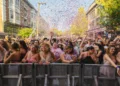
Today, Pioneer Square remains Seattle’s most densely concentrated art district—over twenty-five galleries within one square mile, plus artist studios in Tashiro Kaplan Artist Lofts, ’57 Biscayne, InscapeArts, Equinox Studios, and the Bemis Building. Every First Thursday from 5-9 p.m. (gallery hours vary; some close earlier), wine flows, conversations rise, sidewalks fill, and new exhibitions debut simultaneously across the neighborhood.
The ritual is simultaneously art appreciation, social event, and economic engine. Wine and hobnobbing steal the scene for some—groups moving gallery to gallery, more focused on free drinks and crowd energy than careful examination of art. But at its core, First Thursday represents “impressive communal unveiling of new artwork,” as longtime observers describe it. Artists debut work, collectors discover emerging talent before prices escalate, casual browsers encounter unexpected inspiration, and the neighborhood demonstrates that despite tech industry transformation reshaping Seattle, the city still values spaces where strangers gather around aesthetic experience.
The galleries themselves tell complex story about contemporary art’s commercial ecology, the tension between supporting local artists and attracting national collectors, and Pioneer Square’s evolution from 1960s bohemian haven to present-day historic district navigating homelessness crisis, downtown office vacancy, and changing patterns of urban life.
The Founding Generation: Foster/White and the Art of Longevity
Foster/White Gallery—just short stroll from King Street Station—has showcased fine art since 1966, making it one of Seattle’s oldest continuously operating commercial galleries. That longevity matters in contemporary art world where galleries frequently close after a few years, unable to sustain economics of representing artists, maintaining physical space, and competing for collector attention.
Foster/White’s survival through nearly six decades reflects several strategic choices. The gallery presents diverse media—paintings, sculptures, photographs spanning styles and aesthetics rather than narrow curatorial focus. This diversity attracts broader collector base and allows flexibility responding to market shifts. When minimalist sculpture dominates, the gallery can pivot. When figurative painting resurges, appropriate inventory exists.
The gallery also cultivates artist relationships across career stages. Established artists with national reputations anchor programming and attract serious collectors willing to spend substantial sums. Mid-career artists building momentum provide growth potential—collectors acquiring work before prices increase significantly. Emerging artists create energy and excitement, attracting younger buyers and demonstrating gallery’s commitment to discovery rather than merely selling established names.
Visitors consistently praise Foster/White’s physical space—terrific room where art displays effectively without overcrowding or underwhelming sparseness. Gallery design matters more than casual observers realize. Lighting, wall color, ceiling height, floor materials all affect how art appears. Bad gallery spaces make good art look mediocre. Great gallery spaces let art speak clearly.
The gallery’s location near transportation infrastructure—King Street Station serves Amtrak, Sound Transit light rail, and regional buses—creates accessibility unusual for contemporary art venues typically requiring car trips to industrial districts or off-street locations. Tourists arriving by train can walk to Foster/White within minutes, integrating art viewing into travel itineraries rather than requiring dedicated cultural pilgrimage.
Will Robinson’s large stone sculptures represent the kind of artist relationship Foster/White cultivates—innovative sculptor working in demanding medium, creating pieces that command attention and justify gallery representation. Contemporary stone sculpture requires technical skill, physical space for creation, and patience waiting for work to sell (large sculptures don’t move quickly). Galleries supporting such artists provide essential infrastructure artists couldn’t replicate independently.
Greg Kucera Gallery: East Edge Anchor
Greg Kucera Gallery occupies the East Edge area—neighborhood designation for galleries east of First Avenue, technically outside Pioneer Square proper but integrated into the First Thursday circuit. The gallery’s professional approach to consignment—reasonable rates, useful information, knowledgeable staff—reflects maturity distinguishing serious commercial operations from vanity projects or casual ventures.
Contemporary art galleries operate multiple revenue models simultaneously. Primary market sales represent artists the gallery officially represents, taking 40-60% commission on sales and providing ongoing support including exhibition expenses, marketing, studio visits, and relationship cultivation with collectors. Consignment involves selling work by artists the gallery doesn’t officially represent, typically taking 30-50% commission with less comprehensive support.
Greg Kucera Gallery’s reputation for professionalism matters because artist-gallery relationships can become contentious. Payment disputes, unclear accounting, broken promises about exhibition opportunities, and communication failures create common complaints. Galleries known for treating artists well and collectors honestly build reputations attracting better artists and more confident buyers.
The gallery participates actively in First Thursday Art Walk, understanding that monthly event drives substantial foot traffic and creates sales opportunities that isolated exhibitions wouldn’t generate. The communal energy of Art Walk—multiple galleries opening simultaneously, sidewalks filled with people moving between spaces—creates critical mass drawing crowds that individual galleries struggle attracting independently.
Recent exhibitions featuring Timea Tihanyi explore how contemporary galleries balance representing Pacific Northwest artists with broader international or national programming. Too much local focus risks seeming provincial or limited. Too little local representation alienates community and contradicts galleries’ role supporting regional cultural production. Finding balance requires curatorial vision and market awareness.
Stonington Gallery: Indigenous Art Specialization
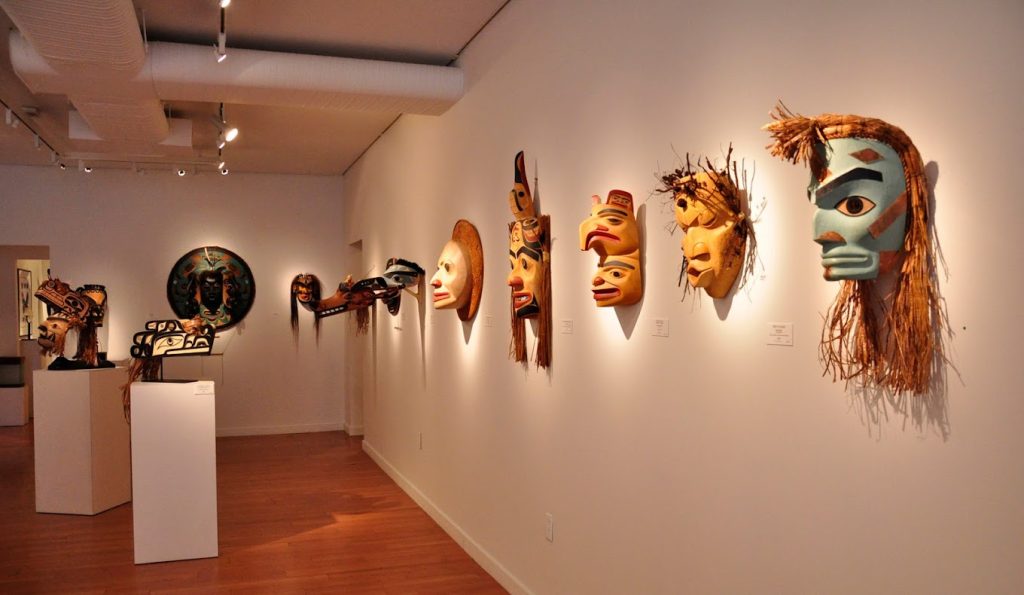
Stonington Gallery represents strategic alternative to general contemporary art programming: specialization in Indigenous art, particularly Pacific Northwest Coast Salish and First Nations work. Visitor reviews describe it as “most exceptional gallery I’ve been to in a while” among Seattle’s Indigenous galleries, praising both the size of collection and the quality and thoughtfulness of artwork.
The “walk here if you have to” enthusiasm reflects how specialization creates destination status. Collectors and admirers of Indigenous art specifically seek Stonington, traveling to Pioneer Square expressly for that gallery rather than casually encountering it during broader art walk. This targeted traffic provides different economic foundation than galleries depending on walk-in browsing.
Indigenous art presents particular opportunities and responsibilities for commercial galleries. The work connects to specific cultural traditions, spiritual practices, and community relationships that generic contemporary art doesn’t carry. Galleries representing Indigenous artists must navigate cultural sensitivity, authenticity verification, appropriate attribution, and relationships with tribal communities and individual artists requiring deeper engagement than typical artist-gallery contracts.
Stonington’s extensive collection allows comprehensive presentation impossible in smaller spaces. Seeing multiple examples of carving styles, understanding regional variations, comparing contemporary interpretations with traditional forms—these educational experiences require inventory depth. The gallery functions as informal museum where visitors learn cultural context alongside aesthetic appreciation.
The combination of “biggest collection” and “most interesting and thoughtful art” suggests curatorial selectivity beyond mere quantity. Not all Indigenous art achieves equal aesthetic power or cultural resonance. Galleries making meaningful contributions to Indigenous artists’ careers and public understanding demonstrate discernment about what to show and how to present it.
Reviews noting fair prices and dealers “good to their word” about shipping and delivery address practical concerns distinguishing positive gallery experiences from frustrating ones. Contemporary art purchases—particularly sculpture, carvings, or large works—often involve complex logistics. Galleries handling these details professionally justify their commissions and build collector trust.
Davidson Galleries: Printmaking Specialization
Davidson Galleries focuses on printmaking—historical and contemporary, domestic and international fine art prints and works on paper. Located in Pioneer Square, the gallery participates in First Thursday while maintaining distinct identity through medium specialization.
Printmaking represents the art market’s paradox: technically sophisticated, historically significant, often more affordable than unique paintings or sculptures, yet frequently undervalued by collectors who privilege uniqueness over edition multiplicity. Galleries championing prints combat prejudice that editions are somehow less authentic than one-of-a-kind works, educating collectors about printmaking’s technical demands and aesthetic possibilities.
Davidson’s holiday guide featuring staff recommendations and curated selections under $250 demonstrates how print galleries make contemporary art accessible to broader economic range. Paintings by emerging artists might start at $2,000-$5,000. Sculptures can command $10,000-$50,000 or more. But high-quality prints—including work by significant artists—often retail for $200-$2,000, allowing collectors with modest budgets to acquire museum-quality work.
The gallery’s emphasis on “first-time art buyers and developing collectors” acknowledges that contemporary art intimidates many potential buyers who lack knowledge about artists, market values, or how to evaluate quality. Galleries serving educational function—explaining techniques, discussing artists’ development, contextualizing work within broader movements—create new collectors rather than merely extracting money from existing ones.
Davidson’s mention of Japanese printmaker work reflects how medium specialization enables international scope. A general contemporary gallery might focus on Pacific Northwest artists with occasional national figures. A print gallery can show Japanese woodblock, European intaglio, American lithography, and contemporary digital prints because medium rather than geographic origin defines curatorial vision.
The gallery’s note about being open 11 a.m.-5 p.m. but closed for First Thursday evening events during January demonstrates how established galleries navigate Art Walk participation. For some, First Thursday generates crucial traffic and sales. For others, the crowd and social atmosphere distract from serious collecting conversations. Galleries balance community participation with business priorities differently based on clientele and inventory.
ArtX Contemporary: Emerging Artist Champion
ArtX Contemporary (formerly ArtXchange Gallery) exemplifies galleries focused on emerging and mid-career artists, particularly those from underrepresented communities. Recent exhibitions—Jeremy G. Bell’s portraits of contemporary Black subjects, Fulgencio Lazo’s Oaxacan-American work, June Sekiguchi’s sculptural installations—demonstrate commitment to artists often marginalized in commercial gallery system dominated by white male artists.
The gallery’s exhibition titles signal thematic ambition beyond mere aesthetic display. “Cosmic Tapestry” exploring “profound interplay of personhood, identity, and existence,” “Tejiendo Historias | Weaving Stories” honoring Mexican heritage, “The Geometry of Resilience” investigating vulnerability and strength—these frames position art as addressing big questions and social concerns rather than decorative objects.
Contemporary art galleries increasingly emphasize identity, social justice, and cultural representation—partly from genuine commitment, partly from market demand. Collectors, particularly younger ones and institutional buyers, want work by diverse artists addressing contemporary issues. Galleries recognizing this shift before mainstream adoption gain competitive advantage and contribute to overdue correction of art world’s historical exclusions.
ArtX’s active blog and social media presence—documenting exhibitions, artist talks, press coverage—reflects how contemporary galleries must maintain robust digital presences. Online visibility drives physical visits. Social media creates exhibition buzz. Digital documentation extends artwork’s reach beyond gallery walls and creates permanent record of programming.
The gallery’s artist talks and First Thursday receptions combine educational programming with social events. Meeting artists, hearing them discuss their work, understanding creative processes—these experiences deepen collector engagement and create relationships encouraging purchases. People buy art from artists they’ve met and conversations they’ve had, not merely images they’ve viewed.
The mention of Chris Maynard’s feather sculptures celebrating “patterns and colors of birds’ feathers by hand-carving and assembling them” demonstrates how contemporary galleries balance conceptual work with craft-intensive pieces appealing to different collector sensibilities. Not all contemporary art engages social theory or abstract concepts. Some rewards technical virtuosity and natural beauty—equally valid but serving different aesthetic purposes.
The First Thursday Ritual: Economics and Community
Free parking from 5-10 p.m. during First Thursday Art Walk—provided by Hudson Pacific Properties and Butler Parking at two participating garages on first-come-first-serve basis—reveals the event’s infrastructure demands. Visitors must pick up free parking voucher at participating gallery or venue, fill it out, and hand to parking attendant leaving. This system ties parking benefit to actual gallery visits rather than generic downtown parking subsidy.
The parking arrangement demonstrates public-private partnership supporting cultural programming. Private property owners (Hudson Pacific Properties) provide parking facilities, private businesses (galleries) distribute vouchers, and neighborhood organization (Alliance for Pioneer Square) coordinates logistics. Government isn’t funding First Thursday—business community and property owners recognize that cultural vitality benefits everyone through increased foot traffic, restaurant patronage, and neighborhood perception.
The “organic neighborhood event” description—repeated across multiple sources—emphasizes grassroots origins and distributed organization. No single entity controls First Thursday. Individual galleries, studios, and venues decide whether to participate, what hours to maintain, which artists to feature. The Alliance for Pioneer Square coordinates communication and promotes the event but doesn’t curate exhibitions or mandate participation.
This organic structure creates both strength and frustration. Strength because galleries maintain autonomy, experimenting with formats and responding to specific community needs without bureaucratic approval. Frustration because no official map or comprehensive list exists—participants submit events to Alliance for posting, but accuracy depends on individual reporting. Publications like Art Access, The Stranger, City Arts Magazine, and Real Change compile monthly previews, guides, and maps, but each differs based on editorial judgment and available information.
The 1981 founding—”very first Art Walk in the USA”—established template copied nationwide. Dozens of cities now host monthly neighborhood art walks. Seattle alone has more than dozen variations: Ballard second Thursday, Georgetown second Saturday, Central District second Saturday, West Seattle second Thursday, Fremont, Capitol Hill, and others. Pioneer Square’s innovation became movement.
But the original faces challenges its imitators avoid. Pioneer Square struggles with downtown office vacancy, homelessness visibility, safety perceptions, and urban transformation reducing residential density. Neighborhood art walks in residential areas like Ballard or West Seattle draw local foot traffic. Pioneer Square depends more heavily on people traveling specifically for Art Walk or combining it with dining, drinking, and entertainment in neighborhood traditionally focused on daytime office workers.
The galleries persist because Pioneer Square’s historic architecture—Richardson Romanesque buildings from 1890s reconstruction after Great Seattle Fire—provides physical spaces with character and scale matching contemporary art. High ceilings, large windows, substantial floors—these features suit gallery conversion better than modern office buildings or suburban retail spaces.
The concentration of galleries within one square mile creates critical mass. A single gallery opening might attract fifty people. Twenty-five galleries opening simultaneously draw hundreds or thousands, transforming neighborhood atmosphere and creating event energy no individual space could generate.
The Architecture Advantage: Historic Buildings as Gallery Infrastructure
Pioneer Square’s Richardson Romanesque architecture—brick and stone buildings constructed after the 1889 Great Seattle Fire—provides physical infrastructure perfectly suited to contemporary art galleries. The neighborhood’s designation as historic district prevents demolition but allows adaptive reuse, creating unusual situation where century-old commercial buildings house 21st-century cultural enterprises.
The architecture matters more than aesthetics alone suggest. Gallery spaces require specific physical characteristics: high ceilings allowing large-scale work, substantial floor loading supporting heavy sculpture, natural light potential for certain types of exhibition, and architectural character that doesn’t compete with artwork. Modern office buildings and suburban retail spaces rarely provide these features. Historic industrial and commercial buildings often do.
Pioneer Square buildings offer ten-to-fifteen-foot ceilings, thick floors designed for heavy machinery or warehouse goods, large windows admitting natural light, and robust construction allowing wall penetrations for lighting and climate control. The exposed brick, heavy timber, and cast iron columns create architectural presence that contemporary art complements rather than contradicts—industrial heritage meeting contemporary creativity.
The ground-floor locations along First Avenue, Occidental Avenue, and side streets create street-level accessibility and window display opportunities. Passersby can see exhibitions from sidewalk, lowering barrier to entry for people intimidated by contemporary art or uncertain about gallery etiquette. Window visibility generates spontaneous visits that second-floor or interior locations rarely achieve.
The clustered geography within one square mile makes gallery-hopping practical. Visitors can walk between ten galleries in thirty minutes, creating afternoon or evening itinerary impossible when galleries scatter across city in distant neighborhoods. This walkability enhances First Thursday experience and supports casual browsing during non-Art Walk periods.
The Future Question: Resilience or Transition?
Contemporary art galleries face existential economics in every city. Artists need representation, exhibition opportunities, and sales infrastructure. Collectors need discovery mechanisms, quality curation, and purchase confidence. Galleries provide these services but struggle covering rent, utilities, insurance, staff salaries, marketing expenses, and artist payments while taking 40-50% commissions on sales that might occur sporadically.
Most galleries lose money or barely break even. Owners subsidize operations through other income, view galleries as loss leaders for art consulting businesses, or accept minimal profits justified by cultural contribution rather than financial return. This fragility means gallery populations fluctuate constantly—new ventures launch optimistically, struggling operations close quietly, successful galleries navigate by adapting programming and business models.
Pioneer Square’s gallery concentration represents both asset and vulnerability. Concentration creates destination status attracting collectors willing to spend entire afternoon visiting multiple galleries. But concentration also means galleries compete for same collector base, similar artists, and overlapping market segments. When downtown foot traffic declines or collector spending contracts, all galleries suffer simultaneously.
The First Thursday tradition provides resilience mechanism. Monthly event creates predictable traffic, regular exhibition turnover encouraging repeat visits, and communal energy supporting individual galleries that might otherwise struggle attracting audiences. But tradition also risks becoming routine—event people attend from habit rather than genuine enthusiasm for particular exhibitions.
The galleries adapting successfully demonstrate several patterns. Medium specialization (printmaking at Davidson, Indigenous art at Stonington) creates distinct identity and targeted markets. Long tenure (Foster/White since 1966) builds collector relationships and reputation withstanding market fluctuations. Commitment to emerging artists and underrepresented communities (ArtX Contemporary) aligns with changing collector demographics and values. Professional operation and artist support (Greg Kucera Gallery) attracts quality artists and confident buyers.
The painted footprints from 1981 are gone, worn away by forty-four years of pedestrian traffic, weather, and urban change. But the pattern they marked endures—monthly gathering where strangers encounter art, galleries unveil new work, wine flows, conversations rise, and Seattle’s oldest neighborhood demonstrates that even in city transformed by tech wealth and rapid growth, spaces remain where aesthetic experience matters more than utility, where community forms around shared appreciation, and where contemporary art finds commercial home supporting artists’ livelihoods and collectors’ passions.
Walk Pioneer Square any First Thursday evening. The galleries glow warm against historic brick and stone. People spill onto sidewalks, glasses in hand, voices animated. Inside, artworks await—paintings, sculptures, prints, photographs, installations created by artists who still believe making things matters, sold through galleries that somehow survive impossible economics, viewed by people choosing art over Netflix on Thursday night. The footprints are gone, but the path they marked leads still to galleries where contemporary art lives in commercial ecosystem forty-four years old and counting, vulnerable always, resilient so far, essential to Seattle’s cultural identity whether the city fully realizes it or not.