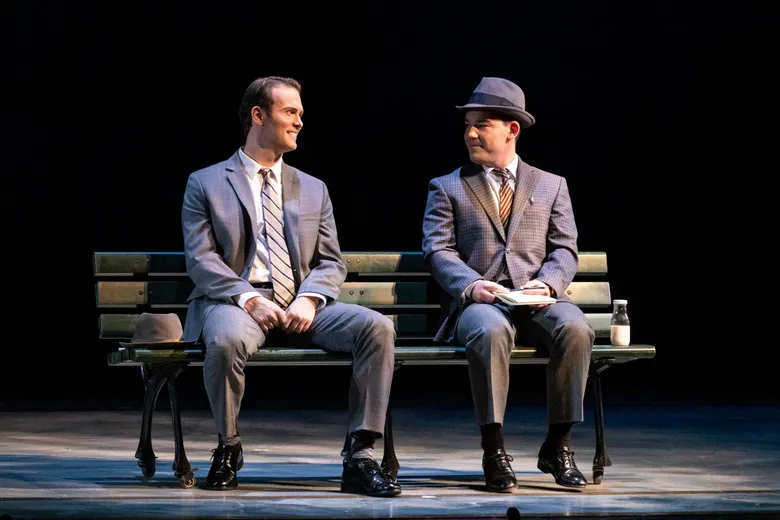
In the heart of Seattle’s cultural landscape, as winter lingers into February 2026, Seattle Opera prepares to unveil one of the most poignant and urgently relevant works in contemporary opera: Fellow Travelers. Opening on February 21 at Marion Oliver McCaw Hall, this production marks the launch of a major national tour, bringing Gregory Spears’ ravishing score and Greg Pierce’s razor-sharp libretto to audiences across the country. Based on Thomas Mallon’s 2007 novel, the opera captures a forbidden romance between two men in 1950s Washington, D.C., set against the brutal backdrop of the Lavender Scare—a shameful chapter when thousands of LGBTQ+ Americans lost jobs, reputations, and lives amid McCarthy-era paranoia.
This is not just another opera revival. Ten years after its 2016 premiere at Cincinnati Opera, Fellow Travelers arrives in Seattle with renewed force, amplified by the 2023 Showtime miniseries that introduced its story to millions. Directed by Kevin Newbury and presented in collaboration with the Up Until Now Collective, the production transforms fiction into a living memorial, incorporating the Lavender Names Project—projections honoring real individuals persecuted during that era. In a time when hard-won rights face fresh threats, this opera stands as both art and activism, reminding us how fragile freedom can be.
Seattle Opera, under General and Artistic Director James Robinson, has made bold choices in recent seasons, prioritizing works that speak directly to contemporary audiences. Staging Fellow Travelers on the mainstage signals a commitment to queer stories told without apology. The opera’s emotional depth, combined with its historical specificity, makes it essential viewing—a mirror held up to society’s recurring cycles of fear and exclusion.
From Page to Stage: The Birth of a Modern Classic
Thomas Mallon’s novel Fellow Travelers first appeared in 2007, a meticulously researched tale of passion and betrayal in midcentury America. Mallon, known for historical fiction that humanizes complex eras, drew from real events: the Lavender Scare, an extension of Senator Joseph McCarthy’s anti-communist crusades, where “sexual perverts” were deemed security risks. Over 5,000 government workers were forced out, many more lived in terror.
The path to opera began when producer G. Sterling Zinsmeyer approached director Kevin Newbury with the book in 2008. Newbury, captivated by the characters, connected composer Gregory Spears and librettist Greg Pierce. Workshopped in 2013 through Cincinnati Opera’s Opera Fusion program, the work premiered there in 2016 to acclaim. Critics praised its “ravishing musical score” and emotional trenchancy. Since then, it has become one of the most performed new American operas, staged by companies from Lyric Opera of Chicago to Minnesota Opera.
Spears and Pierce, in their artist statement, explain the adaptation’s core challenge: capturing a world of coded language. “Opera thrives on stories with rich subtext, where characters cannot fully express themselves in words,” they write. In 1950s D.C., both politicians and queer individuals navigated layers of deception. The creators mirror this in music—blending minimalist patterns evoking bureaucratic machinery with florid, troubadour-inspired melodies expressing forbidden longing. These styles overlap, creating tension that drives the drama forward.
The result is an opera that feels both intimate and epic. At two hours and fifteen minutes with one intermission, it moves swiftly yet lingers deeply. No chorus streamlines the production for touring, focusing attention on the central couple and supporting roles.
A Love Story Forged in Fear: The Narrative Core
At the center are Hawkins “Hawk” Fuller, a charismatic State Department official, and Timothy Laughlin, a recent college graduate brimming with idealism. Their meeting on a Dupont Circle park bench—seemingly ordinary to passersby—ignites something electric. For Timothy, it’s awakening; for Hawk, a calculated thrill.
As their relationship deepens, the Lavender Scare tightens its grip. Interrogations, accusations, and betrayals threaten everything. Timothy’s faith and principles clash with Hawk’s pragmatism, leading to moments of exquisite tenderness and devastating fracture.
Supporting characters add texture: Mary Johnson, a confidante navigating her own compromises; colleagues caught in the purge’s web. Pierce’s libretto shines with witty, natural dialogue that masks deeper truths—flirtations laced with danger, declarations veiled in subtext.
Key scenes devastate. Timothy’s aria in St. Peter’s Church after their first night together wrestles with ecstasy and guilt. The love duets, blending vulnerability and passion, rank among opera’s most moving in recent decades. Spears uses leitmotifs sparingly but effectively, echoing emotions across scenes.
The opera spans years, framing the story with reflections that underscore loss and resilience. It avoids easy sentiment, presenting characters as flawed humans shaped by their time—neither villains nor saints.
The Sound of Hidden Truths: Spears’ Innovative Score
Gregory Spears’ music distinguishes Fellow Travelers from typical contemporary opera. Rejecting atonal experimentation or pop influences, he crafts a sound world both accessible and profound.
Minimalist repetition—steady pulses, arpeggios—evokes the relentless grind of office work and political machinery. Typing secretaries, rushing interns, the hum of suspicion: these become sonic undercurrents. Overlaid are melismatic lines inspired by medieval troubadours, conveying courtly (and not-so-courtly) love. This counterpoint mirrors the characters’ lives: surface conformity hiding passionate interiors.
Spears draws from Baroque and bel canto traditions too—clear melodies, expressive arias, structured ensembles. Yet everything serves the story. A duet might begin playfully, then fracture as external pressures intrude. Orchestration remains intimate, allowing voices to soar.
Critics have called it “lush” and “idiosyncratic,” a score that seduces the ear while piercing the heart. In live performance, the blend of cool detachment and heated emotion creates unbearable tension, releasing in cathartic waves.
Echoes of History: Understanding the Lavender Scare
To fully appreciate Fellow Travelers, context matters. The Lavender Scare paralleled the Red Scare but targeted sexual orientation. In 1950, the State Department began systematic firings; by 1953, Eisenhower’s Executive Order 10450 barred “sexual perversion” from federal employment.
Thousands lost jobs. Many faced ruin—blackmail, suicide, exile. The purge extended beyond government to military and private sectors. Historians note it affected more people than McCarthy’s communist hunt.
Yet queer communities persisted in shadows—bars, parks, coded networks. The opera captures this duality: terror alongside moments of connection. The Lavender Names Project in this production honors real victims, projecting their stories during performances, turning theater into archive.
This history feels distant yet alarmingly close. Recent years have seen rollbacks on LGBTQ+ protections, bans on discussion in schools, rhetoric echoing old fears. Fellow Travelers warns that progress is reversible.
Why It Resonates Today: Parallels and Warnings
As Spears and Pierce note, closet living grows rarer for younger generations. Yet the opera’s depiction of coded existence retains power. In eras of surveillance and suspicion, who hasn’t hidden parts of themselves?
The story’s themes—betrayal for survival, love tested by power imbalances, institutional cruelty—mirrorently mirror current debates. Political paranoia, disregard for truth, scapegoating of minorities: patterns repeat.
Director Kevin Newbury, speaking to the Seattle Times, highlights these connections without overstatement. Created during the Obama era, the opera now lands amid regression, its urgency amplified. The miniseries, with Matt Bomer and Jonathan Bailey’s electric chemistry, broadened reach but lacked opera’s layered subtext.
Seattle audiences, in a progressive city with vibrant queer community, will find particular resonance. The production invites reflection on how far we’ve come—and how far we have to go.
Seattle Opera’s Vision: Cast, Creative Team, and Staging
Kevin Newbury’s direction brings cinematic fluidity and emotional precision. Co-founding Up Until Now Collective during the pandemic, he owns the physical production—elegant 1950s sets, period costumes—ensuring consistency across the tour.
The cast features standout performers. Baritone Andres Acosta as Timothy Laughlin brings youthful fervor and vocal warmth. His counterpart as Hawk delivers charismatic nuance. Soprano Amber R. Monroe debuts as Mary Johnson, adding depth to the confidante role.
Rehearsals began in early February 2026, building intensity toward opening night. Seattle Symphony provides orchestral backbone, no conductor specified in announcements but certain to elevate Spears’ score.
The staging incorporates the Lavender Names Project, a moving addition honoring history’s erased voices.
Performances run February 21, 22, 25, 27, 28, and March 1, 2026. Tickets start at $39, making this accessible.
A Call to the Stage: Why Fellow Travelers Demands Attention
Fellow Travelers succeeds because it transcends its era. It is a love story first—tender, complicated, real. Spears’ music and Pierce’s words create something timeless: art that moves, challenges, heals.
Seattle Opera has given the city a gift. In McCaw Hall, under stage lights, audiences will witness beauty born from pain, resilience forged in oppression. This production launches a tour that will touch lives nationwide, preserving memory and inspiring courage.
See it. Feel it. Remember: love, even when forbidden, endures.