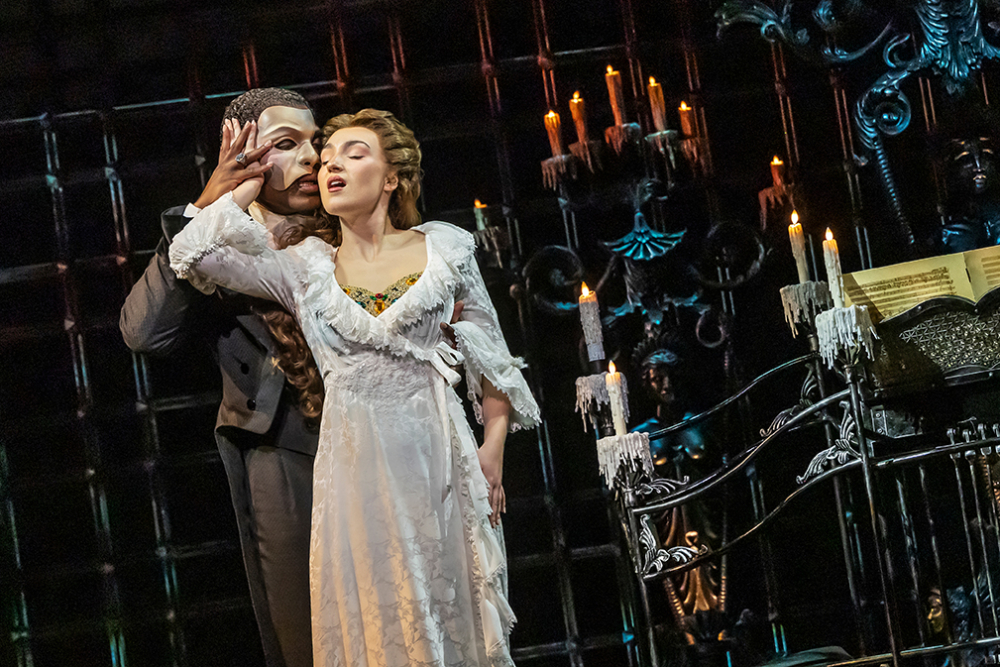
Seattle’s theater lovers have reason to celebrate. After years away from the Emerald City’s stages, Andrew Lloyd Webber’s masterpiece The Phantom of the Opera descends upon the Paramount Theatre for a limited engagement from May 13 to 24, 2026. This North American tour production arrives as a beacon of grand musical theater in an era hungry for spectacle, romance, and raw emotional power. The show’s return feels less like a revival and more like an inevitable homecoming—Seattle has long embraced the Phantom with open arms, and this run promises to reignite that passion.
The announcement alone stirred excitement across the Pacific Northwest. Tickets went on sale months ago, and demand reflects the enduring allure of a story that blends gothic mystery with soaring melodies. In a city known for its innovative spirit—from tech giants to indie music scenes—the arrival of this classic feels grounding, a reminder of theater’s power to transport audiences to shadowy catacombs beneath a glittering opera house.
A Legacy Etched in Broadway History
The Phantom of the Opera premiered in London’s West End in 1986 and crossed the Atlantic to Broadway in 1988, where it held court as the longest-running show until its emotional farewell in 2023. Andrew Lloyd Webber’s score, Charles Hart’s lyrics, and the original direction by Harold Prince transformed Gaston Leroux’s 1910 novel into a global phenomenon. It has played in over 180 cities, enchanted more than 140 million people, and grossed billions.
What sets it apart? The blend of operatic grandeur and pop sensibility. Songs like “The Music of the Night,” “Think of Me,” and the titular anthem have become cultural touchstones. The production’s technical marvels—the crashing chandelier, the underground lair, the lavish costumes—elevate it beyond mere storytelling into an immersive experience.
This touring version, produced by Cameron Mackintosh, carries forward that legacy with fresh energy. Directed by Seth Sklar-Heyn, it preserves the iconic elements while benefiting from modern staging refinements developed over decades.
Seattle’s Long Love Affair with the Phantom
Seattle and The Phantom of the Opera share a deep history. The show first visited in the early 1990s, part of the original national tour, playing to packed houses at the 5th Avenue Theatre and later the Paramount. Returns followed in 1996, 2008, 2015, and 2018—each engagement met with fervor.
In 2015, the spectacular production featuring the famous chandelier drew rave reviews and sold-out crowds at the Paramount. Audiences returned night after night, some seeing multiple performances. By 2018, the “new production” with updated scenery and choreography arrived, proving the show’s adaptability without losing its soul.
Why does Seattle respond so strongly? The city’s appreciation for artistry runs deep. From the Seattle Opera’s world-class productions to the vibrant Broadway at the Paramount series, residents crave high-caliber performing arts. The Phantom’s themes of hidden beauty, unrequited obsession, and redemption resonate in a place that values introspection amid natural splendor.
Past visits left lasting memories: the collective gasp as the chandelier rose, the hush during “The Point of No Return.” This 2026 run continues that tradition, offering newcomers their first encounter and veterans a chance to relive the magic.
The Paramount Theatre: A Perfect Stage for Grandeur
No venue suits The Phantom of the Opera better than the Paramount Theatre.
Opened in 1928 as the Seattle Theatre, this opulent palace boasts Beaux-Arts architecture with grand chandeliers, intricate plasterwork, and a vast auditorium seating nearly 3,000. Restored in the 1990s, it retains its historic charm while offering modern acoustics and sightlines.
The Paramount’s proscenium arch and deep stage accommodate the show’s elaborate sets—the Paris Opera House facade, the misty underground lake, the masquerade ballroom. The famous chandelier auction scene benefits from the theater’s height and rigging capabilities. Sitting in the orchestra or mezzanine, audiences feel enveloped in the world of 19th-century Paris.
Beyond the architecture, the Paramount serves as Seattle’s premier destination for touring Broadway shows. Managed by the Seattle Theatre Group, it hosts everything from Hamilton to Les Misérables. For Phantom, it provides the ideal canvas: majestic, intimate in feel despite its size, and steeped in history.
The Story That Captivates Generations
At its core, The Phantom of the Opera follows a disfigured musical genius lurking beneath the Paris Opera House. Obsessed with young soprano Christine Daaé, he mentors her anonymously, propelling her to stardom while terrorizing the company. When Christine reconnects with childhood friend Raoul, a dangerous love triangle emerges, culminating in heartbreak and revelation.
The narrative explores beauty and monstrosity, genius and madness, love and possession. The Phantom stands as one of theater’s great anti-heroes—tragic, brilliant, terrifying. Christine’s journey from ingenue to empowered woman adds depth, while Raoul represents conventional romance against the Phantom’s dark allure.
Lloyd Webber’s score drives the emotion: the organ-driven overture sets a foreboding tone, “Angel of Music” introduces mystery, and “All I Ask of You” offers tender reprieve. The second act’s “Masquerade” dazzles with ensemble choreography, leading to the intense underground confrontations.
One iconic moment defines the show.
The chandelier—over a ton of crystal and light—rises dramatically above the audience before crashing toward the stage in a blaze of pyrotechnics. It’s theater at its most thrilling, a technical feat that still astonishes decades later.
Meet the 2026 Tour Cast: Fresh Voices, Timeless Roles
The North American tour of The Phantom of the Opera arrives in Seattle with a principal cast that balances raw power, emotional depth, and fresh perspectives on these legendary characters. This revitalized production, directed with renewed vision, showcases performers who bring contemporary nuance to Andrew Lloyd Webber’s timeless roles while honoring the show’s gothic intensity.
At the helm stands Isaiah Bailey as the Phantom. Bailey commands the stage with a resonant baritone that fills the Paramount’s vast auditorium, infusing the masked genius with layers of tormented isolation and magnetic charisma. His “The Music of the Night” delivers seduction laced with desperation, drawing audiences into the character’s fractured psyche. Bailey’s physical presence—tall, brooding, and precise—heightens the tragedy of a man hidden from the world yet desperate for connection.
Jordan Lee Gilbert embodies Christine Daaé with ethereal grace and vocal purity. Her soprano soars effortlessly in “Think of Me,” capturing the young singer’s wide-eyed ambition, while “Wishing You Were Somehow Here Again” reveals profound growth and heartbreak. Gilbert portrays Christine’s evolution from naive protégé to a woman claiming her agency, making her journey the emotional core of the production. In moments of terror and tenderness beneath the opera house, her chemistry with the Phantom creates electric tension.
Daniel Lopez brings youthful ardor and vocal warmth to Raoul, Vicomte de Chagny. As the dashing counterpart to the Phantom’s darkness, Lopez’s clear tenor shines in “All I Ask of You,” offering a beacon of hope and normalcy. His Raoul is earnest yet brave, charging into danger with conviction, providing the perfect foil in the love triangle that drives the drama.
The supporting roles add rich texture. Midori Marsh plays the diva Carlotta Giudicelli with operatic flair and comic timing, her powerful voice dominating scenes until the Phantom’s interventions. Christopher Bozeka as Ubaldo Piangi delivers robust tenor support and humorous pathos. Veterans William Thomas Evans and Carrington Vilmont portray the bumbling managers Monsieur Firmin and Monsieur André, injecting levity amid the chaos.
Lisa Vroman, a seasoned performer with deep ties to the role’s history, takes on Madame Giry, bringing authoritative mystique to the ballet mistress who knows the opera house’s secrets. Melo Ludwig as her daughter Meg Giry provides youthful innocence and strong dance presence. Alexa Xioufaridou Moster serves as alternate Christine, ensuring seamless coverage with her own luminous interpretation.
The ensemble—dancers, chorus, and orchestra—completes the spectacle. Under expert musical direction, Lloyd Webber’s score resonates with precision, from the thunderous overture to delicate underscoring. This diverse cast, drawn from Broadway and touring circuits, reflects modern theater’s inclusivity, uniting varied backgrounds to revitalize a classic for today’s audiences.
Why The Phantom Endures in 2026
Decades after its premiere, The Phantom of the Opera remains a cornerstone of musical theater, defying trends in an era dominated by screens and snippets. Its endurance lies in universal truths that resonate deeper than ever: the outsider’s struggle for acceptance, the destructive force of unchecked obsession, and compassion’s quiet power to redeem even the most damaged souls.
The Phantom himself embodies the artist as misunderstood genius—brilliant yet tormented by rejection. In 2026, amid discussions of mental health and societal exclusion, his story hits harder. He is not merely a villain but a cautionary figure, his deformity a metaphor for inner scars that society amplifies. Christine’s arc, mentored by an invisible force yet choosing her path, speaks to empowerment and the complexities of influence.
Lloyd Webber’s score bridges generations with its blend of rock-infused drama and operatic grandeur. Melodies like the titular theme or “Masquerade” lodge in the collective memory, passed from parents to children. Post-pandemic, the shared thrill of live performance—the chandelier’s dramatic descent, the boat’s glide across the misty lake—reaffirms theater’s irreplaceable magic. Collective gasps and thunderous applause create communal catharsis unavailable in isolation.
Seattle’s atmosphere amplifies this resonance. The city’s frequent rain and fog mirror the opera house’s shadowy underworld, while its creative pulse—from tech innovation to vibrant arts—echoes the Phantom’s inventive genius. Mount Rainier’s looming presence parallels the Phantom’s unseen influence. In a fast-paced digital world, the show slows time, demanding full immersion in emotion and spectacle.
Ultimately, The Phantom endures because it confronts beauty’s duality with monstrosity, love with possession. It reminds viewers that redemption often comes through understanding, not judgment—a message as vital in 2026 as ever.
Experiencing Phantom in Seattle: Practical Guide
Attending The Phantom of the Opera at the Paramount Theatre offers more than a show; it becomes a full evening of elegance and excitement. With performances from May 13 to 24, 2026, planning enhances the experience.
Tickets are available through STGPresents.org, Ticketmaster, or the Paramount box office. Prices vary by seat and date—premium orchestra sections command higher rates, while mezzanine and balcony offer excellent views at more accessible prices. Group discounts apply for 10 or more, and digital lotteries sometimes provide last-minute deals. Accessible seating and services, including audio description on May 24 and ASL interpretation on May 23, ensure inclusivity.
Arrive early to appreciate the Paramount’s opulent lobby. Restored to its 1928 Beaux-Arts glory, it features grand staircases, crystal chandeliers, and intricate plasterwork evoking Versailles. The space buzzes with pre-show energy, perfect for photos or a drink at the bar.
Downtown Seattle abounds with dining options. For Italian elegance, Il Terrazzo Carmine in Pioneer Square serves house-made pastas in a romantic setting. Seafood lovers head to Elliott’s Oyster House on the waterfront for fresh catches. Quick bites include Pike Place Market staples like Piroshky Piroshky or Beecher’s Handmade Cheese.
Post-show, unwind nearby. The Pine Box offers craft beers in a former funeral home, or Rhein Haus provides German fare and bocce. Parking fills quickly—use the Paramount garage or public transit via Westlake Station.
For visitors, extend the trip with Seattle icons. The Space Needle offers panoramic views, Pike Place Market bustles with vendors and the famous fish throwers, and Chihuly Garden and Glass dazzles with intricate sculptures. A ferry ride to Bainbridge Island provides scenic respite.
The Final Note: Don’t Miss This Return
As spring blooms in Seattle, the Phantom’s call echoes stronger than ever. This limited engagement from May 13 to 24, 2026, marks a rare opportunity to witness Cameron Mackintosh’s legendary production in one of its most fitting venues.
The show transcends entertainment— it becomes a shared ritual of wonder, sorrow, and exhilaration. First-timers discover the magic that captivated millions; returning fans rediscover nuances in performances and production. In the Paramount’s embrace, amid Seattle’s misty allure, the opera house comes alive once more.
Tickets move quickly for this spectacle of soaring music, breathtaking sets, and profound storytelling. The music of the night beckons—answer it while you can. The Phantom awaits.